REVIEW · AMIENS
WW1 Somme Battlfields
Book on Viator →Operated by Michael Smith · Bookable on Viator
The Somme hits different with a local guide. This private WW1 battlefield tour from Amiens stays customizable for your nationality, and it’s led by Michael Smith, so the big memorials feel tied to real people. I also love the chance for trench walking, especially at Beaumont-Hamel, plus stops built around the 1916 story arc.
You’ll cover a lot of ground, and the sites include walking on uneven terrain. There’s also no included lunch or coffee/tea, just bottled water, so you’ll want to plan breaks instead of assuming you’ll be fed.
At $288.99 per person, this isn’t a discount day-trip, but it’s a value play for what you get: private time with a guide, air-conditioned round transfers, and key stops listed as admission-free.
In This Review
- Key things to know before you go
- The Somme feels personal when the route is tailored to you
- Meet Michael Smith: the guide who puts names to places
- Price and value for a private WWI day from Amiens
- Getting there comfortably: pickup, transfers, and a realistic day length
- Stop 1: the Somme circuit of remembrance and what it teaches you
- Lochnagar Crater: standing near a blast dated to the minute
- Auchonvillers: original trenches, WWI memorabilia, and a museum stop
- Ulster Memorial Tower & Thiepval Wood: training before the assault
- Pozières: tanks, a windmill ruin, and Commonwealth losses
- Beaumont-Hamel and the Memorial Terre-neuvien: trenches and no-man’s-land
- What to bring so you enjoy every stop
- Who this Somme tour fits best (and who should choose differently)
- Should you book this Somme WWI battlefield tour?
- FAQ
- Is this a private tour?
- Is pickup available from Amiens?
- What language is the tour offered in?
- How long does the tour take?
- Are admission tickets included for the main stops?
- Is lunch or coffee included?
- Is the tour physically demanding?
- Can I cancel for a full refund?
Key things to know before you go

Private, tailored route: The route can shift based on your nationality, with an option to focus on family connections.
Top memorial stops in one day: Thiepval, Ulster Memorial Tower, Pozières, and Beaumont-Hamel are built into the flow.
Actual trench experience areas: You walk through trenches and out onto no-man’s-land at the preserved Beaumont-Hamel battlefield.
Signature sites beyond the main monuments: Lochnagar Crater and Auchonvillers add weight to the story.
Comfort first on transit: Air-conditioned round transfers keep the day manageable between sites.
Bring your own food plan: Bottled water is included, but lunch and hot drinks are on you.
The Somme feels personal when the route is tailored to you
A Somme day trip can turn into a parade of names—unless your route is built with care. Here, the tour is set up to be customizable by nationality, which matters because different countries remember this war through different lenses: training, losses, and memorial styles. If you’re visiting because of ANZAC connections, the day is structured to put those sites front and center rather than treating them as optional add-ons.
I like that the experience doesn’t pretend there’s only one way to feel the place. There’s also an option to visit a cemetery or monument connected to loved ones if that applies to you. That kind of flexibility is what turns a checklist day into something more steady and meaningful.
You can also read our reviews of more tours and experiences in Amiens.

Meet Michael Smith: the guide who puts names to places

The big difference on this tour is the human scale. Your guide is Michael Smith, and the strongest theme in the experience is how personally he connects the war’s story to the ground you’re standing on. You won’t just hear dates. You’ll hear why specific locations mattered—who trained there, how attacks played out, and what the landscape still preserves.
A few other practical strengths matter too. The pacing is set so you see the right amount without rushing your brain. And if your family history needs quiet time near a site, the tour is designed to make space for that kind of pause.
One more detail I’d call out: beyond the military story, Michael is known for bringing local life into the conversation, including plants of the region. That may sound like a small thing, but it helps the day breathe. You’re not stuck in a single emotional register.
Price and value for a private WWI day from Amiens

Let’s talk money like adults. The price is $288.99 per person, and you’re paying for private time plus transport plus a focused route packed with major memorials.
So what are you really getting for that cost?
- Private group touring: This is only your group, not a shared bus schedule.
- Air-conditioned transfers: You avoid spending your day stuck in a stuffy vehicle between stops.
- Bottled water included: A small but helpful inclusion on a long day.
- Admission listed as free at key sites: The day is structured so you’re not chasing ticket machines at every turn.
Is it a budget option? Not really. If you want the cheapest route to the Somme, you’ll find alternatives. But if you want a guided day where the story clicks and you can ask questions (especially with an Australian or broader Commonwealth focus), the price can feel reasonable.
Getting there comfortably: pickup, transfers, and a realistic day length
This is a day built around round transfers from Amiens area, and the tour can run anywhere from 4 to 10 hours depending on how your route is shaped. That range is important. If you only have a limited window, you might still be able to do a meaningful circuit without trying to do everything.
Pickup is offered and handled by phone or SMS, and you’ll receive a mobile ticket. The tour also runs daily during the listed operating window, with the standard hours starting at 8:30 AM.
One practical note: because you’re spending real time outdoors, weather matters. You’ll want layers. Even in good seasons, mornings and afternoons can feel different once you’re out at memorials and exposed craters.
Stop 1: the Somme circuit of remembrance and what it teaches you

The day starts with a circuit built around the 1916 Battles of the Somme, designed for remembrance rather than spectacle. Because the fighting was in many places a war of attrition, parts of the battlefield were preserved in a way modern visitors can still read. That’s why so many stops feel oddly physical: you can see how the terrain influenced what happened.
Key highlights within this Somme circuit include major preserved sites such as the largest and deepest mine crater in France, the iconic Thiepval monument to the missing, and a site linked to the first tank battles at Flers. You’ll also spend time at Beaumont-Hamel’s preserved battlefield area where trenches are intact enough to walk, guided through the trenches and out toward no-man’s-land.
Even the breaks connect to the story. There’s a café stop with trenches in the back garden—this is where the day becomes more than photos. If you’ve ever wondered how people tried to live and regroup in the middle of ruins, these small details make the wartime setting feel less abstract.
For Australians and those tracing ANZAC service, Villers-Bretonneux plays a role with major sites of importance. The guide can shape what you focus on, so you’re not stuck standing in front of the wrong monument for your family story.
Practical trade-off: because this is the foundation stop, you’ll want comfortable shoes and patience. This is not a “quick see, quick go” stretch.


Lochnagar Crater: standing near a blast dated to the minute
Next up is Lochnagar Crater, one of the most striking reminders of 1916 industrial-scale destruction. The site is tied to an enormous mine explosion detonated at 07:30 on 1 July 1916.
That time detail matters because it turns the crater into a timestamp. You’re not looking at rubble; you’re standing where an event was set to unfold at a specific hour, as part of a broader plan. Even if you don’t memorize the operational details, you’ll feel the difference between a general “big battle” and a carefully scheduled one.
Your stop here is about 45 minutes, so you’ll have enough time to look around, take it in, and still keep momentum for the later memorials.
What to consider: because it’s an outdoor crater site, wind and weather can shift quickly. A hat or light rain layer can make the difference.
Auchonvillers: original trenches, WWI memorabilia, and a museum stop

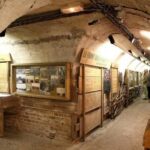
Auchonvillers is a smart middle-day stop because it combines refreshment with artifacts. There’s a café here, and the property includes original WW1 trenches in the back garden. That means you can regain your energy without losing the wartime setting.
You’ll also find WW1 memorabilia and a small, well-presented museum included in the stop. This is a good place to let the guide’s narrative settle into something more tangible. It’s one of those stops where you can slow down and see objects that support what you’ve been hearing.
Your time here is about 1 hour 30 minutes, which is long enough to split between coffee/refreshment and museum browsing, even if you’re reading more carefully than average.
Practical trade-off: if you’re the type who hates museum stops, this might feel longer than you want. But if you like context and details, it’s one of the stops that makes the day feel earned.
Ulster Memorial Tower & Thiepval Wood: training before the assault
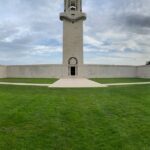
Ulster Memorial Tower is short in time but big in meaning. The tower is a replica of Helen’s Tower in County Down, Northern Ireland, and it connects to the soldiers of the British 16th division who trained there before engaging in the battles of the Somme. The assault on the German positions here cost many Irish lives.
Then there’s Thiepval Wood, which rounds out the stop and helps you connect the training origin story to the reality on the ground. These are places where the war’s geography becomes personal: you can almost picture the path from preparation to catastrophe.
This segment is about 45 minutes. It’s just enough time to take a breath, understand the why behind the monument, and move on before fatigue takes over.
Consideration: if you’re exhausted, monuments can blur together. This is one reason to keep your pace steady and ask questions early, while you still have energy.
Pozières: tanks, a windmill ruin, and Commonwealth losses
Pozières is the stop that leans hard into the theme of new technology in old slaughter. The memorial at Pozières shows different kinds of tanks used in the first tank battles on this planet—this is where the war’s shift from traditional approaches becomes visible.
Across the road is also a site tied to a windmill destroyed during the WW1 battles. Details like that can help your brain map what happened: you’re looking at a point where the human and the machine met the terrain.
A strong historical thread here is the loss of about 2,000 Australian soldiers at Pozières. Even if you don’t carry the numbers with you after you leave, it gives the site weight. It’s a moment where the memorial energy becomes specific rather than general.
Time on site is about 45 minutes. Keep your eyes open for how the memorial tells its story; monuments often do more than honor the dead. They also teach you how people wanted future generations to remember.
Beaumont-Hamel and the Memorial Terre-neuvien: trenches and no-man’s-land
If you want the Somme to stick with you, this is the core. The Memorial Terre-neuvien de Beaumont-Hamel marks a preserved battlefield where you can walk in the trenches and across no-man’s-land, following in the footsteps of soldiers of 1 July 1916.
The value here is not just that you can physically walk parts of the battlefield. It’s that the experience is guided through the space so you understand what you’re seeing. The trenches aren’t a scenic backdrop; they’re a designed survival system, later overwhelmed by tactics, weather, and time.
Your time here is about 1 hour 15 minutes, which is a good balance of guided movement plus enough quiet to absorb the scale. This is where the tour’s tone turns serious and stays serious, in the best way.
Practical caution: the guide takes you through trenches and no-man’s-land areas, so you should expect uneven ground and close-to-historic surfaces. Wear shoes you can walk in for real, not just for photos.
What to bring so you enjoy every stop
This is a long, outdoor day focused on remembrance. You’ll enjoy it more if you plan like you’re hiking with a purpose, not sightseeing with snacks.
Bring:
- Sturdy shoes for trenches and uneven ground
- A layer system for wind and temperature swings
- A rain shell if weather looks iffy
- Your own snacks, since lunch isn’t included
- If you have family connections, names/dates so you can ask the right questions fast
Also, drink the bottled water you’re given and don’t wait until you’re thirsty. It’s easy to forget hydration while you’re thinking hard.
Who this Somme tour fits best (and who should choose differently)
This is a strong match if you:
- Want a guided day focused on major WW1 Somme sites starting from Amiens
- Like an experience that can be shaped around your nationality or family connections
- Want trench walking at Beaumont-Hamel with a respectful, story-first approach
- Prefer private touring over trying to coordinate multiple stops yourself
It might not be your best choice if you:
- Want a purely minimal-walking day (the tour calls for moderate physical fitness)
- Expect lunch and coffee included (those are not included)
- Only want quick photo stops with no time spent on meaning
Should you book this Somme WWI battlefield tour?
I’d book it if you want the Somme to make sense. The private setup, the customizable approach, and the guided trench experience turn the day from sightseeing into understanding. Michael Smith is a key reason this works well: he can adapt the route and help you connect memorials to the story you care about.
If you’re sensitive to long days outdoors, plan your energy and pack food. If you can handle uneven ground and bring the right shoes, this is one of the better ways to see the Somme without losing the human scale.
In short: if you want a guided, respectful Somme day that goes beyond names on stone, this tour is a strong choice.
FAQ
Is this a private tour?
Yes. This is a private tour/activity, meaning only your group participates.
Is pickup available from Amiens?
Pickup is offered. You’ll be able to arrange it by phone or SMS.
What language is the tour offered in?
The tour is offered in English.
How long does the tour take?
The duration is approximately 4 to 10 hours.
Are admission tickets included for the main stops?
Admission tickets are listed as free for the stops included in the day.
Is lunch or coffee included?
No. Lunch and coffee and/or tea are not included. Bottled water is included.
Is the tour physically demanding?
The tour notes a moderate physical fitness level and includes walking through trenches and across no-man’s-land at Beaumont-Hamel.
Can I cancel for a full refund?
Yes. There is free cancellation, and you can cancel up to 24 hours in advance for a full refund.