REVIEW · AMIENS
Full Day Private Battle of the Somme Tour from Albert
Book on Viator →Operated by WW1 Battlefields guided tours: Brigitte De Cuyper from Get a Guide · Bookable on Viator
The most striking part of this private Somme tour is how quickly the battlefield becomes personal. You move from Albert’s medieval tunnel to shell craters, cemeteries, memorials, and villages where soldiers from Britain, Australia, Newfoundland, Scotland, and Ireland fought and died. Brigitte De Cuyper ties the ground to wartime writing by Owen, Sassoon, and Kipling, giving the day both human detail and military context.
I like the small private format, which lets Brigitte shape the stories around your interests, including family research such as the story of Northern Irish soldier Albert Griffin. I also like the range of stops, especially Lochnagar Crater and Newfoundland Memorial Park, two places that make the scale of the battle easier to grasp. The main drawback is the pace: eleven stops in about six hours leaves little time for lingering, and lunch is not included.
In This Review
- Key points at a glance
- Why this six-hour tour works
- Albert begins the story underground
- Albert’s golden Virgin and a wartime story
- Lochnagar Crater makes the artillery visible
- Pozières remembers Australia’s losses
- Le Tommy recreates the trench experience
- Thiepval confronts you with 72,000 names
- Beaumont-Hamel tells Newfoundland’s story
- Hawthorn Ridge and Sunken Lane
- A Scottish memorial and a village close to the front
- What the price includes
- Who should book this Somme tour?
- Should you book it?
- FAQ
- Where does the tour start?
- Where does the tour end?
- How long does the tour last?
- Is this a private tour?
- Is transportation included?
- Is lunch included?
- Is admission to every site included?
- What is the cancellation policy?
Key points at a glance
- Start in Albert’s 230-meter tunnel: The Museum Somme 1916 sets up the battle before you reach the actual front line.
- See the Somme’s largest mine crater: Lochnagar Crater measures about 330 feet across and 70 feet deep.
- Follow the Australian story at Pozières: The memorial and cemetery explain the heavy losses suffered here.
- Walk through a recreated trench: Le Tommy adds a practical sense of the cramped, muddy conditions of the war.
- Read 72,000 names at Thiepval: The Memorial to the Missing brings the human cost into sharp focus.
- Visit Newfoundland and Scottish memorial sites: Beaumont-Hamel shows how different national units experienced the same battle.
Why this six-hour tour works
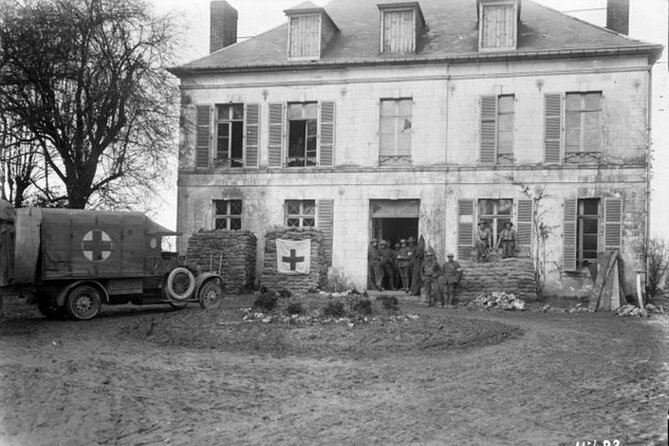
The Somme battlefield is spread across rural northern France. Many sites are close enough to visit in one day, but far enough apart that you need a vehicle and a clear plan. This tour provides private transportation from Albert and returns you to the same meeting point, so you do not spend your day working out local connections between cemeteries and memorials.
The private arrangement matters. Only your group of up to three takes part, which gives you more room to ask questions and follow a family connection. Brigitte has also adapted her explanations for people tracing relatives from Northern Ireland. If your interest is literary rather than genealogical, she connects the Somme with writers including Wilfred Owen, Siegfried Sassoon, and Rudyard Kipling.
The day begins at 9:00 a.m. and lasts about six hours. That is enough time for a strong introduction to the main Albert and Beaumont-Hamel sectors, but not enough for long walks, extended museum visits, or every battlefield site in the region. You will spend much of the day getting in and out of the vehicle, with short walks at several stops.
A moderate level of fitness is useful. The tour includes a tunnel museum, outdoor memorial grounds, cemeteries, and battlefield sites. The supplied details do not give a precise accessibility plan, so if you have mobility concerns, ask before booking.
You can also read our reviews of more private tours in Amiens

Albert begins the story underground
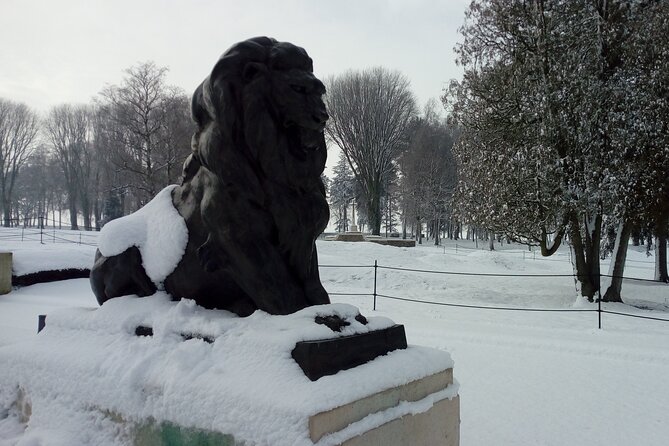
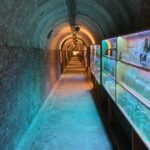
Your first stop is the Museum Somme 1916 in Albert. The museum occupies a 230-meter-long tunnel first dug in the Middle Ages, a fitting setting for an exhibition about soldiers living below ground during the First World War.
Inside, more than 4,000 First World War objects help explain the events leading to the Battle of the Somme and the daily life of men in the trenches. This is a useful opening because the later sites can otherwise feel like a string of names and monuments. The museum gives you the basic military and human background before you reach the open battlefield.
Allow about an hour here. Admission is not included, so budget for that separately. Because the tour covers eleven stops, you should not expect a leisurely museum morning. The value lies in the way this visit prepares you for what follows.
Albert’s golden Virgin and a wartime story
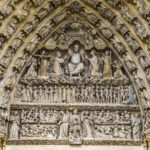
A short visit to the Basilica Notre-Dame de Brebières follows. Built in the late nineteenth century in a Neo-Byzantine style, the basilica is unusual for Picardy. Its dome carries a gold-covered statue of the Virgin Mary holding the baby Jesus.
The church was destroyed during the Great War and rebuilt in its original form by Edmond Duthoit, son of the first architect. Brigitte explains the wartime story connected with the statue, adding a local point of memory before the tour heads toward the front line.
You spend only about fifteen minutes here, so this is an exterior-focused stop rather than a long church visit. Admission is included. The basilica also helps you see Albert as more than a starting point: the town itself was caught up in the destruction and rebuilding that shaped the Somme after 1918.
Lochnagar Crater makes the artillery visible
At Lochnagar Crater, the war becomes a physical mark in the ground. British forces placed a large mine beneath the German front line, one of nineteen mines set under the German positions on the British section of the Somme front. The explosion helped begin the infantry advance on the first day of the battle.
The crater is about 70 feet deep and 330 feet wide, making it the largest crater in the Somme area. You have roughly twenty minutes here, enough to grasp its scale and hear how underground mining formed part of the opening attack.
This stop is visually powerful, but it also needs explanation. Without context, a crater can look like an oversized pond or field hollow. Brigitte’s account of the mining operation and the planned infantry advance gives the site meaning. Wear sensible shoes, since this is an outdoor battlefield visit rather than a paved monument stop.
Pozières remembers Australia’s losses
The Pozières section brings the Australian experience to the front. At Pozières British Cemetery, 2,758 soldiers are buried or commemorated. Brigitte explains how the main combatant countries dealt with the war dead, including the disputes and scandals that followed the huge task of identifying, burying, and commemorating millions of soldiers.
You also learn about the creation of the Commonwealth War Graves Commission and the ideas behind its cemetery design. This is one of the more useful cemetery stops because it moves beyond names and dates. It explains why the cemeteries look the way they do and how official remembrance took shape after the war.
The nearby Pozières Memorial focuses on the Australian sacrifice. Nearly 7,000 Australian men lost their lives in the fighting here between July 23 and September 3, 1916. The site is often treated as a key place in Australia’s First World War story, and Brigitte sets the battle within that wider national memory.
Each Pozières stop lasts about twenty-five minutes. Together, they offer a good balance: one site explains commemoration, while the other concentrates on the battle itself. If you are tracing an Australian relative, this part of the day may be the central reason to book.
A few more Amiens tours and experiences worth a look

Le Tommy recreates the trench experience
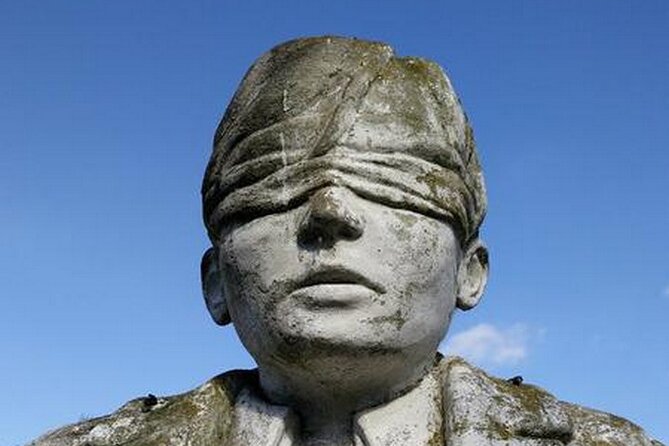
Le Tommy is a private exhibition with a small cafe and bar. Its owner, Dominique, and his son created a reconstruction of First World War trenches. The museum is described as a labor of love, and its purpose is direct: to help you picture the conditions in which soldiers fought and lived.
This one-hour stop is longer than most of the memorial visits. That extra time makes sense. At formal memorials, you stand among carefully maintained lawns and carved stone. At Le Tommy, the trench reconstruction gives you a more practical sense of confined space and harsh living conditions.
The cafe can be useful during a long morning, but do not assume it replaces lunch. Lunch is not included in the tour, and the information provided does not specify a meal arrangement. Ask Brigitte what food options fit the day’s schedule.
Thiepval confronts you with 72,000 names
The Thiepval Memorial to the Missing is the largest British war memorial in the world. Its walls carry the names of more than 72,000 soldiers who are missing or whose bodies were found but could not be identified.
The monument sits above the surrounding countryside, making it visible as a major landmark in the Somme area. You spend about forty minutes here, the longest memorial stop on the tour. Brigitte discusses military tactics and the meaning of being missing, including what that uncertainty meant for families waiting for news.
The word missing can sound tidy on a memorial. In practice, it meant years of uncertainty, no confirmed grave, and often no clear account of a final moment. Thiepval gives that absence a physical form through its immense list of names.
This stop is likely to be especially moving if you have a family name to find. Even without one, the sheer number makes it difficult to treat the battle as an abstract military event.
Beaumont-Hamel tells Newfoundland’s story
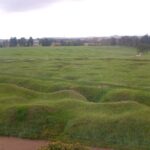
Newfoundland Memorial Park is the largest battlefield site in the Somme and a memorial to Newfoundlanders who served in the First World War. The Battle of the Somme was the Newfoundland Regiment’s first major engagement, and its losses on July 1, 1916 were staggering.
The ground was purchased in 1921 by the women of Newfoundland and the Newfoundland government. It became a symbol of sacrifice and an important part of the island’s identity. That detail gives the site a special character: this is not only a battlefield preserved by an overseas organization, but also a place tied closely to national memory.
You have about thirty minutes here. The stop works best if you take time to look across the preserved battlefield and consider how a unit’s identity can be shaped by a single disastrous day. The park is also one of the places where the terrain itself helps explain the difficulty faced by attacking troops.
Hawthorn Ridge and Sunken Lane
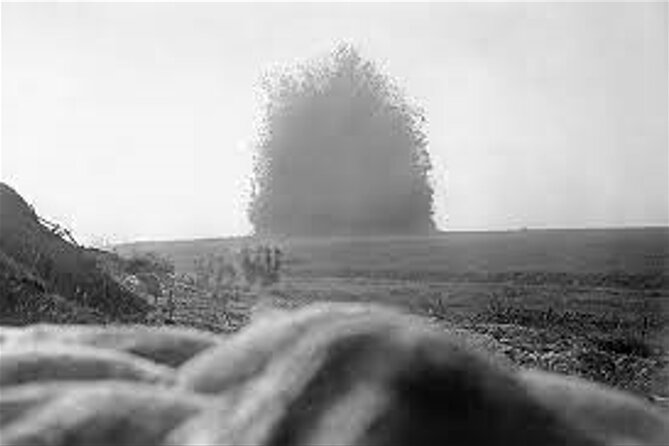
Hawthorn Ridge Crater was created by two mine explosions. One of them, detonated on July 1, 1916, was the first action of the Battle of the Somme.
The crater is paired with a visit to Sunken Lane across the road. From this lane, the Lancashire Fusiliers went over the top. The action was filmed by Geoffrey Malins, giving the site a link to early battlefield film as well as military history.
Brigitte explains what happened here in July and November 1916 and discusses the filming of the war. That combination is valuable because it shows how the Somme was experienced in two ways: by soldiers fighting on the ground and by audiences watching edited images far away.
This section takes about forty minutes. You will cross a road and walk into the lane, so pay attention to footing and traffic. The visit is less polished than a formal memorial, which is part of its appeal. You are looking at a battlefield feature rather than a grand monument.
A Scottish memorial and a village close to the front
At Beaumont-Hamel, the memorial to the 8th Argyll and Sutherland Highlanders recalls the role of Scottish troops. The memorial was unveiled by the Duke of Argyll, and Brigitte uses the stop to explain Scotland’s participation in the First World War.
You spend around twenty minutes here. It is a brief stop, but it adds another national perspective to a day that already includes British, Australian, and Newfoundland stories. The Somme was fought by units from across the British Empire and the United Kingdom, and this variety helps prevent the battle from being reduced to one national narrative.
The final stop is Mailly-Maillet, a picturesque village with roots reaching back to Roman times. During the First World War, it was only four kilometers from the front line and was used to billet troops from many parts of the world.
Look closely at the village buildings. Some still bear shell damage. Here, Brigitte discusses life behind the front, including the disturbing subject of soldiers being shot at dawn. This is a useful ending because it moves away from the great memorials and back into an inhabited place where civilians, soldiers, housing, and war damage existed side by side.
What the price includes
The price is $357.42 per group of up to three people. For three people, that works out to about $119 per person. For one person, the group price is much less attractive, but you still receive private transportation and a guide for a full six-hour program.
The strongest value comes from the route and the private format. You are not paying for a single monument visit. You are paying for transport between scattered sites, interpretation at each stop, and the ability to focus on British, Australian, Newfoundland, Scottish, or family history as needed.
Admission to most listed sites is included, but Museum Somme 1916 admission is not. Lunch is also excluded. You should factor in both costs when comparing the total price with other Somme options.
The tour is offered in English. Confirmation arrives at booking, and the meeting point is in Albert at 80300 Albert, France. The activity returns to that meeting point at the end of the day. The area is near public transportation, though the tour itself relies on private transport to connect the battlefields.
Free cancellation is available if you cancel at least 24 hours before the 9:00 a.m. start time. Changes or cancellations made inside that window are not accepted for a refund.
Who should book this Somme tour?
I would choose this tour if you want explanation rather than simply a map and a car. It suits anyone with a serious interest in the First World War, military history, battlefield photography, remembrance, or family research.
It is particularly useful for a group of two or three people with different interests. One person can ask about tactics, another about cemetery design, and another about a relative from Australia, Ireland, Newfoundland, Scotland, or Britain. Brigitte’s style allows those threads to meet.
The tour also suits first-time visitors to the Somme who want the major sites in one day. You see Albert, Lochnagar, Pozières, Thiepval, Beaumont-Hamel, Hawthorn Ridge, Sunken Lane, and Mailly-Maillet without having to plan the driving route yourself.
You may want something else if you prefer long walks, quiet time at each cemetery, or a slower museum-centered day. Eleven stops is a lot. The short visits create variety, but they also mean you must keep moving.
Should you book it?
Book this tour if you want a compact, personal introduction to the Somme with a guide who can connect battlefield facts to literature and family stories. Brigitte De Cuyper’s greatest strength is her ability to make the subject understandable without stripping away its sadness or complexity.
The best match is a couple, family, or small group of up to three people who value private transport and focused explanation. If you need more time at one particular grave, memorial, or museum, tell Brigitte when booking and ask what can be adjusted.
For a first day in the Somme, this is a strong route. Just arrive ready for a full schedule, bring practical outdoor footwear, allow extra money for the first museum and lunch, and accept that the tour offers a broad view rather than an exhaustive study of every site.
FAQ
Where does the tour start?
The tour starts at 80300 Albert, France, at 9:00 a.m.
Where does the tour end?
The activity ends back at the meeting point in Albert.
How long does the tour last?
The tour lasts approximately six hours.
Is this a private tour?
Yes. Only your group participates, with a maximum of three people.
Is transportation included?
Private transportation is included.
Is lunch included?
No. Lunch is not included in the tour price.
Is admission to every site included?
Admission is included at the Basilica Notre-Dame de Brebières, Lochnagar Crater, Pozières Memorial, Thiepval Memorial, and Newfoundland Memorial Park. Admission to the Museum Somme 1916 is not included. Several cemetery and outdoor memorial visits have no admission charge.
What is the cancellation policy?
You can cancel at least 24 hours before the experience start time for a full refund. Cancellations or changes made less than 24 hours before the start are not accepted for a refund.