REVIEW · AMIENS
Australian private Somme tour including Sir John Monash Centre
Book on Viator →Operated by Chemins d'Histoire Battlefield Tours · Bookable on Viator
A quiet field can feel loud with history. This private Australian-focused Somme tour pairs a calm, comfy ride with guided stops that connect the dots across the Western Front. I love how the experience is paced for real understanding, not speed-walking, and I especially like the inclusion of the Sir John Monash Centre before you hit the battlefield sites.
The only real catch: it’s a full day (about 7 hours), and lunch isn’t included, so you’ll need to budget time and pick a café when the group stops.
Key highlights at a glance
- Private guide + air-conditioned car: You get a focused day with less hassle, plus comfort for a long drive.
- Sir John Monash Centre on the route: A dedicated stop that helps you frame the Western Front story before visiting the trenches.
- Battlefield classics, tightly linked: Villers-Bretonneux, Lochnagar, Pozières, and Beaumont-Hamel connect through one clear narrative.
- All stop admissions listed as free: Each major site on the itinerary is marked with free entry.
- Flexible pickup around Amiens, Arras, Saint-Quentin: Useful if you’re based outside Paris.
- Guide is local to Picardy: The day benefits from regional context and on-the-ground geography.
In This Review
- Why This Private Somme Tour Works So Well for Australians (and Everyone Else)
- Meeting in Amiens (and Why Paris Is Not the Starting Point)
- All the Main Stops, in the Order That Helps You Understand the Somme
- Stop 1: Australian National Memorial at Villers-Bretonneux + Cemetery
- Stop 2: Sir John Monash Centre (Why Context Comes Before the Craters)
- Stop 3: Lochnagar Crater (The First-Day Mine That Still Shows the Impact)
- Stop 4: Lunch Break near La Boisselle or Pozières (Lunch Not Included)
- Stop 5: Pozières and the First Australian Division Memorial Area
- Stop 6: Windmill Memorial + Tanks Corp Memorial Across the Road
- Stop 7: Beaumont-Hamel, Newfoundland Park Trench System (Trenches You Can Read)
- The Guide Factor: Why Olivier Makes This Feel Personal
- Comfort, Timing, and What You’ll Actually Do With Your Day
- Value for Money: $372.45 for a Private, Context-Heavy Day
- Who This Tour Fits Best
- Should You Book This Australian Somme Day From Amiens?
- FAQ
- FAQ
- How long is the Australian private Somme tour from Amiens?
- What is the price per person?
- Does the tour include lunch?
- What’s included in the tour price?
- Is pickup available, and where does it work?
- Can this tour start from Paris?
- Is the Sir John Monash Centre included?
- Are admission tickets included for the stops?
- Is it a private tour?
- What languages and conditions does the tour use?
Why This Private Somme Tour Works So Well for Australians (and Everyone Else)
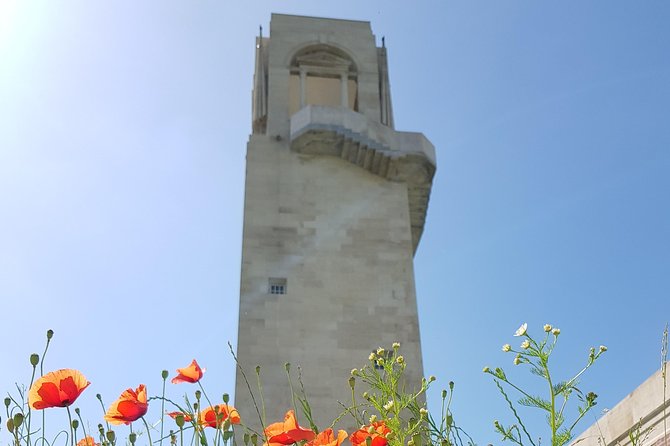
If you’re drawn to the Somme because of personal stories, this tour hits the right note. It’s not just a list of places. It’s a guided route where each stop explains what you’re looking at—so the day makes sense instead of feeling like scattered photos in your head.
I also like the way it’s set up for comfort. You travel in a spacious, air-conditioned vehicle. That matters on a long day in northern France, when weather and temperature can swing. And because it’s private, you’re not trying to keep up with someone else’s pace.
Finally, I appreciate the tone: respectful, practical, and grounded. World War I sites deserve more than a quick glance. This day gives you enough time to process what you’re seeing—while still moving through the key locations efficiently.
Meeting in Amiens (and Why Paris Is Not the Starting Point)
The tour starts at 9:30 am, and pickup is flexible within the Amiens, Arras, and Saint-Quentin areas. So if you’re staying in one of those towns, you can usually make this fit without a complicated commute.
One practical point: the operator notes that tours can’t originate from Paris due to travel distance and time constraints. The tour could also start from Arras or Saint-Quentin, which is great if you’re basing yourself closer to the battlefield region.
You’ll also get a mobile ticket. That’s handy on travel days when you’re bouncing between museums, cars, and sidewalks with limited patience.
You can also read our reviews of more private tours in Amiens


All the Main Stops, in the Order That Helps You Understand the Somme
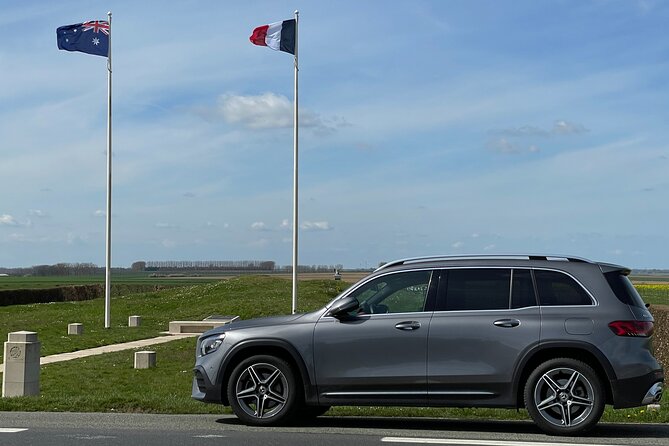
This is built like a storyline. You start by remembering the missing, then you get context for the Western Front, then you move into the physical remains of the battle and the trench system.
The day runs about 7 hours, and most stop windows are short-but-not-rushed (think 15 to 30 minutes, plus a longer stop at the Sir John Monash Centre). Admissions for the listed sites are shown as free, which helps you keep control of your costs.
Stop 1: Australian National Memorial at Villers-Bretonneux + Cemetery
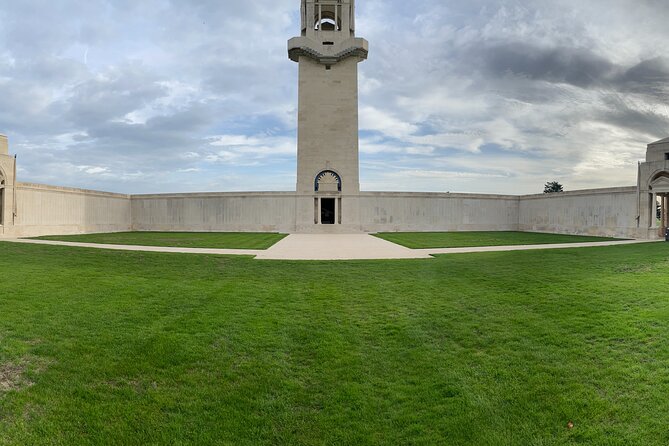
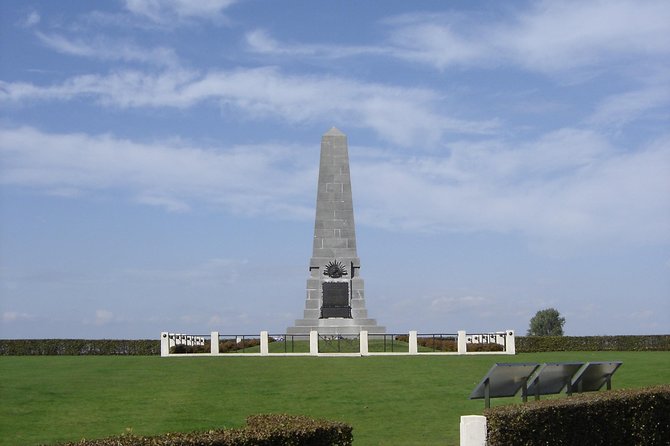
Your morning begins at the Australian National Memorial in Villers-Bretonneux, a place that carries an emotional weight even before the history lesson starts. Here, 11,000 Australians with no known grave from the Somme are remembered.
Right near that memorial is the Villers-Bretonneux Military Cemetery. This combination is powerful because it anchors the story in human reality—names, absence, and the way commemoration works when burial isn’t possible.
Practical note: the scheduled time is 30 minutes. In a good way, it’s enough time to pay attention without turning the day into a slow crawl.
Stop 2: Sir John Monash Centre (Why Context Comes Before the Craters)
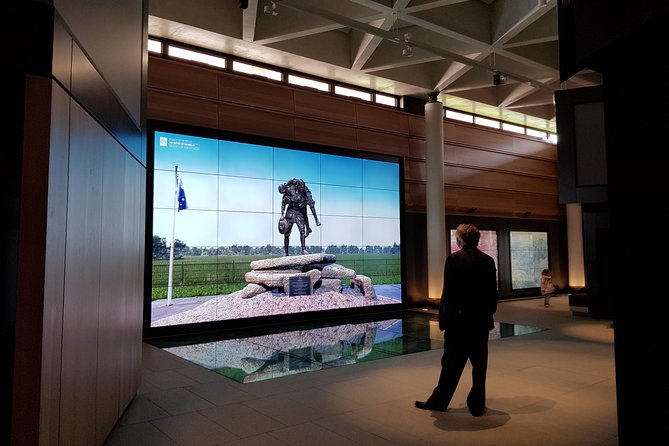
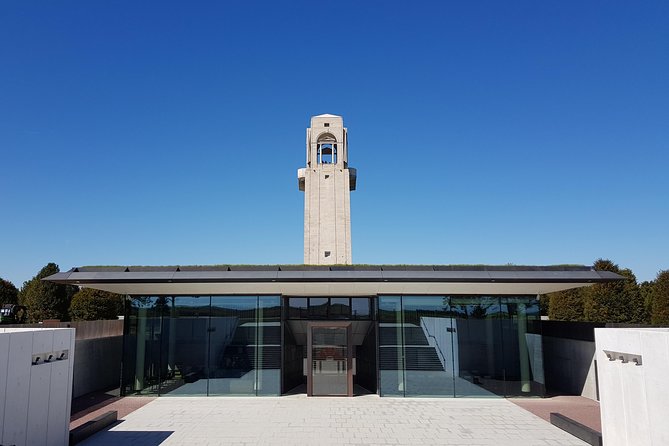
Next up is the Sir John Monash Centre, and I think it’s the best mid-day hinge for this whole route.
The centre is designed to tell the Australian story of the Western Front, so by the time you step outside, you’re not just looking at remnants—you understand how those remnants fit into strategy and sacrifice.
You get 1 hour 30 minutes here, with free admission noted for this tour. That time allows you to actually absorb the information rather than doing museum-speed reading.
One important timing caution: the Sir John Monash Centre is closed from 24 December 2025 to 2 January 2026 inclusive, and also from 2 February to 1 March 2026 inclusive. If your trip falls into those windows, you’ll want to confirm what the operator plans to do on your specific date.
Stop 3: Lochnagar Crater (The First-Day Mine That Still Shows the Impact)
After the Monash Centre, you head to Lochnagar Crater. This is one of those Somme sites that’s hard to photograph in a way that feels real—so standing there matters.
The crater is the remain of the biggest mine used by the British Army on the first day of the Battle of the Somme. Your guide can help you connect what you’re seeing to the bigger battle plan, instead of treating it like a random hole in the ground (though, yes, it looks like that at first glance).
You’ll have about 15 minutes, and that’s usually a good match for a site like this: enough time to understand it, then move on before it becomes just “another stop.”


Stop 4: Lunch Break near La Boisselle or Pozières (Lunch Not Included)
Then comes a break for lunch. The plan is 45 minutes, and lunch is in a local restaurant or café in La Boisselle or Pozières.
This is where I’d plan smart. Since lunch isn’t included, you’ll want to decide in advance whether you prefer a quick meal or a longer sit-down. The time window is built for reset, not a full dining experience.
If you’re trying to keep costs down, choose something simple nearby. If you want something more substantial, you’ll likely need to eat early within that 45 minutes.
Stop 5: Pozières and the First Australian Division Memorial Area
After lunch, you continue into Pozières, the scene of what’s described as the bloodiest Australian struggle on the Western Front.
This stop mixes battlefield remains and memorials, including vestiges of the Gibraltar bunker plus several memorial points:
- First Australian Division Memorial
- Windmill Memorial (you’ll also visit separately)
- Tanks Corp Memorials
The time listed here is 15 minutes. That might sound short, but it works because the route is tightly planned. Your guide’s job is to give you the context fast enough that you’re not just reading plaques while mentally checking your watch.
Stop 6: Windmill Memorial + Tanks Corp Memorial Across the Road
The Windmill Memorial is described as a German position captured by Australian troops during the Battle of Pozières. Nearby, across the road, the Tanks Memorial remembers where tanks were used for the first time in history.
This is a neat pairing because it shows two different kinds of change in the same region: fixed positions and the shift toward mechanized warfare.
You’ll have 20 minutes here. Wear shoes you’re comfortable walking in. If the ground is damp, it’s not hard to slip—World War I sites aren’t designed for your fashion choices.
Stop 7: Beaumont-Hamel, Newfoundland Park Trench System (Trenches You Can Read)
The final stop helps you understand what trench warfare actually meant on the ground. You’ll visit the Memorial Terre-neuvien de Beaumont-Hamel, specifically the Newfoundland Park and its well preserved trench system.
This is scheduled for 30 minutes, with free admission noted. It’s a fitting closer because you’ve moved from memory (Villers-Bretonneux) to context (Monash Centre) to specific physical battle remains (Lochnagar) to the Pozières fighting zone—and then ends in the “how it worked” trenches of Beaumont-Hamel.
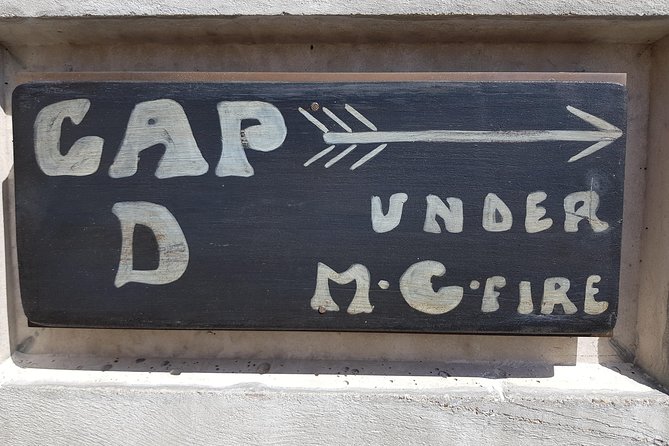
This is where the day clicks. Even if you’ve read about the Somme before, standing near a preserved trench system helps you grasp the geometry and the limits soldiers faced every day.
The Guide Factor: Why Olivier Makes This Feel Personal
This tour is built around a professional guide/driver, and the guide is a big part of why people rate it so highly.
Olivier comes across as well organized and attentive—someone who knows the geography and the history well and makes sure you stay comfortable through the day. You also get an approach that uses photos and maps so you can visualize what the area looked like during the fighting, not just what it looks like today.
That “put it on a map” style is exactly what you want on the Somme. Otherwise, it can be easy to lose the thread and end up with a list of places that don’t quite connect in your mind.
Comfort, Timing, and What You’ll Actually Do With Your Day
For a private tour, the timing is fairly structured, and that’s good. You’ll cover multiple major sites without it turning into a full-day slog of constant driving.
- Start at 9:30 am
- Roughly 7 hours total
- Mix of shorter stops (15 minutes) and deeper ones (Monash Centre at 1.5 hours)
You’re also given bottled water, which is a small inclusion that can matter more than you expect on a long out-and-back day.
Because it operates in all weather, dress for the conditions you get. If it’s wet, bring something you can move comfortably in. If it’s cold, you’ll be happy you packed a layer.
Value for Money: $372.45 for a Private, Context-Heavy Day
At $372.45 per person, this isn’t the cheapest way to see the Somme. But if you compare it to the cost of piecing together your own transport plus paying for guided interpretation, private value can make sense fast.
Here’s where the price feels justified:
- Private transportation in a spacious, air-conditioned vehicle
- A professional guide who provides the context and interpretation
- Free admission listed for each of the major stops on the route
- A structured itinerary that hits the key Australian-connected sites
The only thing that can change the math is your group size. Since the tour notes group discounts, the per-person value improves if you’re traveling with others. If you’re solo, you may pay more for the privilege of a tailored day, but you’ll also get more attention and flexibility.
Who This Tour Fits Best
This is a strong pick if you:
- Want an Australian-focused Somme day with a guided narrative
- Appreciate spending real time at the most important learning points
- Prefer private pacing over rushing with strangers
- Care about understanding both strategy and ground-level reality
It’s also a decent choice if you’re not Australian. The memorials and trench systems connect the story in a way that’s accessible, and the Western Front context at the Monash Centre helps you keep up.
If you’re the type who likes to see everything in the shortest possible time, you might find it “just right but not frantic.” For most people, that’s exactly the point.
Should You Book This Australian Somme Day From Amiens?
I’d book this if you want one guided day where the places make sense together. The route is built around context first, then physical battlefield remains, and it doesn’t treat remembrance like a checkbox.
Skip it (or at least check dates closely) if you’re traveling during the Sir John Monash Centre closure window in late December to early January, or from early February to early March. Also, if you hate long days and you’re expecting lunch to be handled for you, plan for that missing meal ahead of time.
For the best experience, wear comfortable walking shoes, bring a layer for weather, and come ready to pay attention. The Somme isn’t a theme park. This tour treats it that way.
FAQ
FAQ
How long is the Australian private Somme tour from Amiens?
The tour runs for about 7 hours.
What is the price per person?
The price is $372.45 per person.
Does the tour include lunch?
No. Lunch is not included, though there is a scheduled lunch break at a local restaurant or café.
What’s included in the tour price?
It includes driver/guide, professional guide, bottled water, an air-conditioned vehicle, and private transportation.
Is pickup available, and where does it work?
Pickup is available and flexible within the Amiens, Arras, and Saint-Quentin areas. You’ll arrange your preferred location after booking.
Can this tour start from Paris?
The provider notes that tours cannot originate from Paris due to travel distance and time constraints. The tour can start from Amiens, Arras, or Saint-Quentin.
Is the Sir John Monash Centre included?
Yes, the itinerary includes the Sir John Monash Centre as a major stop. Note that it has closure dates from 24 December 2025 to 2 January 2026, and from 2 February to 1 March 2026.
Are admission tickets included for the stops?
Admission tickets for the listed stops are shown as free.
Is it a private tour?
Yes. It’s described as a private tour/activity, so only your group participates.
What languages and conditions does the tour use?
The tour is offered in English and operates in all weather conditions, so you should dress appropriately.