REVIEW · AMIENS
Full day Australian Battlefields Tour
Book on Viator →Operated by WW1 Battlefields guided tours: Brigitte De Cuyper from Get a Guide · Bookable on Viator
A single day in the Somme changes how you feel. I love the stop in Villers-Bretonneux where you can pay respect at the graves, and I love the way the Sir John Monash Centre uses interactive multimedia to explain what Australians experienced on the Western Front. One drawback to plan for: it’s an 8-hour day with lots of standing, walking, and heavy subject matter, so pack comfort (and emotional stamina).
Your guide for this private, English-language tour is Brigitte De Cuyper, a local to the Somme area, and the day is designed to keep you oriented from start to finish. Pickup is offered, you get a mobile ticket, and many people book well ahead (the average booking window is about 108 days).
In This Review
- Key highlights you’ll care about
- Entering the 800-year-old Amiens Cathedral before the battle story
- Villers-Bretonneux: cemeteries, the Monash Centre, and names you can’t unsee
- Chipilly viewpoint and the Somme Valley context that makes sites click
- Brebières Basilica: reconstruction, gold dome detail, and why architecture matters here
- Lunch time at Le Hygge Restaurant Brasserie (plan for a real break)
- Lochnagar Crater: the mine that shaped the opening day
- Pozières: Australian sacrifice at the memorial sites and windmill view
- Mouquet Farm: another key Somme checkpoint in the same battle arc
- Thiepval’s Memorial de Thiepval: the Missing and the families behind the names
- Ulster Tower and the traces of front lines still visible
- Beaumont-Hamel: Newfoundland identity, sacrifice, and 1 July 1916
- Price and value: what $253.97 gets you on a day like this
- Who should book this Australian Battlefields tour?
- Should you book it or DIY?
- FAQ
- How long is the Australian Battlefields tour?
- What time does the tour start?
- Where does the tour take place?
- What is the price per person?
- Is pickup available?
- What language is the tour in?
- What about tickets and admissions?
- What’s included vs not included?
- Is this tour private?
- Is it easy to cancel if plans change?
Key highlights you’ll care about
- Sir John Monash Centre (1 hour): interactive exhibits in English that bring letters and diaries to life.
- Villers-Bretonneux memorial ground (time for reflection): graves and monuments tied directly to Australian WWI service.
- Lochnagar Crater (20 minutes): a massive mine crater linked to the opening of the Battle of the Somme.
- Pozières memorial circuit: places connected to major Australian casualties, with the windmill site and tank talk.
- Memorial de Thiepval (45 minutes): the Missing, with more than 72,000 names carved into stone.
- Beaumont-Hamel Newfoundland Memorial (30 minutes): identity, sacrifice, and the regiment’s first big action on 1 July 1916.
Entering the 800-year-old Amiens Cathedral before the battle story
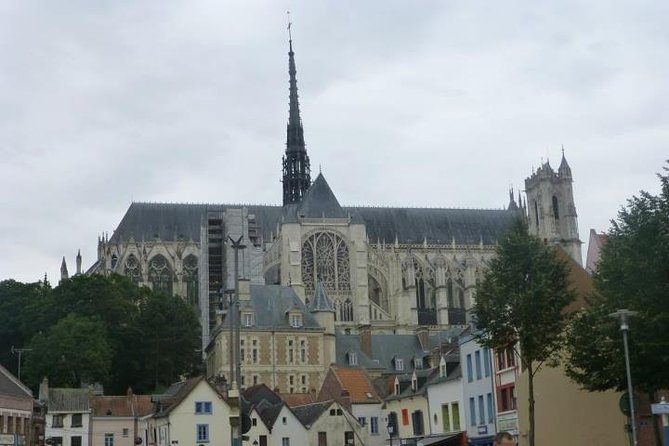
You start in Amiens, and the day wisely opens with Amiens Cathedral, celebrating its 800th birthday. It’s the largest Gothic cathedral in the world, and even if you’re not a church person, the scale helps you shift gears from modern travel into 20th-century history. On the drive, your guide also sets the context with how Amiens evolved from the Middle Ages to today.
This first stop does two useful things. It gives you an anchor in place and time, and it helps you understand the Somme region as a living landscape—not just a list of sites to tick off.
A few more Amiens tours and experiences worth a look

Villers-Bretonneux: cemeteries, the Monash Centre, and names you can’t unsee
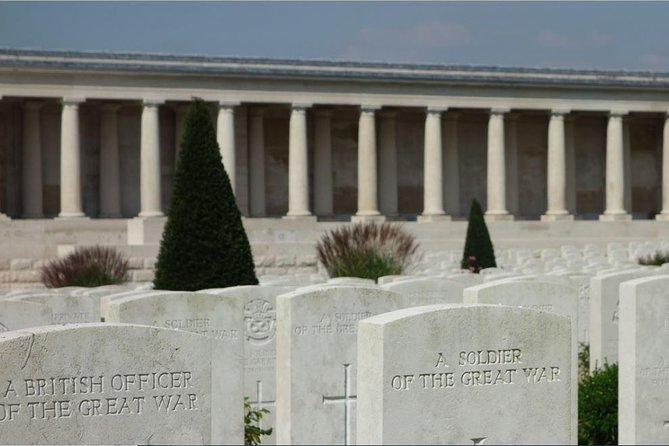
The first major Australian-focused stop is Villers-Bretonneux Military Cemetery. You’ll stand on ground tied to the Australian Memorial and learn about Australia’s role in WWI on the Western Front, including the Allied counter-attack in April 1918. You’ll also get time to pay respects on the graves of the diggers—short walk, quiet moment, then you’re back on the story.
Near there is the Sir John Monash Centre, and it’s the heart of the day if you want understanding, not just locations. You’ll have about an hour inside, and the centre is built around interactive media and immersive experiences. The Australian Western Front experience is told through letters, diaries, and life-size images—so instead of war as a textbook diagram, you get it through the people who wrote and lived it.
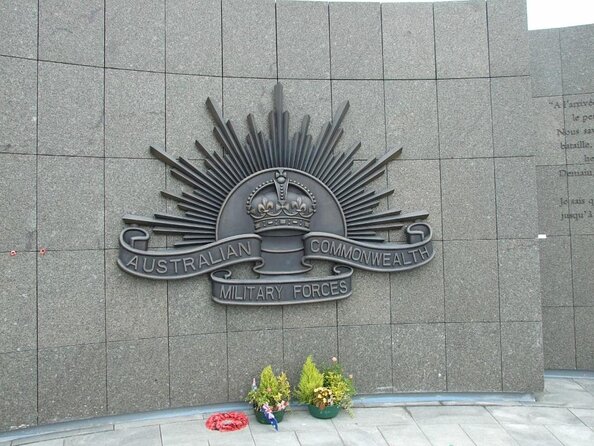
After that comes the Australian Corps Memorial at the centre of the Villers-Bretonneux CWGC cemetery. It’s one of the last Great War memorials erected, inaugurated on 22 July 1922. The walls include the names of 10,729 Australian servicemen, and your guide ties the site to the annual ANZAC Day dawn commemorations.
Why this cluster works: you get the emotional grounding of a cemetery, the brain-friendly clarity of a multimedia centre, and then the weight of a major national memorial—all before you head deeper into the Somme battlefield area.
Chipilly viewpoint and the Somme Valley context that makes sites click
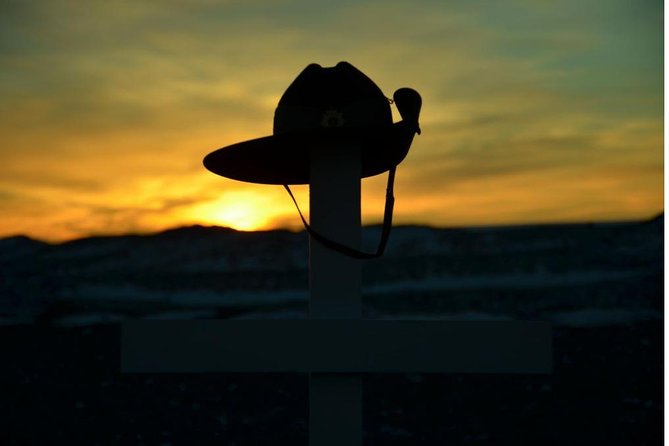
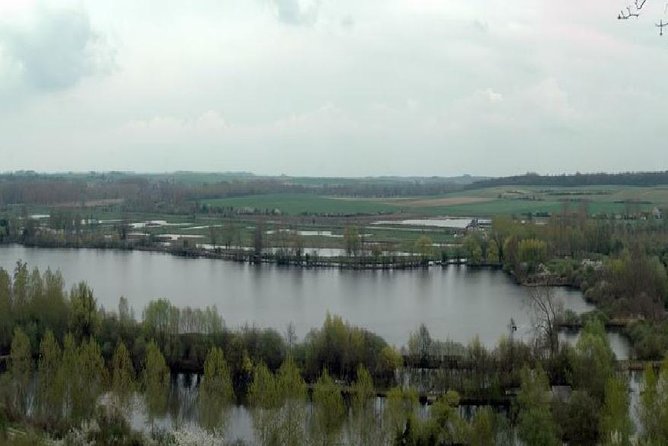
Once you leave Villers-Bretonneux, the tour shifts into big battlefield geography. At Chipilly, you’ll pause at the Camp Cesar viewpoint for panoramic views of the Somme Valley, the region that lent its name to the famous Battle of the Somme. The stop is brief (about 10 minutes), but it matters because you finally see what you’ve been hearing about: lines of movement across open country.
Your guide also discusses why the Battle of the Somme was planned and which nations took part. That quick history lesson is what turns later memorials and craters from “random points on a map” into parts of one connected story.
Brebières Basilica: reconstruction, gold dome detail, and why architecture matters here
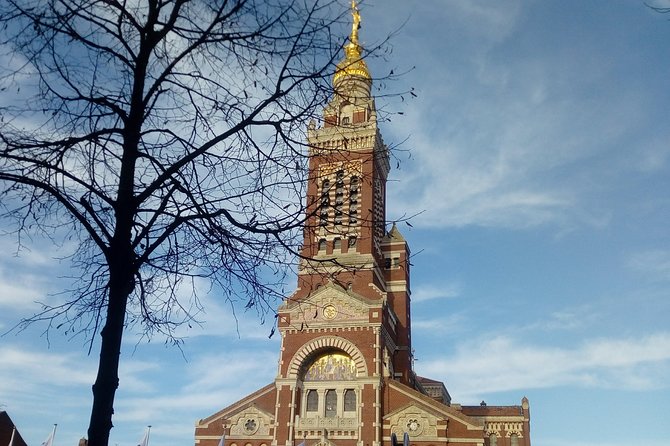
The tour also includes Basilica Notre Dame de Brebières. It’s Neo-Byzantine in style and built at the end of the 19th century, but the key detail is this: it was entirely destroyed during the Great War and reconstructed identically after. Your guide will explain the story tied to the statue inside—Virgin Mary holding baby Jesus—plus what happened during WWI.
This stop is more than a photo opportunity. It shows you how communities rebuilt after the devastation, and it explains why certain places feel both sacred and scarred at the same time. When war hits, it doesn’t only change front lines—it changes the buildings people rely on.
Lunch time at Le Hygge Restaurant Brasserie (plan for a real break)
Lunch is scheduled as an hour at Le Hygge Restaurant Brasserie, and it’s the one part you’ll have to manage yourself since lunch isn’t included. An hour is a solid chunk, but this is still a packed day, so I’d treat lunch like a reset button: water, something filling, and a quick breather before the more intense stops.
If you have dietary needs, it can be smart to check in ahead or choose something simple. With the schedule, you don’t want lunch to turn into a guessing game.


Lochnagar Crater: the mine that shaped the opening day
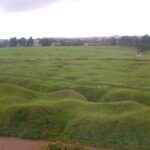
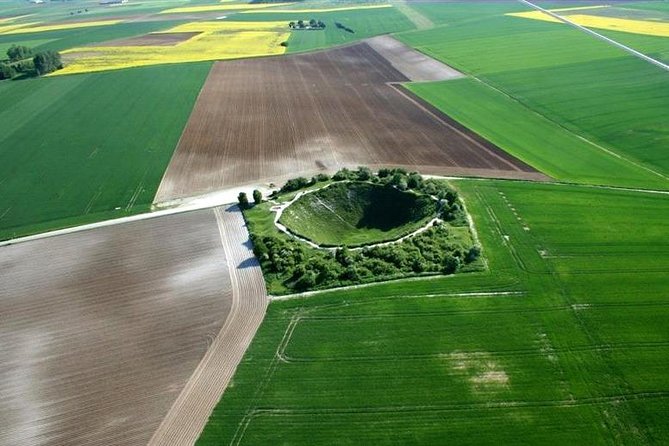
Next up is Lochnagar Crater, in the 1916 Somme sector. This crater was created by a large mine placed beneath German front lines on the first day of the Battle of the Somme. It was one of 19 mines set beneath German positions from the British section to help the infantry at the start of the offensive.
The numbers here are jaw-dropping: the crater is about 70 feet deep and 330 feet wide, and it’s the largest crater in the Somme. You’ll have around 20 minutes at the site, which is enough time to look, absorb, and let your guide connect it back to the human cost behind the tactics.
Pozières: Australian sacrifice at the memorial sites and windmill view
The tour then moves into Pozières, starting with the 1st Australian Division Memorial. Australian official historian Charles Bean described Pozières as more densely sown with Australian sacrifice than any other place on earth. The area is known to Australians because almost 7,000 men died here, during fighting between 23 July and 3 September 1916.
You’ll have about 20 minutes at the memorial site while your guide explains the battle. After that, the tour includes the Windmill site at Pozières, established as an Australian memorial in the 1930s based on Charles Bean’s suggestion. This site commemorates 23,000 casualties, including some who died in the surrounding countryside.
Opposite the windmill site, you’ll also talk about tanks on the Western Front, tying the battlefield story to changing technology and modern warfare.
One practical note: even though time at each stop may be short, your brain will work hard. Pozières is where the day can feel emotionally heavier, so it helps to be mentally ready for that shift.
Mouquet Farm: another key Somme checkpoint in the same battle arc
You’ll also stop at Mouquet Farm. The tour doesn’t give you a long chunk of time here based on the provided details, but the site is included as part of the wider Somme circuit your guide uses to connect the battles into a single route. If you’re the type who wants every location explained in plain language, this is the kind of stop where your guide’s narration becomes the value.
In other words: don’t rush it just because it’s shorter. The payoff is usually in how your guide fits it into the bigger movements of the war.
Thiepval’s Memorial de Thiepval: the Missing and the families behind the names
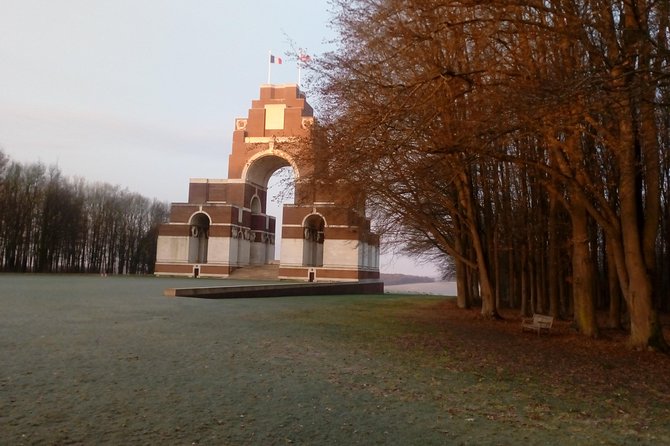
At Memorial de Thiepval, you’ll see the Memorial of the Missing, described as the largest British war memorial in the world. The monument overlooks rolling countryside, and on its walls are the names of over 72,000 soldiers who were missing—bodies found but not identified, or not recovered at all.
You’ll spend about 45 minutes here, and your guide addresses not only tactics but the meaning of being missing to the families who waited. That emotional layer is a big part of why this stop lands so hard: it’s not history from a distance. It’s the bureaucratic reality of grief, carved into stone.
Ulster Tower and the traces of front lines still visible
The next stop is the Ulster Tower, a Northern Ireland national war memorial. It commemorates the men of the 36th Division and all those from Ulster who served in WWI. The tower was officially opened on 19 November 1921.
There’s a built-in moment of contrast here: from the top of the hill, in the opposite field, you can still see traces of the Somme front lines and remains of a German machine-gun post. That’s the kind of detail that makes you feel the passage of time, without needing a reenactment or special effects.
Beaumont-Hamel: Newfoundland identity, sacrifice, and 1 July 1916
The final big memorial stop is Memorial Terre-neuvien de Beaumont-Hamel—the Newfoundland Memorial Park. It’s described as the largest battlefield site in the Somme dedicated to Newfoundlanders who served in WWI.
Your guide explains that the Battle of the Somme was the regiment’s first major engagement, with staggering losses on 1 July 1916. The ground was purchased in 1921 by the women of Newfoundland and their government. It became a symbol of sacrifice and a source of identity for the island, which is why the site feels different from the usual “war sightseeing.”
The stop is about 30 minutes, enough to take it in and reflect, then close the day with a clearer sense of how Commonwealth nations are stitched into the same events.
Price and value: what $253.97 gets you on a day like this
At $253.97 per person, you’re paying for more than transportation across the Somme. This is a full day (about 8 hours) packed with major sites, and most admissions are either free or included. The Sir John Monash Centre admission is included, and the rest of the stops listed are marked as free-entry.
The bigger value is interpretation. You’re not just visiting memorials—you’re getting guided context for why each site matters to the Australian story, and how the wider British, Ulster, and Newfoundland memorials fit into the same battlefield system. Reviews for this tour also highlight how Brigitte De Cuyper researches family connections and adapts the storytelling when relevant, which is exactly what you want from a private tour.
Also, it’s private: only your group participates. That matters when questions come up, or when someone needs a slower, more reflective pace.
Lunch is the main extra cost because it’s not included, so plan that budget in advance.
Who should book this Australian Battlefields tour?
Book this if you want an organized, single-day route that prioritizes Australian WWI sites while still giving you the broader Commonwealth context. It’s especially good for Australians or anyone with family ties to the region who want the memorials explained clearly, site by site.
If you prefer a light, casual outing, this won’t fit. The day moves through cemeteries and major memorials tied to mass loss. Also, while the fitness level is listed as moderate, you should expect walking and standing—so bring comfortable shoes and a layer for weather changes.
Should you book it or DIY?
I’d book it if you want someone to connect the dots between Amiens, Villers-Bretonneux, Pozières, Thiepval, and Beaumont-Hamel. The Monash Centre plus cemetery reflection plus battlefield geography in one day is hard to replicate well on your own, especially if you’d like the story told in English with local understanding.
I’d consider DIY only if you’re traveling with your own transport plans and you’re comfortable building the context yourself, including what to look for at each memorial and how to interpret the Missing theme at Thiepval.
For most people, the guide-led structure is the difference between seeing sites and truly understanding them.
FAQ
How long is the Australian Battlefields tour?
It runs for about 8 hours (approx.).
What time does the tour start?
The tour starts at 9:00 am.
Where does the tour take place?
The tour is based in Amiens, France.
What is the price per person?
The price is $253.97 per person.
Is pickup available?
Yes, pickup is offered.
What language is the tour in?
The tour is offered in English.
What about tickets and admissions?
You’ll receive a mobile ticket. The Sir John Monash Centre admission is included, and other sites listed are marked with free admission.
What’s included vs not included?
All fees and taxes are included. Lunch is not included.
Is this tour private?
Yes. It’s private, so only your group participates.
Is it easy to cancel if plans change?
Yes, free cancellation is offered. You can cancel up to 24 hours in advance for a full refund.