REVIEW · PARIS
Wheelchair-Frendly Private Louvre Tour – Stress-Free & Easy
Book on GetYourGuide →Operated by Dayin · Bookable on GetYourGuide
The best thing about this private wheelchair-friendly Louvre tour is that it treats access as part of the visit, not as an afterthought. Your guide plans a step-free route, uses elevators and accessible paths, and adjusts the pace to your needs. I especially like the private format and the chance to request a wheelchair in advance. The main thing to keep in mind is that some Louvre galleries may still be inaccessible, closed, or missing works on the day.
I also like the practical arrival choices. You can meet your guide beside the horse statue near the pyramid, or select hotel pickup with an accessible taxi. Guides including Walid, Clara, Wasim, and Justine have earned praise for patience, clear explanations, and flexibility. At $377 per person, this is a serious spend, but it can make sense when easy access and personal care matter more than finding the cheapest museum ticket.
In This Review
- Key points to know before booking
- Why this Louvre tour is different
- Meeting at the pyramid or starting at your hotel
- Following a step-free route inside the Louvre
- Seeing the Mona Lisa without making it the whole visit
- Meeting the Venus de Milo and other major works
- The guides are the heart of the experience
- Is $377 per person a fair price?
- Who will benefit most from the private format
- Practical ways to make the visit easier
- Should you book this wheelchair-friendly Louvre tour?
- FAQ
- Is this Louvre tour wheelchair accessible?
- Can I rent a wheelchair at the Louvre?
- Can I arrange hotel pickup?
- Where do I meet the guide if I do not choose pickup?
- Which languages are available?
- How long does the Louvre visit last?
- Can I keep exploring the Louvre after the tour?
Key points to know before booking
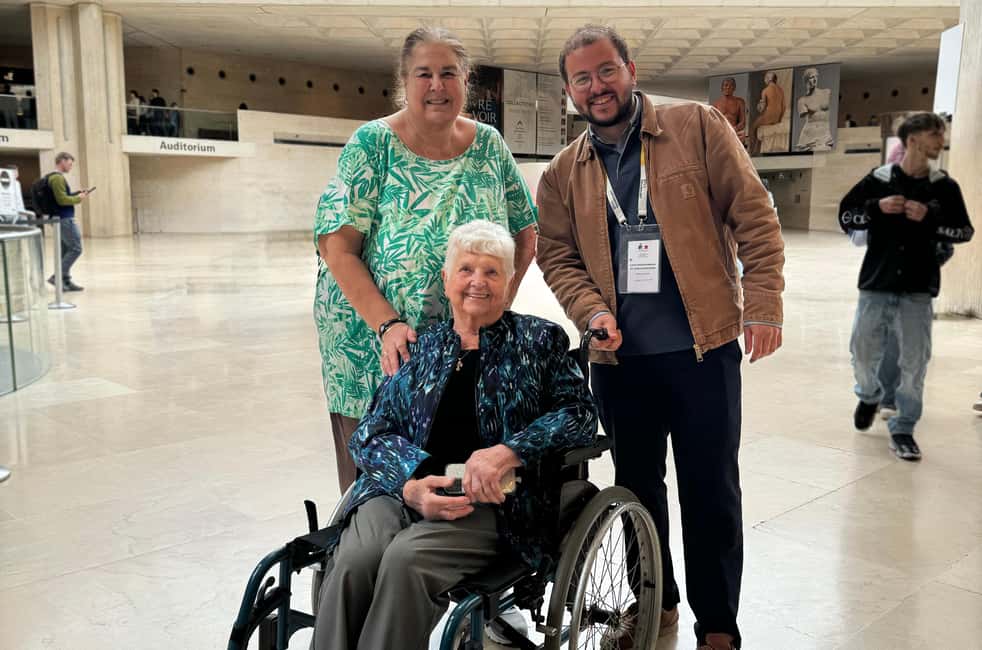
- Step-free Louvre planning: Your guide uses elevators and accessible routes, but not every gallery is guaranteed to be reachable.
- Private pace and attention: You can spend more time on a favorite artwork and ask questions without keeping up with a large group.
- Major masterpieces included: The route is designed around the Mona Lisa, Venus de Milo, and other Louvre highlights.
- Wheelchair support: A wheelchair can be rented at the museum, and you should state your needs when booking.
- Optional hotel pickup: An accessible taxi can meet you outside your hotel and take you to the Louvre.
- Strong personal service: Walid, Clara, Wasim, and Justine are named guides praised for patience, care, and clear explanations.
Why this Louvre tour is different

The Louvre is not an easy museum to approach casually. It is enormous, crowded, and full of changes in floor level, long corridors, elevators, and galleries that do not always connect in an obvious way. If you are using a wheelchair, or helping an older family member who tires easily, the basic challenge is not simply seeing the art. It is getting from one important room to the next without unnecessary strain.
This private tour is built around that problem. An accessibility-trained guide leads you through a planned route instead of leaving you to work out the building on your own. You still see famous works, but the visit is shaped around comfort, access, and the interests of your group.
The tour lasts about two hours inside the museum, with the full experience running from 150 minutes to three hours depending on the pickup option and timing. That is enough time for a focused introduction to the Louvre, but not enough to cover the whole museum. This is a strength for many people. A shorter, well-planned visit can be far more enjoyable than trying to conquer the entire building.
You can also read our reviews of more private tours in Paris


Meeting at the pyramid or starting at your hotel
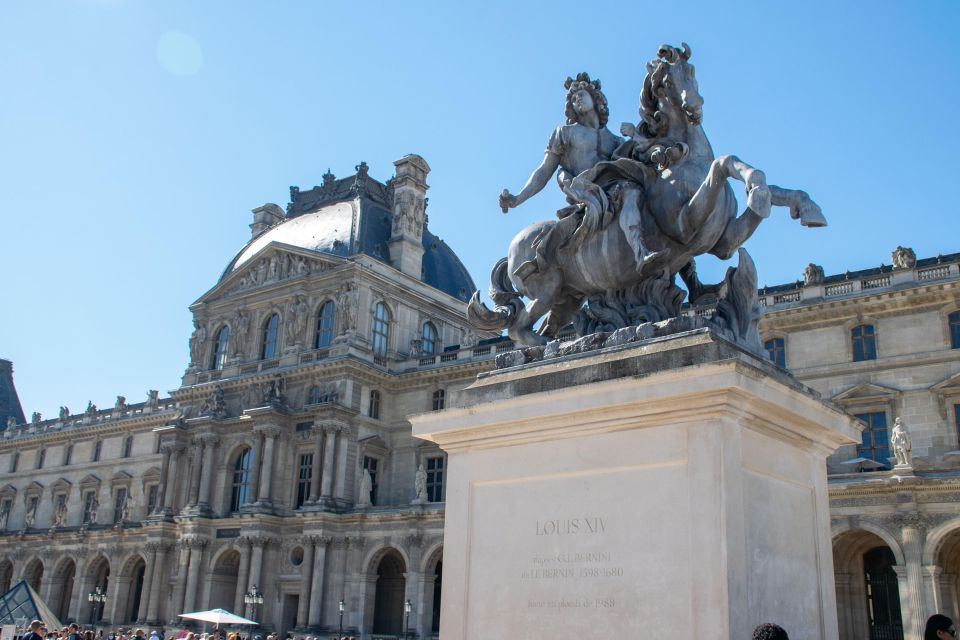
You have two ways to begin. The simplest is to meet your guide at the Louvre, next to the horse statue in front of the pyramid. If you use Google Maps, search for Louvre Pyramid, not just Louvre Museum. Your guide will hold a blue Dayin sign.
Allow extra time for Paris traffic, especially if you are arriving by taxi or private vehicle. The meeting point is clear once you are at the pyramid, but the Louvre area can feel confusing when you are managing a wheelchair, luggage, or a family group.
The hotel pickup option adds convenience. Your guide meets you in the hotel lobby, and an accessible taxi waits outside at the agreed time. The supplied route allows about 30 minutes for the van or taxi transfer before the museum visit. This option is useful if reaching the pyramid would be tiring or stressful, though it adds to the overall cost and does not include a ride back to your hotel after the tour.
Tell Dayin at booking if you already have a wheelchair. Include the type of wheelchair, since that helps the team prepare. If you need one, you can request a rental from the Louvre or arrange for one through the pickup plan. This is not a detail to leave until arrival. The earlier you explain your needs, the better the guide can shape the visit.
Following a step-free route inside the Louvre
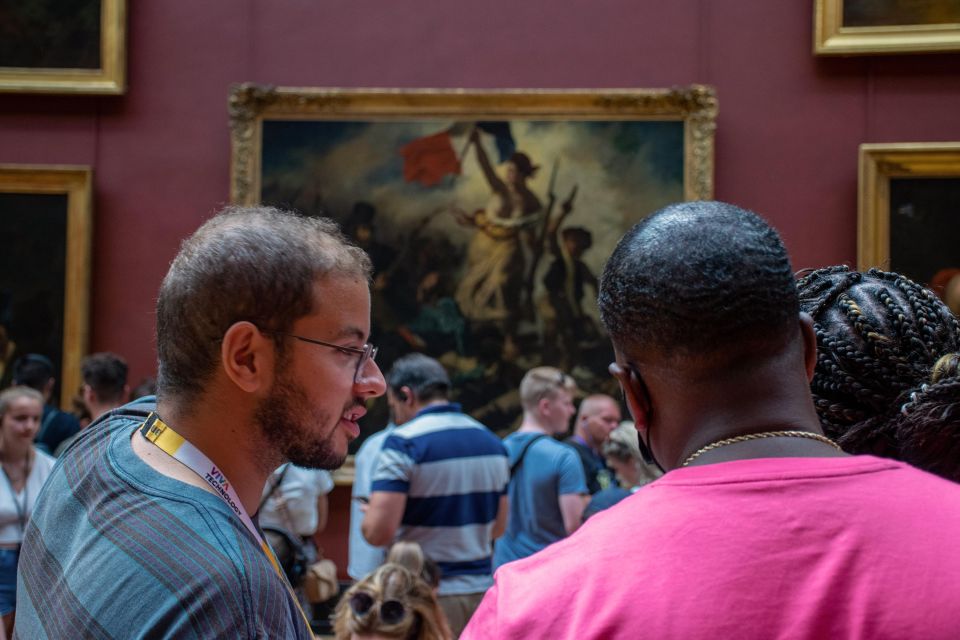
Once inside, your guide takes responsibility for the route. The plan relies on elevators and accessible pathways, avoiding stairs wherever possible. That sounds basic, but in a building as large as the Louvre, good routing saves time and energy.
You should expect a guided visit of roughly two hours rather than a complete museum tour. Your guide leads you toward the best-known works and explains what you are seeing through stories about the artists, objects, and building. The goal is not to recite labels. It is to give you enough context to understand why each work matters, then leave room for questions.
The private setting helps here. A guide can slow down when you need a break, move on when a room is too crowded, or spend more time on an artwork that interests you. You are not trying to keep up with a large group, and your companion can stay focused on the visit instead of constantly looking for ramps or lifts.
There is still an important limitation. Some parts of the Louvre may not be accessible with a wheelchair. Galleries can also close without notice, and artworks may be removed for restoration or loan. A good guide can adjust the route, but no tour can promise that every famous room and every requested object will be available.
Seeing the Mona Lisa without making it the whole visit
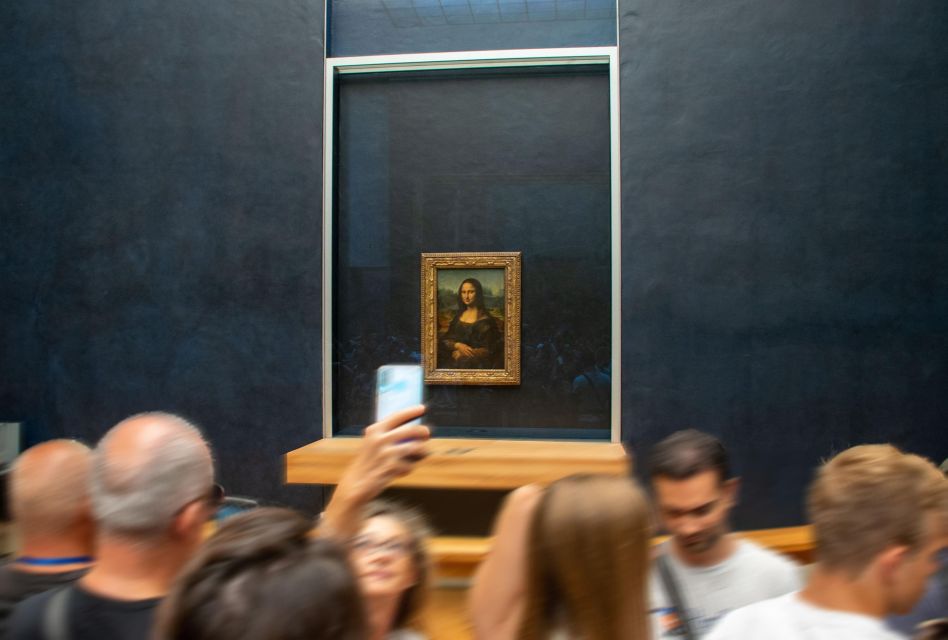
The Mona Lisa is usually the main target for first-time Louvre visitors, and this tour includes it among the key sights. Your guide helps you reach the area using the accessible route and provides the background that can be lost when you are focused only on getting close to the painting.
Expect this part of the museum to attract attention. The private format does not mean the room will be empty, and the tour cannot control the number of people at the painting. The advantage is having someone who knows how to manage the route and explain what is worth noticing, even if your viewing time is brief.
I like that the tour does not stop at one famous painting. The Mona Lisa is important, but it is only one small part of a huge collection. Your guide can connect it with other works and answer questions as you go, giving the visit a better shape than simply arriving, taking a photograph, and leaving.
If seeing the Mona Lisa is your top priority, tell the guide at the start. The route is personalized, and the supplied information specifically encourages you to request the works you want to see.
Meeting the Venus de Milo and other major works
The Venus de Milo is another central stop. This ancient sculpture gives you a very different experience from the Mona Lisa: it is large, three-dimensional, and best understood by looking at its pose, missing arms, and position in the gallery.
Your guide can explain the work in plain terms and place it within the wider collection. The benefit of a private guide is not just more facts. It is the chance to ask why a detail matters, how the object was found, or how it fits into the Louvre’s display.
The route also includes other must-see works, depending on what is open and what you request. You may find that the guide spends less time on the works you already know and more time on pieces that catch your attention. That flexibility is particularly useful for families with mixed interests, or for a group combining art lovers with people who are visiting the Louvre for the first time.
At the end, the tour finishes near the copy of Louis XIV sous les traits de Marcus Curtius. The exact finish point matters because you can use the remaining time to continue exploring on your own. Ask your guide where you are and which nearby areas are accessible before separating.





The guides are the heart of the experience

The strongest part of this tour is the human attention. Walid is repeatedly praised for patience, flexibility, and his ability to answer questions. One family was able to see everything it had requested without feeling rushed. That is exactly the service you want when a wheelchair user needs time to move, rest, or get a clear view.
Clara, Wasim, and Justine are also named as warm and capable guides. Wasim was especially appreciated by a family accompanying an elderly mother, while Justine was praised for her understanding of art, history, and even civil engineering. Those details suggest a guide team that can talk about the Louvre as both an art museum and a remarkable building.
The available languages are English, French, Spanish, Chinese, and Traditional Chinese. Request your preferred language when you book. The tour is private, so your group receives the guide’s attention rather than sharing the pace and questions of strangers.
The service is not only about art knowledge. It is also about kindness, patience, and practical problem-solving. For a visitor using a wheelchair, that may be more valuable than a long lecture about painting techniques.
Is $377 per person a fair price?
At $377 per person, this is not a budget Louvre visit. You are paying for a private guide, entrance tickets, accessibility training, route planning, and the option to arrange a wheelchair. Hotel pickup by accessible taxi is optional, so the final price depends on the package you choose.
The value improves when you consider the needs this tour addresses. A standard museum ticket does not give you a personal route through a vast building, help with elevators, or someone ready to change plans when a gallery is blocked. If reaching the Louvre is already a major concern, the accessible taxi and hotel meeting can remove several difficult steps.
The price is easier to justify for a family group caring for an older parent, a first-time Louvre visitor who wants a calm introduction, or anyone who does not want to risk getting lost in a huge museum. It is harder to justify if you already know the Louvre well, have your own wheelchair, can manage the building independently, and only want a ticket to the Mona Lisa.
The strongest value is not the number of objects you see. It is the reduction in effort and uncertainty. You are buying a planned, personal visit rather than trying to solve access problems as they appear.
Who will benefit most from the private format

I would look closely at this tour if you are traveling with an elderly parent, using a wheelchair, or supporting someone who cannot manage a long, unpredictable museum route. The private setup lets you pause and keeps the group together.
It also suits first-time Louvre visitors who want the famous works without spending an entire day inside. The guide can explain the museum at a manageable pace and help you decide what to see after the official tour ends.
This may not be the right choice for a visitor seeking a full scholarly survey of the collection. Two hours cannot cover every wing, period, and masterpiece. It is also not ideal if you are carrying large bags, since luggage and large bags are not allowed. Selfie sticks are not allowed either.
You can continue exploring after the tour, but your energy and the museum’s access rules will shape what remains possible. Think of the guided portion as a strong introduction, not a complete visit.
Practical ways to make the visit easier
Contact Dayin with your wheelchair details before the tour. State clearly if you need a museum rental, already have a manual chair, or require an accessible taxi from your hotel.
Arrive early. Paris traffic can delay a vehicle, and finding the pyramid takes time if you are unfamiliar with the area. At the meeting point, look for the blue Dayin sign beside the horse statue.
Keep your belongings light. Large bags and luggage are not allowed, and a lighter load makes movement through the museum simpler.
Tell the guide your priorities at the beginning. You may want the Mona Lisa and Venus de Milo, but you might also have a particular interest in sculpture, painting, royal history, or the building itself. A private visit works best when the guide knows what matters to you.
The tour can be canceled up to 24 hours in advance for a full refund, and you can reserve now and pay later. Those terms are useful if your Paris schedule is still changing, but they do not remove the need to check your booking time and accessibility details carefully.
Should you book this wheelchair-friendly Louvre tour?
Book it if you want the Louvre to feel manageable rather than exhausting. The strongest reasons are the private guide, planned step-free routing, optional accessible taxi, and repeated evidence of patient service from guides such as Walid, Clara, Wasim, and Justine.
I would be especially comfortable recommending it for a family helping an older relative. The tour does not promise access to every gallery, and $377 per person is a major cost, but the personal help can be worth far more than a standard ticket when navigation is the main worry.
Skip it if you are looking for the lowest possible price or a full-day museum marathon. For everyone else, this is a focused and caring way to see the Louvre’s major works while keeping comfort at the center of the visit.
FAQ
Is this Louvre tour wheelchair accessible?
Yes. The experience is designed for wheelchair users and includes an accessibility-trained licensed guide, elevators, and accessible pathways. Some parts of the Louvre may still not be accessible.
Can I rent a wheelchair at the Louvre?
Yes. A wheelchair rental at the Louvre is included. Tell Dayin when booking if you need one, or provide details about your own wheelchair.
Can I arrange hotel pickup?
Yes. The pickup option includes a guide meeting you in your hotel lobby and an accessible taxi waiting outside. Drop-off after the tour is not included.
Where do I meet the guide if I do not choose pickup?
Meet the guide next to the horse statue in front of the Louvre pyramid. Search for Louvre Pyramid in Google Maps, and look for the blue Dayin sign.
Which languages are available?
The tour is offered in English, French, Spanish, Chinese, and Traditional Chinese.
How long does the Louvre visit last?
The full experience lasts from 150 minutes to three hours. The guided portion inside the Louvre is about two hours, while pickup and transportation can affect the total time.
Can I keep exploring the Louvre after the tour?
Yes. You can explore more of the museum on your own after the guided visit ends, subject to access rules, gallery closures, and the time available.