REVIEW · ROUEN
Walking tour with an Actor-Guide: Rouen with Joan of Arc
Book on GetYourGuide →Operated by Memories France · Bookable on GetYourGuide
Rouen becomes a courtroom in this theatrical walk through Joan of Arc’s final months. Your actor-guide plays Joan, leading you from the old Donjon to the square where her death at the stake is remembered, while you take the role of a juror and judge the charges against her. I like the mix of street theater and serious history, and I like that the Hundred Years War gets explained through one young woman’s fate. The main consideration is tone: this is a dramatic character experience, not a standard city tour packed with dates, art, and broad sightseeing.
The small group, limited to 15 people, should make the courtroom setup easier to follow and give the actor room to interact with you. A guide even brought umbrellas during heavy rain on one September walk, a thoughtful touch that helped keep the group comfortable. Still, the $82 price is fairly high for 90 minutes, so I would choose it for its performance and emotional focus, not as your only introduction to Rouen.
In This Review
- Key points at a glance
- Why this Joan of Arc walk feels different
- Meeting Joan at the Donjon
- The Hundred Years War through one doomed teenager
- From the abbey and cemetery to the church
- The courtroom comes alive on Rouen’s streets
- The final scene in the town square
- What the actor-guide adds
- Is $82 a fair price for 90 minutes?
- Weather, walking, and group size
- Who should book this experience?
- Should you book Rouen with Joan of Arc?
- FAQ
- Where does the tour meet?
- How will I recognize the guide?
- How long does the tour last?
- What language is the tour in?
- What is included in the price?
- How large is the group?
- Is hotel pickup or drop-off included?
- How much does the experience cost?
- Can I cancel the booking?
Key points at a glance
- You help judge Joan: Listen to the accusations and her defense, then consider her fate as if you were part of the medieval court.
- The Donjon begins the story: The tower keep of Rouen’s old castle sets the scene for Joan’s imprisonment and trial.
- The route uses real monuments: An abbey, cemetery, church, and town square become stages for the final chapter of her life.
- The actor stays in character: Joan guides the walk in costume, turning a history lesson into a live drama.
- Groups stay small: A maximum of 15 people is useful when the performance depends on attention and direct interaction.
- Rain need not ruin it: An umbrella was provided during one wet outing, though you should still dress for a walking tour.
Why this Joan of Arc walk feels different
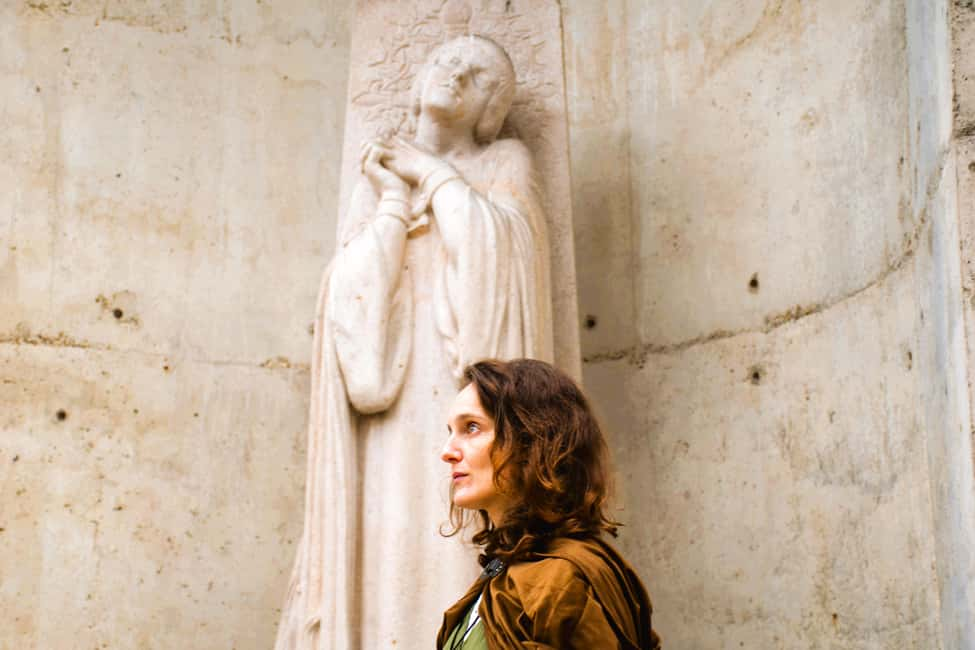
Most walking tours ask you to look, listen, and move on. This one asks you to judge. As Joan leads you through Rouen, you hear the charges brought against her, the dangers facing a woman in armor, and the pressure placed on her during a medieval witchcraft and heresy trial.
That setup gives the experience a clear purpose. You are not simply being told that Joan was captured, tried, and burned. You are placed near the center of the argument. Was she a soldier and saint, or a witch and heretic? The tour uses that question to explain how politics, religion, warfare, and fear collided around her.
I like this approach because Joan’s story can otherwise become a string of famous images: armor, voices, capture, trial, flames. The role-playing gives those images a human thread. You follow a young prisoner trying to survive a court designed to condemn her.
The theatrical style will not suit everyone. If you prefer a quiet guide who gives dates, architectural details, and a broad survey of Rouen, you may find the performance too focused. But if you enjoy history brought to life, the format offers something a conventional city walk cannot.
You can also read our reviews of more walking tours in Rouen


Meeting Joan at the Donjon
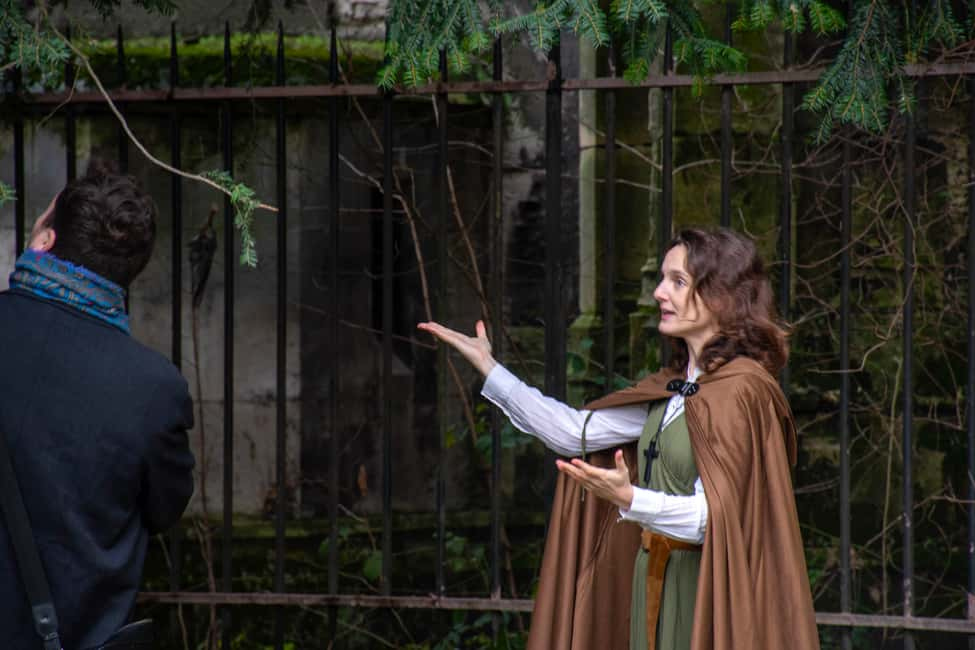
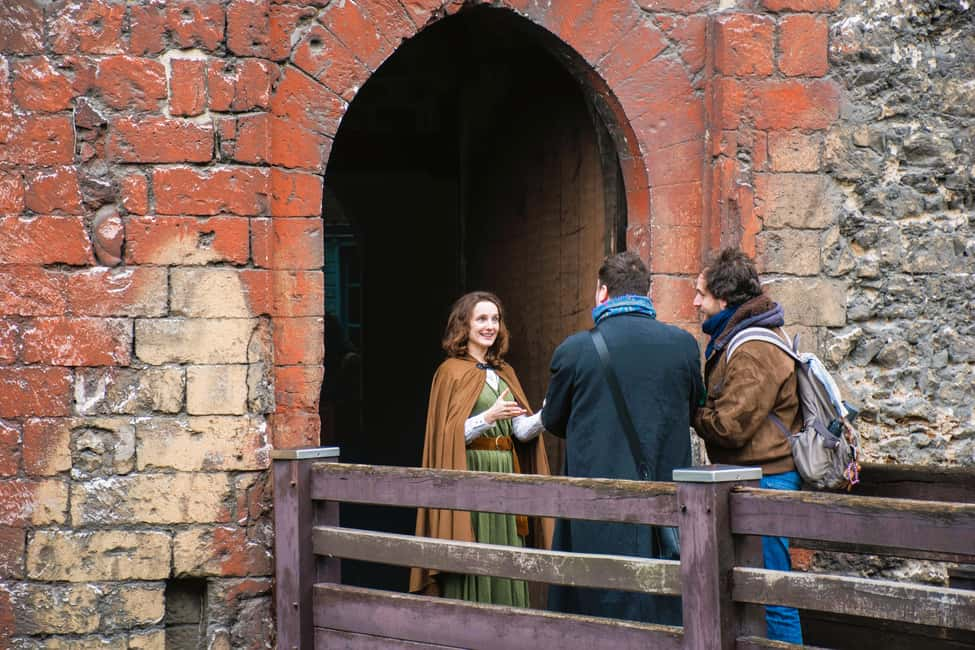
The tour begins at 6 rue du Donjon, 76000 Rouen. Look for a woman in costume wearing a badge on a black lanyard. That detail matters because the meeting point is given as a street address rather than a large landmark or hotel lobby.
Starting at the Donjon makes good historical sense. The tower keep belonged to Rouen’s old castle and is tied to the setting of Joan’s final ordeal. Here, the story turns from military success to captivity. Joan is no longer the figure leading French forces. She is a prisoner whose enemies now control the questions, the setting, and the rules.
Your guide presents Joan directly, rather than discussing her only in the third person. Expect the walk to feel staged from the first moments. The actor-guide leads you into the period and sets up the accusations you will hear later.
This opening also gives you a useful frame for the Hundred Years War. The tour is not only about one trial. Joan’s fate makes more sense when you understand that she became a political pawn in a long conflict between England and France. Her military role gave her fame, but it also made her dangerous to those who wanted to weaken the French cause.
The Hundred Years War through one doomed teenager
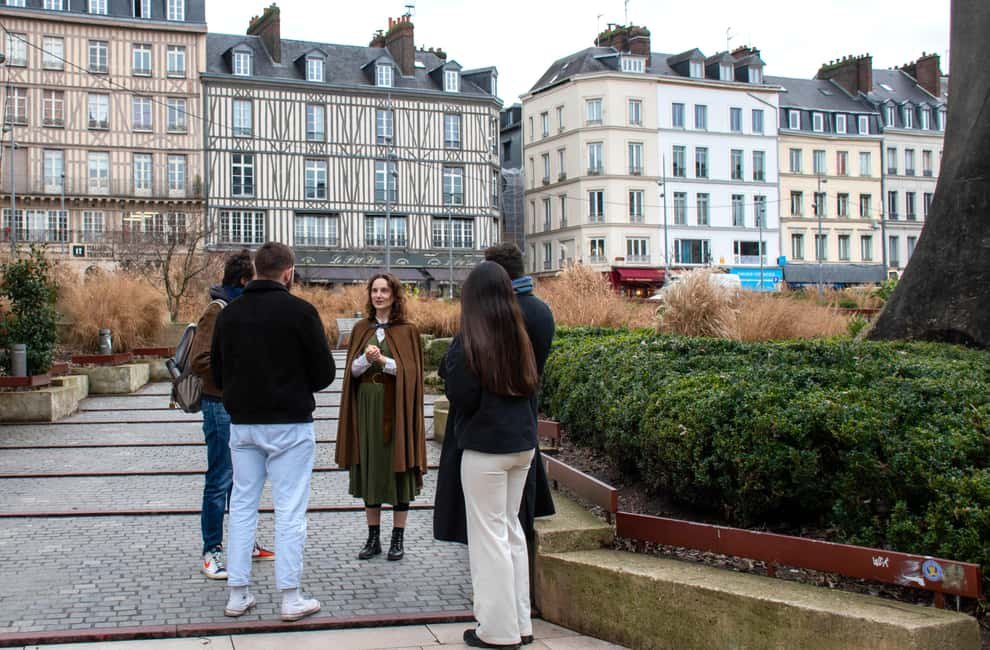
You do not need to arrive as a Joan of Arc expert. One of the tour’s stated aims is to help you see how her story fits into the Hundred Years War. The focus remains personal, but the wider conflict gives the drama its stakes.
Joan was a teenager who put on armor and fought against France’s enemies. That simple fact carried enormous weight in a period when warfare, religion, royal power, and gender expectations were tightly linked. Her enemies could attack not only her military actions but also her clothing, beliefs, and claims of divine guidance.
I find this focused method more useful than a long military lecture. You get the essential setting, then see how the conflict closes around Joan. The court’s accusations become part of a larger attempt to discredit her and the cause she represented.
The tour does not present the court as a neutral search for truth. Its language of traps, deadly accusations, interrogation, and false hope emphasizes the danger Joan faced. You are encouraged to notice how a defendant might be pushed into statements that could later be used against her.
From the abbey and cemetery to the church
The route continues through an abbey and cemetery, then to the church that now bears Joan’s name. These stops shift the mood from confinement and interrogation toward memory and commemoration.
An abbey and cemetery are fitting places for a story shaped by religious judgment. They help you picture the world in which Joan’s trial took place, where religious authority was not separate from public life or political power. The cemetery also gives the performance a more somber setting as Joan’s options narrow.
The church named for Joan represents a later act of remembrance. It is not simply another medieval building on a sightseeing route. In this experience, it becomes part of the question of how a condemned figure can later be honored.
You should not expect a full architectural tour at each stop. The monuments serve the drama first. The actor uses them as scenery and historical touchpoints, so the amount of detail about construction, design, or unrelated Rouen history may be limited.
That trade-off is important when you compare this experience with a standard guided walk. You get a stronger emotional line, but less time for a broad look at the city’s churches, streets, and architecture.
The courtroom comes alive on Rouen’s streets
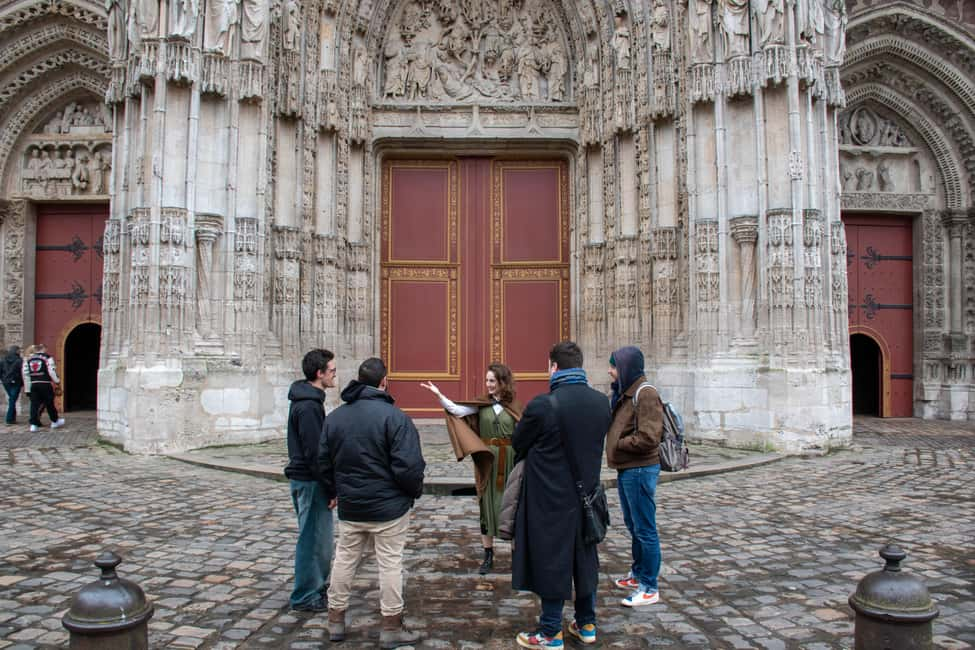
The most unusual part of the experience is the way the city itself becomes a courtroom. Your guide does not ask you to sit in a museum and absorb a display. You move through the places tied to the story while the trial unfolds around you.
At points, you cross paths with Joan’s enemies as part of the staged narrative. These figures are presented as the people who helped frame her with accusations that could lead to death. Their presence gives the proceedings a personal edge. You are not only hearing about an institution. You are watching opposing forces press Joan toward a verdict.
The tour also presents elements of medieval interrogation and torture. This is one reason I would think twice before booking it for very young children. The subject is grim, and the language of execution and religious persecution is part of the central story, not a passing reference.
The performance includes moments of false hope. Joan appears to have a chance to defend herself, then faces another trap or threat. This rhythm keeps the walk moving and shows how a trial can exhaust a defendant even before the final sentence.
The small group should help here. With 15 people or fewer, you are less likely to lose the thread of the performance in a crowd. You can pay attention to the actor’s expressions and responses, including the emotional moments that make this more than a scripted lecture.
You can also read our reviews of more guided tours in Rouen


The final scene in the town square
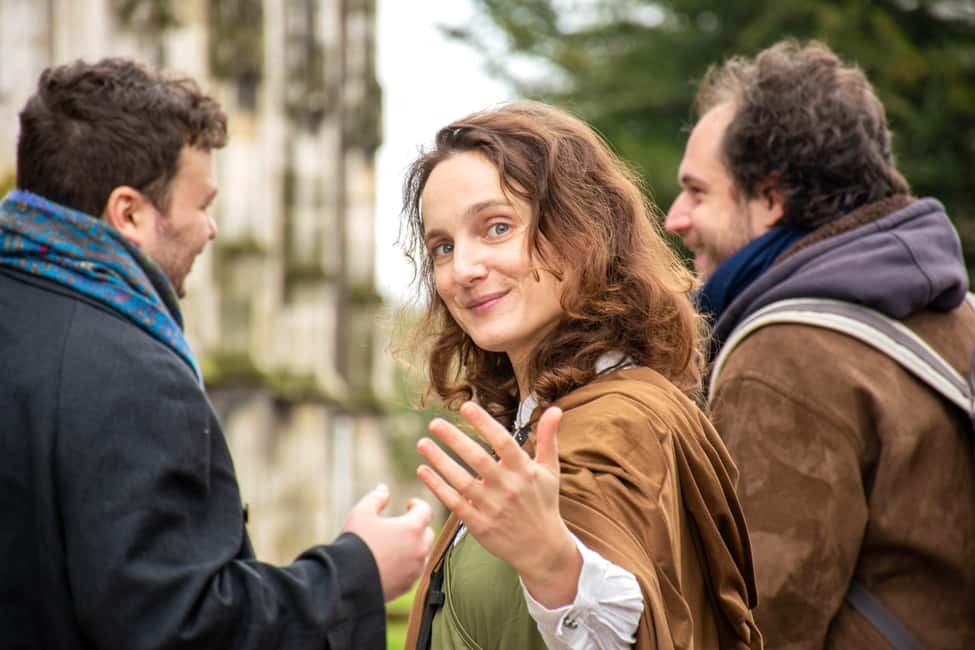
The route reaches the dreaded town square, associated with Joan’s execution at the stake. This is the emotional destination of the walk, and the performance builds toward it from the start.
You already know the historical outcome, but the staged progression makes the final scene feel less like a fact in a textbook. Joan has been captured, questioned, accused, and pushed into a corner. The square becomes the place where private fear turns into public punishment.
The experience aims for tension rather than spectacle. You feel the threat of flame and watch Joan prepare for death. The stated goal is to make your heart race, and the actor’s performance carries much of that burden.
One review describes the guide’s eyes filling with tears at a moment when she seemed to stop being an actor and become Joan. That detail gives you a useful sense of the intended style. Expect sincere, emotional acting rather than light historical comedy.
If you dislike dramatic reenactments, this may feel too intense. If you respond to live performance, the final scene is likely to be the part you remember after the rest of your Rouen sightseeing has blurred together.
What the actor-guide adds
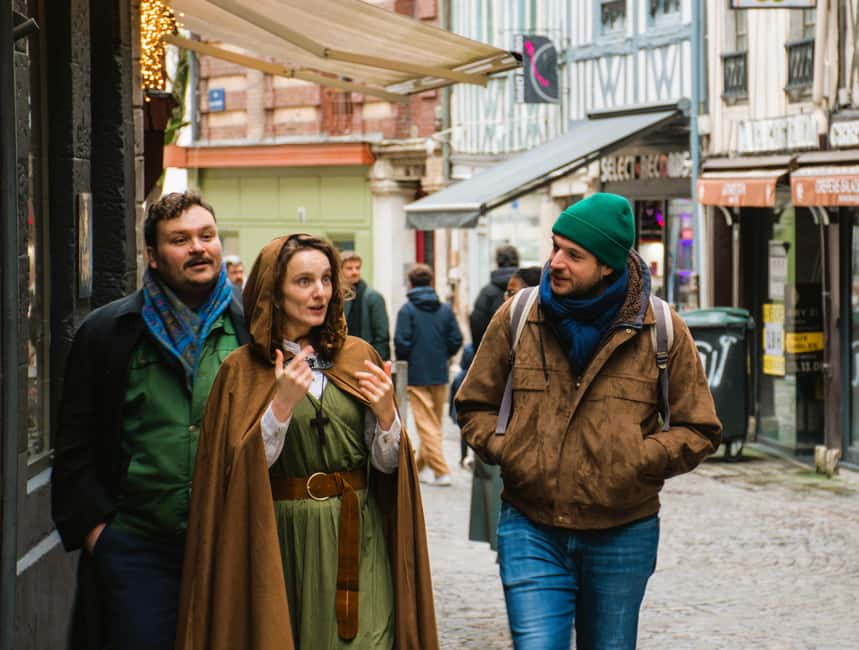
The actor-guide is the heart of the experience. Joan is not treated as a distant historical figure who appears only in a few lines of narration. She leads the walk, tells you about the capture and trial, and faces the accusations in front of you.
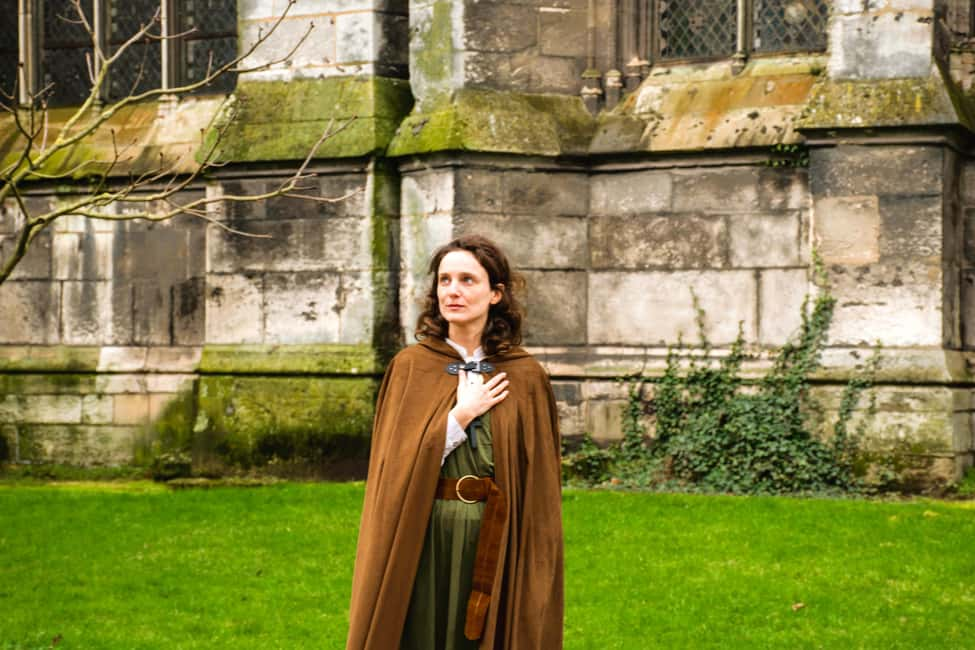
The costume helps establish the role, while the badge on a black lanyard makes the guide easy to identify at the meeting point. The performance is in English, so you can follow the trial without relying on an audio device or printed text.
The guide needs to do two jobs well: act and explain. The strongest moments appear to come when those roles meet, such as when a historical detail leads into a personal defense or a sudden emotional shift. The positive feedback about the guide being engaging and informative suggests that the balance is a key strength.
Still, a character-led tour can vary with the individual performer. You are booking the format and the provider, Memories France, rather than a named guide. The supplied information does not give the actor’s name, so you should not expect to select a particular Joan.
Is $82 a fair price for 90 minutes?
At $82 per person, this is not a bargain sightseeing walk. A 90-minute tour gives you a concentrated experience, but the price per hour is high when compared with a basic city orientation.
The value comes from the live performance, the small group, and the use of Rouen’s actual historic settings. You are paying for an actor-guide who carries a story from place to place and involves you in the judgment. If that sounds like the kind of history you remember, the price may feel reasonable.
I would not choose it if your main goal is to cover as many Rouen landmarks as possible. The route uses several important sites, but they are there to support Joan’s story. You may receive less detail about other periods, buildings, and local life than you would on a general walking tour.
For a first visit, I would pair this with independent time in Rouen or a broader city walk. That way, you get the city’s wider picture and then return to Joan’s final months with a sharper sense of place.
Weather, walking, and group size
This is a walking tour lasting 1 hour and 30 minutes. The supplied details do not state the walking distance, the number of stairs, or accessibility arrangements, so you should ask the provider if those points affect your plans.
Rouen weather can change, and the tour continues outdoors between its historic settings. One group faced heavy rain and received umbrellas from the guide, which was considerate and practical. I would still bring a rain jacket and wear comfortable shoes rather than rely on that gesture being repeated every time.
A maximum group size of 15 is a real advantage for a performance. You can hear the guide more easily, follow the action through the streets, and feel less like one face in a large crowd. It also keeps the jury idea workable, since the actor can address the group directly.
There is no hotel pickup or drop-off. You need to reach 6 rue du Donjon on your own and arrange your own way back after the final scene.
Who should book this experience?
I would recommend it to you if you enjoy:
- Joan of Arc, medieval France, or the Hundred Years War
- Live acting with a serious historical subject
- Small-group walks rather than large sightseeing groups
- Stories that ask you to make a judgment
- Emotional experiences tied to real places
It can work well for couples, families with older children, and anyone who wants a memorable break from conventional guide commentary. The subject matter is heavy, so consider the age and temperament of everyone in your group before booking.
I would steer you toward another tour if you want a neutral academic lecture, a full architectural survey of Rouen, or a relaxed stroll with little focus on violence and death. An audio-guided route or standard city walk may suit you better.
Booking is flexible, with free cancellation up to 24 hours before the start time and a reserve-now, pay-later option. Check the available start times before planning dinner or another timed activity, since the exact departure schedule is not fixed in the details provided.
Should you book Rouen with Joan of Arc?
Book it if you want Rouen to feel like a living courtroom rather than a list of monuments. The actor-guide, small group, and jury-style format give Joan’s final months a clear emotional shape, while the Donjon, abbey, cemetery, church, and square make the story feel rooted in the city.
At $82 for 90 minutes, I would call it a special-interest experience rather than an essential budget tour. It is best as a focused addition to your Rouen plans, not a replacement for a general introduction to the city.
If the idea of hearing Joan defend herself in costume appeals to you, this is a strong choice. If you prefer facts without theater, spend your money elsewhere. The tour asks you to take part, and that is precisely its strength.
FAQ
Where does the tour meet?
Meet the guide at 6 rue du Donjon, 76000 Rouen.
How will I recognize the guide?
The guide will be in costume and will wear a badge around her neck on a black lanyard.
How long does the tour last?
The walking tour lasts 1 hour and 30 minutes.
What language is the tour in?
The live tour guide speaks English.
What is included in the price?
The price includes a fully guided walking tour with a professional actor-guide.
How large is the group?
The group is limited to 15 people or fewer.
Is hotel pickup or drop-off included?
No. Hotel pickup and drop-off are not included.
How much does the experience cost?
The listed price is $82 per person.
Can I cancel the booking?
Yes. You can cancel up to 24 hours in advance for a full refund. A reserve-now, pay-later option is also available.