REVIEW · ROUEN
Rouen: Guided Tour of the Historic Center
Book on GetYourGuide →Operated by Elodie Guide Local · Bookable on GetYourGuide
Rouen tells stories at every corner, and Elodie strings it all together on a guided walk through Joan of Arc places and the Gros-Horloge clock. I like how the tour connects big, dramatic moments to real street-level detail, so you’re not just staring at monuments—you’re understanding why they matter.
My other favorite part is the city’s changing “camera lens”: Middle Ages settings alongside a hint of 19th-century Impressionism around Rouen Cathedral. One consideration: it’s a brisk 90 minutes over about 3 km, and it runs rain or shine, so plan for a steady walking pace and bring layers.
In This Review
- Key points before you go
- Why This Rouen Historic-Center Walk Is a Smart First Stop
- Place de la Pucelle to Joan of Arc at Place du Vieux Marché
- Gros-Horloge: The Astronomical Clock Under a Renaissance Street Arch
- Courthouse of Rouen and the Cathedral-Set-Up Moment
- Rouen Cathedral: 3 Towers, a 150m Spire, and Two Eras in One View
- Saint-Maclou Church: Flamboyant Gothic at Close Range
- Martainville: Medieval Living Conditions Without the Museum Maze
- Pace, Price, and Value: What $28 Buys You
- Practical Tips That Make the Walk Easier
- Who Should Book This Tour (and Who Might Want a Different One)
- Should You Book This Rouen Historic-Center Tour?
- FAQ
- How long is the Rouen guided historic center tour?
- Where does the tour start?
- Where is the meeting point exactly?
- What language is the tour offered in?
- What does the tour include?
- Are monument entry tickets included?
- Does the tour run in bad weather?
- How far will we walk?
- Is it free for children?
Key points before you go
- Meet Elodie in the center near the Public restaurant (guide has a green or orange badge).
- Joan of Arc at Place du Vieux Marché gives context right where the story unfolded.
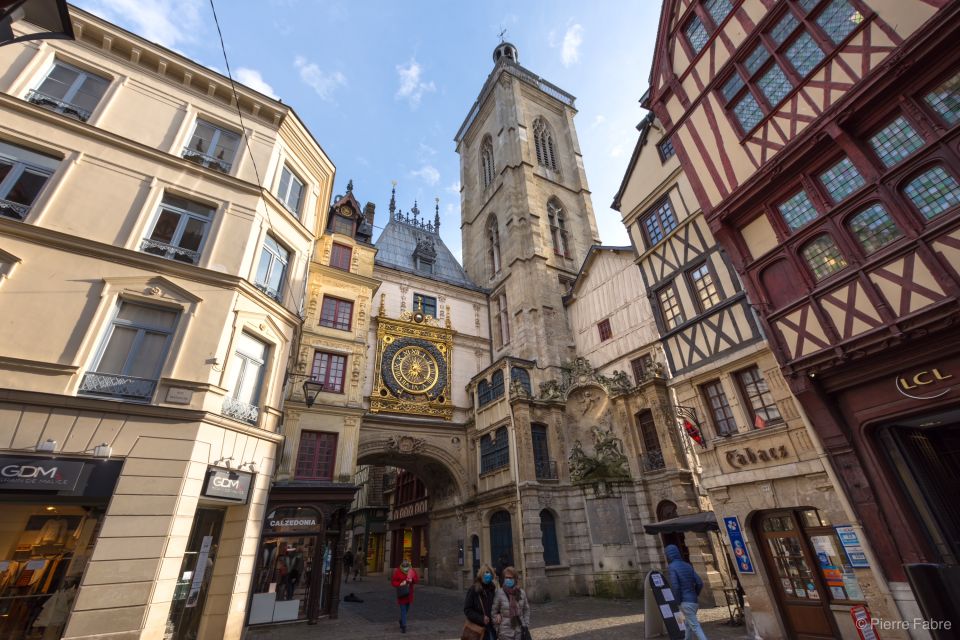
- Gros-Horloge’s 14th-century astronomical clock sits inside a Renaissance street-arch setting.
- Rouen Cathedral’s 3 towers each show a different architectural style, plus a spire over 150m.
- Saint-Maclou’s Flamboyant Gothic is a standout stop for the details fans.
- Martainville ends the tour with a look at medieval life in the neighborhood streets.
Why This Rouen Historic-Center Walk Is a Smart First Stop
If you want Rouen to feel like a living city instead of a photo scroll, this is a great way to start. In just 90 minutes, you move through the parts of the historic center where the city’s identity shows up fast: Joan of Arc’s legacy, iconic clockwork, major church architecture, and a neighborhood that slows things down.
The best value here is not only the sights. It’s the way Elodie, a Rouen local, ties each location to what you’re seeing in front of you—how a building is designed, what a symbol means, and why certain streets feel different from each other. And yes, the price sits in the “worth it even if you’re busy” range for a guided, step-by-step introduction.
You can also read our reviews of more guided tours in Rouen



Place de la Pucelle to Joan of Arc at Place du Vieux Marché
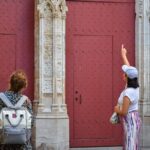
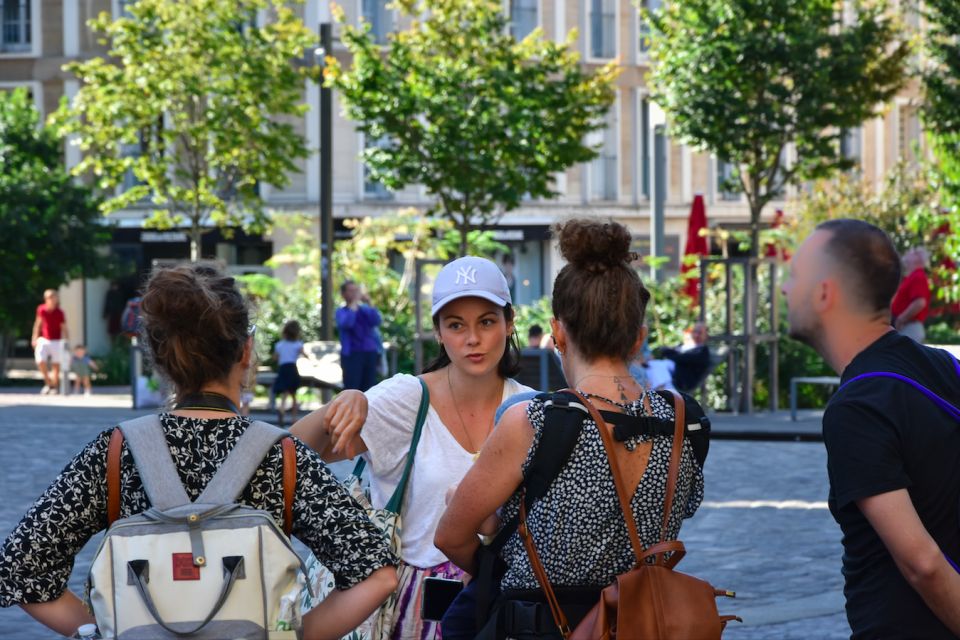
The tour begins at 4 Pl. de la Pucelle, with your guide waiting at the Public restaurant. Look for Elodie with a green or orange badge around her neck, and you’ll be set.
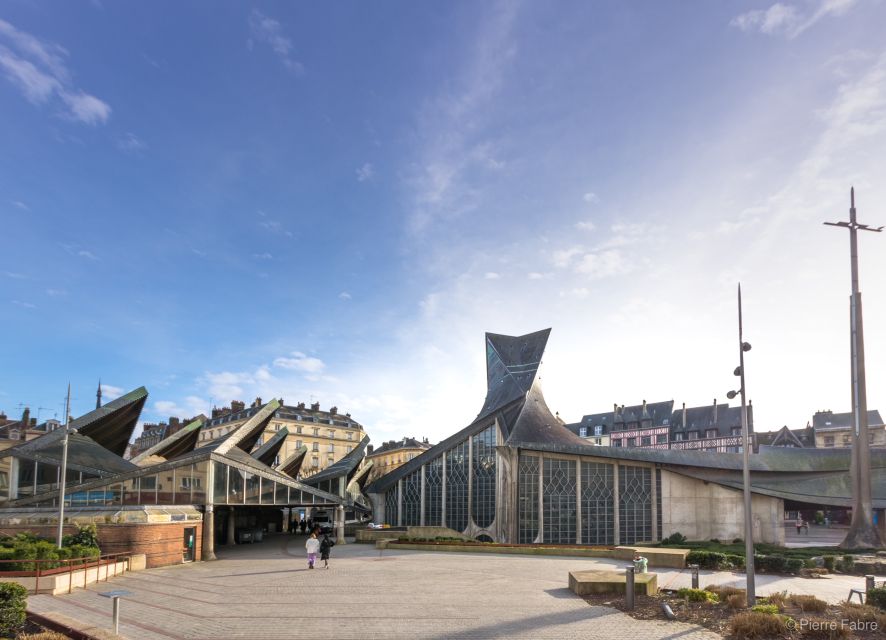
From there, the focus turns quickly to Joan of Arc. You head to Place du Vieux Marché, a square packed with meaning because it’s tied to the final moments of her life. Instead of treating Joan of Arc as a distant textbook chapter, you get the story anchored in the exact streets and square layout you’re standing in—so the history feels less abstract.
This early portion works well for two reasons. First, it gives you a narrative thread before you start looking at architecture. Second, it helps you see the city as “one place with layers,” not as a list of buildings.
Gros-Horloge: The Astronomical Clock Under a Renaissance Street Arch
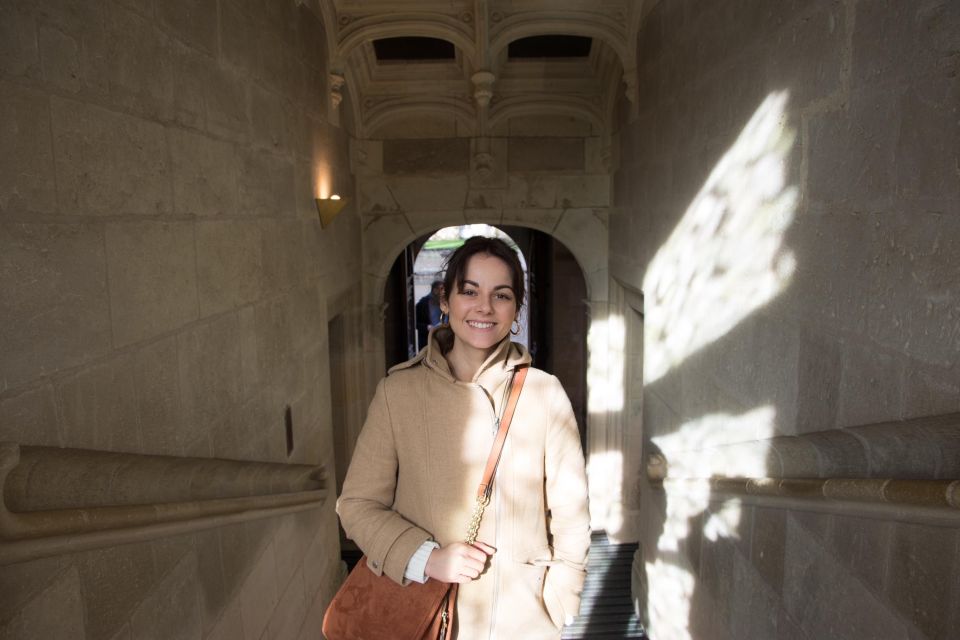
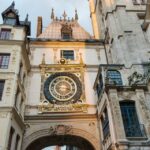
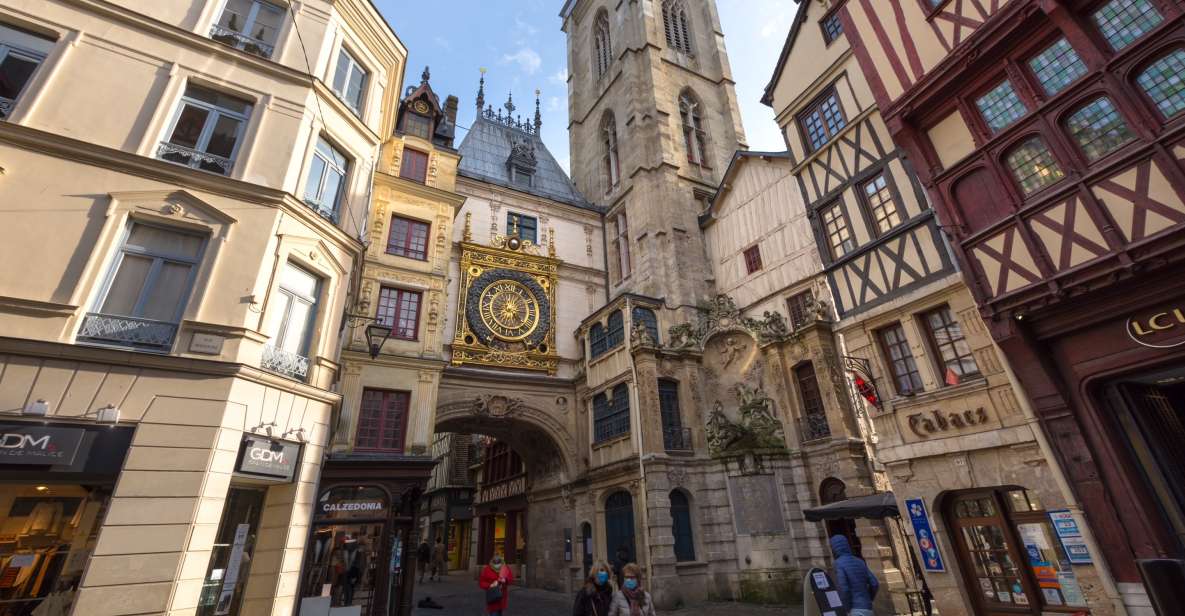
Next you reach one of Rouen’s star attractions: Le Gros-Horloge, famous for its 14th-century astronomical clock. What I like about this stop is the setting: the clock is housed in a Renaissance street-arch that frames the view as you move through the old streets.
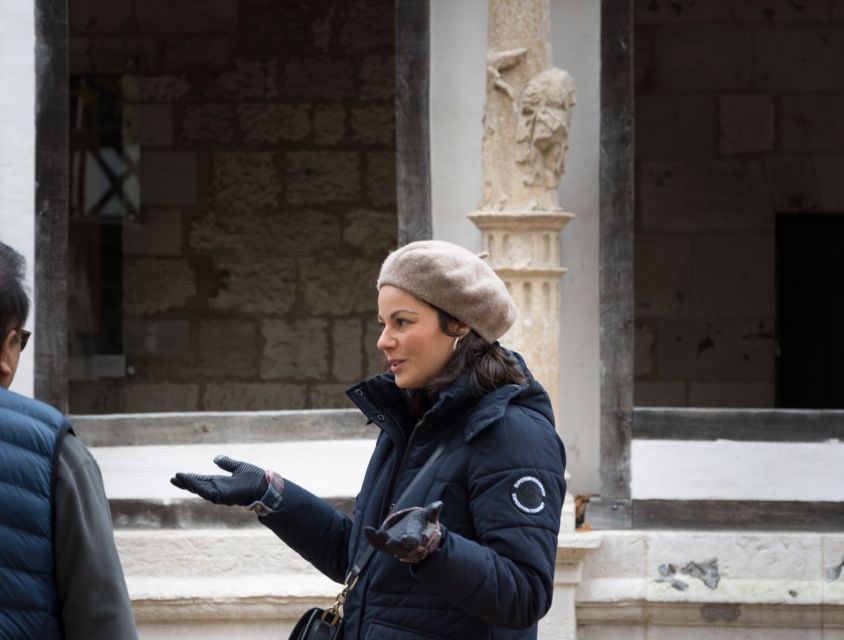
This is one of those sights where a guide really matters. The clock isn’t just a pretty face on a wall; it’s part engineering, part timekeeping culture. With Elodie pointing out what to watch for, you understand why this monument became a landmark rather than a random medieval detail.
You also get a sense of how the city’s power and public life showed up in architecture. Rouen’s old center wasn’t designed for quiet museum browsing—it was built for people to pass by, look up, and remember what the city values.
Courthouse of Rouen and the Cathedral-Set-Up Moment
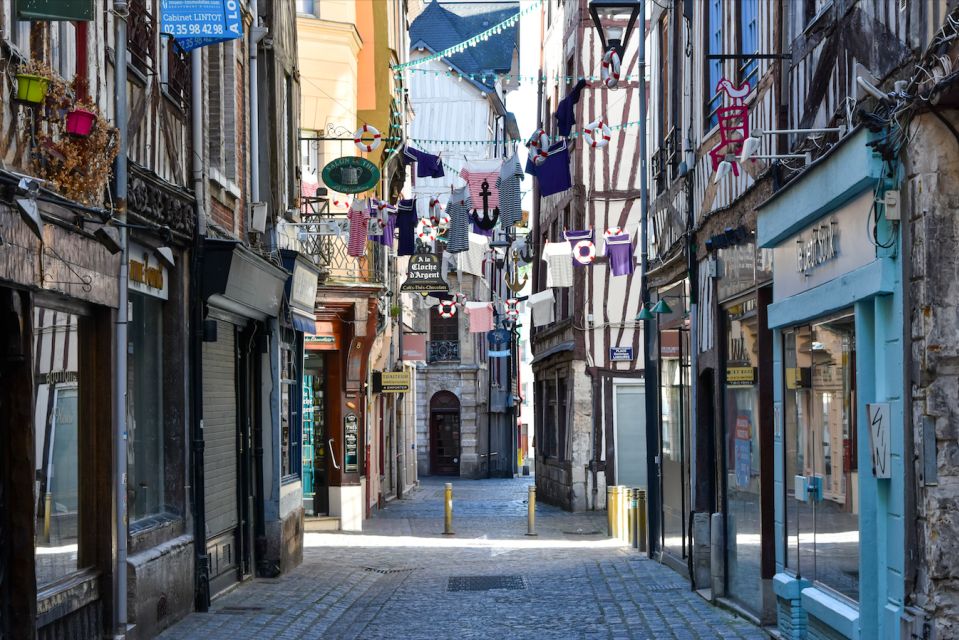
After Gros-Horloge, the tour shifts toward Rouen’s courthouse. Even if you’re not spending time reading facades, this stop helps you connect the dots between the civic side of the city and the religious side you’ll see next.
Then, Rouen Cathedral takes the spotlight, but not all at once. You get time to adjust your eyes, so when you start analyzing the cathedral, it doesn’t feel like information overload. This is a small but real advantage of having a planned route and a guide who knows what order to show things in.
Rouen Cathedral: 3 Towers, a 150m Spire, and Two Eras in One View
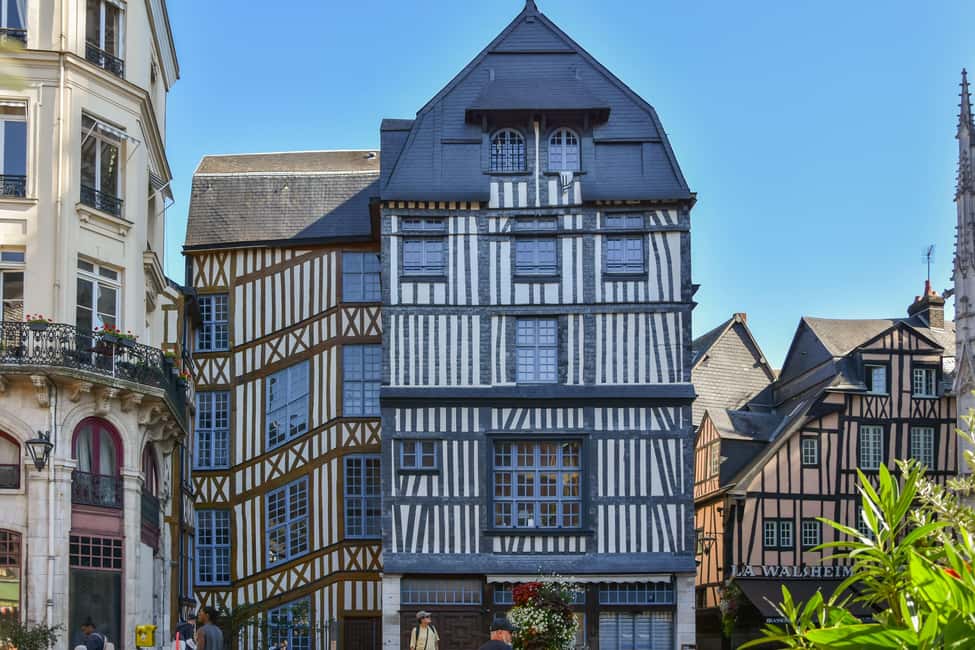
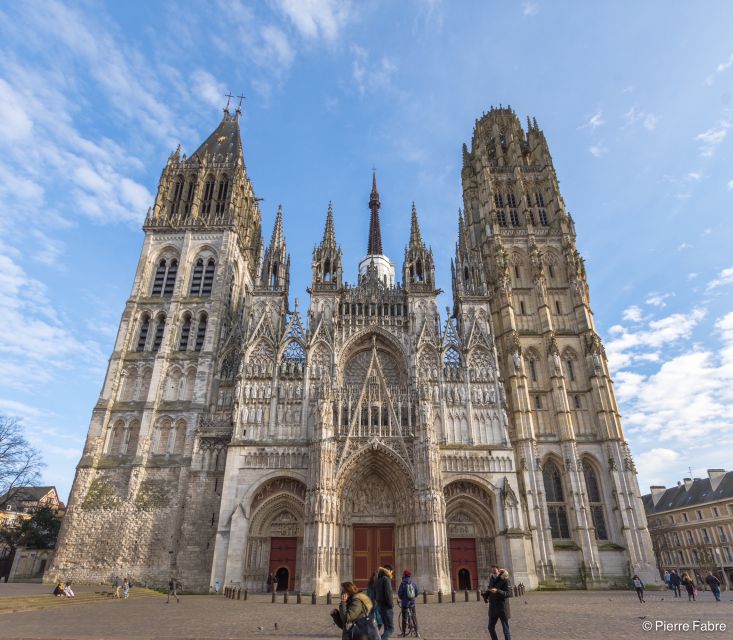
Rouen Cathedral is where the tour earns its reputation. You’ll stand in front of a church constructed in two phases, and the guide points out how the design choices reflect different time periods.
The cathedral’s most striking feature in this walk is its three towers, each in a different architectural style. That detail matters because it turns “one big church” into a timeline you can see with your own eyes. You’re not memorizing dates—you’re noticing how style shifts.
Then there’s the spire, circling upward into the sky at a height of over 150 meters. Even if you’re not a big architecture nerd, a spire that tall changes the way you orient yourself. It makes the rest of the old streets feel like they’re all converging toward that vertical statement.
One especially useful angle: you also get a glimpse of 19th-century Impressionism tied to the cathedral’s presence in later art. The tour doesn’t ask you to become an art expert, but it nudges you to see the building the way artists did—so you leave with a clearer sense of why this specific cathedral mattered beyond worship.
You can also read our reviews of more historical tours in Rouen

Saint-Maclou Church: Flamboyant Gothic at Close Range
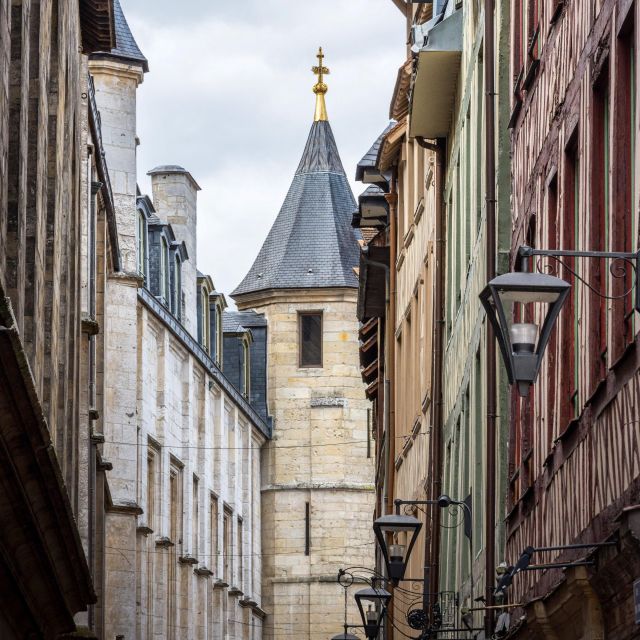
After the cathedral area, you move toward Saint-Maclou Church, which is considered one of the best examples of Flamboyant Gothic architecture in France. This stop is a treat if you like ornate stonework, because Flamboyant Gothic is all about motion in architecture—forms that look like they’re flickering or curling rather than sitting still.
What makes this stop valuable on a guided walk is scale. Up close, the details are the point. With a guide directing your attention, you’re less likely to miss the small design logic that makes Flamboyant Gothic feel so expressive.
It also balances the cathedral nicely. Rouen Cathedral gives you big mass and height; Saint-Maclou gives you finer “fingerprint” details you can actually spot while you’re standing there.
Martainville: Medieval Living Conditions Without the Museum Maze
The tour ends in the Martainville district, where you get a look at the living conditions of the Middle Ages. This is the moment that helps the whole walk click. You’ve already seen the major public monuments; now you see the neighborhood logic—how everyday life likely worked in the same urban space that produced famous landmarks.
On the way, you also learn the legend of the abbey of Saint-Ouen. Even if you don’t know Rouen well, legends like this add texture. They remind you that cities don’t just have buildings; they have stories people repeated until they became part of local identity.
Finally, the tour wraps at the Saint-Ouen Abbey Church, giving you a satisfying “bookend” end point instead of a random drop-off in the middle of town.
Pace, Price, and Value: What $28 Buys You
For $28 per person and 90 minutes, you’re paying for something you can’t DIY in the same time: a local guide who knows what to point out and an ordered route through Rouen’s key historic layers.
Included:
- a guide
- a walking tour
Not included:
- monument entry
So, what’s the real value? You’re getting guided context across multiple major stops—Joan of Arc references, Gros-Horloge, Rouen Cathedral, Saint-Maclou, and the Martainville district—plus interpretation of architecture and a link to later Impressionism.
If you’re the type of traveler who enjoys walking but gets lost when there’s too much to read on signs, this price is fair. You’re buying time and clarity. And with a duration this short, it fits well even if you only have part of a day in Rouen.
Practical Tips That Make the Walk Easier
Plan your day around shoes. The tour covers about 3 km (1.8 mile) and it’s a walking-focused experience, not a sit-and-stare museum circuit.
Also bring what the weather asks for:
- comfortable shoes
- hat
- umbrella
- water
It runs rain or shine, so assume you’ll walk through some wet patches even if the sky looks uncertain. A hat and umbrella save your attention span for the architecture, not for fighting the elements.
If you’re traveling with kids or teens, this also has a built-in advantage. People have specifically said the pace and storytelling work even for younger visitors who can usually tune out at history-heavy stops.
Who Should Book This Tour (and Who Might Want a Different One)
This tour is a great fit if you:
- want a first introduction to Rouen that makes the city feel connected
- care about architecture details like Flamboyant Gothic and cathedral towers
- like guided storytelling anchored in specific places
It may be less ideal if you:
- want long stays inside monuments (entry isn’t included, and the format is walking)
- prefer a slow, independent pace where you can stop for photos endlessly
But for most people—especially those with a tight schedule—this is a strong “get your bearings fast” option that still feels substantial.
Should You Book This Rouen Historic-Center Tour?
If you want Rouen to click quickly, I’d book it. For a little over an hour and a half, you get a smart route through Joan of Arc’s key setting, Gros-Horloge’s astronomical clock, and the cathedral area with its three-tower visual story, then you end in Martainville where medieval life feels closer to the ground.
Book it when you can walk comfortably for about 3 km and you’re ready for a steady pace. Bring the basics, accept that the weather won’t pause for your photos, and let Elodie do what a great local guide does best: point your eyes where they’ll learn the most.
FAQ
How long is the Rouen guided historic center tour?
The tour lasts 90 minutes.
Where does the tour start?
Meet at 4 Pl. de la Pucelle, with your guide waiting in front of the Public restaurant.
Where is the meeting point exactly?
Your guide waits in front of the Public restaurant. They wear a green or orange badge around their neck.
What language is the tour offered in?
The tour is offered in French and English.
What does the tour include?
It includes a guide and a walking tour.
Are monument entry tickets included?
No. Entry to monuments is not included.
Does the tour run in bad weather?
Yes. The tour takes place rain or shine.
How far will we walk?
The tour covers about 3 km (1.8 mile).
Is it free for children?
Yes. It is free for children under 14 years old, with no booking required.