REVIEW · ROUEN
Rouen: Private Walking Tour with a Licensed Tour Guide
Book on GetYourGuide →Operated by TOUR FRANCE EXPERIENCE · Bookable on GetYourGuide
Rouen’s story comes at you quickly on this private two-hour walk. You’ll move from medieval lanes to the Renaissance Great Clock, then to the square where Joan of Arc was burned, before finishing at the Gothic cathedral that Claude Monet painted again and again. It is a compact way to put the city’s monuments in order.
I like the one-to-one attention and the freedom to ask questions or adjust the route with your guide. I also like the mix of famous sights and small details in the old streets, which can be easy to miss when you walk Rouen alone. The main caution is pace: two hours goes fast, and people with mobility limitations may find the walk difficult.
In This Review
- Key points at a glance
- Why this private walk works well in Rouen
- Starting at Esplanade Marcel Duchamp
- Reading Rouen through its old streets
- The Great Clock and its Renaissance face
- Justice Palace and Rouen’s Renaissance architecture
- Place du Vieux-Marché and Joan of Arc
- Notre Dame Cathedral through Monet’s eyes
- What the guide adds to the experience
- Timing, pace, and practical limits
- Who gets the best value from $235 per person
- Should you book the Rouen private walking tour?
- FAQ
- How long is the private walking tour?
- Where does the tour begin and end?
- Which languages are available?
- What sights are included?
- Are entry tickets and transportation included?
- Can the tour be adapted to my group?
Key points at a glance
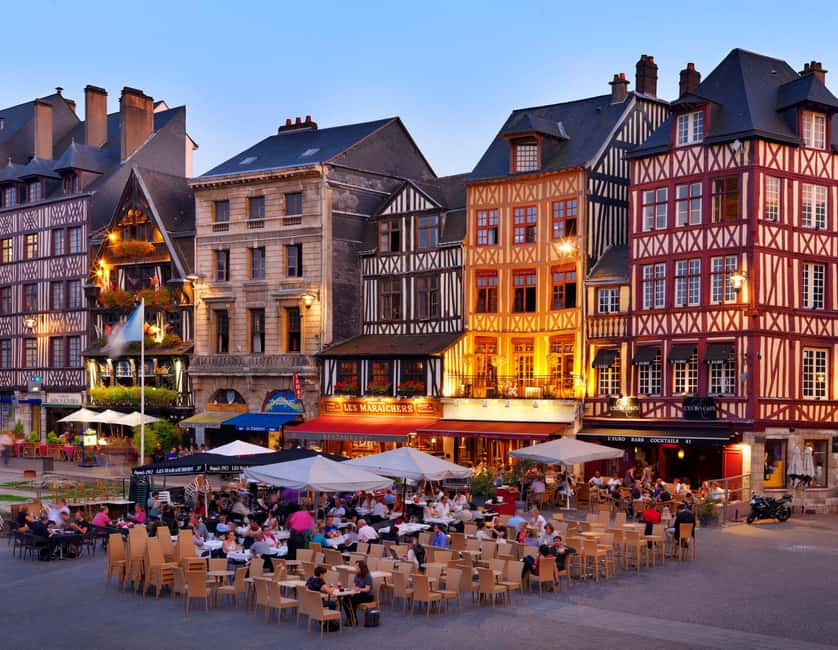
- See Rouen’s medieval center: Walk among preserved half-timbered houses despite the city’s heavy damage during the Second World War.
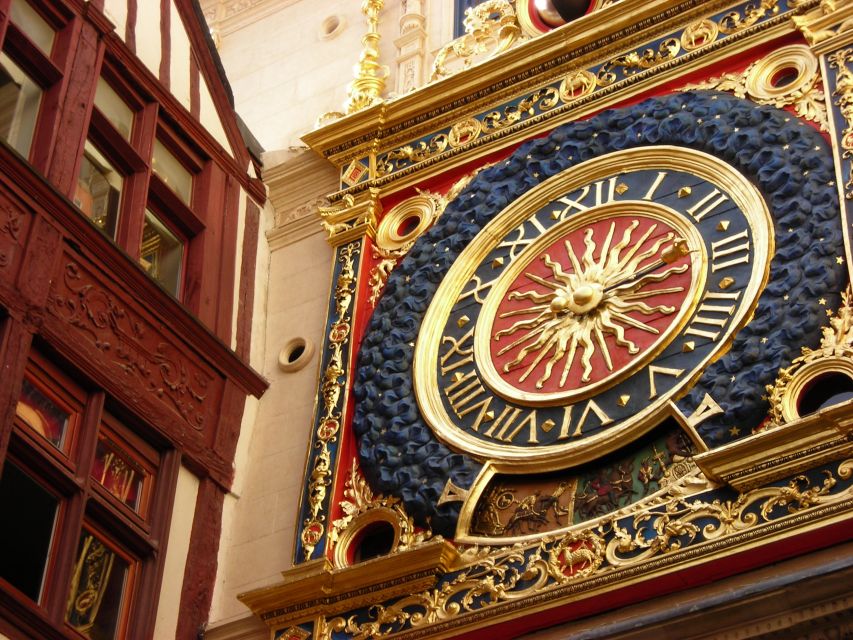
- Read the Great Clock: Study the Renaissance facade and its unusual clock, where one hand shows the hour.
- Stand at Joan of Arc’s final site: Visit Place du Vieux-Marché, where the 19-year-old Joan was burned in 1431.
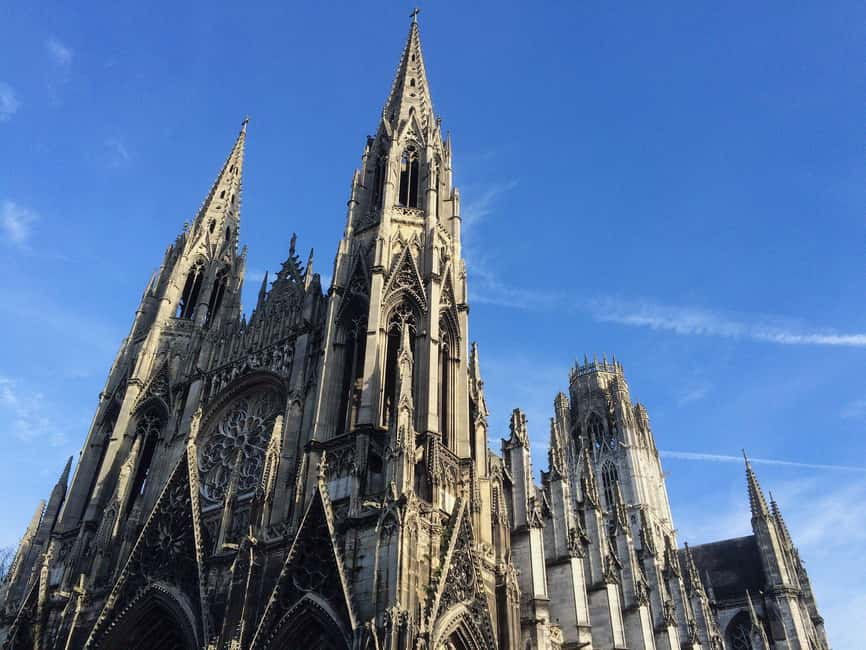
- Finish with Notre Dame: Admire the Gothic facade that inspired Claude Monet’s famous series of paintings.
- Ask for a tailored route: Your private guide can adapt the visit and answer questions beyond the basic sights.
- Plan for a true walking tour: Transportation and entry tickets are not included, and large bags are not allowed.
Why this private walk works well in Rouen
Rouen is the sort of city that rewards a guide who can connect separate sights. The cathedral, clock, law courts, and market square are not just photo stops. Each one opens a different chapter in the city’s story, from Roman beginnings and Viking rule to war damage and French national memory.
I like the private format because you are not tied to a large group’s questions or pace. You can ask why the clock looks the way it does, pause over a carved detail, or spend more time on Joan of Arc if that is what brought you to Rouen. The guide can also adapt the tour to your interests, a useful feature when your family or friends have different levels of interest in art and history.
The experience costs $235 per person. That is a serious price for two hours, especially since admission tickets and transportation are extra. The value depends on your group size and priorities. For one or two people, it is a premium purchase. For a family or group of friends, the private cost may make more sense because everyone receives the same guide’s attention and you can shape the conversation.
This is not the right choice if you want a long museum visit, a food tour, or a full-day survey of Normandy. It is a focused introduction to central Rouen. You pay for an informed local explanation, not for a packed list of included attractions.
You can also read our reviews of more walking tours in Rouen


Starting at Esplanade Marcel Duchamp
The tour begins outside the tourism office at Esplanade Marcel Duchamp. Your guide should be holding a sign with your name, which makes the meeting point fairly easy to identify.
This starting place is practical for a city walk because you begin near the central sights rather than spending your short tour on a bus or in a taxi. Arrive ready to walk, since the experience returns to the same area after two hours and includes several historic streets and public squares.
No transportation is included. That is not much of a problem if you are already in central Rouen, but it matters if you are coming from outside the center. Build in enough time to reach the meeting point without cutting into your tour.
Bring only what you need. Large bags and luggage are not allowed, so this is not a convenient activity to schedule while carrying suitcases between hotels or stations. Comfortable shoes are a sensible choice, although the exact street surfaces are not specified.
Reading Rouen through its old streets
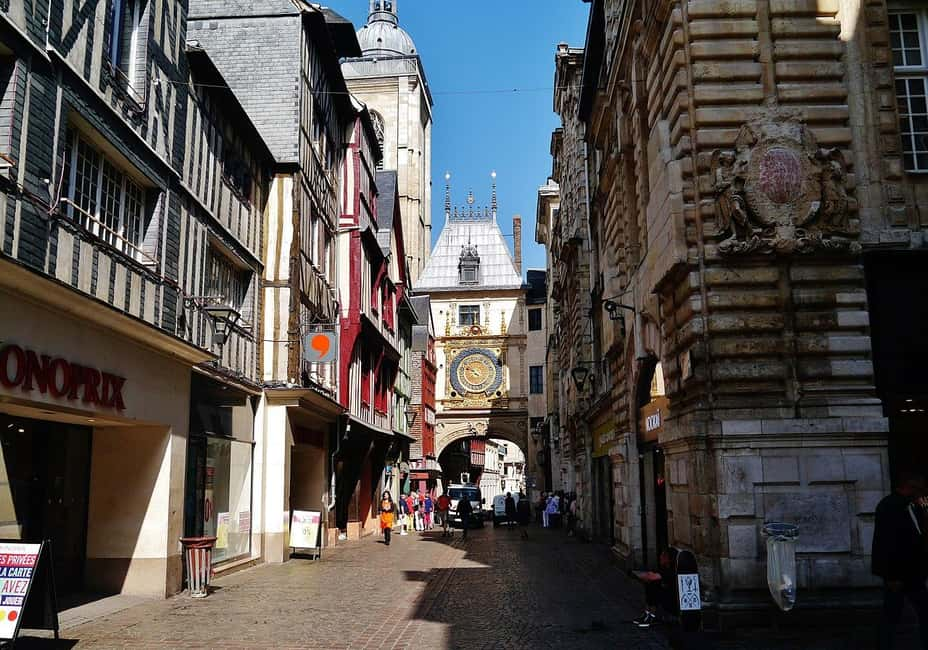
The medieval center gives the tour its character. Rouen was founded by the Romans, later ruled by Vikings, and badly damaged during the Second World War. Yet much of the historic center survived, including its half-timbered houses and old street pattern.
That contrast is important. You are not seeing a city frozen untouched in time. You are seeing a historic center that endured war and still presents layers of older architecture. A guide can help you notice how the houses, streets, and major monuments fit together rather than treating each stop as an isolated landmark.
The half-timbered buildings are likely to be among the most enjoyable parts of the walk for anyone who prefers street scenes to formal museum interiors. You can look closely at the upper stories and the changing lines of the old houses while hearing how Rouen developed over time.
This section is also where a private guide can add real value. A printed map will show you where the street goes, but it will not necessarily explain which details matter or connect Roman, Viking, medieval, Renaissance, and modern events. One past guide, Sara, was specifically praised for pointing out small details that would otherwise be easy to miss.
The Great Clock and its Renaissance face
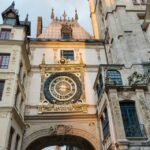
The Gros-Horloge, or Great Clock, is one of Rouen’s defining sights. The tour pauses at its Renaissance facade, where a giant clock displays the hour with a single hand.
That unusual design gives the stop a built-in talking point. It is not simply another ornate facade to photograph. Look up and study how the clock is arranged, then compare its practical purpose with the decorative Renaissance setting around it.
The Great Clock is a good example of why a guided walk can be more rewarding than a quick self-guided circuit. You may notice the large dial, but the guide can direct your attention to the design and explain why this structure became a symbol of the city. The information provided does not include an interior visit, so expect to observe the facade from the walking route rather than count on entering the clock complex.
This is also a useful point to ask questions. Since the tour is private, you can move beyond the prepared commentary and ask about the clock, Rouen’s architecture, or how the city’s center changed over time. That flexibility is one of the clearest reasons to choose this format over a general group walk.
Justice Palace and Rouen’s Renaissance architecture
The route continues past the Justice Palace, described as an example of Renaissance architecture. It gives the walk another change of mood after the narrow medieval streets and the Great Clock.
You will not be paying for a dedicated legal-history visit here, and no entry ticket is included. The value is in seeing the building as part of Rouen’s public and architectural center. The guide can place its design beside the half-timbered houses and the Gothic cathedral, helping you see how several periods share the same compact city.
For architecture lovers, this stop adds balance. Rouen is often reduced to Joan of Arc and Notre Dame, but the Justice Palace shows that the city’s appeal is wider than those two famous names. It also helps keep the route from becoming a straight march from one headline attraction to the next.
You can also read our reviews of more guided tours in Rouen

Place du Vieux-Marché and Joan of Arc
Place du Vieux-Marché is the tour’s most emotionally charged stop. Joan of Arc was burned here in 1431, when she was 19 years old.
The square is not just a historical address. It is a place tied to one of France’s best-known figures and one of the harshest events in Rouen’s past. A guide’s explanation matters here because the basic fact can be easy to repeat without grasping its weight or place in the city’s story.
I would give this stop your full attention, even if you arrived mainly for architecture. The tour brings together the physical setting and the historical event, allowing you to understand why Joan of Arc remains so closely linked with Rouen.
The supplied details do not promise entry to a museum or a separate Joan of Arc exhibit. Treat Place du Vieux-Marché as a guided outdoor stop. If you want extensive time inside museums, you will need to arrange that separately and should not expect the two-hour walk to cover it.
Notre Dame Cathedral through Monet’s eyes
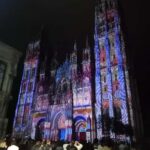
The cathedral is the grand finish. Notre Dame de Rouen is one of the world’s most famous Gothic cathedrals, and its detailed facade impressed Claude Monet enough to inspire an entire series of paintings.
You can look at the facade in two ways. First, notice the Gothic structure and the density of its decorative details. Then think about Monet’s repeated attention to the same building. The cathedral becomes not only a religious monument but also a subject whose appearance changes with light and conditions.
The tour information focuses on admiring the exterior, so do not assume that an interior visit is included. Entry tickets are not part of the price. If seeing the inside is important to you, ask the guide about the route and current access when you meet, but plan on the advertised experience being a walking tour with exterior sightseeing.
For me, the cathedral is a strong ending because it gathers the tour’s themes in one place. Rouen’s past is architectural, religious, artistic, and sometimes painful. The facade gives you a memorable final image, while Monet supplies a reason to look longer instead of taking one quick photograph and moving on.
What the guide adds to the experience
A licensed guide is included, and the tour is available in English, French, or German. The guide is there not only to recite dates but also to answer questions and adjust the visit to your needs.
That difference is easy to feel in a private group. You can ask for more art, more local history, or more explanation of the Second World War damage. The tour can also work well for friends or a family who want to stay together without being folded into a larger group.
The named guides connected with past visits include Nina, Mylène, and Sara. Nina was described as friendly and helpful. Mylène gave detailed explanations of history and art, while Sara was praised for answering questions beyond the immediate sights and drawing attention to details people might have missed.
Those comments point to the tour’s strongest quality: interpretation. Rouen already provides impressive buildings. The guide’s job is to make them readable and to help you understand what you are seeing.
Timing, pace, and practical limits
Two hours is enough for a clear introduction to the central sights, but not enough for every corner of Rouen. The route includes the old center, Great Clock, Justice Palace, Place du Vieux-Marché, and Notre Dame, so expect a steady sequence of outdoor stops.
If you like to linger at every facade, take many photographs, or ask long questions at each location, you may feel pressed for time. A private guide can adapt the tour, but adaptation usually means choosing what matters most rather than adding unlimited stops.
The experience is not suitable for people with mobility impairments according to the supplied activity information. It is also not designed for luggage or large bags. These are practical limits, not minor footnotes, so consider them before booking.
The tour offers free cancellation up to 24 hours before the start, and you can reserve now and pay later. Those terms help if your Normandy plans are still shifting, though they do not change the short duration or the walking requirements.
Who gets the best value from $235 per person
I would consider this tour a good match for you if you want context quickly and prefer a private conversation to a large group. It suits first-time visitors who want to understand central Rouen before exploring on their own, as well as families who need a guide willing to adjust the focus.
It is especially useful for people who recognize names such as Joan of Arc and Monet but want to connect them to actual places. The route turns those names into a square, a cathedral facade, and a city center you can continue exploring after the guide leaves.
The price is harder to justify if you are content to walk independently with a guidebook and take in the exteriors at your own pace. Since entry tickets and transportation are excluded, the fee is mainly for the licensed guide and private format. That can be worth it for a group, but less so for a solo visitor on a tight budget.
I would also skip it if your priority is interior access. The supplied details promise a private walking tour and exterior landmarks, not admission to the cathedral, Justice Palace, or other sites.
Should you book the Rouen private walking tour?
Book it if you want a focused introduction to central Rouen, value the chance to ask questions, and are comfortable paying a premium for a private guide. The combination of medieval streets, the one-handed Great Clock, Joan of Arc’s execution site, and Monet’s cathedral makes good use of two hours.
Think twice if mobility is an issue, you need to bring luggage, or you want a full-day experience with museum entries. For everyone else, this is a practical way to give Rouen’s buildings and history some shape before you continue exploring on your own.
FAQ
How long is the private walking tour?
The tour lasts two hours, including the guided visit around Rouen’s historic center.
Where does the tour begin and end?
You meet the guide outside the tourism office at Esplanade Marcel Duchamp. The tour also returns to Esplanade Marcel Duchamp.
Which languages are available?
The live guide is available in English, French, or German.
What sights are included?
The route covers Rouen’s medieval center, the Great Clock, the Justice Palace, Place du Vieux-Marché, and Notre Dame Cathedral.
Are entry tickets and transportation included?
No. Entry tickets and transportation are not included in the tour price.
Can the tour be adapted to my group?
Yes. The private format includes the possibility of adapting the tour with the guide and asking questions based on your group’s interests.