REVIEW · PARIS
Walking tour of the Covered Passages of Paris -10 people max
Book on Viator →Operated by SLL Paris Tours · Bookable on Viator
Paris has a quieter side hiding behind its grand boulevards. This small-group walk leads you through the covered passages built for shopping, strolling, and shelter, from the Palais-Royal area to Faubourg-Montmartre. You get mosaic floors, old arcades, small shops, and a slice of Parisian history that many first-time visitors miss.
I like the small group of no more than 10 because it gives you a better chance to ask questions and keep the pace comfortable. I also like the route itself: at about 1 hour and 40 minutes, it fits neatly beside a museum visit or an evening meal. The main consideration is that this is a walking and history tour rather than a major-attraction tour, so it works best if you enjoy architecture, local stories, and browsing more than big views or famous monuments.
In This Review
- Key details to know before booking
- Why Paris’s covered passages are worth your time
- Starting at Palais-Royal and the Jardin du Palais Royal
- Passage des 2 Pavillons, small but memorable
- Galerie Vivienne and its mosaic floor
- Place de la Bourse and the old stock exchange
- Passage des Panoramas, the oldest passage
- Passage Jouffroy and the pleasure of browsing
- Passage Verdeau and the art galleries
- Finishing at Faubourg-Montmartre
- What Sebastien adds to the walk
- Is $59.17 a fair price?
- Who will enjoy this Paris walk most?
- Timing, group size, and small practical details
- Should you book the Covered Passages tour?
- FAQ
- How long does the Covered Passages of Paris tour last?
- How many people can join the tour?
- What language is the tour offered in?
- Where does the tour start?
- Where does the tour end?
- Is bottled water included?
- Can I cancel for a full refund?
Key details to know before booking
- The route covers eight historic stops: You walk from Palais-Royal through Galerie Vivienne and several passages to Faubourg-Montmartre.
- The group is capped at 10 people: This is a more personal format than a large street tour.
- Guide Sebastien leads the experience: He speaks clear English and can answer questions about French food, customs, restaurants, and useful phrases.
- The walk lasts about 1 hour and 40 minutes: It is long enough to tell the story but short enough to fit into a crowded Paris schedule.
- The passages are free to enter: Your $59.17 pays for the guide, organization, and local interpretation, not admission tickets.
- The tour ends near a reasonably priced French restaurant: It is a useful place to finish if you want to continue with lunch or dinner nearby.
Why Paris’s covered passages are worth your time
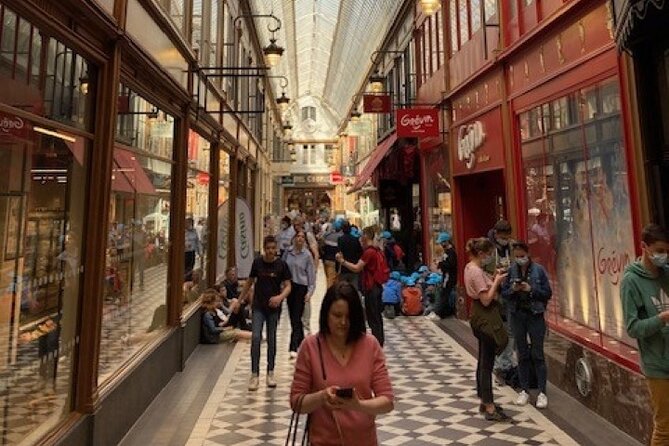
The covered passages are easy to overlook. From the street, you may see only an entrance between larger buildings. Inside, the mood changes: glass and metal canopies, patterned floors, narrow corridors, shopfronts, restaurants, and old commercial spaces create a very different kind of Paris walk.
I like this tour because it gives these passages a purpose. You are not simply looking at pretty ceilings and floors. You learn why these shopping arcades appeared, how they fit into the growth of Paris, and why they became an important part of city life.
The route also offers a nice change from the standard Paris checklist. You do not spend the time crossing between distant monuments. Instead, you follow a compact section of the city, with several stops close enough together to keep the walk manageable.
The covered sections may offer shade, but this is not a fully enclosed experience. You still walk between the passages, across streets, and through open public spaces. On a hot day, that matters. Sebastien has provided bottled water, adjusted the pace, and looked for cooler places to pause, which is useful practical help rather than a small extra.
You can also read our reviews of more walking tours in Paris


Starting at Palais-Royal and the Jardin du Palais Royal
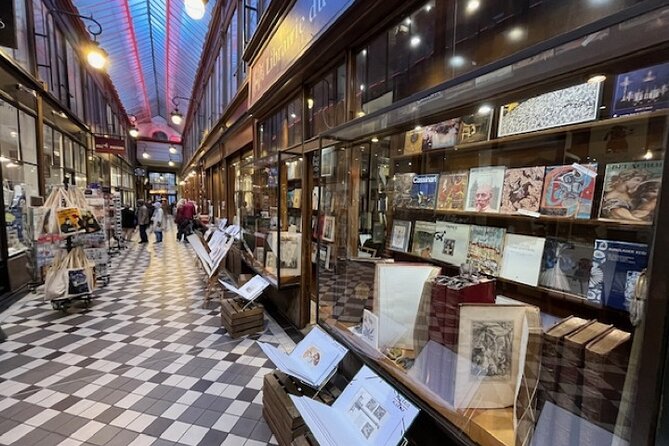
The meeting point is Palais Royal, near the Louvre, at 75001 Paris. This is a sensible starting place because the first part of the tour sets up the story of Paris’s covered galleries before you enter the smaller passageways.
The opening Palais-Royal stop lasts about 20 minutes. Here, Sebastien introduces the covered galleries and places them within the wider history of Paris. That introduction matters because the passages make more sense when you understand them as part of the city’s changing commercial and social life.
You then walk to the Jardin du Palais Royal for about 15 minutes of discussion. The focus is the Palais Royal itself and the first covered gallery. This gives you a useful beginning-to-end idea of how the covered passage tradition developed.
Do not expect a long garden visit or a formal palace tour. The Palais-Royal area is a starting point for the subject, not a separate attraction with an admission ticket. If you want a detailed look at the Louvre or the palace interiors, you will need to plan those separately.
Passage des 2 Pavillons, small but memorable
The next stop is Passage des 2 Pavillons, which takes only about three minutes. It is described as the smallest covered passage in Paris, so this is a quick look rather than a long stop.
That short pause is part of the charm. The tour does not treat every passage as if it needs a full lecture. Some are brief links in the larger story, and Passage des 2 Pavillons gives you a sense of how compact these urban shortcuts can be.
You may want to keep your expectations in check here. This is not the grandest or longest section of the walk. Its value comes from contrast: after hearing about the larger covered galleries, you see a much smaller example tucked into the city.
Galerie Vivienne and its mosaic floor
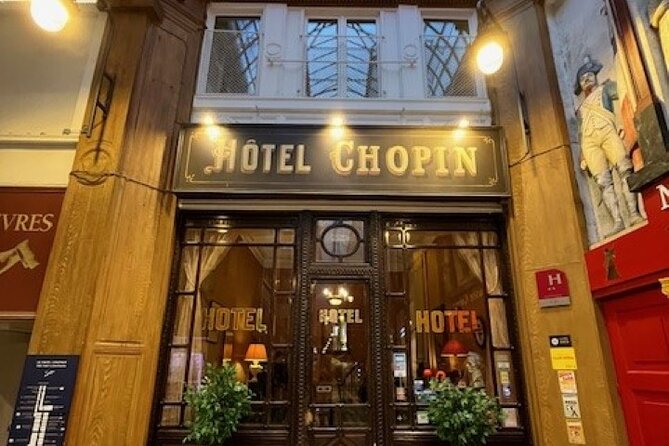
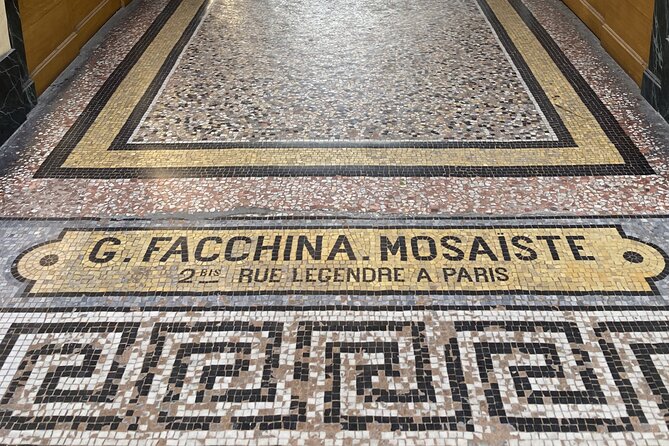
Galerie Vivienne receives about 15 minutes, and this is one of the visual highlights of the route. The arcade is known for its beautiful mosaic floor, which gives the passage a polished, decorative character.
This is a good place to slow down and look down as well as up. The floor is the detail that many people might miss if they are only trying to get from one end to the other. A guide helps turn that passing glance into part of the story.
I particularly like this stop for visitors who want attractive architecture without spending hours inside a museum. You can enjoy the design, hear about the passage’s place in Paris, and continue on foot without a ticket line or a fixed indoor schedule.
The tradeoff is that the passage is still a public shopping area. Shops and businesses may shape what you see on the day, and the experience is not a staged historical attraction. That is also why it feels more like part of Paris than a display built only for sightseeing.
Place de la Bourse and the old stock exchange
The walk to Place de la Bourse takes about five minutes. The square is home to Paris’s old stock exchange, adding a commercial and financial note to a tour otherwise centered on arcades and shopping.
This brief stop helps connect the passages to the business life of the city. Covered galleries were not isolated curiosities. They belonged to busy parts of Paris where shopping, finance, dining, and daily movement came together.
At only about five minutes, this is a linking point rather than a major lecture. I see that as a benefit if you prefer a moving tour with several distinct sights. If you want long photo breaks at every location, the pace may feel brisk.





Passage des Panoramas, the oldest passage
Passage des Panoramas is one of the central stops, with about 15 minutes to explore and learn. It is known as the oldest of Paris’s covered passages, making it an important part of the route.
This is where the history becomes especially useful. The passage is not just another pretty corridor. Its age gives you a better sense of how the covered passage idea took root and why these spaces still matter to the city’s identity.
You can expect a walk through a passage with shops and places to pause, but the exact businesses you see can change. The tour focuses on the character and history of the space rather than promising a particular shopping experience.
For me, this stop gives the tour its strongest historical anchor. Galerie Vivienne brings the decorative appeal, while Passage des Panoramas gives the route a clear link to the early development of these arcades.
Passage Jouffroy and the pleasure of browsing
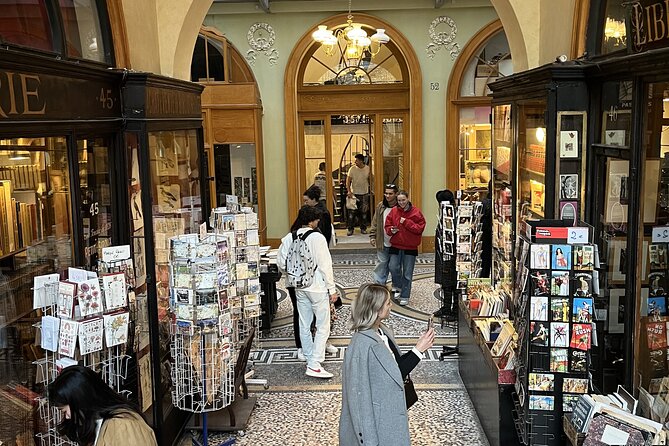
The route continues to Passage Jouffroy for about 15 minutes. This covered walkway has a canopy of metal and glass, with fun shops beneath it.
This is a good section for people who like the small details of Parisian shopping streets. You get the structure overhead, the storefronts at eye level, and the chance to see how a passage functions as more than a monument.
The tour is not limited to a lecture while everyone walks in silence. Sebastien has adjusted stops to suit the group, including shopping requests from a teenage participant. A detour to the Jellycat Patisserie was also made during one outing, showing that the guide can respond to reasonable interests when time and route allow.
That flexibility is useful, but it should not be treated as a guaranteed part of every departure. The advertised route remains the covered passages, and extra shopping stops depend on the group and the available time.
Passage Verdeau and the art galleries
Passage Verdeau is the last major passage on the route and receives about 10 minutes. It is described as picturesque and known for its many art galleries.
This gives the walk a slightly different flavor from the shopping-focused sections. Instead of seeing only retail spaces, you get a sense of the passages as places tied to art, collecting, and browsing.
The shorter stop also helps keep the total tour under two hours. By this stage, you have seen several related spaces, so a 10-minute visit is enough to add another example without making the route drag.
You should not book this expecting gallery admissions or a private art viewing. The tour includes the walk and the guide, while personal purchases and other expenses are your responsibility.
Finishing at Faubourg-Montmartre
The walk ends on rue du Faubourg-Montmartre, at 7 Rue du Faubourg Montmartre, 75009 Paris. The final stretch takes about two minutes and finishes in front of a traditional French restaurant known for reasonable prices and good food.
That ending is practical. You are not dropped at a vague point in the middle of a large square. Instead, you have a clear nearby reference and an easy option for a meal after the tour.
I would still treat the restaurant as a suggestion rather than part of the paid experience. Your meal is not included, and the tour price covers only the guide and bottled water. The location also lets you continue exploring the area on your own after the walk.
What Sebastien adds to the walk
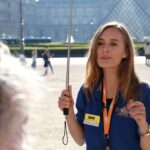
A strong local guide matters on a tour like this because the passages do not explain themselves. Sebastien has led the experience in clear English and has answered questions about French food, customs, restaurants, and basic useful words and phrases.
That wider city advice may be as useful as the history. If you are unsure where to eat near your hotel, how to handle a common French situation, or what local custom to expect, you can ask during the walk.
His approach also appears flexible. He has adjusted for different exertion levels, looked for cooler and shaded places on a hot day, and made room for shopping interests. Families may appreciate that. So may anyone who dislikes a rigid tour where every minute is fixed.
The guide’s flexibility has limits. The experience lasts about 100 minutes, so a long detour could reduce time at the passages. If you have a specific shop or food stop in mind, ask early and understand that it may not fit every departure.
Is $59.17 a fair price?
At $59.17 per person, this is not the cheapest way to walk through Paris. The passages are free to enter, and you could visit them independently with some research.
The value comes from the guide’s interpretation and the compact route. In less than two hours, you see several passages, learn the basic story behind them, and avoid spending your time figuring out the order and location of each stop. For a first visit, that organization can be worthwhile.
The cap of 10 also helps justify the cost. A small group gives you a better chance to hear the guide, ask questions, and request a modest adjustment. It is not a private tour, but it is far more intimate than a large group moving through narrow passageways.
I would consider the price reasonable for someone who wants context and personal guidance. If you are happy to read about the passages and explore at your own pace, the fee may feel high because there are no paid admissions included.
Who will enjoy this Paris walk most?
This experience suits you if you like architecture, urban history, independent shops, and short walking routes. It is also a good fit if you have already seen the main sights and want something different from another major museum or monument.
Families can make good use of it, especially if younger members need a route with variety. The passages offer changing surroundings, and the guide has shown a willingness to respond to shopping interests and family needs.
It also works well for a busy schedule. The duration is predictable, the route is walkable, and you finish near a restaurant. You can place it between larger activities without giving up half a day.
You may want to skip it if you are looking for grand interiors, entry to famous attractions, or a full-day historical lecture. The passages are the point. The experience is smaller, more local, and focused on details.
The tour is offered in English, uses a mobile ticket, and is near public transportation. Most people can participate, and service animals are allowed. The supplied details do not describe a fully step-free route, so if you have specific mobility needs, ask the provider before booking.
Timing, group size, and small practical details
Plan for about 1 hour and 40 minutes, though the exact pace can change slightly with questions, shopping interests, and the group’s walking speed. Wear comfortable shoes because the experience moves through several streets and passages.
Bottled water is included. Tips and personal expenses are not, so bring money or a payment method for anything you buy along the way or at the restaurant after the tour.
The start and finish are in different parts of central Paris. That is useful because the walk feels like a route rather than a loop, but you should check your plans after the finish at Faubourg-Montmartre.
You receive confirmation when you book. Free cancellation is available if you cancel at least 24 hours before the local start time. Changes or cancellations inside that 24-hour window are not accepted for a refund, and the minimum group requirement means the provider may offer another date or a full refund if the tour cannot run.
Should you book the Covered Passages tour?
Book it if you want a short, personal introduction to a less obvious side of Paris. The best reasons are the capped group, the clear route through Galerie Vivienne, Passage des Panoramas, Passage Jouffroy, and Passage Verdeau, and Sebastien’s practical help with food, customs, and local questions.
I would especially recommend it early in a Paris visit if you want to get your bearings in this part of the city. It can also work later in your trip when you have had enough of major sights and want a slower look at Parisian streets and shopping arcades.
Skip it if your priority is a landmark admission, a panoramic view, or a full-day tour. For everyone else, $59.17 buys a well-sized group, a manageable walk, and a useful story about places you might otherwise pass without noticing.
FAQ
How long does the Covered Passages of Paris tour last?
The tour lasts approximately 1 hour and 40 minutes.
How many people can join the tour?
The group has a maximum of 10 people.
What language is the tour offered in?
The tour is offered in English.
Where does the tour start?
It starts at Palais Royal, near the Louvre, at 75001 Paris, France.
Where does the tour end?
The tour ends at 7 Rue du Faubourg Montmartre, 75009 Paris, France, in front of a traditional French restaurant.
Is bottled water included?
Yes. Bottled water and a guide are included. Tips and personal expenses are not included.
Can I cancel for a full refund?
Yes, if you cancel at least 24 hours before the experience start time. Cancellations or changes made less than 24 hours before the start are not accepted for a refund.