REVIEW · FRANCE
Walk in the vineyards of Chablis Grands Crus
Book on Viator →Operated by Domaine Céline & Frédéric Gueguen · Bookable on Viator
The best part of this Chablis experience is that it takes wine out of the tasting room and puts you among the vines, especially around the famous Grand Cru area of Les Clos. You learn how growers work, how the four Chablis ranks differ, and why soil matters before tasting the results back at the cellar.
I like the small-group format, capped at 20 people, and the chance to see the vineyard from several viewpoints. I also like the generous tasting, which covers a broad range of Chablis and Burgundy wines. The main drawback is practical: the walk crosses rough ground and includes a fairly steep climb, while hot or rainy weather can change the experience.
In This Review
- Key points
- Starting at 5 Bis Rue Jules Rathier in Chablis
- Walking into the Grand Cru vineyards
- Views across the Chablis growing areas
- What the guide adds to the experience
- Returning to the cellar for the wine tasting
- Is the $54.07 price good value?
- Who should book this Chablis walk?
- Booking and cancellation details
- Final verdict: a strong choice for curious wine drinkers
- FAQ
- Where does the Chablis vineyard tour start?
- Where does the experience end?
- How long does the experience last?
- What language is the tour offered in?
- How much does the tour cost?
- How many people can join the tour?
- Is the wine tasting included?
- Is a Chablis Grand Cru included in the tasting?
- Do I need good walking shoes?
- What happens if the weather is poor?
Key points
- Grand Cru Les Clos setting: Walk among one of the best-known vineyard areas in Chablis.
- Wine education in the vines: Learn about cultivation, soil types, winegrowers’ work, and the four Chablis ranks.
- Cellar tasting included: Taste a wide selection of Chablis and Burgundy wines after the walk.
- Small groups: The tour accepts no more than 20 people, and some departures may be much smaller.
- Sturdy shoes matter: Expect uneven ground and a steep section near the end.
- Grand Cru may cost extra: The standard tasting does not always include Grand Cru wines, but two can be added for a €5 supplement when available.
Starting at 5 Bis Rue Jules Rathier in Chablis
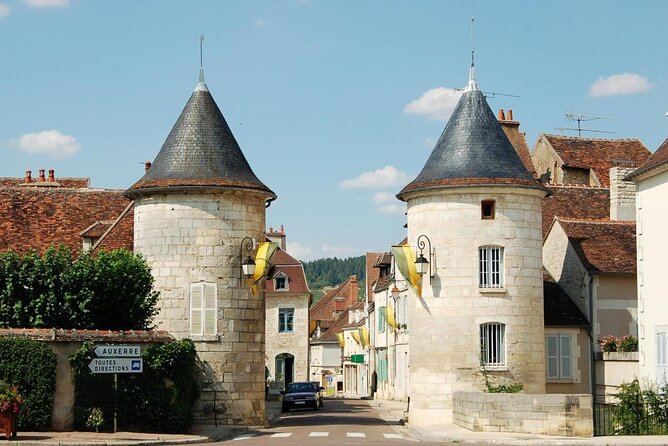
This two-hour outing begins at 5 Bis Rue Jules Rathier, in Chablis, and returns to the same point. That simple arrangement matters because you do not need to coordinate a separate ride back from the vineyards or figure out where the tasting will take place.
I would allow a little extra time to reach the meeting point. The tour is based in the town of Chablis, but the main walking portion takes place out among the vineyards. Confirmation is sent within 48 hours of booking, subject to availability, so do not leave a last-minute reservation until the day before if your schedule is tight.
The group limit is 20 people. That is still large enough for a lively discussion, but the experience can feel much more personal when fewer people book. One outing had only four participants, which allowed plenty of room for questions and close attention to the guide.
The activity is offered in English. The provider is Domaine Céline & Frédéric Gueguen, a local wine estate whose wines form the focus of the tasting.
You can also read our reviews of more tours and experiences in France.
Walking into the Grand Cru vineyards
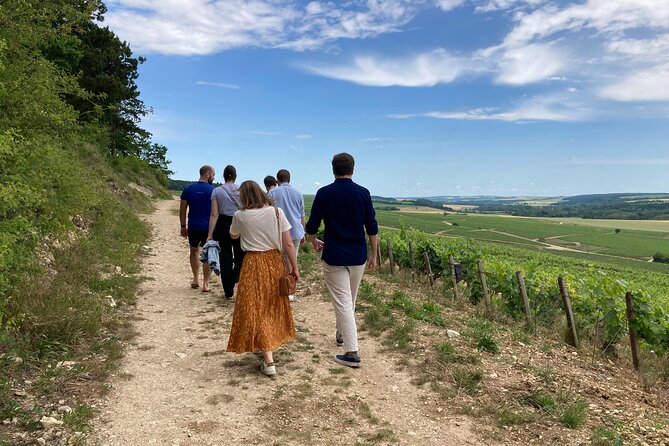
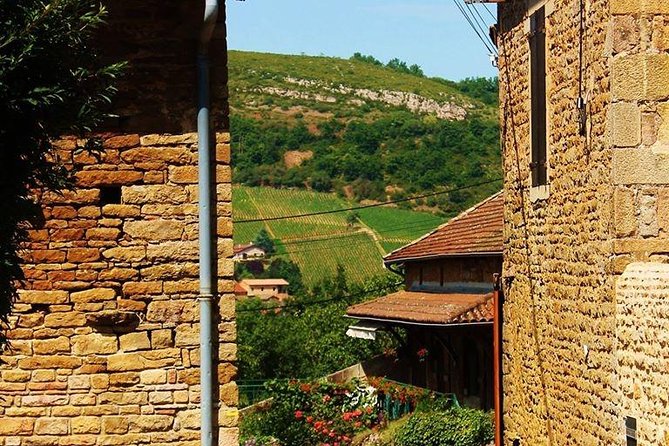
The walk introduces you to the Chablis vineyard in the place where the wine begins. Rather than hearing a string of wine terms indoors, you can look across the slopes and connect the explanation to the actual rows of vines, viewpoints, and soil.
The Grand Cru area, including Les Clos, gives the walk a strong sense of place. Chablis has four ranks of wine, and one useful aim of the visit is to help you understand how those ranks relate to the vineyards. You are not simply tasting labels. You are learning why a wine from one site can differ from another, even when both come from the same broad region.
The guide explains the winegrower’s work and the main types of cultivation. That can include the practical side of tending vines as well as the role of soil in the character of the wine. This is the sort of information that becomes more useful at the tasting, since you have just seen the setting and heard how the estate approaches its wines.
I like this order. You first get the physical setting, then the glass. It gives the tasting a framework and helps you notice differences instead of treating every Chablis as the same.
Views across the Chablis growing areas
The views are a key part of the outing. From different points along the route, you can get a broader sense of the growing area and see the distinction between the left and right bank sections of the Chablis vineyard.
That wider view helps explain why vineyard geography matters. A relief map can show the designated climats, but standing among the vines gives the information more weight. You see how the slopes sit in relation to one another and begin to understand why a producer talks about individual sites rather than only the name Chablis.
Do not expect a long country hike. The walk is described as short, and the main value is the explanation and the viewpoints rather than mileage. Still, the route is not a flat stroll on a paved path. Uneven ground and a steep climb near the end make sturdy footwear a sensible choice.
I would also plan around the weather. A hot day can make the vineyard walk tiring, particularly with little relief from the sun. A cloudy morning may be more comfortable. Rain can interrupt the walking portion altogether. When that happens, the provider may use a car to show the left and right bank growing areas and their views, but that is not quite the same as walking through the vines.
The weather policy is helpful here. If poor conditions lead to cancellation, you can receive a different date or a full refund. That does not prevent a warm or damp day from affecting a tour that still operates, so check the forecast and dress sensibly.
What the guide adds to the experience
The quality of the explanation matters as much as the vineyard itself. Frédérique is named in the feedback as a particularly engaging guide, bringing a friendly mood to the visit while explaining the estate and its wines.
You can expect the tone to be informal rather than academic. The aim is to make the four Chablis ranks and their terroirs understandable, even if you are not already comfortable with French wine vocabulary.
That makes this a good choice for mixed groups. People who know a little about wine can ask more detailed questions, while beginners can focus on simple links between place, soil, cultivation, and taste. I would not book it expecting a technical viticulture course, but I would book it if you want more than a quick sip at a shop counter.
The guide also gives context for the estate’s wines. The Domaine Céline & Frédéric Gueguen name is not just attached to the cellar at the end. The producer’s own vineyard work and bottles provide the thread connecting the walk and tasting.
Returning to the cellar for the wine tasting
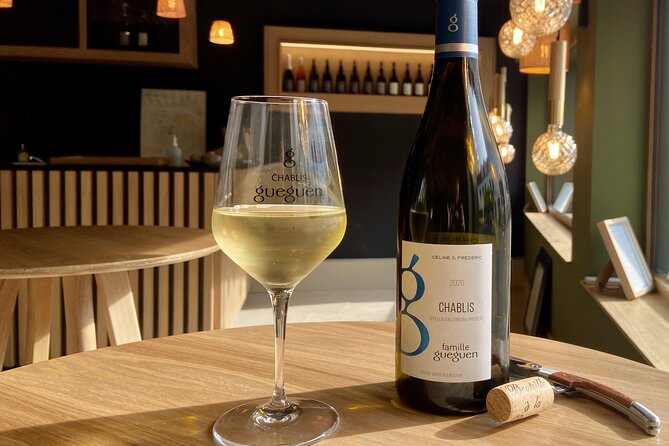
After the walk, you return to the meeting point for a cellar tasting. This is where the earlier explanations become practical. You can compare wines from the estate and consider how the different vineyard categories show themselves in the glass.
The tasting is described as generous, with a broad selection of Chablis and Burgundy wines. For the price, that is a major part of the value. A short vineyard walk by itself might suit a curious visitor, but the combination with several pours makes the outing feel like a full introduction to the producer.
The tasting is relaxed and informal. You are not rushed through a single sample before being sent on your way. The format allows you to ask questions and think about what you have seen outside.
One important detail is the Grand Cru policy. A Grand Cru is not guaranteed as part of the standard tasting. The provider explains that two Chablis Grand Cru wines can be tasted for a €5 supplement, subject to limited stock. If tasting Grand Cru is central to your plans, ask about availability and the supplement before or during the visit.
That small extra cost is worth considering. You have just walked through the Grand Cru vineyards, so trying one of those wines can complete the connection between site and bottle. Still, do not assume the $54.07 price automatically includes every top-level wine in the cellar.
Some outings have also included quality local dishes with the wine tasting. That detail is not presented as a fixed part of every departure, so I would not book on the assumption that food is always included. The reliable feature is the wine tasting itself.

Is the $54.07 price good value?
At $54.07 per person, the tour sits above a basic tasting but below a long, formal wine day. I think the price is fair if you value the explanation in the vineyard and the number of wines poured at the end.
You are paying for about two hours, a guided walk, access to a Grand Cru setting, and a generous tasting of Chablis and Burgundy wines. The practical benefit is that the walk gives meaning to the tasting. You are not simply buying several small glasses. You are getting an introduction to the producer’s work and the local vineyard structure.
The value is strongest for people who want to understand Chablis. If you only want to drink wine, a simple cellar tasting may be cheaper and easier. If you want to connect the wine to its growing sites, this experience offers more.
The possible extra €5 for two Grand Cru wines should be included in your budget if that part matters to you. Since stock is limited, paying the supplement may not always be possible. The standard tasting still offers a broad selection, so the add-on is a useful option rather than a reason to reject the tour.
Who should book this Chablis walk?
I would recommend this experience to first-time visitors who want an accessible introduction to Chablis wine. It is also useful for people who have already tasted Chablis but want to understand the difference between the four ranks and the individual vineyard areas.
Families can take part in the walk with children, but only people over 18 may consume alcohol. That makes the outing workable for adults traveling with children, provided everyone understands that the tasting is for the adults.
You should have a moderate level of fitness. The route is short, but rough ground and a steep section can be awkward in sandals or smooth-soled shoes. I would wear walking shoes, bring water, and carry a light rain layer even if the forecast looks promising.
Service animals are allowed. The tour is conducted in English, which makes it a practical choice for English-speaking visitors who want local wine instruction without needing French fluency.
This is less suitable if you need a fully accessible route, a guaranteed Grand Cru pour, or a weatherproof indoor program. The walk is a central part of the experience, and conditions can change the plan.
Booking and cancellation details
The tour is often reserved well ahead, with bookings averaging about 31 days in advance. That suggests you should reserve early if you are visiting Chablis on a fixed date, especially during a busy wine trip.
Free cancellation is available until 24 hours before the start time for a full refund. Changes or cancellations made inside that 24-hour window are not accepted for a refund. Cut-off times follow local time in France.
Because the activity depends on good weather, a provider cancellation for poor conditions gives you the choice of another date or a full refund. That policy makes it easier to book ahead, but I would still check the forecast before setting out and prepare for sun, heat, or rain.
Final verdict: a strong choice for curious wine drinkers
I would book the Walk in the Vineyards of Chablis Grands Crus if you want the place behind the wine, not just the wine itself. The vineyard views, explanation of the four Chablis ranks, and cellar tasting work well together, and the small-group setting can make the two hours feel personal.
The main cautions are clear: wear sturdy shoes, expect a climb, and do not count on a Grand Cru tasting unless you arrange the €5 supplement and stock allows it. On a hot or rainy day, the walking portion may be less comfortable or may shift partly to a vehicle visit.
For about $54.07, this is a well-balanced introduction to Chablis, especially for first-time visitors and anyone who wants to taste with a better sense of where the wine comes from.
FAQ
Where does the Chablis vineyard tour start?
The tour starts at 5 Bis Rue Jules Rathier, 89800 Chablis, France.
Where does the experience end?
The activity ends back at the same meeting point.
How long does the experience last?
The tour lasts approximately two hours.
What language is the tour offered in?
The experience is offered in English.
How much does the tour cost?
The listed price is $54.07 per person.
How many people can join the tour?
The maximum group size is 20 people.
Is the wine tasting included?
Yes. The experience includes a cellar tasting of Chablis and Burgundy wines.
Is a Chablis Grand Cru included in the tasting?
A Grand Cru is not guaranteed in the standard tasting. Two Chablis Grand Cru wines may be available for a €5 supplement, subject to stock.
Do I need good walking shoes?
You should wear sturdy footwear because the route includes rough ground and a fairly steep climb near the end.
What happens if the weather is poor?
The activity requires good weather. If the provider cancels because of poor conditions, you can choose another date or receive a full refund.