REVIEW · BEAUNE
Visit of our 15th century cellars
Book on Viator →Operated by Maison Champy · Bookable on Viator
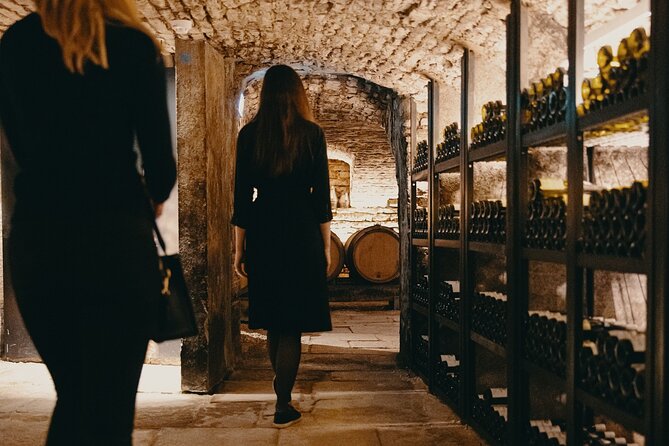
Beaune’s cellars feel like another century. At Maison Champy, you get a guided look underground in 15th-century cellars, plus historic buildings in the heart of town that tie the place to major figures and landmarks tied to science-era design and wine culture. It is a compact, 1.5-hour outing that focuses on how Burgundy’s top producers think and work.
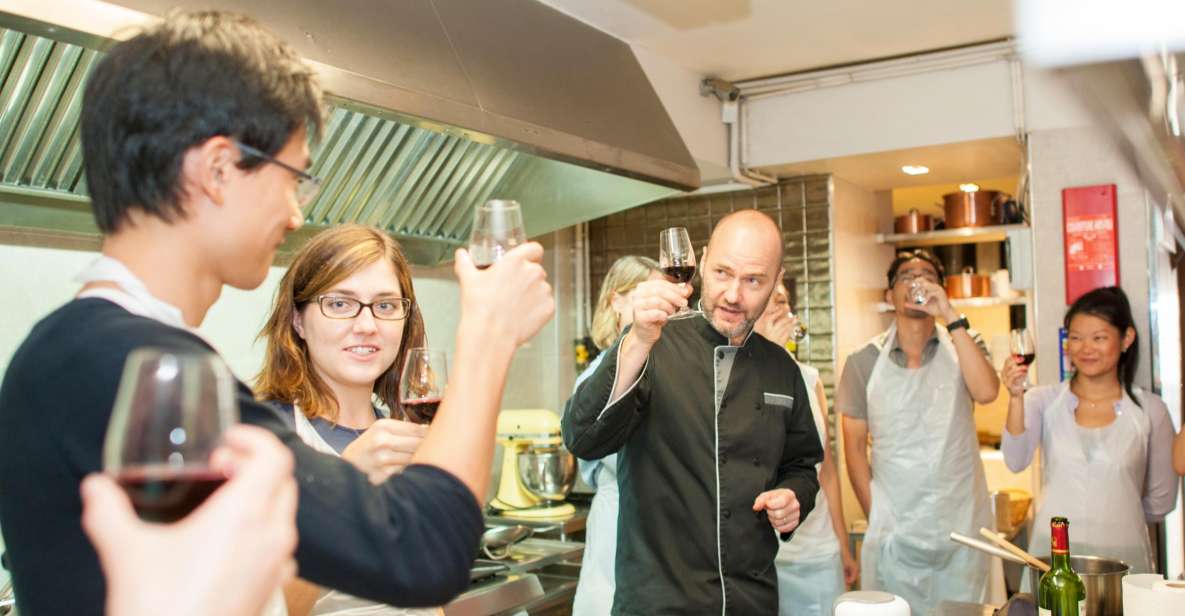
What I really like is the way the guide turns wine into something you can actually understand. With English guidance, you learn the basics of what separates Burgundy wines and why a top producer like Maison Champy is known for its Grand Crus, including Corton-Charlemagne. If you get Cyriane (the manager mentioned by name) or Mathis, you’ll likely appreciate how patient the explanations can be.
The main consideration is simple: this is a single-estate visit with a tight time window. If you’re hoping for a longer, multi-winery day to compare lots of styles, this one may feel short at 1 hour 30 minutes.
In This Review
- Key things to know before you go
- Entering Maison Champy’s cellar world in Beaune
- How the English-guided experience really helps
- The Burgundy wine lesson: terroir, vineyards, and Grand Crus
- What you can expect during the tasting
- Maison Champy’s historic buildings: more than scenery
- Small-group comfort and how to plan your day
- Who should book this Maison Champy cellar visit
- Price and value: is $30.17 worth it?
- Should you book the Maison Champy 15th-century cellars tour?
- FAQ
- How long is the Maison Champy cellars visit?
- What language is the tour offered in?
- Is admission included?
- How big is the group?
- When should I book to get a spot?
- What’s the cancellation policy?
Key things to know before you go
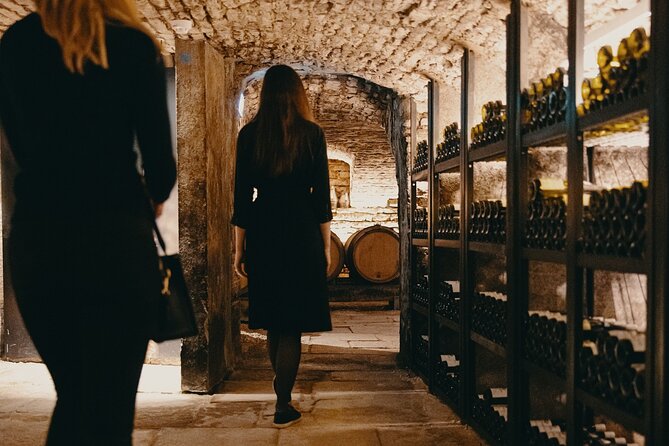
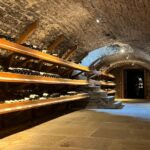
- 15th-century cellars at Maison Champy: You’re not just touring pretty rooms; you’re stepping into the kind of storage space that shaped Burgundy wine for generations.
- Historic-monument setting in central Beaune: The winery is tied to protected landmarks and unique architectural references connected to well-known names.
- English explanations that make Burgundy click: The guide focuses on clear differences in regional wine style so you leave with context, not just facts.
- Wine tasting that feels like part of the story: You taste while connecting what you see underground to what ends up in the glass.
- Small group size (max 8): Easier questions, less waiting, more back-and-forth.
- Mobile ticket and near public transport: Low-friction logistics for a town where you’ll likely be walking anyway.
Entering Maison Champy’s cellar world in Beaune
Maison Champy sits right in Beaune, so this doesn’t require a complicated commute or a whole-day plan. You’re dropped into a place with old-school credibility: founded in 1720, and tied to historic cellars that connect directly to how Burgundy wine has been stored and aged for centuries. That matters because Burgundy isn’t just about grapes. It’s also about time, temperature, and the quiet work of cellars.
One reason I’d pick this stop early in your Beaune trip is that it gives you a baseline. Once you’ve seen how a long-established producer operates in the same kind of space that shaped their wines, it’s easier to make sense of what you’ll later notice in shop tastings and museum-like exhibits around town. You also get the sense of scale and seriousness that comes from a winery tied to protected historic buildings, not a temporary set-up.
There’s also a practical side to starting with Maison Champy. The experience is timed and structured, and it runs about 1 hour 30 minutes. That makes it a good fit if you have limited energy for the day, or if you’d rather spend your time tasting and walking outside the rest of the afternoon.
You can also read our reviews of more tours and experiences in Beaune.


How the English-guided experience really helps
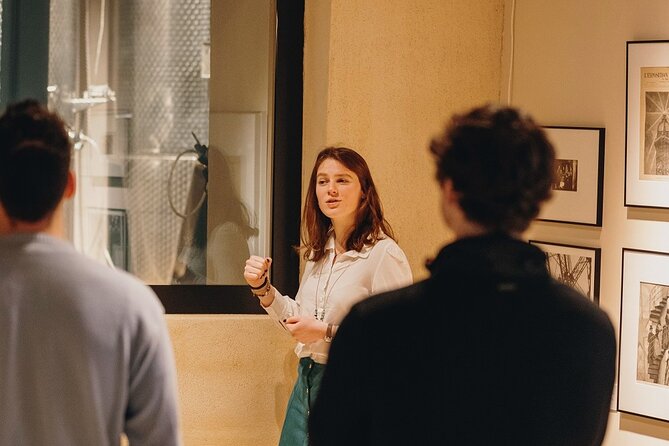
The biggest value here is the guide’s ability to translate Burgundy for real people. In the comments you’ll often see praise for clarity and patience in English, with guides named Cyriane (Cubadda) and Mathis called out directly. When a guide explains things calmly, you can actually follow along even if your wine knowledge is still at the basics level.
The explanation isn’t just about dates and names. It’s about how Burgundy’s structure works. You start learning how the region’s identity forms at different levels, and why a producer like Maison Champy is discussed internationally. The key point is that Burgundy isn’t one simple category. It’s a web of parcels, practices, and reputations built over long periods.
A smart move on your part: go in with a couple of questions ready. For example:
- Which Burgundy styles do you want to understand first?
- Are you more interested in sweet spot entry wines or top-tier Grand Cru names?
- What does it mean when people talk about differences between wines from Côte de Beaune?
That small prep turns the tour into something interactive. And since the group size is max 8, there’s a decent chance you can ask your questions without feeling rushed.
The Burgundy wine lesson: terroir, vineyards, and Grand Crus
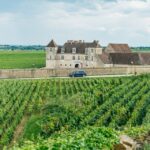
Maison Champy is known for top bottlings, and you’ll see the brand message connected to real-world specifics: vineyards on the Côte de Beaune, and Grand Crus such as Corton-Charlemagne. If you’re new to Burgundy, it helps to connect the famous names to the broader idea of place.
You’ll also get a sense of how modern methods show up inside an old cellar. A meaningful detail here is that a portion of the vineyard area is cultivated using organic farming methods. Even if you don’t get into agriculture trivia, this matters because Burgundy producers often talk about protecting the terroir. In plain terms: when you want the wine to reflect the ground and the climate, you pay attention to what you do (and what you avoid) in the vineyard.
What I like about this is that it makes the tasting smarter. If you understand that organic practices and careful parcel work are part of the equation, then the wines in the glass don’t feel random. They feel like a result of choices.
If you’re the kind of traveler who likes to leave with names you can remember, focus on the vineyard side. Pick one Grand Cru name you hear (like Corton-Charlemagne) and try to connect it to the idea of a top site within the Côte de Beaune. Later, when you see it on menus or in shop displays, you’ll understand what you’re looking at.
What you can expect during the tasting
The tasting is part of why this tour works, especially if you’re just starting your Beaune adventure. This isn’t the kind of outing where you only walk through rooms and leave with photos. The wine moment comes as a way to connect what you learned to what you can taste.
From what’s been shared by visitors, the tasting is held up as a strong point: people consistently mention the tasting quality and the overall flow of learning plus sampling. That’s exactly what you want from a winery visit. The guide builds context in the rooms, then the wine gives you a reality check.
One practical expectation: because the overall time is about 1 hour 30 minutes, the tasting won’t be a long seminar. It’s more like a focused introduction. Plan to take notes if you’re comparing wines later. Even just writing down which one you liked most is useful, because Beaune has a lot of options once you step back outside.
Also, be ready to talk with the group and ask for clarification. Small groups help here. When you can hear the guide clearly and ask follow-ups, the tasting stops being passive.
Maison Champy’s historic buildings: more than scenery
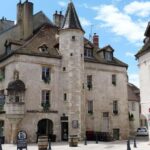
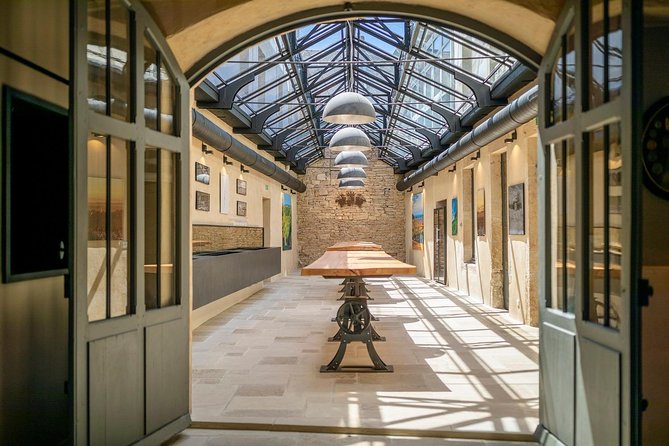
This estate isn’t only about wine storage. It’s also about a place shaped by architecture and cultural references that visitors can recognize quickly. Maison Champy is described as having buildings inspired by the Eiffel School, and those structures are listed as Historic Monuments.
If you’re wondering why architecture matters in a wine tour: it’s because it signals priorities. Protected buildings usually mean the estate has continuity, and continuity often means the winery’s decisions are long-term. That helps you understand why Burgundy producers become known for consistent styles and why cellars and buildings show up in the story.
One review detail adds another layer: the tour connects the Eiffel reference with a historical touch linked to Pasteur. Even if you only catch this as an interesting footnote, it makes the experience feel less like a generic wine stop. You’re seeing the winery in a broader context of ideas—science, design, and craft—rather than only rows of barrels.
My suggestion: slow down when you’re in the buildings. Look for the little cues the guide points out, because those details often explain why certain spaces were built the way they were. Then, when you go back into the cellars, it all feels like one coherent story.

Small-group comfort and how to plan your day
This is a tour with a maximum of 8 travelers, which is a big deal in Beaune. In crowded places, you end up watching the back of someone else’s head and trying to hear through the noise. Here, the smaller format makes the guide easier to follow, and it helps you stay engaged during the entire 90-minute block.
Timing-wise, you’re looking at a mobile ticket and a duration of about 1 hour 30 minutes. That’s helpful if you’re building a day around walking, meals, and a couple of tastings outside the main tour. Since it’s also near public transportation, you’re not stuck figuring out a very specific parking or far-from-town routing.
Another small planning note: on average it’s booked about 11 days in advance. That doesn’t mean you must book a month ahead, but it does mean this is not the kind of thing you should assume you can grab last-minute on a busy week. If Beaune is your main stop, booking earlier is a safe move.
If you want the best flow, pair it with lighter wine shopping afterward. After a cellar experience and tasting, your palate and your vocabulary are already warmed up. You’ll be able to focus on what you genuinely like rather than getting overwhelmed by options.
Who should book this Maison Champy cellar visit
This fits especially well if you want a high-quality introduction to Burgundy without turning your day into homework.
You’ll probably love it if:
- you’re new to Beaune and want a guided explanation in English
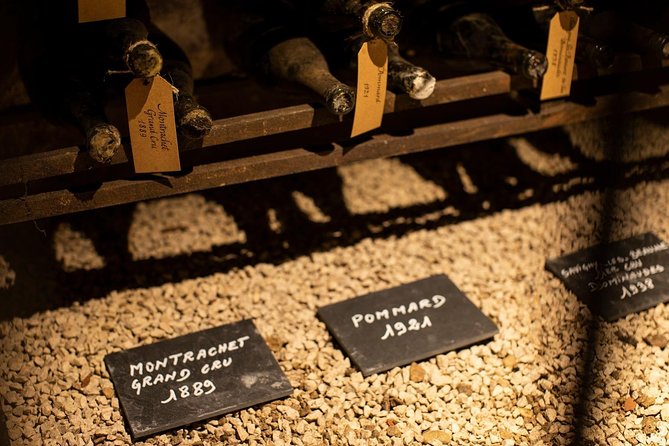
- you want a winery with real historical depth, including 15th-century cellars
- you’d enjoy learning about Côte de Beaune and Grand Crus such as Corton-Charlemagne
- you like the idea of an intimate group setting (max 8)
It may not be ideal if:
- you want a very long, multi-estate itinerary with lots of different producers
- you prefer strictly self-guided time, with no structured explanation
- you’re looking for something far outside central Beaune (this is in-town)
Price and value: is $30.17 worth it?
At $30.17 per person, the price feels reasonable for what you get: entry to a major estate, a guided English experience, access to historic cellars and protected buildings, plus wine tasting. The cost isn’t just paying to walk around. You’re paying for interpretation—how the guide connects the underground aging space, vineyard practices, and Burgundy’s reputation.
Where value shows up most is in your head, not just in your calendar. If you leave able to explain the basics of Burgundy style differences, that alone can make your next wine stop easier and cheaper. You’ll spend less time asking the same beginner questions in shops, and more time choosing wines you actually want.
Given the small group size and the strong emphasis on tasting plus clear explanations, this reads like a smart entry-level Burgundy experience rather than a tourist checklist item.
Should you book the Maison Champy 15th-century cellars tour?
Yes, if you want an easy, well-focused way to understand Beaune and Burgundy. The combination of historic cellars, a strong English-guided explanation, and a tasting that supports what you’re learning makes it a solid use of 90 minutes. With a max group of 8 and guides like Cyriane or Mathis referenced directly for patience and clarity, it’s also the kind of tour where you can ask questions and actually get answers.
If you already have a packed wine itinerary and want maximum variety across many wineries, you might feel this one is narrow. But for most first-time Beaune travelers, it’s a strong starting point that pays off in everything you do afterward.
FAQ
How long is the Maison Champy cellars visit?
It lasts about 1 hour 30 minutes.
What language is the tour offered in?
The tour is offered in English.
Is admission included?
Yes, the admission ticket is included.
How big is the group?
The tour has a maximum of 8 travelers.
When should I book to get a spot?
On average, this experience is booked about 11 days in advance.
What’s the cancellation policy?
You can cancel for a full refund up to 24 hours before the experience starts. If you cancel less than 24 hours before, you won’t get a refund.