REVIEW · PARIS
Verdun 1916 and AEF Meuse Argonne offensive 1918 – Private tour (2,7 pax)
Book on Viator →Operated by ADRIAN ROADS · Bookable on Viator
Verdun is not a quick museum stop. It is a full day of forts, shell-pocked ground, memorials, trenches, and cemetery rows, tied together by the story of soldiers who fought there. The most powerful part is the shift from the French and German battle at Verdun in 1916 to the American Meuse-Argonne offensive in 1918.
I like the private format, which gives your group room to ask questions and pause at places that matter to you. I also like the way the day includes both the excellent Verdun Memorial Museum and quiet sites such as Bayonet Trench and the Meuse-Argonne American Cemetery. The drawback is the long day: you leave Paris at 6:30 am and spend 13 to 14 hours on the road and at the sites.
In This Review
- Key points at a glance
- Why this World War I day trip matters
- Leaving Paris at 6:30 am
- The Verdun Memorial puts the battle in context
- Douaumont Ossuary and the human cost of Verdun
- Bayonet Trench is brief but unforgettable
- Fort Douaumont reveals the battle underground
- Montfaucon links Verdun to the American offensive
- Meuse-Argonne Cemetery brings the day to a quiet close
- What the $595.71 price includes
- Who should book this tour
- Final call: a serious day for serious history
- FAQ
- Where does the tour begin and end?
- What time does the tour start?
- Is hotel pickup included?
- Is the tour private?
- What is included in the price?
- Is the tour offered in English?
- Can I cancel for a full refund?
Key points at a glance
- Two major World War I battlefields in one day: Study Verdun in 1916, then follow the American offensive in Meuse-Argonne in 1918.
- A private English-language experience: Your group alone participates, making it easier to shape the pace and ask detailed questions.
- The renovated Verdun Memorial: See a battlefield replica, archival material, soldier artwork, and a large audiovisual presentation.
- Fort Douaumont and Bayonet Trench: Enter one of Verdun’s most important forts and visit a stark memorial to soldiers buried alive.
- The largest American military cemetery in Europe: Pay respects among 14,246 graves at Meuse-Argonne.
- Lunch and transport included: An air-conditioned vehicle, sandwiches with salad, a soft drink, and coffee are provided.
Why this World War I day trip matters
This tour works because it connects places that can feel scattered on a map. Verdun and Meuse-Argonne are not interchangeable battlefields. Verdun shows the brutal French-German struggle of 1916, while Meuse-Argonne brings you to the final major American offensive of the war in 1918.
You will not simply look at plaques and monuments. The day gives physical shape to the war. You see the defensive forts, the ground torn by bombardment, the remains of villages and shell holes near Montfaucon, and the carefully kept cemetery where thousands of American soldiers lie.
The setting also makes the scale of the fighting easier to grasp. A museum can explain troop movements and dates. A fort with narrow underground spaces, a monument built over human remains, or a cemetery stretching across a hillside gives those facts weight.
This is best for someone with a real interest in World War I. If you want a relaxed day out from Paris with only a little history, the early start and serious subject matter may feel heavy. If your family has a connection to the war, the private setup can be especially valuable.
You can also read our reviews of more private tours in Paris


Leaving Paris at 6:30 am
The meeting point is outside the Théâtre du Lido at 116 Avenue des Champs-Élysées. The tour returns to the same place, and hotel pickup and drop-off are not included, so plan your route to and from the Champs-Élysées before the morning departure.
The early start is not just a minor detail. Verdun is far enough from Paris that you need a full day to cover both battle zones. You will spend many hours in the vehicle, but round-trip transport removes the work of arranging separate trains, local connections, and site visits.
The vehicle is air-conditioned, and the activity is offered in English. Since only your group participates, the guide can spend more time on family connections or topics that interest you. One particularly personal account came from a group whose grandfather fought in World War I. Their guide, Regis, adjusted the discussion to the grandfather’s movements and made space for a private moment of remembrance.
That kind of attention is one of the strongest reasons to choose a private tour rather than a large group outing. It cannot be promised that Regis will be your guide, but the experience is designed for personal questions and discussion.
The Verdun Memorial puts the battle in context
The first major stop is the Verdun Memorial Museum, with about an hour inside. The museum was renovated and expanded for the centenary of the battle, and its design aims to present both the facts and the human cost of the fighting.
The central display is a replica of the 1916 battlefield inside a glass case. A 100-square-meter video wall shows the ground shaking and changing under constant shellfire. Archival images and artwork made by soldiers add a personal layer to the military story.
I find this a useful first stop because it gives you a framework for the rest of the day. Without some background, Fort Douaumont and the nearby memorials can seem like separate points on a long drive. Here, the battle’s scale and violence are laid out before you reach the sites themselves.
The upper floor opens toward the surrounding countryside, with terraces and wide views. That visual pause matters. You move from a dark, intense presentation to an open view of the ground where the battle took place.
One hour is enough for a focused visit, but not enough to read every display at length. If you are a serious museum reader, you may want more time than the schedule allows. The trade-off is that this tour takes you to several important places afterward rather than keeping you inside the museum all morning.
Douaumont Ossuary and the human cost of Verdun
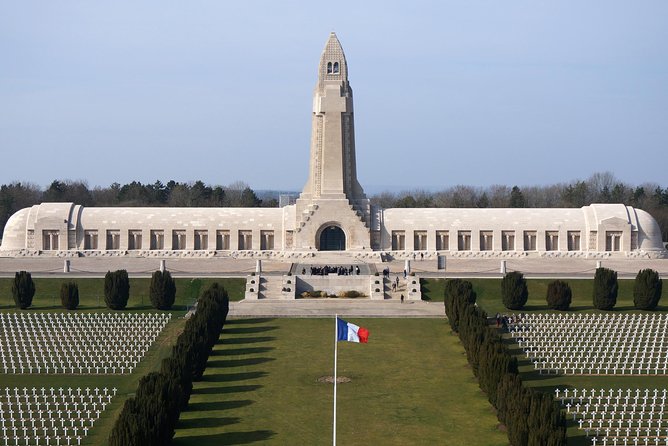
The Douaumont Ossuary is a short but solemn stop of about 30 minutes. It contains the remains of French and German soldiers killed on the Verdun battlefield. Through small exterior windows, you can see bones belonging to at least 130,000 unidentified combatants.
Inside, plaques cover part of the walls and ceiling with the names of French soldiers who died during the battle. The building is also a national cemetery, so this is not simply a historical attraction. It remains a place of mourning.
The shared presence of French and German remains gives the site a wider meaning. The dead are not separated into a neat story of victory and defeat. They are gathered together because the battlefield consumed soldiers from both sides.
You should expect a quiet, respectful visit rather than a conventional sightseeing stop. Thirty minutes is enough to see the main parts and absorb the atmosphere, though you may want longer if you have a family connection to the battle.
Bayonet Trench is brief but unforgettable
Bayonet Trench takes only about ten minutes, yet it may be one of the day’s most striking stops. A concrete slab supported by large pillars marks the place where French soldiers were reportedly buried alive after a shell explosion on June 12, 1916.
The story is tied to the bayonets that remained visible above the ground. Those tips led to the discovery of the bodies and gave the memorial its name.
The site does not require a long explanation to make an impression. It is small, stark, and difficult to treat as just another stop on a route. The short visit also shows one limit of a tightly timed day: you have time to pay respects and hear the story, but not to linger at length.






Fort Douaumont reveals the battle underground
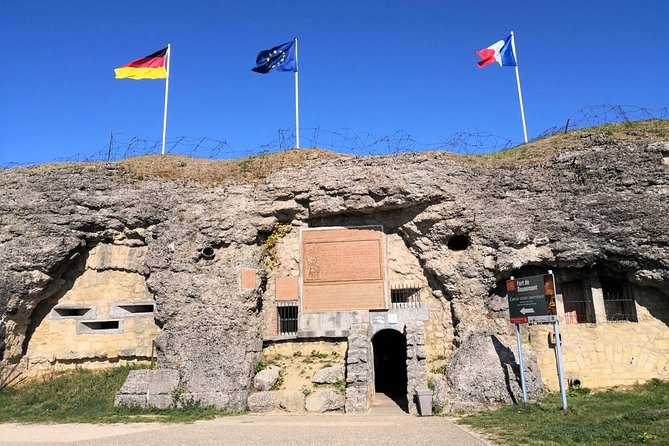
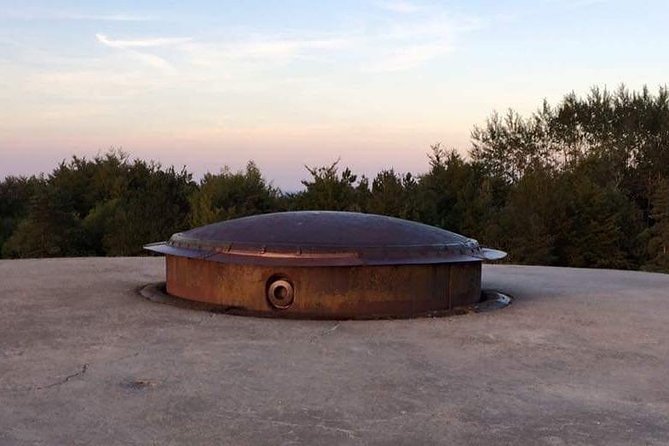
Fort Douaumont receives about 40 minutes and admission is included. It was the largest and highest of the 19 major forts built to protect Verdun from the 1890s onward.
By 1915, French commanders feared that even these defenses could not withstand Germany’s massive 420-millimeter guns. Four days after the Battle of Verdun began, on February 25, 1916, German forces took Fort Douaumont without a fight. The capture became a major German success and gave the German army a key shelter and support point on the east bank of the Meuse.
The fort remained under German control for eight months. French forces retook it on October 24, 1916, using colonial troops from the Morocco Colonial Infantry Regiment and the 43rd Senegalese Tirailleurs Battalion.
Inside, the fort helps you understand how soldiers lived and fought in a fortified position. Its importance is not just architectural. Control of Douaumont affected the wider battle, and the fort’s capture and recovery carried a price remembered in the words attributed to General Pétain, who said 100,000 French soldiers had died to retake it.
Fort Douaumont is one of the stops where your guide’s explanation matters most. The concrete rooms and corridors do not explain themselves. Dates, units, and the changing control of the fort turn a cold military structure into a place connected to decisions and lives.
Montfaucon links Verdun to the American offensive
The second half of the day shifts to the American Expeditionary Forces and General John Pershing’s Meuse-Argonne offensive. The campaign began on September 26, 1918, and continued until the Armistice on November 11.
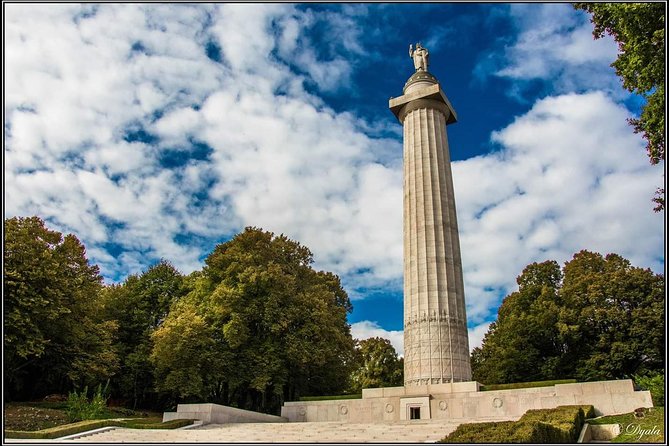
At Montfaucon, you visit the Meuse-Argonne American Memorial, maintained by the American Battle Monuments Commission. The monument rises 60 meters and is topped by a statue representing liberty.
Its location is important. It faces the front line held by the First American Army on the morning the attack began. From the observation platform, you can see much of the ground captured during the offensive, once considered the largest battle in American history.
Access to the platform depends on the opening times posted at the monument. That is worth checking during the visit, since the view is a major part of the stop. Even from below, the size of the memorial makes clear that this is a national monument, not just a local marker.
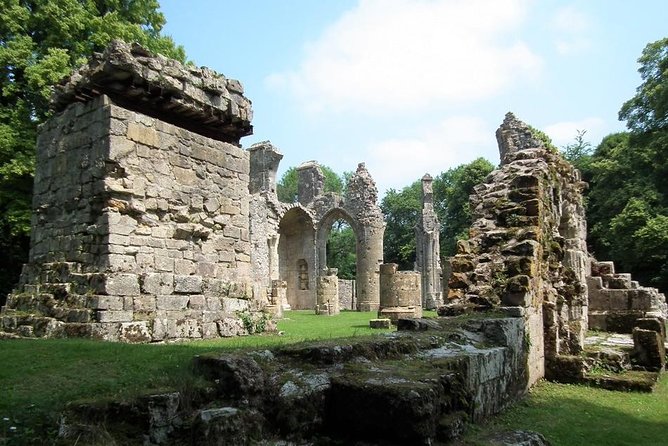
The nearby remains of ruined buildings and shell holes add a direct link to the fighting. The ground is not presented as a polished park with every trace removed. You might find the contrast between the tall memorial and the surviving damage especially effective.
The scheduled visit lasts about 40 minutes. That provides time for the monument, the view if open, and the guide’s account of the American advance, but it is another stop where you will need to keep moving.
Meuse-Argonne Cemetery brings the day to a quiet close
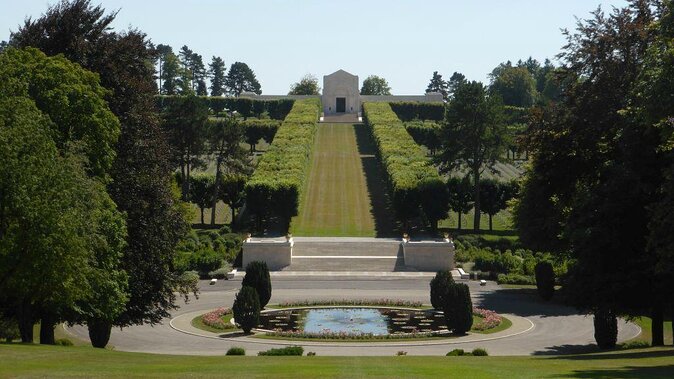
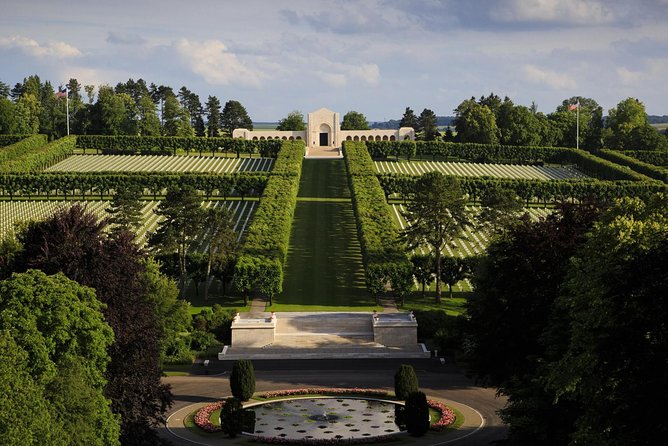
The final stop is the Meuse-Argonne American Cemetery, with about two hours set aside. It covers 130.5 acres and contains 14,246 graves, the largest number of American military dead in Europe.
The headstones run in long, orderly rows up the hillside toward a chapel. A wide central pool leads the eye through the grounds. After a day of forts, trenches, shellfire, and offensive maps, the calm design of the cemetery changes the mood.
This is the place to slow down. You can walk among the rows while your guide explains the stories of soldiers who fought nearby and later received the highest military decorations for bravery. The site gives individual names and lives a place within the larger campaign.
Two hours is generous compared with the shorter memorial visits earlier in the day. It allows time for a guided explanation as well as a personal pause. If you are tracing a relative, bring the soldier’s name and any details you have, though the tour information does not promise a dedicated genealogical search.
The cemetery is also where the tour’s emotional arc comes together. You have seen how the battlefield was defended, attacked, and reshaped. Here, you see the final cost in rows of white headstones.
What the $595.71 price includes
At $595.71 per person, this is a costly day trip. The price makes more sense for a small private group that values a personal guide and avoids the work of organizing a difficult route from Paris.
Included are the air-conditioned vehicle, a light lunch of sandwiches with salad, a soft drink, coffee, and admission to the Verdun Memorial and Fort Douaumont. The other listed memorials have no admission charge.
The value depends heavily on your group size. For a group of two, the per-person price is a serious expense. For a larger private group, the cost buys a full day of transport, an English-language guide, and a route that would be awkward to assemble independently.
Hotel pickup and drop-off are not included. You must reach the Lido meeting point in the morning and return there at the end. Confirmation is provided at booking, and the experience is near public transportation.
The lunch is practical rather than elaborate. That is fine for a day with long drives and several outdoor stops. You should think of it as fuel that keeps the schedule moving, not a separate dining experience.
Who should book this tour
I would choose this tour if you have a strong interest in World War I, military history, memorial architecture, or family history connected to the conflict. It is also a good fit if you want to see both Verdun and Meuse-Argonne without renting a car or managing local transport.
The private setup suits families and small groups. A personal connection can change the day, as shown by the way Regis adapted one group’s visit around a grandfather who had fought at Verdun. You can also ask for more detail about a particular unit, battle phase, or American connection.
I would hesitate if you dislike early starts, long road days, or emotionally difficult sites. The schedule is demanding, and the subject is not light. The tour also requires good weather, and cancellations can occur if the weather is poor or if the minimum number of participants is not met.
Free cancellation is available up to 24 hours before the start time for a full refund. Changes or cancellations inside that window are not accepted for a refund. If the provider cancels because of weather or insufficient participation, you are offered another date or experience, or a full refund.
Final call: a serious day for serious history
Book this tour if Verdun and the American war effort are important to you, especially if you are following a family story. The combination of museum context, forts, battlefield remains, monuments, and the Meuse-Argonne Cemetery gives you far more than a single memorial visit.
Skip it if you want an easygoing excursion from Paris. The 6:30 am departure, 13 to 14-hour length, and somber subject demand commitment. For the right audience, though, this is a thoughtful and personal way to pay respects while learning how two major World War I campaigns unfolded on the ground.
FAQ
Where does the tour begin and end?
The tour begins at the Théâtre du Lido, 116 Avenue des Champs-Élysées, Paris. It ends back at the same meeting point.
What time does the tour start?
The scheduled start time is 6:30 am.
Is hotel pickup included?
No. Hotel pickup and drop-off are not included. You must make your own way to the meeting point.
Is the tour private?
Yes. Only your group participates in this private activity. The tour is listed for groups of two to seven people.
What is included in the price?
The price includes an air-conditioned vehicle, a light lunch of sandwiches with salad, a soft drink, coffee, and admission to the Verdun Memorial and Fort Douaumont.
Is the tour offered in English?
Yes. The experience is offered in English.
Can I cancel for a full refund?
Yes, if you cancel at least 24 hours before the experience start time. Cancellations or changes made less than 24 hours before the start time are not refunded.