REVIEW · BORDEAUX
Bordeaux: Introduction to Bordeaux Wines Tasting Workshop
Book on GetYourGuide →Operated by Olala Bordeaux · Bookable on GetYourGuide
Three sips teach Bordeaux faster than you think. This one-hour workshop happens in the heart of Bordeaux, just a few steps from the Grand Théâtre, with a wine expert guiding you through terroir and tasting basics in a warm, bar-meets-class setup. I like that it’s not just drinking—there are practical exercises like aroma-based tasting that help you learn how to recognize what you’re smelling and why it matters.
I also love the value of the tasting lineup: you’ll get one white and two reds, including a Grand Cru, paired with local cheese and charcuterie (plus baguette and water). The only real drawback is time: at just 60 minutes, you’ll leave with solid tools, but you won’t master everything in one sitting—so go in ready to practice the basics, not chase perfection.
In This Review
- Key highlights you’ll feel right away
- Bordeaux wine basics, without the headache
- Getting there: a convenient start near the Grand Théâtre
- Your tasting lineup: white, two reds, and a Grand Cru
- Terroir, blending, and appellations: turning wine words into flavor clues
- Cheese and charcuterie: the smartest tasting tool in the room
- How the tasting teaches your senses, not just your vocabulary
- Price and value: why $34 makes sense for Bordeaux
- Who should book this workshop (and who might not)
- Should you book this Bordeaux wine tasting workshop?
- FAQ
- How long is the Bordeaux wines tasting workshop?
- How much does it cost?
- What wines are included in the tasting?
- Is food included, or should I eat beforehand?
- Is it a small-group experience?
- What languages does the instructor speak?
- Is this suitable for children?
- Are pets allowed?
- Can I cancel if my plans change?
- Where do I meet?
Key highlights you’ll feel right away
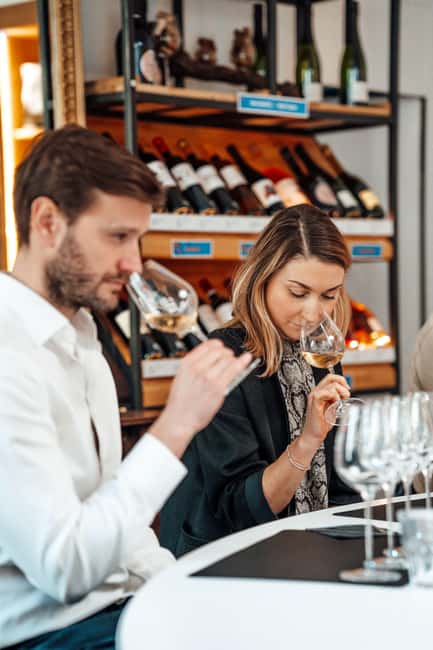
- A fast, structured tasting: look, smell, taste, then put words to what you notice
- Three wines included: 1 white + 2 reds, including a Grand Cru
- Terrior-to-flavor explanations: soil, climate, grape variety, appellations, and blending
- Cheese and charcuterie pairings: learn how food changes what you taste
- Interactive teaching style: Q&A plus exercises that make the session feel lively
- Small-group feel: easier to ask questions and stay engaged
Bordeaux wine basics, without the headache
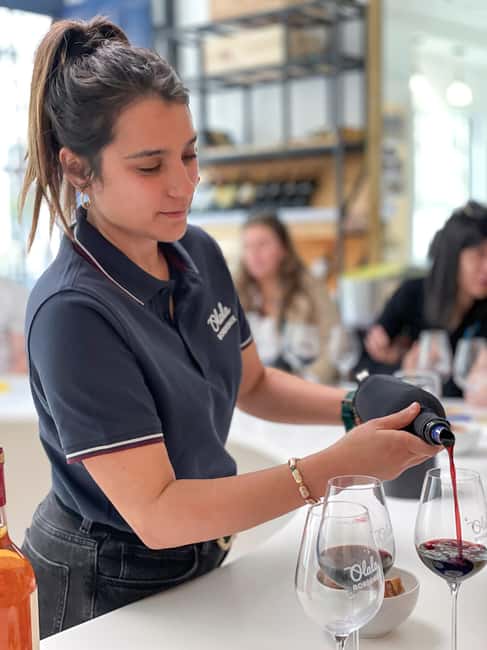
Bordeaux can feel like a password you don’t yet know. You hear words like appellation, blending, and terroir—and suddenly the wine list starts reading like a map of places you’ve never visited.
This workshop helps you put those terms to work, fast. Instead of treating Bordeaux like a trivia contest, you learn how the land and the choices made in the winery show up in the glass. The idea is simple: soil and climate shape the grapes, the grape variety and appellation help explain style, and blending is where Bordeaux often reveals its real personality.
What I like about this approach is that it gives you language you can actually use while you’re tasting elsewhere—at a shop, at a restaurant, or during a day trip out to the region. You don’t need to memorize anything. You learn the logic: what to look for first, what to smell next, and how to connect a flavor to the idea behind it.
In past sessions, guides such as Antoine and Anna have been praised for keeping things clear and engaging, with room for questions. That matters because Bordeaux is confusing mainly because no one bothered to translate it into everyday taste.
You can also read our reviews of more food & drink experiences in Bordeaux
Getting there: a convenient start near the Grand Théâtre
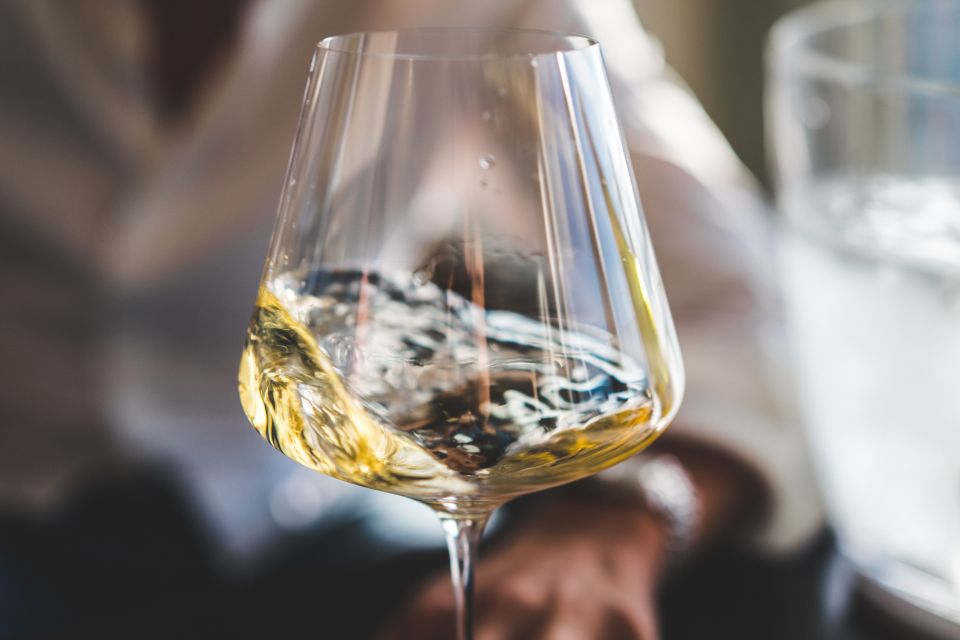
Location is part of the experience here. The workshop takes place in the center of Bordeaux, “a few steps” from the Grand Théâtre, which is handy if you’re already walking the city streets and want a short, satisfying stop.
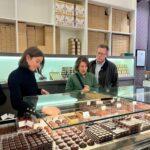
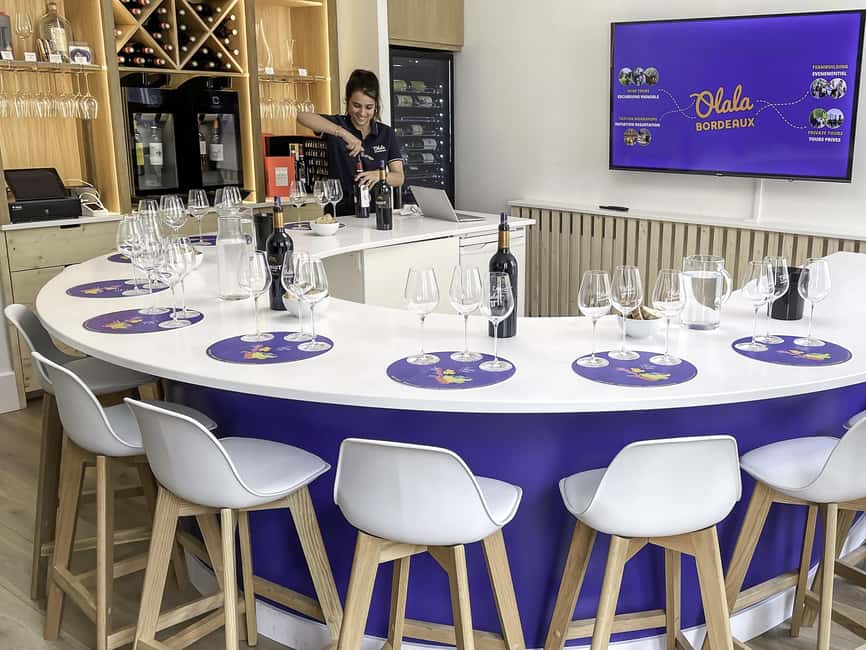
You’re also not squeezed into a random corner. One participant noted that Olala Bordeaux has its own dedicated space in the city, small but brightly lit, and with white tables—a small detail, but it helps when you’re trying to judge wine color and clarity.
Timing is also friendly. The session is 1 hour, so it fits into a travel day without turning into a half-day commitment. If you’re pairing your plans with other Bordeaux highlights (like a museum visit earlier in the day), this can work as a “how to taste” follow-up, because you’re learning a method, not just consuming wine.
Language is practical too: the instructor speaks English and French, and the group is listed as small. That usually means you can ask follow-up questions instead of shouting over a crowd—and in a tasting class, that makes a difference.
Your tasting lineup: white, two reds, and a Grand Cru
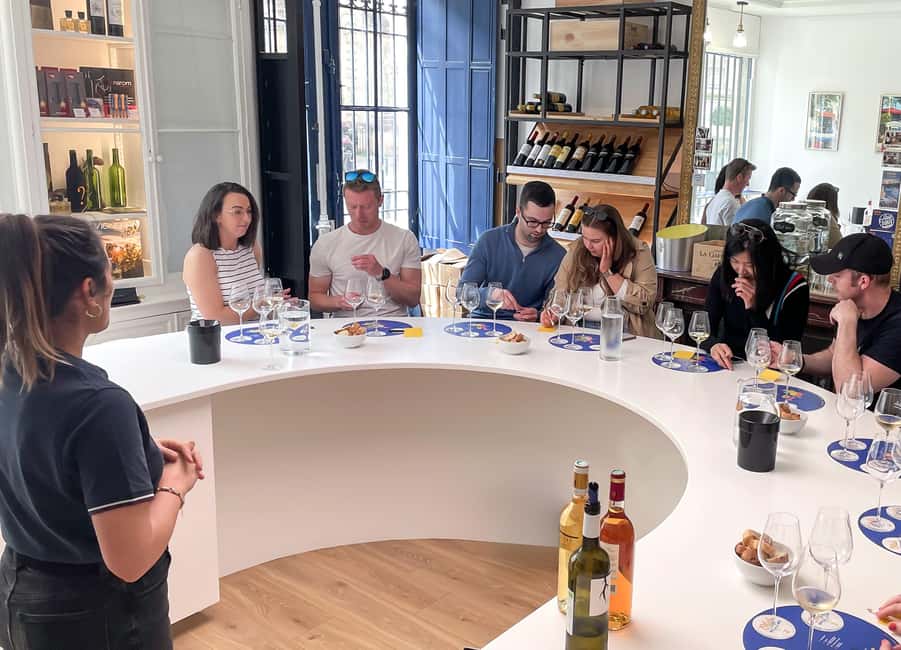
Here’s what you actually drink: 1 white wine and 2 red Bordeaux wines, with one of the reds including a Grand Cru. This mix is a smart way to learn Bordeaux style, because you’re tasting across wine types, not just one lane.
You’ll also get paired food at the same time: a selection of local cheese and charcuterie, served with baguette, plus water. The water is not an afterthought—it helps you reset your palate between tastings.
How you taste matters. The workshop is designed as both an oenology lesson and a wine bar moment, so you move through tasting steps like:
- noticing the wine’s look
- smelling for aromas
- tasting and describing
- comparing impressions as the food changes your palate
One review mentioned a blind tasting and an aroma kit activity, which makes sense for a class that’s trying to teach aroma identification, not just “taste and nod.” Since the exact exercises can vary by session, don’t count on every activity—but the goal stays the same: train your senses to notice patterns.
You’ll likely also pick up what to call what you’re tasting—fruit, spice, wood, tannin feel, freshness—so you can describe it later without sounding like you’re guessing.
Terroir, blending, and appellations: turning wine words into flavor clues
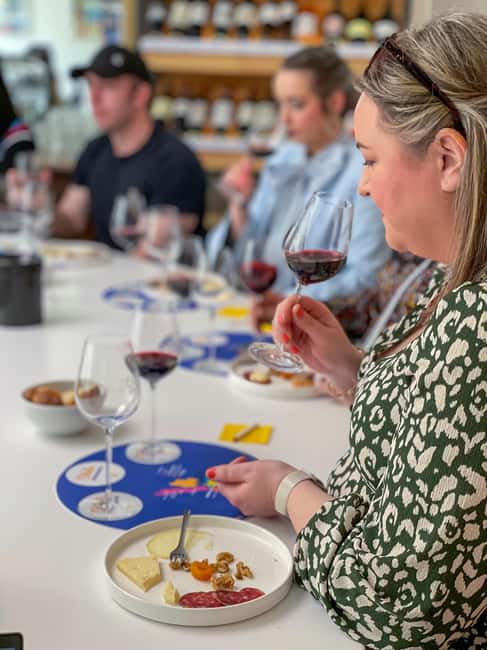
The big concepts you’ll cover are terroir, grape variety, appellation, and blending. If those words made you roll your eyes before, this is where they become useful.
Think of it like this:
- Terroir is the winemaker’s starting point: soil texture, drainage, and microclimate influence how grapes ripen and what flavors show up.
- Grape variety tells you the core flavor tendencies—what kinds of fruit, spice, or structure you might expect.
- Appellation (in Bordeaux) gives you a regional identity: what’s typical there, and how the rules and traditions affect style.
- Blending is the balancing act. Bordeaux reds often combine grapes to soften edges, add complexity, and shape tannin and acidity.
In a 60-minute format, you can’t cover every detail of Bordeaux’s history. What you can do—and what this workshop aims for—is connect those ideas to what you’re tasting right now. When you understand why a blend was made, it changes how you read the glass. You stop thinking, I don’t know what this is, and start thinking, I can see what it’s trying to do.
That’s why this class is useful even if you already visited a big wine museum. One participant worried it would feel repetitive after visiting La Cité du Vin, but the takeaway was that the tasting taught new topics in a different way—less “look at facts,” more “learn how to notice.”
Cheese and charcuterie: the smartest tasting tool in the room
Wine tasting classes often ignore the most practical tool: food.
Here, you get a board of local cheese and charcuterie, served with baguette. Cold cuts and cheese work well for beginners because they create obvious changes in the way wine feels on your palate. Salty, fatty, and sometimes a little savory bitterness from charcuterie can make tannins seem smoother—or can highlight acidity in a way you wouldn’t notice with plain crackers.
The session also touches on food and wine pairing, which is where the class becomes more than a sip-and-smile activity. Instead of memorizing pairings, you learn why pairings work: fat and salt affect perception, acidity cuts through richness, and flavors can amplify or clash.
If you’re the type who always orders cheese and wonders what it’s doing to the wine, you’ll enjoy this part. Even if you’re not a big eater, the board gives you something concrete to test tasting impressions against.
And because you’re tasting three wines, you can compare how each one reacts with the food. That comparison builds instincts faster than a lecture.
You can also read our reviews of more wine tours in Bordeaux

How the tasting teaches your senses, not just your vocabulary
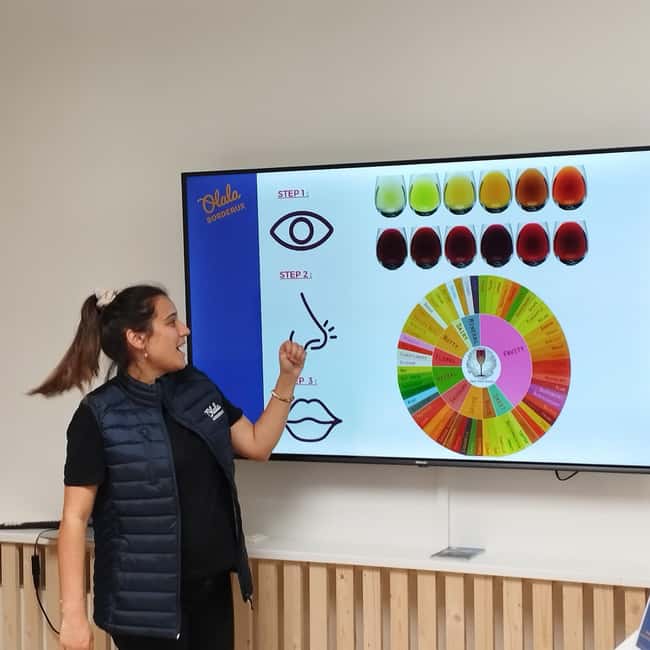
The workshop walks you through wine tasting in a relaxed atmosphere. You learn the different tasting steps, then you practice identifying aromas.
In other words: you train your nose and your brain to connect smell to flavor. One review specifically mentioned that they learned how to smell and taste individual flavors for the first time, and that it made the whole experience feel more real and less mysterious.
You might also get scent exercises. Aroma kits and smell tests are mentioned as part of the experience by participants, and that fits the format: wine aromas can be hard to name unless someone gives you a method.
Here’s the practical value you’ll take with you:
- You’ll know when to swirl (and when not to overthink it)
- You’ll learn how to separate fruit aromas from wood or spice impressions
- You’ll understand how tannin and acidity feel, even if you don’t have a wine “background”
If you’ve ever tasted wine and felt like you were either guessing or copying someone else’s description, this style helps you stop relying on luck.
You’ll also get information brochures, which are handy for review later. They don’t replace real practice, but they help you keep the tasting logic straight when you’re back on your hotel bed with memories and a few half-formed questions.
Price and value: why $34 makes sense for Bordeaux
At $34 per person for three wines, plus cheese/charcuterie, baguette, water, and teaching materials, this is priced like a serious tasting—not a light snack.
The “value” piece isn’t just the wine count. It’s that you’re paying for:
- a guided structure for tasting
- explanations that connect concepts to what you see and taste
- a small-group environment where you can ask questions
- food that actively changes how the wine registers
If you’re comparing this to casual wine tastings where you pay for pours with no method, the difference is obvious. You leave with skills you can reuse. Even a short session can be a confidence boost, especially before you do a longer wine day in the region.
And if you’re planning to visit more wine stops—shops, cellars, or a winery tour next—you’ll likely find that this one-hour session makes the next tasting easier. You know what you’re looking for.
Who should book this workshop (and who might not)
This experience is listed for adults and teens 16 and older. It also has a no pets rule, and it does not allow unaccompanied minors. If you’re traveling with kids younger than 16, plan on a different Bordeaux activity.
Who it suits well:
- You’re curious about Bordeaux but want a guided start
- You want a short, high-satisfaction activity in central Bordeaux
- You’d like to learn how to taste—smell, describe, compare—rather than just drink
- You’re a couple or a small group who enjoys a social, relaxed learning vibe
If you’re a hardcore wine nerd who wants deep technical detail, you might feel the time limit. But the point here is entry-level clarity with real practice.
One small consideration to keep in mind: some people noted that the session’s flow could feel talk-heavy at moments. That doesn’t mean it’s slow or unfun, but if you’re the type who learns best by doing nonstop, plan to ask questions early and keep yourself engaged with the tasting exercises.
Should you book this Bordeaux wine tasting workshop?
Yes, if you want the quickest path from confused to confident in Bordeaux wines. For $34 and one hour, you get a focused introduction to how Bordeaux works—through three tastings, food pairings, and sensory training like aroma exercises. It’s a smart way to get your bearings fast before you branch out into Bordeaux wine shops and winery tours.
Book it especially if you:
- want to learn tasting basics you can reuse immediately
- like hands-on learning more than museum-style facts
- prefer a small-group format where you can ask questions
- want a central-city activity that doesn’t eat your whole day
Skip it if you’re looking for a full winery visit or a long, technical masterclass. This is a short workshop, designed to teach you how to taste, not replace a multi-hour tour.
FAQ
How long is the Bordeaux wines tasting workshop?
It lasts 1 hour.
How much does it cost?
The price is listed at $34 per person.
What wines are included in the tasting?
You’ll taste 1 white wine and 2 red Bordeaux wines, and one of the reds includes a Grand Cru.
Is food included, or should I eat beforehand?
Food is included. You get a board of local cheese and charcuterie with baguette, plus water.
Is it a small-group experience?
Yes. A small group option is available.
What languages does the instructor speak?
The instructor is listed as available in English and French.
Is this suitable for children?
No. It is not suitable for children under 16.
Are pets allowed?
No, pets are not allowed.
Can I cancel if my plans change?
You have free cancellation up to 24 hours in advance for a full refund, and there’s also a reserve-and-pay-later option.
Where do I meet?
The meeting point may vary depending on the option booked, but the workshop is described as being in central Bordeaux near the Grand Théâtre.