REVIEW · STRASBOURG
Strasbourg: France and Germany Border Walking Tour
Book on GetYourGuide →Operated by Bretzel&Fun · Bookable on GetYourGuide
Germany is one bridge away. This Strasbourg-to-Kehl walk is a fast, fun way to see how France and Germany touch on the Rhine, plus it mixes street art culture with real industrial and border history. I love the simple wow-factor of crossing into Germany by foot, and I love how the guide connects what you see on the street to what shaped the region over time. One drawback: it’s a walking tour with no wheelchair-friendly setup, so if mobility is an issue, you’ll want to look for another option.
You start with a local at the tram stop Starcoop and keep things moving in a small group (up to 6). With a guide like Nicolas, the tone stays upbeat and practical, including tips for navigating Kehl and where to eat and shop once you’re across.
In This Review
- Key points to look for
- How the Strasbourg–Kehl border walk works in 90 minutes
- Coopérative district and Port du Rhin: where Strasbourg is reinventing itself
- Jardin des Deux Rives: the Rhine as a shared public space
- The 2003 pedestrian bridge: EU freedom, up close
- Kehl: a small German doorstep across the Rhine
- Street art and border history, explained without the snooze factor
- Price and logistics: why $35 for two countries can be a smart deal
- Who should take this walk (and who may not love it)
- What to bring so the tour feels easy
- Should you book the Strasbourg to Kehl border walking tour?
- FAQ
- Where do I meet the guide?
- How long is the tour?
- How big is the group?
- What languages are the tours offered in?
- Do I need a passport or ID card?
- Is there border control when crossing into Germany?
- Is the tour suitable for people with mobility impairments?
- Can I cancel or reschedule if plans change?
Key points to look for
- Cross the border on foot into Kehl and feel the EU “move freely” vibe up close
- Street art + industrial Strasbourg in the Coopérative district and around Port du Rhin
- Jardin des Deux Rives gives you Rhine views from both sides in one stroll
- Kehl is a quick taste of Germany with local customs explained so you’re not guessing
- Small-group pacing keeps questions easy and the tour more personal
How the Strasbourg–Kehl border walk works in 90 minutes
This tour is built for people who have limited time in Strasbourg but still want something more meaningful than a postcard loop. In about 90 minutes, you’ll cover enough ground to see how the city changes from one side of the Rhine to the other, without turning it into an all-day mission.
Logistically, plan to bring a passport or ID card. Even though there’s no border control during the crossing, you’re technically moving into Germany, so treat it like a real border crossing for your planning. The guide leads the group in French and English, and the tour runs with a live guide for a reason: you’re not just walking, you’re getting the why behind the places.
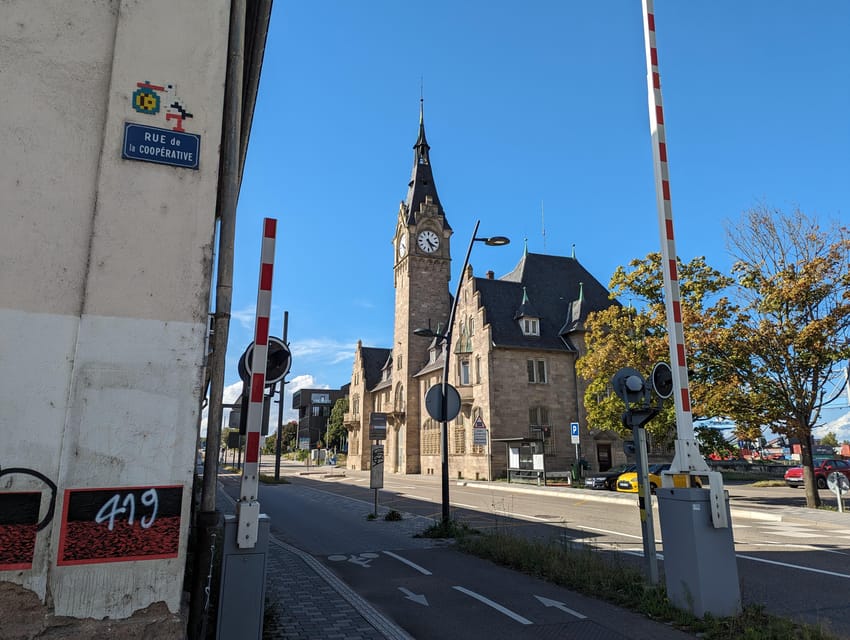
You’ll meet your guide at the tramway stop Starcoop. That matters because the walk starts in an area that sets the theme right away: the city’s shift toward new development, still tied to old industry, and close enough to the Rhine to make the border feel like part of daily life.
Finally, remember this is not suitable for people with mobility impairments. Even with a short duration, you’ll be on your feet, walking between districts and across the bridge.
You can also read our reviews of more walking tours in Strasbourg


Coopérative district and Port du Rhin: where Strasbourg is reinventing itself
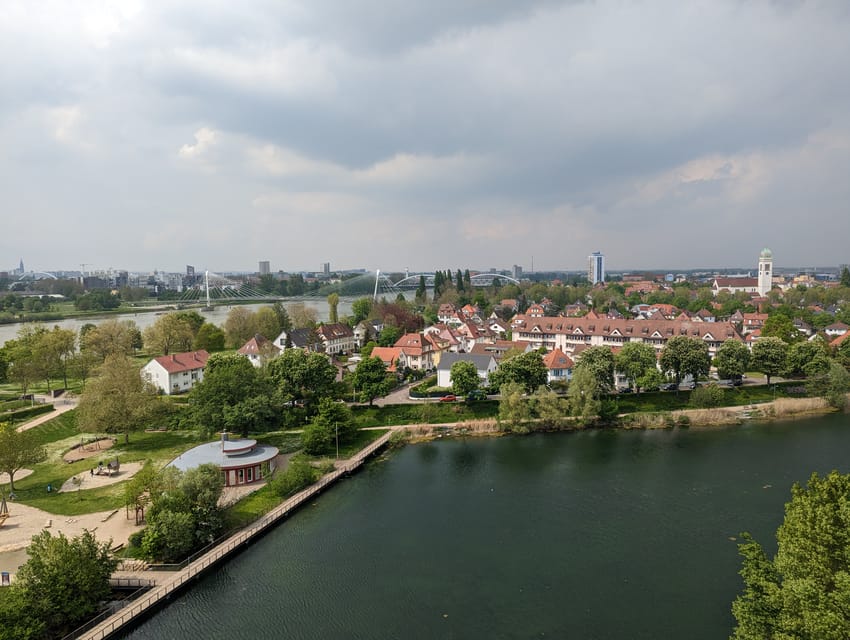
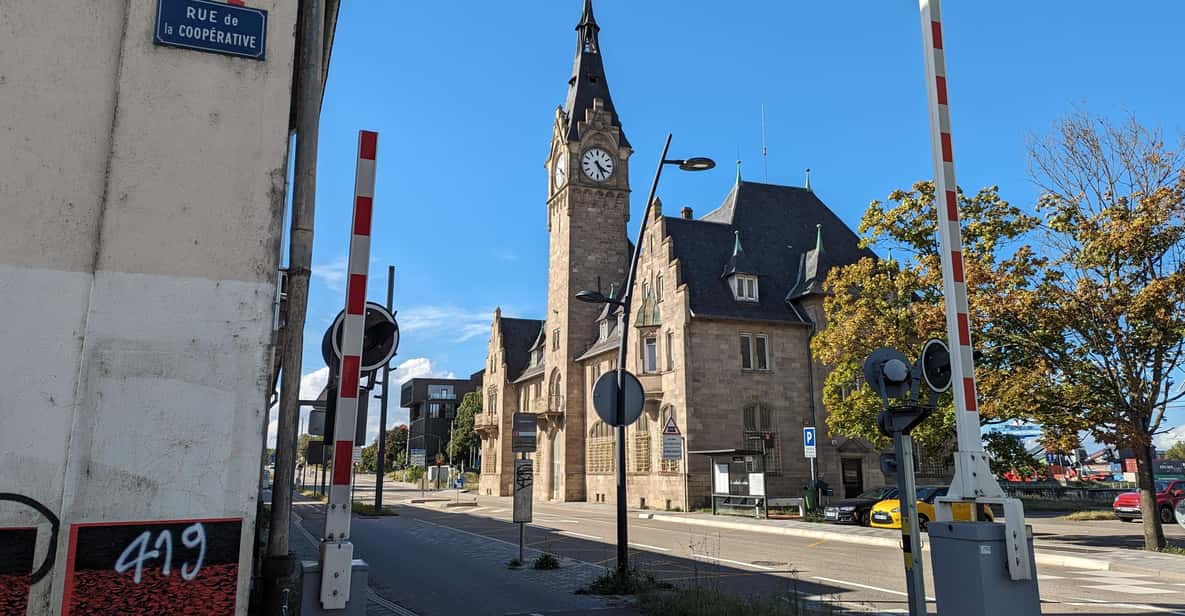
The tour begins in the Coopérative district, a neighborhood in the making. That’s a clever start point because it frames Strasbourg as a city that grows while it remembers. You’ll cross through this developing area before heading toward the waterfront, so you can see the “new” first, then understand what it’s built on.
Next comes Port du Rhin, the big Rhine harbor. This is where the industrial backbone of Strasbourg comes into focus. Expect stories and anecdotes tied to how the port worked and why it mattered to the city’s position at the Rhine crossing. The guide uses this setting to explain how the region’s geography has always pulled people, goods, and ideas across borders.
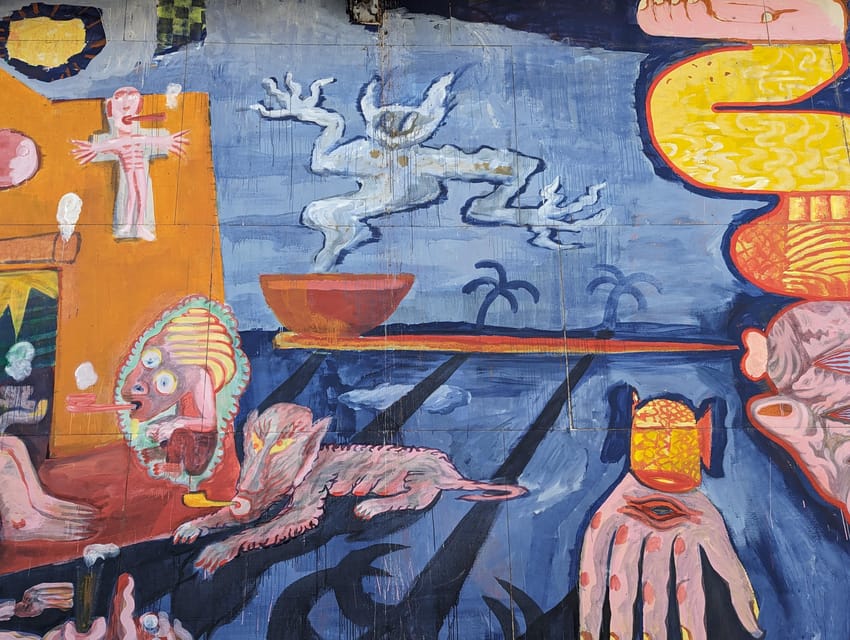
Then there’s the street-art culture. Strasbourg is known for artists who paint the city’s walls and corners like they belong to the same conversation as its architecture. You’ll see the most famous pieces tied to the local scene, with the guide explaining how the art fits the identity of the city. It’s not just a quick look at murals. You get context for why this style took hold here and what it says about the community.
Practical note: street art and industrial areas are great for photos, but lighting can change fast depending on the time of day and weather. If you like photos, bring a camera/phone that’s ready to shoot at walking speed.
Jardin des Deux Rives: the Rhine as a shared public space

The Jardin des Deux Rives is one of the most practical places to understand the border. It’s a symbol of Strasbourg’s closeness to Germany, and the design lets you enjoy the Rhine as something both sides share.
This is your reset point in the walking rhythm. The guide will talk about life on the border—how daily movement happens for workers, shoppers, and ordinary people. You can picture the Rhine not as a wall, but as a commute route.
You’ll also get the cultural and architectural differences explained in plain terms. The value here is that the tour doesn’t treat borders like history museums only. It shows that today’s differences still shape how people build, shop, socialize, and move through neighborhoods.
And yes, you’ll have time to stroll along both banks. The garden is the kind of place where you can slow down enough to look, even while the tour keeps moving. If you’re traveling with kids, this section can be a nice break from constant narration—there’s room to breathe, look at the river, and take in the views.
The 2003 pedestrian bridge: EU freedom, up close
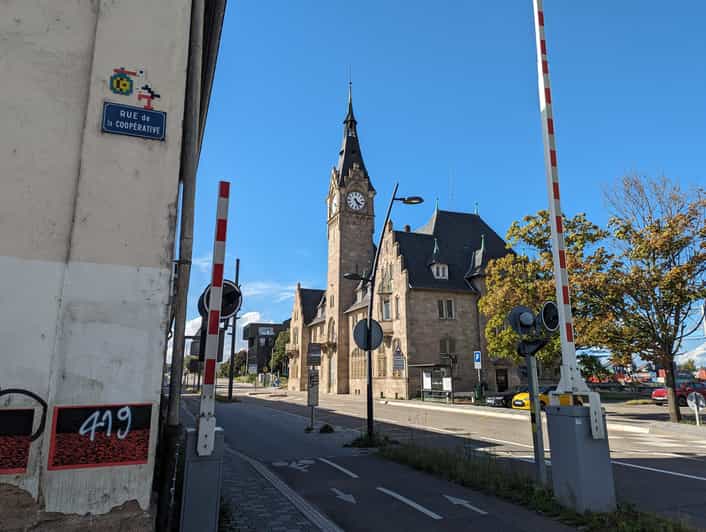
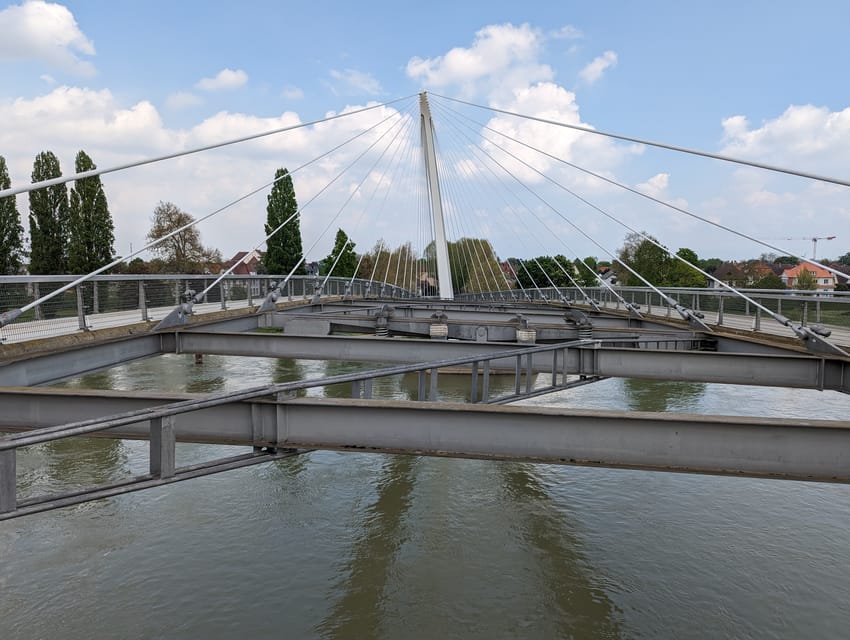
Crossing the river is the big moment. The bridge you’ll use is pedestrian and cycle-only, inaugurated in 2003, and it’s a strong symbol of how EU membership makes cross-border movement feel normal.
Walking onto the bridge changes the vibe right away. From there, you’re not “going to Germany someday.” You’re doing it, in the simplest way possible—your feet, your pace, and a view that keeps reminding you why Strasbourg and Kehl are linked.
As you cross, the guide ties in border history, including relevant WWII context that helped shape the region. The way it’s explained matters. You’re not reading a textbook. You’re looking at a geography that affected real lives, then hearing how the past is still visible in how these cities relate.
Photo opportunities come naturally here. It’s open space, the river creates a visual frame, and you’ll get a viewpoint that’s hard to recreate from ground level.
Kehl: a small German doorstep across the Rhine
Once you reach Kehl, you’re in a town that functions like a neighbor’s living room—small, close, and surprisingly satisfying to explore briefly. Kehl is described as a charming town, and it’s also presented as the first German city to cross the Rhine from Strasbourg’s side.
The guide explains how Kehl feels different from Strasbourg, not by lecturing, but by pointing out practical day-to-day contrasts: language habits, small customs, and what to watch for as you navigate streets and shops. This is where the tour becomes extra useful if you don’t speak much German. You’ll get help translating how locals think, so you’re less likely to feel lost once the walking stops.
You’ll also get recommendations for where to eat and shop, and those kinds of practical suggestions can be worth more than you expect. One of the most useful takeaways from people who’ve done this tour is that going to Kehl on your own can be tricky, especially when you’re short on time. A guided start helps you understand the layout and what’s worth your attention.
The tour finishes in the German city center, which is a smart choice. You end where you can actually use the information immediately—grab a meal, browse, or keep exploring without backtracking.




Street art and border history, explained without the snooze factor
This tour works because it blends three themes in a way that feels human: art, industry, and the history of the border.
The street art pieces aren’t treated like random decoration. The guide connects the art scene to Strasbourg’s identity, so you understand it as local communication, not just aesthetic wallpaper. That’s why people who care about culture often walk away feeling they saw something “real.”
Then the industrial harbor stories give the art context. When you understand how a city’s economy shaped its walls, bridges, and movement patterns, the border stops being an abstract concept. It becomes part of the city’s daily rhythm.
Add in the WWII references, and the tour lands with more meaning. It’s not about fear or doom. It’s about why these cities developed the way they did, and why the Rhine crossing became such a practical, emotional, and political line.
One small detail I appreciate: the guide keeps space for questions. If you want a specific answer—about the EU, daily life, or even local sports chatter—this kind of tour tends to handle it better than rigid audio-guide routes.
Price and logistics: why $35 for two countries can be a smart deal
At $35 per person for 90 minutes, this isn’t expensive in the way “good deal” pricing sometimes is. You’re paying for a live guide, small-group attention (max 6), and a route that includes an actual border crossing and multiple themed stops—street art, the Rhine garden area, industrial harbor history, and a quick walk into Kehl.
What makes the value feel real is the practical help at the end. If you were planning to visit Kehl anyway, the guide tips can quickly add up: knowing what to look for, where to eat, and how to handle the first-time awkwardness of moving into Germany.
Also, the tour is timed right for visitors with tight schedules. You can do it early in your Strasbourg trip to orient yourself. Afterward, you’ll know the Rhine neighborhoods and the border geography, which makes everything else easier.
Who should take this walk (and who may not love it)
This is ideal if you:
- Want a short experience that still feels like “two countries”
- Like history told through places, not just dates
- Enjoy street art and want real context
- Are traveling with kids old enough to walk for 90 minutes (this duration works well for many families)
- Appreciate EU border freedom explained in everyday terms
You might skip it if:
- You need a mobility-friendly route. This one is not suitable for mobility impairments.
- You hate walking as a default. Even with a small-group pace, you’ll still be moving for most of the tour.
What to bring so the tour feels easy

At minimum: passport or ID card. That’s the only “must” listed, but it’s not a small detail. The tour crosses into Germany, and you’ll want your documents ready.
Other helpful items, based on the walking nature of the route:
- Comfortable shoes with grip
- A phone/camera for the bridge and Rhine viewpoints
- A layer for river wind (Rhine areas can feel cooler than you expect)
If weather turns, don’t automatically cancel in your head. The route stays interesting because the tour is about meaning, not just sunshine. People have still enjoyed it even when conditions weren’t perfect.
Should you book the Strasbourg to Kehl border walking tour?
If you want a quick, high-impact way to understand why Strasbourg sits so close to Germany, book it. The border crossing, the Jardin des Deux Rives stroll, and the mix of street art plus industrial harbor history make the 90 minutes feel like more than a simple walk.
I’d especially recommend it if it’s early in your trip and you want the guide’s help to make the rest of your time smoother—especially once you’re in Kehl, where practical advice makes exploration easier.
Skip it only if mobility is a concern or if you’re looking for a more relaxed sit-down sightseeing style.
FAQ
Where do I meet the guide?
You meet your guide at the tramway stop Starcoop.
How long is the tour?
The tour lasts 90 minutes.
How big is the group?
It’s a small group limited to up to 6 participants.
What languages are the tours offered in?
The live tour guide speaks French and English.
Do I need a passport or ID card?
Yes. Bring either your passport or an ID card.
Is there border control when crossing into Germany?
There’s no control at the border, but you should keep in mind that you’re not in France for all formalities like visa and insurance.
Is the tour suitable for people with mobility impairments?
No, it’s not suitable for people with mobility impairments.
Can I cancel or reschedule if plans change?
There is free cancellation up to 24 hours in advance for a full refund, and you can reserve now and pay later.
If you want, tell me your dates and whether you’re visiting Strasbourg on a first trip. I can suggest the best time to do this walk relative to the rest of your day.