REVIEW · STRASBOURG
Strasbourg Bites & Stories: A Tasty City Adventure with a Local
Book on Viator →Operated by That's All Local · Bookable on Viator
Food and stories, stitched through Strasbourg’s old stones.
This is a short, tasty tour where I love how history shows up in everyday places—square names, street-level architecture, and the kind of bread you’d actually grab. I also like the focus on real Alsatian flavors, with multiple sweet stops rather than one token bite. One thing to keep in mind: it is only about two hours, so you’ll get snapshots at each landmark, not long museum-style stays.
The route flows from Place d’Austerlitz into the cathedral neighborhood, with brief stops that still manage to teach you something useful. And yes, you’ll eat—think kugelhopf, bredeles and other Alsatian sweets, and seasonal favorites like pain d’épices and tarte flambée/flammekueche. If you’re the type who wants a full meal, or you dislike snack pacing, this may feel a bit too light on food.
In This Review
- Key Things That Make This Strasbourg Bite Tour Work
- A 2-Hour Bite-Size Route That Actually Makes Strasbourg Click
- Place d’Austerlitz: Where the Name Feels Like a Hint
- Kugelhopf Stop: The Wedding Bread You Can Find Any Day
- Place du Château and Vault for the Future: Future Archaeology on the Ground
- Cathedral Neighborhood: Pink Sandstone and the 13th to 15th Century Story
- Cour du Corbeau: When a Place Was Built to Be a Hotel
- Oriel Windows: The Small Detail That Changes a Street View
- Your Alsatian Sweet Spread: Kugelhopf, Bredeles, Pain d’Épices, and Seasonal Swaps
- Unusual Venues Locals Actually Use
- Price and What You’re Really Paying For ($78.02 for Two Hours)
- Timing, Language, and How to Make the Most of It
- Who This Tour Fits Best (and Who Might Want Something Else)
- Should You Book Strasbourg Bites & Stories?
- FAQ
- What’s the duration of Strasbourg Bites & Stories?
- How much does it cost?
- Is the tour offered in English?
- What’s included in the ticket price?
- Where does the tour start, and what time does it begin?
- How big is the group?
- What if the weather is bad?
Key Things That Make This Strasbourg Bite Tour Work

- Short walk, big context: 2 hours that connect streets, buildings, and food into one story.
- Kugelhopf isn’t a gimmick: you learn why this fluted coffee bread has cultural staying power.
- Landmarks at the right angle: quick stops in the cathedral area without turning it into a hike.
- Alsatian sweets variety: bredeles and other treats show up alongside seasonal items.
- Small group feel: max 12 travelers, so the guide can manage questions and timing.
A 2-Hour Bite-Size Route That Actually Makes Strasbourg Click

Strasbourg can feel like a picture postcard until you start noticing how the details connect. This tour helps you do that fast. You spend about two hours moving through key areas, stopping long enough to learn what you’re looking at, then pairing the lesson with something you can taste.
The value is in the mix: landmarks plus edible Alsace. Many food tours go heavy on the eating and light on meaning. This one keeps the landmarks brief but specific, so you walk away knowing what Place d’Austerlitz refers to, why the cathedral neighborhood matters, and what that cathedral-size story is doing in bronze nearby.
And because the group is capped at 12, the experience doesn’t feel like a moving classroom. It feels more like a local afternoon—especially if your guide is the kind who adjusts pacing to keep the day running on schedule. People have praised guides like Darya and Lubna for that local clarity and friendly approach, even when timing mattered.
You can also read our reviews of more city tours in Strasbourg



Place d’Austerlitz: Where the Name Feels Like a Hint

You start at Place d’Austerlitz, a square name that points to both location and destiny. That idea—this city as a confluence, a meeting point—sets the tone for the tour.
This stop is also about noticing modern layers on top of old ones. The sculpture here was inaugurated by Roland Ries, the mayor of Strasbourg, in October 2012. You don’t need to be an art expert to get the point: Strasbourg constantly adds to itself, without forgetting what came before.
At only about 10 minutes, this isn’t a deep art stop. But it’s a strong opener because it teaches you to look for meaning in plain sight, then the tour keeps doing that as you move.
Kugelhopf Stop: The Wedding Bread You Can Find Any Day

Next comes a classic Alsatian pattern: a famous dish that’s both historic and still totally normal. Kugelhopf ranks just behind choucroute garnie in the local culinary lineup, and your guide explains why that matters.
Kugelhopf is a tall, fluted coffee bread dusted with confectioners’ sugar. The flavor is mild—so it pairs well with coffee, tea, and even liqueurs like kirsch. The tour’s helpful detail is how it’s not only a holiday thing. It’s available year-round and you’ll typically find it in most Alsatian bakeries.
You also learn the social role behind it. Historically, kugelhopf was served before weddings and other traditional ceremonies. That’s a big deal because it reframes the bread. It’s not just dessert. It’s part of local ritual and everyday comfort at the same time.
This stop runs about 20 minutes and it’s mainly about context plus tasting. If you’re the kind of traveler who likes food with a reason behind it, this is one of the best spots on the route.
Place du Château and Vault for the Future: Future Archaeology on the Ground
Near the cathedral, at Place du Château, you’ll see a small but fascinating reminder that history doesn’t stop. A bronze model of the cathedral weighing about 200 kilos commemorates the millennium of the cathedral’s foundations (2015 is the year referenced here).
And right near it is something you can literally point at on the ground: the Vault for the Future (Caveau du Futur), described as future archaeology. It’s the kind of detail that makes you slow down even if you’re on a walking tour. Instead of just looking back at the past, Strasbourg is also thinking about what will be discovered later.
This stop is quick—about 10 minutes—but it gives you a smart lens for the rest of the day. You start seeing Strasbourg as a city that keeps recording itself, not just preserving postcards.
Cathedral Neighborhood: Pink Sandstone and the 13th to 15th Century Story

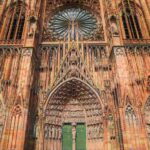
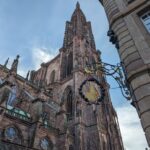
Now you reach the real emblem: the cathedral neighborhood. The cathedral sits on the highest point of Strasbourg, with a pink sandstone facade that rises about 66 meters. The tour frames it like a visual summary of architectural art from the 13th to the 15th century.
Also, if you’re comparing cathedrals, this one gets noted as the second highest in France. That matters because it helps you understand why people treat this area like the main character.
Practically, this is about views and orientation. Expect a 20-minute stop that’s long enough to take in the facade and get oriented to the area around it, but not so long that you feel trapped waiting for the group.
The tour pacing works best if you keep your eyes active: look at the facade materials, take in the scale, then listen for how the guide connects what you’re seeing to the city’s timeline.


Cour du Corbeau: When a Place Was Built to Be a Hotel

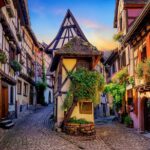
One of my favorite kinds of sightseeing stops is when the building has a job to tell you. Cour du Corbeau is exactly that.
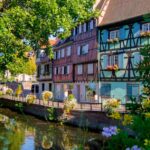
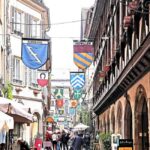
You learn that as early as 1528, La Cour du Corbeau housed a hotel named Zum Rappen. The tour also points out that this ensemble seems to be one of the few in Europe that was built from the outset as a hotel.
That’s a fun detail because it changes how you see courtyards and street corners. You start wondering what daily life looked like centuries ago: travelers arriving, lodging in the city center, and commerce happening around the same kind of pathways you walk today.
This stop is brief—around 10 minutes—but the story sticks. It also pairs well after the cathedral area, because it gives you a more human time scale, not just religious architecture.
Oriel Windows: The Small Detail That Changes a Street View

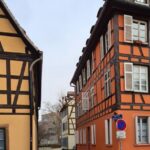
Next is a more technical but very practical architecture stop: the Oriel. The guide explains what an oriel is in plain terms—a bow window that curves outward beyond the exterior wall, creating space and widening what you can see outside.
Even in a short tour, this kind of detail helps you “read” the city. You stop treating Strasbourg like a flat photo and start noticing how design decisions shaped how people lived and looked out from buildings.
This part lasts about 10 minutes. Don’t expect a long lecture. Do expect a new way to look at windows, facades, and street-level architecture.
Your Alsatian Sweet Spread: Kugelhopf, Bredeles, Pain d’Épices, and Seasonal Swaps

Food is where the tour earns its name, and it does it with variety. You’ll see a selection of Alsatian sweets including bredeles and other treats like pâte à tartiner (fruit or nut spreads), chocolates shaped like bretzels and kouglofs, guimauves, and pâtes de fruits.
The menu you’ll taste includes:
- Kugelhopf as a dessert-style bite: mild, lightly sweetened, and built for pairing with coffee or tea.
- Alsatian sweets: bredalas and other small confections, often tied to local shapes and traditions.
- Gingerbread (pain d’épices) and tarte flambée/flammekueche depending on the season.
Pain d’épices is explained as gingerbread flavored with spices like ginger, cloves, nutmeg, and cinnamon, sweetened with honey, sugar, or molasses. And you learn why it shows up most in winter and especially during Christmas markets. So when you taste it (or when it’s swapped in), you’re not just eating sugar—you’re sampling a seasonal tradition with a reason.
Tarte flambée/flammekueche is a different kind of Alsatian classic—savory, often associated with local eating rituals. Since the tour calls out a seasonal swap, you’ll get whichever seasonal option matches the time of year.
Two practical points for the tasting portion:
- Don’t skip the guide’s pairing notes. Kugelhopf especially benefits from knowing it was meant for coffee, tea, and kirsch-style pairings.
- Pace yourself. You’re likely to take multiple sweet samples in a short window, and it can help to plan around your next meal.
Unusual Venues Locals Actually Use
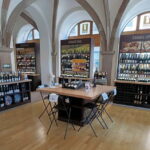
A standout feature here is that you don’t just stop at the most touristy spots. The tour includes unusual venues where locals go, which is exactly what makes the tastings feel grounded.
That matters because Strasbourg has plenty of places selling sweets. But local places tend to reflect what people buy for normal life—morning coffee, after-school treats, and winter markets. When the tour routes you into that kind of space, the food feels less staged.
If your goal is authentic flavor and a city that makes sense on your first afternoon, this is the part that delivers.
Price and What You’re Really Paying For ($78.02 for Two Hours)
At $78.02 per person, this is not a bargain snack crawl. But it can still feel fair because you’re buying three things:
- A guided walk that connects landmarks and architectural details.
- Multiple tastings, including kugelhopf plus several Alsatian sweets.
- A short, efficient route—about two hours—so you’re not losing your whole day to wandering.
Group size matters too. With a maximum of 12 travelers, you’re more likely to get a coherent route and a guide who can manage questions and timing. If someone feels the tour is expensive, it’s usually because they expected longer stops or a fuller meal. If that’s your expectation, adjust it now: this is a sweet-and-stories format, not an all-you-can-eat event.
Timing, Language, and How to Make the Most of It
The tour starts at 3:00 pm and loops back to the meeting point at Place d’Austerlitz. That half-day timing is useful in Strasbourg, because it gives you daylight for photos and still leaves time afterward to explore on your own.
You also get a mobile ticket, and the meeting point is near public transportation. That means you can arrive without turning it into a logistics puzzle.
Language is another practical plus. The tour is offered in English, and the guide may speak both English and French during the experience. If you know even a few basic French words, you’ll likely catch more of the flavor in conversation—but you don’t need it to follow the tour.
One expectation to keep: the tour works best with moderate physical fitness. There’s walking involved, even if the stops are short. Wear comfortable shoes and plan to stand outside during the tastings.
Who This Tour Fits Best (and Who Might Want Something Else)
This tour is a great fit if you:
- Want a fast, guided introduction to Strasbourg’s center.
- Like food with cultural context, not only tasting.
- Prefer small group walking over big bus tours.
- Are okay with short stops and snack portions.
It may not be the best fit if you want:
- Long time inside major sights.
- A sit-down meal experience.
- Extra time at each landmark for photos and lingering.
One more thing: because it’s weather-dependent, plan to wear layers or be ready for schedule changes if conditions are poor.
Should You Book Strasbourg Bites & Stories?
If you like the idea of eating Alsace while learning how Strasbourg’s streets and buildings connect, I’d book it. The route hits major landmarks like the cathedral neighborhood and pairs them with specific local food stories—from kugelhopf’s ceremonial roots to pain d’épices as a winter marker.
If you’re the type who needs deep, long sightseeing blocks, look for a longer tour instead. But if you want a memorable afternoon that ends with your taste buds satisfied and your head full of useful details, this is a strong choice.
FAQ
What’s the duration of Strasbourg Bites & Stories?
The tour runs for about 2 hours.
How much does it cost?
It costs $78.02 per person.
Is the tour offered in English?
Yes. The tour is offered in English, and the guide may speak both English and French during the tour.
What’s included in the ticket price?
It includes snacks and access to unusual venues where locals go. Food tastings are part of the experience.
Where does the tour start, and what time does it begin?
It starts at Place d’Austerlitz (Pl. d’Austerlitz, 67000 Strasbourg, France) at 3:00 pm, and it ends back at the meeting point.
How big is the group?
The tour has a maximum of 12 travelers.
What if the weather is bad?
This experience requires good weather. If it’s canceled due to poor weather, you’ll be offered a different date or a full refund.