REVIEW · ARLES
Arles: Express Walk with a Local
Book on GetYourGuide →Operated by LocalBini AG (EU) · Bookable on GetYourGuide
Old-school Arles, plus the shortcuts. This express walk is a smart way to understand the city fast, with a local leading you through the Roman core and Arles’ artistic side. I especially like how you get landmarks with context, not just photos, and how the guide adds real-world food and bar recommendations you can use right after the walk.
The group stays small, with a maximum of 8 people, so the pace feels human and the guide can adjust if your legs (or your questions) slow you down. The main drawback: it’s still a walking tour, and it’s not suitable for people with mobility impairments, so plan on sturdy shoes and some steady steps.
In This Review
- Key things I’d mark on your Arles map
- A 60-Minute Arles Fix: Roman Roots Meets Art Soul
- Where You Start: The Dubois Pharmacy on Boulevard Émile Combes
- The Roman-to-City-Core Route: Arles Amphitheatre and Saint-Trophime Church
- Place de la République and Local Lifestyle Tips That Actually Help
- Trinquetaille Bridge and the Van Gogh Circuit: Art Walk Energy
- Quartier de La Roquette: Finishing Where You Can Keep Going
- How Much Is It Really Worth? The $41 Value Question
- Pace, Weather, and the One Thing to Watch
- Who Should Book This Walk (and Who Should Skip It)
- Should You Book Arles: Express Walk with a Local?
- FAQ
- How long is the Arles express walk?
- What is the meeting point?
- Where exactly is the meeting point located?
- What landmarks are included?
- What is the group size?
- What languages is the tour guide available in?
- Is the tour private or shared?
- What’s included in the experience?
- What should I bring?
- Is it accessible for people with mobility impairments?
Key things I’d mark on your Arles map

- Up to 8 people for a more personal, adaptable walk
- Roman and artistic Arles in about 60 minutes of focused sightseeing
- Fast stops from the Arles Amphitheatre to Place de la République
- Van Gogh circuit connection via the Stairway Trinquetaille Bridge
- Finish in Quartier de La Roquette, not back where you started
- Local bar and café tips you can act on immediately
A 60-Minute Arles Fix: Roman Roots Meets Art Soul

Arles can feel like it has two personalities at once: the serious Roman-era bones, and the softer artistic glow that people come to chase. This walk is designed to stitch those together quickly, so you leave with a clear sense of what makes the city tick. In a short time window, it’s a useful way to get your bearings fast and stop wandering blind through the old streets.
What you’re really paying for isn’t only the sightseeing list. It’s the guide’s sense of what matters in Arles and how to explain it in plain language. That matters on a first visit, because the difference between seeing a landmark and understanding it can be the difference between a good day and a great day.
And yes, it’s “express,” which is travel-speak for: fewer detours, more meaning per minute. If your schedule is tight, that’s a big win.
You can also read our reviews of more walking tours in Arles


Where You Start: The Dubois Pharmacy on Boulevard Émile Combes

The meeting point is at the Pharmacy Dubois, located at 37 Bd Emile Combes. Showing up at the right spot at the right time is half the battle in old European cities, where streets can look similar and you don’t want to waste your limited hours.
Once you’re gathered, your local guide sets the tone. The tour is hosted by an independent local, and the route is built around a 60-minute exploration through defining landmarks. It also adapts to your walking pace and interests, which is exactly what you want when you’re sightseeing instead of sprinting.
Practical tip: bring comfortable shoes and water. This is a walk, and even if it’s only 1–2 hours, you’ll feel every stop. If your smartphone battery is low, charge it ahead of time, since you’ll likely want navigation help and photo time.
The Roman-to-City-Core Route: Arles Amphitheatre and Saint-Trophime Church

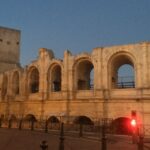
The tour begins by getting you to the big recognizable anchors. First up is the Arles Amphitheatre, a key piece of the city’s Roman roots. Even if you’re not the type who memorizes dates, you’ll get enough framing to see what the amphitheatre would have meant in daily life—how architecture shapes the story of a place.
From there, you head toward major landmarks like Saint-Trophime Church and Place de la République. These stops matter because they help you understand Arles as more than a “Roman site checklist.” You’re learning how the city’s identity shifts over time—from its Roman origins to the later structures and civic spaces people use now.
At each stop, your guide’s job is to connect three things for you:
- what you’re looking at,
- why it’s important,
- and what to notice without needing a history degree.
This is where the small-group format helps. With a maximum of 8 people, you’re more likely to get direct answers and better pacing. One guide named Gerard, for example, was praised for being very knowledgeable and helpful, with a strong handle on history and local customs. That kind of guidance is exactly what turns a quick walk into a memorable orientation.
Place de la République and Local Lifestyle Tips That Actually Help
A lot of tours show you the famous spots and then send you on your way. This one does something smarter: it also tries to teach you how locals move through Arles.
Place de la République is one of those civic hubs where daily life and visitor life overlap. In a short tour, it’s a smart stop because it gives you context for how the city feels in real time. You’re not only learning what’s old—you’re getting clues about what’s used today.
The guide also points you toward lively areas and gives guidance on where to eat and drink. That’s huge value if you’re trying to maximize your first day. The reviews highlight that the guides are not just reciting facts; they’re offering practical recommendations—bars, cafés, and restaurants that fit the local vibe.
And it’s not only food talk. You’ll get the kind of advice that helps you order with confidence, plan your next steps without overthinking, and avoid the tourist-only traps that drain your time.
Trinquetaille Bridge and the Van Gogh Circuit: Art Walk Energy
One of the most interesting parts of the route is the Stairway Trinquetaille Bridge, tied to the Van Gogh circuit. This stop works because it connects Arles’ artistic reputation to a very specific walking moment. It’s not abstract. It’s a place you physically reach while your guide explains the art connection.
Even if you don’t consider yourself an art expert, the structure of the experience helps. You walk to the bridge area as part of a broader orientation of the city, so the Van Gogh link feels integrated rather than tacked on.
There’s a small but real benefit to including an art-associated route piece in an “express” walk: it keeps your eyes active. You’re not only looking at architecture and churches. You’re also watching for sightlines and angles that make sense in the art story.
A quick note on pace: this part is still walking, and stairways mean you’ll want shoes with grip. The tour is only 1–2 hours, but you’ll likely be doing enough steps to feel awake afterward. That’s a good trade if you have a second half of your day to explore.





Quartier de La Roquette: Finishing Where You Can Keep Going
The tour ends in Quartier de La Roquette, which is a smart way to avoid the “back to the start” problem. Finishing in a different part of town helps you transition directly into independent exploration.
This neighborhood finish is especially handy if you’re planning a meal afterward. You’ll already know what you saw and why it matters, and you’ve got the guide’s local tips in your pocket. You can use the rest of your day to follow the direction you’ve been given, instead of starting from scratch.
If your itinerary is flexible, you can also treat the tour ending point as a launch pad. Think of it like this: the walk gives you the map of the city’s identity, and the finish point gives you a practical place to continue.
And yes, small-group experiences can feel a little more personal here, because you’re not all disbanding at the same obvious tourist landmark. You’re leaving with momentum.
How Much Is It Really Worth? The $41 Value Question
The price is listed at $41 per person, with a duration of 1–2 hours. On paper, it’s an “express” tour, so the question is: is it worth it versus doing Arles on your own?
For me, the value hinges on three things.
First, time. If you only have a short visit, a guided walk can compress the learning curve. Instead of spending half your day figuring out what to prioritize, you follow a route designed to cover defining landmarks in a tight loop.
Second, guidance. You’re not just paying for movement. You’re paying for an actual local perspective: stories, context, and advice on where to eat and where to relax. That’s the kind of information that’s hard to replicate from a basic guidebook, especially when you’re hungry and tired and your plans need to work in real life.
Third, the group size. Up to 8 people is small enough that the guide can adjust to your pace, and you’re less likely to feel like you’re stuck listening from the back of a big crowd. In a short tour, that difference is noticeable.
Is it “complete Arles”? No. But that’s not the goal. This is a best-first-step experience for people who want to understand Arles quickly and keep their next hours flexible.
Pace, Weather, and the One Thing to Watch
Your walking pace matters. The itinerary adapts to your interests and walking pace, and stops may vary depending on weather conditions. That flexibility is good, but it means you shouldn’t plan anything tightly timed immediately after the tour without a buffer.
Also, check your comfort level with walking. This is not described as wheelchair-friendly, and it explicitly says it’s not suitable for mobility impairments. If stairs and uneven sidewalks aren’t your thing, you’ll probably find this tour frustrating rather than rewarding.
One more real-world note from the reviews: there was mention of a strike that caused a late start, and a guide (Melissa) was praised for still showing Roman sights during the time available. That tells you the guides seem prepared to work around disruptions and make the most of the window you have. That’s reassuring if you’re traveling during unpredictable schedules.
Who Should Book This Walk (and Who Should Skip It)

This experience fits best if you want:
- A quick orientation to Arles with Roman landmarks plus an art connection
- Practical local recommendations for bars, cafés, and restaurants
- A small-group feel that keeps the pace from turning into a march
It might not fit if you’re looking for a deep, museum-style day or you dislike walking tours that include multiple stops. It’s also not suitable for mobility impairments, so if that’s your situation, you’ll want a different format.
If you’re traveling solo, this still works because the small group means you’re not lost in a crowd. If you’re coming from another city and need to hit the ground running, this is a strong first stop.
Should You Book Arles: Express Walk with a Local?
If your visit to Arles is short, you should seriously consider booking this. The combination of defining landmarks, a Van Gogh circuit moment, and immediate local food and bar guidance makes it a high-impact use of time. You’ll come away with a clearer understanding of what Arles is, and where you’ll want to go next.
I’d book it if you like being guided, want a sensible walking route, and enjoy hearing the “why” behind what you see. I’d skip it if you want long stops, museum depth, or if walking (and stairs) is a problem for you.
In the end, this tour is a smart value move: you pay for time saved and guidance gained, not just for a route through town.
FAQ
How long is the Arles express walk?
The experience is listed as 1–2 hours, with a 60-minute exploration through Arles.
What is the meeting point?
You meet at the Pharmacy Dubois to start the walk.
Where exactly is the meeting point located?
The starting location is 37 Bd Emile Combes, and the meeting happens at the Pharmacy Dubois.
What landmarks are included?
You’ll visit key stops including the Arles Amphitheatre and Saint-Trophime Church. The walk also includes the Stairway Trinquetaille Bridge connected to the Van Gogh circuit, with a finish in Quartier de La Roquette. Place de la République is also part of the route.
What is the group size?
It’s a small group with a maximum of 8 travellers.
What languages is the tour guide available in?
The live guide offers English and French.
Is the tour private or shared?
It’s described as private or small groups available.
What’s included in the experience?
Included items are a local guide, the small group format, and personalized recommendations.
What should I bring?
Bring comfortable shoes, water, weather-appropriate clothing, and a charged smartphone.
Is it accessible for people with mobility impairments?
No, it is not suitable for people with mobility impairments.