REVIEW · ARLES
Arles: Private Guide Tour – Explore History & Culture
Book on GetYourGuide →Operated by TOUR FRANCE EXPERIENCE · Bookable on GetYourGuide
A Roman arena and Van Gogh in the same walk. That is the charm here: a focused 2-hour history-and-culture route through central Arles with real landmarks, not just a quick photo stop. I like that the tour starts with the big Roman clues, then keeps tying the city back to people and places you can still see today.
Two things I especially like: you get to view the Roman amphitheatre from outside and learn how Arles’ Roman footprint still shapes the city, and you end up right at key sights tied to later cultural life, including the Hôtel Dieu area associated with Vincent van Gogh’s stay in Arles. One consideration: since it is only 2 hours and tickets/transport aren’t included, it’s a good fit for orientation and landmark learning, not for a long museum day.
In This Review
- Key takeaways before you book
- Why this Arles tour feels practical (not just sightseeing)
- Meeting point and how to plan your timing
- Stop 1: Outside Arles Amphitheatre, a Roman anchor
- Stop 2: Antique Theatre and the Roman storytelling layer
- Stop 3: Place de la République and the Arles Obelisk
- Stop 4: Hôtel Dieu and Van Gogh’s Arles connection
- UNESCO sites: seeing the bigger picture without the paperwork
- The private-guide advantage (and what it costs you)
- Who this tour suits best
- What to do after the 2 hours end
- Should you book this Arles private guide tour?
Key takeaways before you book

- Roman Arles starts with the amphitheatre: see the 1st-century arena from outside and get the context without crowds inside
- Place de la République + the Arles Obelisk: a compact stop that connects street layout to ancient art
- Hôtel Dieu and Van Gogh: you’ll pass the building tied to his time in town
- Private group, flexible route: tell your guide what you want to emphasize and adjust on the fly
- Multiple language options: English, French, German, Italian, Spanish are available
Why this Arles tour feels practical (not just sightseeing)

Arles is one of those French cities where time layers on top of itself. You can walk a few blocks and go from Roman stone to later religious and cultural sites, and it all makes sense faster when someone points out what you are looking at.
This tour keeps things tight: 2 hours and a private guide. You’re not trying to “cover everything.” Instead, you get a guided thread through the historical center, with enough time to ask questions and still finish before your legs demand retirement.
Also, Arles has a big seasonal identity thanks to Rencontres d’Arles, the photography festival in summer. Even if you’re not there for that, you’ll feel why the city draws creative attention: it’s made of strong shapes, noticeable history, and streets that invite slow walking.
You can also read our reviews of more guided tours in Arles

Meeting point and how to plan your timing

You meet in front of the tourist office at 9 boulevard des lices. That matters because it usually means an easy, central start where you’re already oriented to the historic core.
This is a walking tour, but it isn’t described as a full-day endurance plan. You can think of it as a fast way to understand the city’s map: you’ll see the Roman anchor points, a major public square, and a building connected with Van Gogh—all without needing to commit to long indoor visits.
One practical tip for your day: plan this earlier rather than later. If you do it upfront, you can use your new “mental map” to decide where to linger afterward—especially if you want to add museums on your own, like Musée de la Camargue or Musée Réattu.
Stop 1: Outside Arles Amphitheatre, a Roman anchor

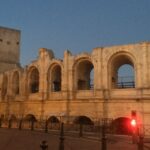
The tour begins with one of Arles’ most instantly recognizable Roman remnants: the amphitheatre arena built in the 1st century. You’ll see it from outside, so you can get the big picture quickly—scale, setting, and how the site fits into the modern city.
What I like about doing the amphitheatre from the outside on a short tour: it keeps the focus on orientation. You’re not stuck reading long information panels for every detail. Instead, your guide can explain the role the amphitheatre played and how Roman planning still echoes in today’s streets.
A small drawback to consider: because you’re viewing from outside, you won’t get the full experience you might get if you were planning an indoor visit with an entrance ticket. If you care most about the amphitheatre itself, budget a separate time later for ticketed sightseeing.
Stop 2: Antique Theatre and the Roman storytelling layer
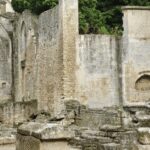
From the amphitheatre, the route continues toward other Roman remains, including the Antique Theatre. Even without entering (entrance tickets are not included), this helps you understand that Roman Arles wasn’t just one showpiece—it was a whole civic performance system.
Why this matters: when your brain sees more than one Roman building, the city stops feeling like random ruins. It starts to look like a plan. A guide is especially useful here, because you can compare shapes and locations instead of trying to guess what each structure was doing.
If you’re the kind of traveler who enjoys “why this location, why this form,” this section tends to be where the tour earns its keep.
Stop 3: Place de la République and the Arles Obelisk
Next up is Place de la République, home to the 4th-century Arles Obelisk. This is a compact stop, but it packs a lot of meaning. A square isn’t just a place to wait for a coffee—it’s a built-in landmark for how a city governs space and movement.
The obelisk helps you connect a visible object to the deeper timeline of the city. In a short tour, that kind of anchor keeps you from losing the thread as you move from Roman remains to later cultural references.
Practical note: because it is a walking tour and tickets aren’t included, you’ll likely get the “look and learn” version here rather than a longer interpretive session. Still, for 2 hours of coverage, this square stop is a smart use of time.
You can also read our reviews of more private tours in Arles


Stop 4: Hôtel Dieu and Van Gogh’s Arles connection

Then you’ll walk by the Hôtel Dieu, where Vincent van Gogh stayed while in Arles. This is one of those moments that changes your city-walk from architecture to human story.
What I like here is the pacing. You’ve been processing Roman sites and the shape of the city. Then the tour gives you a cultural and personal thread. Even if you’re not a hardcore art historian, you’ll come away with a real place tied to a major artistic chapter.
A small consideration: you are walking by the building. That’s usually enough to place it on your mental map, but if you want deeper museum-style context about van Gogh in Arles, you’ll want to pair this tour with additional self-guided time afterward (since entrances/tickets aren’t included).
UNESCO sites: seeing the bigger picture without the paperwork
The city’s buildings and cathedrals include UNESCO World Heritage Sites, and you’ll get a sense of that cultural weight during the walk. This is valuable even when you’re not stepping inside: it helps you understand why the streets, squares, and churches feel carefully preserved.
Because the tour is only 2 hours, the UNESCO angle is best used as context. You’ll know what to look for next time you’re wandering, and you’ll be more likely to stop and read (or ask questions) instead of just passing by.
The private-guide advantage (and what it costs you)

This is a private group tour, and that is a big part of the value proposition. You can ask questions in your preferred language (English, French, German, Italian, Spanish), and you can also steer the balance toward what you care about most.
The price is $235 per person for 2 hours. That can sound steep if you’re comparing it to group tours, but it’s easier to judge when you think about what you’re buying:
- time saved (you’re not hunting for meaning)
- flexibility (your guide can adjust if you want a different focus)
- language comfort
- a tighter route that hits major “why this place matters” points
If you’re traveling as a small group or you really want a curated walk rather than wandering, the cost starts to make sense. If you’re on a strict budget and you’re happy to self-guide, you might choose a slower day with free walking plus a map.
Who this tour suits best

This tour is best for adults who want an efficient introduction to Arles’ historical center. It’s described as not suitable for children under 10, and it is also not suitable for people over 70, plus there are limits around mobility aids (non-folding wheelchairs and electric wheelchairs aren’t allowed).
Here’s a straightforward match:
- Great for couples and small groups who want a guided “orientation walk”
- Great if you like Roman sites plus later art connections (amphitheatre + Van Gogh area)
- Best when you’re okay with seeing key places from the outside and doing deeper visits separately
If you hate walking or you want lots of indoor time, this may feel short on museum action. But for understanding the city quickly, it’s a strong plan.
What to do after the 2 hours end
Once you finish, you’ll have a clearer sense of where the Roman and cultural anchors sit in the city. That’s when you can choose your next move:
- If museums call you, consider adding one on your own, such as Musée de la Camargue or Musée Réattu
- If you want more church and cathedral context tied to UNESCO, use what you learned to pick where to linger
- If the photography scene is your thing, Arles’ summer identity is worth checking out when you’re in town
This is one of those tours where the real win is mental: you leave with a city that feels less confusing.
Should you book this Arles private guide tour?
If your priority is a clear, guided introduction to Arles in only 2 hours, I think it’s a solid choice. You’ll hit major landmark stops—Roman amphitheatre outside, Place de la République and the Arles Obelisk, and the Hôtel Dieu area tied to Vincent van Gogh—with a guide who can adjust your route to match your interests.
I’d skip it if you want a ticketed, museum-heavy day with lots of indoor time, or if you’re looking for a low-cost group alternative. This tour isn’t trying to replace long sightseeing. It’s designed to help you see Arles smarter once you’re already there.
Bottom line: book it if you want meaning with your walking. Pass if you want quantity over context.