REVIEW · ARLES
Arles: Art and History Walking Tour
Book on GetYourGuide →Operated by Andrea Stoppe · Bookable on GetYourGuide
Arles lets you cross more than 2,000 years in a single afternoon, from Roman arenas to medieval carvings and the cafés, squares, and studios tied to Van Gogh. I like the way this private walk links major monuments with smaller old streets, and I like that guide Andrea Stoppe adjusts the pace to suit the group.
The main consideration is time. Three hours gives you a useful first look, not a full study of every museum and Roman site. The $330 price also makes the most sense for a group sharing the cost, since it covers up to 25 people rather than charging each person separately.
In This Review
- Key points
- Arles in three hours, from Rome to Van Gogh
- The Roman Theatre and Amphitheatre
- Saint-Trophime Church and Provençal Romanesque art
- Espace Van Gogh and the city of artists
- Place du Forum and the old streets
- What Andrea Stoppe’s guiding style adds
- Is $330 good value for a private group?
- Meeting points, timing, and comfort
- Who should choose this Arles walk?
- Final verdict: book it for a first look at Arles
- FAQ
- How long does the Arles Art and History Walking Tour last?
- What languages does the guide speak?
- Is this a private tour?
- Where does the tour meet?
- Which Arles sights are included?
- Is the tour wheelchair accessible?
Key points
- A 2,000-year walk: See Roman, Romanesque, and modern Arles in one compact tour.
- Van Gogh connections: Visit Espace Van Gogh and places linked with his paintings.
- Andrea Stoppe as your guide: Expect a private walk with English, French, or Portuguese commentary.
- Smaller streets included: The route can move beyond the biggest monuments and into quieter corners of the old city.
- Flexible meeting point: Meet at a suitable location inside the old city.
- Good for mixed groups: The tour is wheelchair accessible and runs in rain or shine.
Arles in three hours, from Rome to Van Gogh
Arles is a place where the past is not sealed behind glass. Roman stone, medieval church sculpture, and modern art all share the same center. That makes a walking tour especially useful here, since the links between each period are easier to grasp on foot than from a bus or a map.
Your three-hour visit begins with a guided tour of Arles. The exact order can vary, but the listed route includes the Espace Van Gogh, Saint-Trophime Church, the Roman Theatre, the Amphitheatre, and Place du Forum. You also spend time on foot among the old streets, where Andrea can point out details that are easy to miss when you are focused only on the famous sights.
I like this format for a first visit. You get enough structure to understand the city, yet the private setting leaves room for questions and a more personal pace. The tour is not presented as a long museum lecture. It is a compact introduction to Arles as a city of monuments, artists, and daily life.
You can also read our reviews of more walking tours in Arles


The Roman Theatre and Amphitheatre
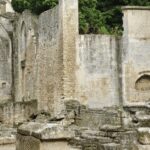
The Roman Theatre of Arles is one of the clearest reminders that this was once an important Roman city. It is included as a visit, so you can expect the guide to explain its place in Arles rather than simply point to the remaining stones and move on.
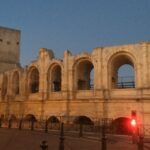
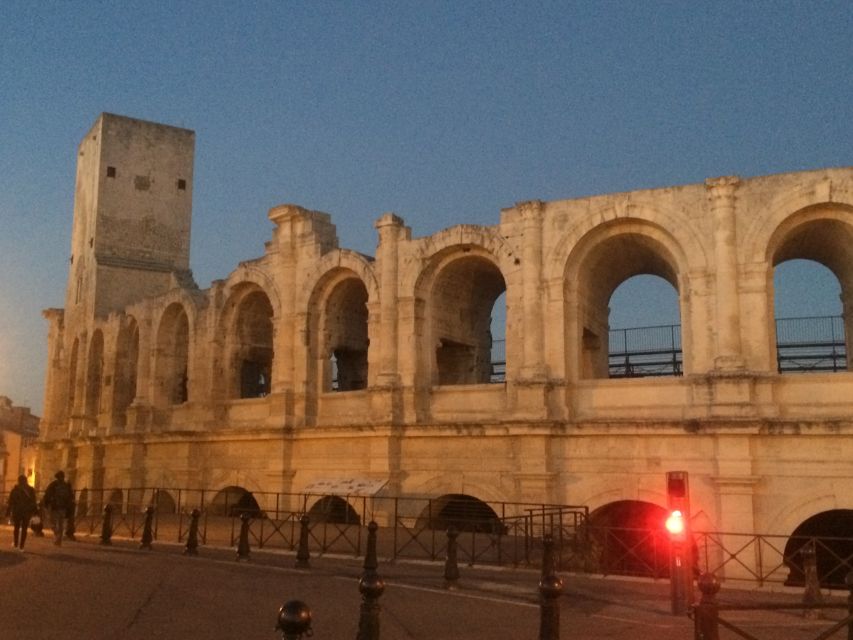
The nearby Amphitheatre is the larger and more instantly recognizable Roman sight. Its curved structure gives the city one of its strongest visual markers, and it helps you understand the scale of Roman public entertainment. A guided explanation adds useful context, especially if you do not already know how the theatre and amphitheatre served different purposes.
These stops are among the tour’s strongest choices because they anchor the rest of the walk. After seeing the Roman remains, the medieval buildings and later artistic landmarks feel like part of a long sequence rather than unrelated sights.
The drawback is that a three-hour tour cannot give every Roman monument equal time. The itinerary also refers to Constantine’s Baths as part of Arles’ ancient heritage, but the listed stops center on the theatre and amphitheatre. If Roman archaeology is your main reason for visiting, you may want extra time in the city beyond this walk.
Saint-Trophime Church and Provençal Romanesque art
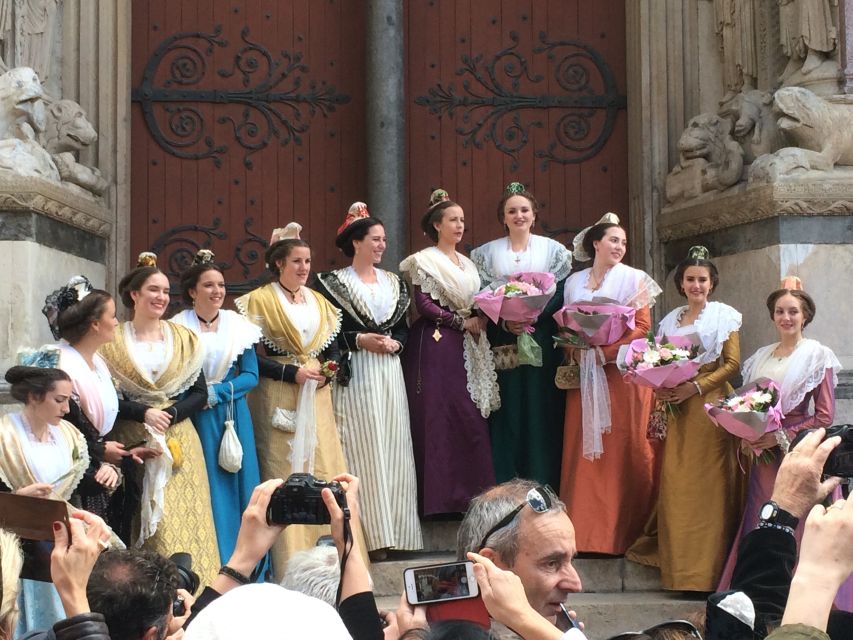
Saint-Trophime Church brings you into the medieval chapter of Arles. Its Romanesque character and emblematic sculpture offer a different experience from the Roman sites, with attention shifting from grand public buildings to religious art and carefully carved stone.
The cloister is another important part of the medieval setting. The information provided for the tour specifically highlights the Saint-Trophime cloister and its Provençal Romanesque sculpture, so this is not just a quick exterior stop. You should expect the guide to help you read the carvings and understand why this corner matters.
I especially like having this church and cloister between the Roman and Van Gogh portions of the tour. It gives Arles a sense of continuity. The city is not simply an ancient site with an art connection added later. Its medieval center is a major part of what makes the walk worthwhile.
Church visits can be less predictable than outdoor stops, since access and viewing conditions may vary. Still, Saint-Trophime is part of the planned route, and its inclusion gives the tour more depth than a walk limited to Roman monuments and Van Gogh locations.
Espace Van Gogh and the city of artists
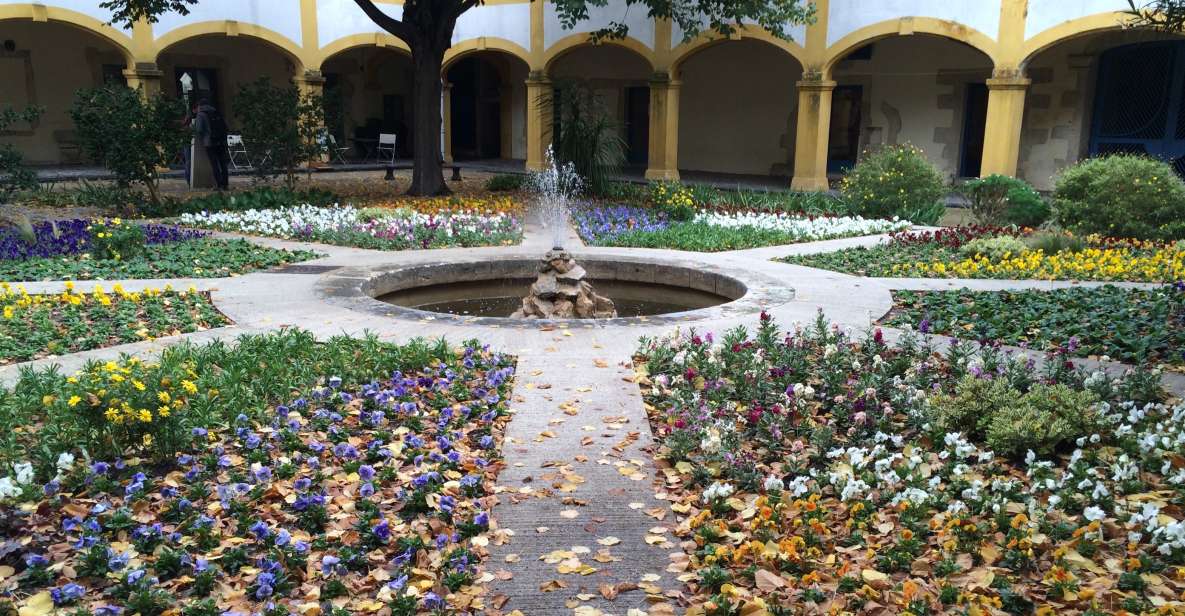
Arles is closely linked with Vincent Van Gogh, and the tour makes that connection part of the main experience rather than a brief footnote. At Espace Van Gogh, you visit a place associated with his time in the city and then continue through locations where he painted famous works.
The appeal here is not only finding a familiar view. It is seeing how Arles became part of Van Gogh’s artistic life and how the city’s streets, buildings, and light shaped his work. You may already know the paintings, but standing in the places connected with them gives the art a more physical setting.
The tour also presents Arles as a continuing city of artists. Its cultural identity includes the Gipsy Kings, fashion designer Christian Lacroix, the Rencontres Internationales de la Photo, and many cultural events. That wider context keeps the Van Gogh portion from feeling like a single-artist attraction.
Do not expect a dedicated Van Gogh museum visit to fill the three hours. The emphasis is on walking in his footsteps and seeing connected places in the city. If you want a detailed study of his paintings or personal life, this tour will be an introduction rather than a complete art seminar.
Place du Forum and the old streets
Place du Forum is one of the route’s open-air viewing points. It gives you a chance to pause, look around, and connect the public life of modern Arles with the older buildings around it. It is also the kind of place where a guide can explain how the city’s center functions today, not only what happened there centuries ago.
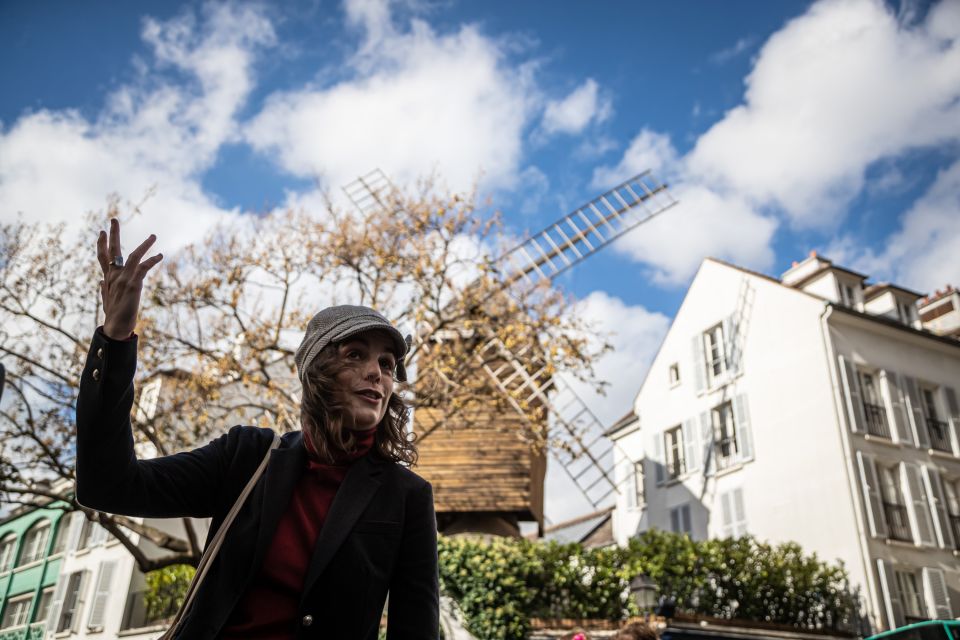
The smaller streets may be the most rewarding part of the walk for people who already know they want to avoid a standard monument checklist. Andrea Stoppe has a reputation for taking groups beyond the main tourist paths and into old lanes and areas that are easy to overlook. That is a useful strength in Arles, where a turn into a quieter street can reveal more of the city’s character than another hurried photograph of a famous façade.
I would pay attention to the transitions between stops. The route is not only about arriving at each named monument. It is also about noticing how Roman remains, medieval streets, cafés, galleries, and modern cultural spaces sit close together.
Because this is a walking tour, comfortable shoes matter. Bring water as well. The tour runs rain or shine, so a wet-weather plan is sensible even though no special equipment is provided.
You can also read our reviews of more historical tours in Arles


What Andrea Stoppe’s guiding style adds
Andrea Stoppe leads the tour in English, French, or Portuguese. That language choice matters, particularly for a private group with mixed preferences or for anyone who wants to ask questions without relying on a large group format.
The strongest practical detail about Andrea’s style is the attention to pace. She is described as reading the group well, which means you can expect the walk to respond to how quickly your party moves and how much time you need at each stop. That is more useful than a rigid script, especially for families, older visitors, or groups with different interests.
The guiding also reaches beyond headline sights. Andrea can take you through smaller streets and less-visited parts of the old center, places you might not choose on your own. This is where a private tour can earn its price. You are not simply paying for access to a route you could copy from a map. You are paying for local interpretation and the ability to shape the walk around your group.
Of course, a private guide is only as valuable as the fit between the guide and your interests. If your group wants an intensely specialized Roman archaeology tour, ask for that emphasis when arranging the experience. If you want a balanced introduction to art and history, the stated route is a natural match.
Is $330 good value for a private group?
The price is $330 for a group of up to 25 people. That is expensive for one or two people, but the calculation changes quickly when shared across a larger party. A group of 10, for example, is effectively paying $33 per person for three hours of private guiding. A full group of 25 brings the cost per person down much further.
The value is strongest if you want flexibility. A private tour can keep a family together, accommodate a preferred language, and allow more time at the church, Roman sites, or Van Gogh locations that interest you most. The group size limit is generous, though a very large party may feel less intimate even with a private guide.
The tour does not list admission tickets, meals, or transportation as included. What is included is the meeting point inside the old city and the guided walking experience. Plan your budget with that in mind. The practical advantage is that you begin in the center, where the main sights are close enough to connect on foot.
For a couple, the cost may be hard to justify unless a private guide is a priority. For a family, reunion group, or small organized party, the price can be reasonable, especially if you value a tailored pace and commentary in your chosen language.
Meeting points, timing, and comfort
The meeting point is arranged at a suitable location inside the old city. Named options include Place de la République, Place Paul Doumer, Place Lamartine, Hôtel de Ville, Parking du Centre, Hôtel du Musée, Maison Volver, L’Arlatan, Hôtel La Muette, Brit Hotel Acacias, and the Musée de l’Arles et de la Provence antiques.
That range gives you useful flexibility, but confirm the exact point before the day of the walk. The old city has several recognizable squares and hotels, and arriving at the wrong one could cost valuable time in a three-hour experience.
The duration is three hours, with starting times dependent on availability. That is long enough for a serious introduction without turning the day into an endurance test. You will be on foot among historic streets and outdoor monuments, so wear supportive shoes and bring water.
The tour is wheelchair accessible. Since the route includes historic buildings and old streets, it is still sensible to confirm the specific path and any access needs in advance. The tour takes place in all weather, so check the forecast and bring suitable clothing.
Cancellation is free up to 24 hours before the start, and you can reserve now and pay later. Those policies are useful if your South of France plans are still shifting, but they do not change the main question: can your group make good use of a private guide for three hours?
Who should choose this Arles walk?
I would recommend it to first-time visitors who want a clear introduction without spending a full day on separate museums and monuments. It also suits anyone drawn to the connection between art and place, since Van Gogh is woven into the city walk rather than treated as an unrelated stop.
It is a good match for groups that want to move at their own pace. Andrea’s ability to adjust the walk and show quieter streets should appeal to you if you prefer local texture over a strict parade of major sights.
Families may appreciate the mix of open-air Roman structures, medieval sculpture, and recognizable Van Gogh locations. The private setup also avoids the pressure of keeping up with a large public group.
I would be more cautious if you want extensive interior visits, a full archaeological tour, or a day devoted only to Van Gogh. Three hours provides a broad sweep. Its strength is range, not exhaustive detail.
Final verdict: book it for a first look at Arles
Book this tour if you want Arles explained as one connected story: Roman power, medieval faith, Van Gogh’s working life, and the city’s ongoing artistic culture. Andrea Stoppe’s flexible pacing and willingness to use smaller streets add the personal touch that makes a private walk more than a list of famous buildings.
Think twice if you are traveling alone or as a couple and the $330 group price feels steep. In that case, compare the cost with a self-guided visit and consider how much you value a live guide in English, French, or Portuguese.
For families and groups, the decision is easier. The tour covers the essential sights, adds quieter corners, works in rain or shine, and gives you three focused hours to get your bearings in one of France’s most layered cities.
FAQ
How long does the Arles Art and History Walking Tour last?
The tour lasts three hours.
What languages does the guide speak?
Guiding is available in English, French, and Portuguese.
Is this a private tour?
Yes. It is offered for a private group of up to 25 people.
Where does the tour meet?
The meeting point is arranged at a suitable location inside Arles’ old city. Options include places such as Place de la République, Place Lamartine, Hôtel de Ville, and several listed hotels and museums.
Which Arles sights are included?
The route includes a guided tour of Arles, Espace Van Gogh, Saint-Trophime Church, the Roman Theatre, the Arles Amphitheatre, and Place du Forum.
Is the tour wheelchair accessible?
Yes, the activity is wheelchair accessible. It takes place rain or shine, and comfortable shoes and water are recommended.