REVIEW · STRASBOURG
Strasbourg: City game – The Gold of Cagliostro
Book on GetYourGuide →Operated by Studio Guimauve · Bookable on GetYourGuide
Strasbourg turns into a puzzle board. This outdoor escape game has you walking real streets, solving clues with your smartphone, and learning the city’s layers through a story built around Cagliostro and old secrets.
I especially like two things: the views at major landmarks (Petite France, Ponts Couverts, and the Vauban dam area), and the way history becomes a game through observation and puzzle prompts. It’s a rare combo of culture and momentum, which makes the route feel like more than just sightseeing.
One consideration: the whole experience is in French only, so if you want lots of spoken-language support in English, this isn’t the best fit. The good news is that the clues are guided through your phone, and you can use phone support if needed.
In This Review
- Key highlights you’ll feel right away
- A smartphone mystery route through six centuries of Strasbourg
- Price and time: $22 per group that can feel like value
- The game engine: GPS, phone sensors, and clues when you stall
- How the route is built: from Cathedral Square to Petite France and back
- 1) Place de la Cathédrale (Start) + early orientation
- 2) Secret stop + Place Gutenberg
- 3) Église Saint-Thomas
- 4) Petite France (big sightseeing time)
- 5) Ponts Couverts
- 6) Barrage Vauban (photo stop)
- 7) Multiple secret stops + viewpoint
- 8) Notre Dame Cathedral (Strasbourg) + final return loop
- The story of Cagliostro: fun history with a slightly shady edge
- What works best: who should play this game
- Practical tips: make it easier on your phone and your feet
- Stop pacing: how to avoid the common frustration
- Should you book The Gold of Cagliostro?
- FAQ
- FAQ
- Is the game available in English?
- How long does the game take?
- Where does the game start?
- Do I need to download an app?
- Can I pause and resume later?
- How does timing work?
- How many players can join?
- What do I need to play?
- What happens after purchase?
- Is there a validity period?
Key highlights you’ll feel right away

- GPS-guided walking with short stops that keep you moving at your own pace
- Cagliostro’s 1780 scenario with lead-to-gold ingredients hidden around the city
- Smartphone sensor interactions for extra surprises beyond simple reading
- Some of Strasbourg’s most photogenic spots built into the route
- Pause and resume anytime, plus clues available if you get stuck
- A private team setup (up to 4 players) where everyone can join on their own phone
A smartphone mystery route through six centuries of Strasbourg

The premise is deliciously strange: in 1780, the Count of Cagliostro arrives in Strasbourg claiming he has a parchment with a formula for turning lead into gold. Some people admire him, others dislike him, but the key problem is practical—those ingredients are hidden, and the trail is full of puzzles.
What I like about this setup is that it makes you “read” the city instead of just passing it. You’ll be looking for unusual details, and the game nudges you toward Strasbourg’s big monuments because some of the answers may be tucked right into what you’re already seeing.
Even though Cagliostro anchors the story in 1780, the game’s narrative spans the past between the 15th and 21st centuries. That means you’re not only chasing one plot point—you’re learning how the city evolved while you walk.
You can also read our reviews of more city tours in Strasbourg



Price and time: $22 per group that can feel like value

The price is $22 per group up to 4 people, and the game takes about 2.5 to 3 hours. If you’re traveling with friends or a small family unit, that grouping matters a lot, because you’re not paying per person for the phone-guided adventure.
Think about it like this: instead of paying for a long, scripted guided tour, you’re paying for a route + puzzle system that keeps your team engaged while you also hit iconic places. If you’re the kind of traveler who likes to explore with structure, the cost-to-time ratio tends to feel fair.
One practical point: only the time spent solving puzzles is timed, and you can pause and resume. That flexibility can save you from the stress of trying to finish on the exact clock.
The game engine: GPS, phone sensors, and clues when you stall

You start by opening a link on your smartphone. There’s no need to download an app, and after purchase the provider sends access by email and SMS. One small thing I’d take seriously: check your spam folder, because that’s where the link sometimes ends up.
Once you have access, the game uses your smartphone’s GPS to guide you around Strasbourg. It also uses your smartphone’s sensors for interaction and surprises, which is why a charged phone matters so much. You’ll need an internet plan too, so plan on using mobile data rather than assuming you’ll find Wi‑Fi at every corner.
If you get stuck, the game includes clues. That reduces the frustration factor, especially if your team approach is different (one person spots details fast, another reads prompts closely). And because you can pause at any time, you can step into a café, take a breath, or adjust for daylight.
How the route is built: from Cathedral Square to Petite France and back
The adventure is designed as a loop. Your starting point is 17 Place de la Cathédrale, and you return there at the end. You’ll also find the tour begins in front of the Strasbourg Tourist Office on Cathedral Square, which is an easy landmark to use if you arrive a little early.
The itinerary includes scheduled break times, which is helpful because the stops include walking and attention to small details. Here’s what you can expect as you go.
1) Place de la Cathédrale (Start) + early orientation
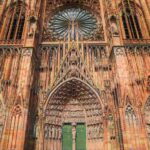
You kick off near one of Strasbourg’s strongest visual anchors: Cathedral Square. Expect the game to get you oriented fast—what to look for, how to move to the next clue, and how the puzzle flow feels.
This first segment sets the tone. If your phone battery is low or the GPS is slow to settle, I’d take a moment right here to fix it before you move on.




2) Secret stop + Place Gutenberg
After the initial start, you head to a secret stop—one of those moments where the game expects observation rather than sightseeing. These kinds of stops are where outdoor escape games can either shine or frustrate, depending on how attentive you are. In this route, the breaks help because you can slow down and actually see.
Next comes Place Gutenberg. This is the kind of square where Strasbourg’s visual density works in your favor: there are plenty of lines, symbols, and details for the game to point at. Use the break time to zoom in on what the phone wants you to notice.
3) Église Saint-Thomas
Then you move to Église Saint-Thomas. Churches in old European cities are perfect puzzle zones because there’s usually a mix of architecture, inscriptions, and vantage points. Even if you’re not a deep art-history person, the game format encourages you to look at specific features instead of getting overwhelmed by everything at once.
A small drawback with any puzzle around religious sites is timing. You might need to keep your voice down, watch your footing, and stay respectful if people are nearby.
4) Petite France (big sightseeing time)
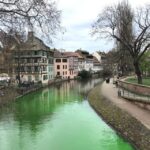
Now you hit one of the most rewarding parts of Strasbourg: Petite France. Your itinerary gives it a longer break—about 20 minutes—which signals that this district isn’t just a waypoint. It’s a pause for photos, wandering, and letting the story make sense in real space.
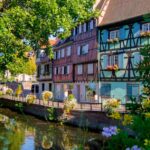
This is also where you’ll feel the main value of the game. You’re still “doing” something—solving and observing—but you’re also getting actual atmosphere: canal-adjacent views, timber-and-stone textures, and those classic postcard angles.
If the weather is kind, this is where you’ll want to slow your pace. If it’s raining, Petite France can be slippery in spots, so keep an eye on surfaces.
5) Ponts Couverts
Next up: Ponts Couverts. This is one of the best places to connect puzzle-thinking with sheer visual payoff. The game keeps you focused on a task, but the surrounding structures give you lots to look at between clues.
The break time here is shorter (around 10 minutes), so don’t plan on a long detour. Use your time slice strategically: find the prompt, solve it, then take a quick look around before you move on.
6) Barrage Vauban (photo stop)
Then the route reaches Barrage Vauban, and you get a photo stop. This is exactly the kind of landmark that benefits from puzzle pacing—one minute you’re on a task, then suddenly you’re also watching water, stone, and fortification logic come together.
Because the stop is explicitly photo-oriented, you can treat this as a reset point. Snap a few photos, check your battery level, and make sure you have enough signal for the next GPS jump.
7) Multiple secret stops + viewpoint
After Vauban, you’ll hit several more secret stops. The game doesn’t name them, so the best way to handle them is with the mindset that you’re hunting for small visual answers rather than expecting a major building.
A bit later, you reach a view point with a break of around 10 minutes. This is likely one of those moments where the city’s geometry makes the clue easier. It’s also a great spot to pause, look around, and orient yourself in Strasbourg—so the rest of your route feels less like random wandering.
8) Notre Dame Cathedral (Strasbourg) + final return loop
You’ll return to Cathedral area again at the end, with Notre Dame Cathedral, Strasbourg included as a named highlight and a break around 10 minutes. This is a fitting emotional close: you start near the Cathedral Square, then later you see the big cathedral presence with the game already shaping how you look at details.
After that, you get a few more secret stops and then it’s back to 17 Place de la Cathédrale to finish. At this point, you’ll probably feel like you covered a lot of ground without forcing yourself to “do everything” the usual tour way.
The story of Cagliostro: fun history with a slightly shady edge
Cagliostro is the kind of character who naturally brings tension: doctor, magician, charlatan—people disagree, and the game leans into that. The mystery revolves around ingredients hidden across town, and you’ll also meet historical figures and spot unusual details.
One thing I found useful: even when a story character is controversial, you can still enjoy the historical angle if you treat it like a guided lens. The game is less about judging the man and more about making you notice what the city is telling you.
Still, one reviewer noted they were surprised by the character’s morality. If you prefer clean-cut characters and zero controversy, you may want to keep that in mind and approach the scenario as fiction-with-history.
What works best: who should play this game
This is a private group activity for 1 to 4 players. All team members can connect simultaneously with their phones, which is ideal if you like teamwork instead of taking turns watching one person play.
It’s also built for self-paced travel. You can pause and resume, and clues exist if you stall. That makes it forgiving for small detours or slow walking days.
Who should consider it:
- Couples or friends who enjoy puzzles and don’t mind staying alert while sightseeing
- Travelers who want to cover multiple major sights without a rigid script
- People comfortable reading prompts in French (since the content is in French only)
Who should think twice:
- Anyone needing accessibility accommodations, since it’s not suitable for mobility impairments, wheelchair users, visually impaired people, or hearing-impaired people
- Families with kids under 12 years, since that age group isn’t suitable
Practical tips: make it easier on your phone and your feet
A charged smartphone with an internet plan is the core requirement. If you’re the type who takes lots of photos, start the game with a full charge and keep a power bank handy if possible. Otherwise, you risk a frustrating slowdown at the exact moment the GPS needs to guide you.
You don’t need the GetYourGuide app, but you do need to be ready to click the correct access link. After purchase, watch for the email or SMS link and confirm it works before you step too far from the start point.
Finally, I’d plan your timing around daylight. One reviewer suggested finishing the adventure before nightfall because it can be more practical for the lighting cues. Even if that’s not a rule, it’s a smart travel habit in any city-based puzzle game.
Stop pacing: how to avoid the common frustration

The biggest mistake with outdoor escape games is treating every stop like a museum exhibit. Instead, treat each stop like a mini mission: read the prompt, look for the specific details the game hints at, solve, then take your time for photos after the answer.
Also, don’t fight the team dynamic. If you’re with two or more people, split roles naturally:
- One person can scan for visual clues
- Another can read the prompt closely
- Someone else can keep an eye on the GPS to avoid wandering off-route
Because clues are available if you get stuck and you can pause, you’re not on a timer for every second. That reduces stress and helps you enjoy Petite France and the canal area without feeling rushed.
Should you book The Gold of Cagliostro?
I’d book it if you want Strasbourg in a way that feels active. This game is strongest when you like puzzles, enjoy walking, and are comfortable working through a story in French while using GPS and phone prompts to guide you between top sights.
Skip it if French-only content would frustrate you, or if you want a classic guided history lecture with lots of explanations on-site. One review even asked for more explanations on the monuments themselves, so if you need a deeper spoken narrative, you might prefer a traditional tour.
If your goal is to cover Cathedral Square, Petite France, Ponts Couverts, and Vauban-area views with a sense of play, this is a good value way to do it—especially for small groups.
FAQ
FAQ
Is the game available in English?
The experience content is in French only.
How long does the game take?
You should plan for about 2.5 to 3 hours.
Where does the game start?
Start at 17 Place de la Cathédrale, Strasbourg.
Do I need to download an app?
No. You do not need to download the GetYourGuide app. You’ll receive an access link by email and also via SMS.
Can I pause and resume later?
Yes. You can pause at any time and resume later.
How does timing work?
Only the time spent solving puzzles is timed. If you get stuck, clues are available.
How many players can join?
It’s designed for a team of 1 to 4 players, and multiple team members can connect at the same time using their own phones.
What do I need to play?
You’ll need a charged smartphone and an internet plan.
What happens after purchase?
You’ll get an access link by email and SMS, which lets you start the game directly on your smartphone. Check your spam folder too.
Is there a validity period?
Yes. The game is valid for 100 days from first activation, and you can start whenever you want within that window.