REVIEW · ARRAS
2 Day Australian Tour – from Arras
Book on Viator →Operated by Sacred Ground Tours · Bookable on Viator
World War I gets personal here.
This is a focused 2-day Australian Western Front trip that strings together the sites most connected to Australia’s role—trenches, memorials, and cemeteries—without wasting hours in transit. I like that it’s run in a small group (max 7) with an air-conditioned vehicle, so the day stays human-sized and you can hear the guide over the road noise.
What I really appreciate is the way the itinerary moves from famous moments to the quieter, harder-to-sit-with places: Beaumont-Hamel’s preserved trench lines, Villers-Bretonneux tied to ANZAC Day in France, and then the big, sobering names like Tyne Cot and Menin Gate. You’ll also get a strong cultural finish in Ypres with the Last Post Ceremony, performed by locals every day since 1928.
One consideration: this is not a light, casual outing. The subject matter is heavy, and most stops are outside, so you’ll want comfortable walking shoes and a mindset prepared for memorials, missing names, and mass-grave locations.
In This Review
- Key highlights to know before you go
- Starting in Arras: a smart base for the Western Front
- Day 1: Somme trenches and Australian memorials that hit hard
- Serre Road Cemetery No. 2
- Beaumont-Hamel Memorial and its preserved trenches
- Thiepval and the scale of missing British soldiers
- Australia’s concentration of the fallen
- Tank Corps Memorial at Windmill Site
- 1st Australian Division Memorial at Pozieres
- Lochnagar Crater: the mine scar
- 3rd Australian Division Memorial and Monash-linked stopping points
- Villers-Bretonneux: ANZAC Day in France
- Sir John Monash Centre
- Franco-Australian Museum (not included)
- Australian Corps Memorial at Le Hamel
- Day 2: From Fromelles mass-grave remembrance to Tyne Cot and Ypres
- Pheasant Wood Military Cemetery and the Fromelles mass grave
- Australian Memorial Park and Cobber’s Statue
- VC Corner Australian Cemetery: missing names on no-man’s land
- Christmas Truce Memorial
- Hill 60: mine crater and the Beneath Hill 60 reference
- Brothers In Arms Memorial
- Buttes New British Cemetery and ANZAC Day connections
- Passchendaele Museum (not included)
- Tyne Cot Cemetery: largest Commonwealth cemetery in the world
- Menin Gate Memorial: the missing in Belgium
- Ypres dinner, then the Last Post Ceremony
- Walking the lines: why these stops matter (beyond the plaques)
- Comfort, timing, and what to expect with a 7-person group
- Price and value: is $740.53 fair for two days?
- Who should book this tour (and who might not)
- Should you book this 2-day Australian Western Front tour from Arras?
- FAQ
- What is the duration of the 2 Day Australian Tour from Arras?
- What time does the tour start, and where do I meet?
- How big is the group?
- Are meals included?
- Is the tour in English, and are tickets digital?
- Can I cancel for a full refund?
Key highlights to know before you go

- Walk preserved trench ground at Beaumont-Hamel, where the first-day Somme fighting is still laid out for you to see
- See the Australian-specific memorials around Pozieres, Le Hamel, and Villers-Bretonneux, including Monash-linked references
- Fromelles remembrance is front-and-center, including VC Corner and the memorials connected to the mass grave discoveries
- Tyne Cot Cemetery and Menin Gate give you the two biggest “Commonwealth missing” moments in Belgium
- Ypres Last Post Ceremony is built into the day, ending your visit with local tradition and emotion
- Most entry is handled already, with only a couple of museum add-ons not included
Starting in Arras: a smart base for the Western Front
Arras is a practical launch point for this route. The tour starts at 9:00 am, and you can either meet at Arras Train Station (Place du Maréchal Foch) or get picked up from your accommodation in Arras. If you’re staying near public transport, that helps too, since the meeting point is straightforward.
The other small detail that matters: you’re going with a guide in an English-speaking group of up to seven people, riding in an air-conditioned vehicle. On a Western Front itinerary, that comfort isn’t fluff—it’s how you keep focus on the places instead of turning the day into a fatigue contest.
You can also read our reviews of more tours and experiences in Arras.


Day 1: Somme trenches and Australian memorials that hit hard

Day 1 is the “Somme and first-week-of-the-war feeling” stretch. You’ll move through major memorial sites connected to Australian losses and to the battle zones that shaped how the war unfolded.
Serre Road Cemetery No. 2
This stop is brief but powerful: Serre Road Cemetery No. 2 is described as the largest Commonwealth cemetery in the Somme. Even if you’ve seen cemetery photos before, the lived-in scale here lands differently once you’re walking among the graves.
Beaumont-Hamel Memorial and its preserved trenches
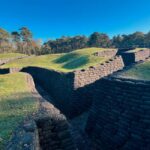
Then you get the experience people remember most for a reason: the Memorial Terre-neuvien de Beaumont-Hamel keeps the battlefield layout much as it was. You’ll walk through authentic trenches used on the first day of the Battle of the Somme. It’s one thing to read about trench systems; it’s another to walk their lines and understand how terrain shaped decisions. This stop is about 30 minutes, which is enough time to take it in without dragging you from place to place.
Thiepval and the scale of missing British soldiers
At Memorial de Thiepval, the tour centers on commemoration for soldiers with no-known grave—over 73,000 missing British soldiers are named there. If you want a single site that shows how memorials can carry grief when the bodies are gone, Thiepval does that plainly.


Australia’s concentration of the fallen
The tour then points out fields containing the highest concentration of Australia’s fallen on the Western Front. You don’t get a single “wait here for the perfect photo” vibe; instead, the pacing nudges you toward the sense that this ground is not symbolic—it’s specific.
Tank Corps Memorial at Windmill Site
Next is the Tank Corps Memorial at the Wind Mill Site, described as sacred ground where many Australians fought. Even if tanks and trenches sound like different worlds, the Western Front history ties them together, especially as the fighting changed in later years. This is a short stop, but that’s part of the point.
1st Australian Division Memorial at Pozieres
At the 1st Australian Division Memorial, the focus is brutal: the division lost more men at Pozieres than at any other battlefield in France and Belgium. It’s the kind of fact that makes you slow down, because it turns a name on a stone into a sense of proportion—how much was paid for a relatively small patch of ground.
Lochnagar Crater: the mine scar
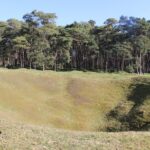
Then comes the Lochnagar Crater, tied to the underground mine detonation that helped start the Battle of the Somme. The tour calls it the biggest scar on the Western Front land. Standing near the crater area gives you a visual scale for “industrial warfare as geography,” where a battlefield isn’t just fought on—it’s reshaped.
3rd Australian Division Memorial and Monash-linked stopping points
At the 3rd Australian Division Memorial, the story is about holding the line in 1918: it marks where General Monash and the 3rd Australian Division halted the German advance. This is where the itinerary shifts from pure loss into the strategic picture—how Australians helped change outcomes, not only how they suffered them.
Villers-Bretonneux: ANZAC Day in France
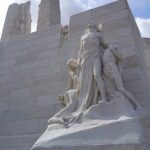
You’ll also visit the Australian National Memorial in Villers-Bretonneux, where the ANZAC Day Dawn Service is held in France. That’s not an abstract connection. It’s a living tradition tied to the same community memory the memorials preserve.
Sir John Monash Centre
Plan around the time here: the Sir John Monash Centre is about one hour and is framed as a must-see information center covering Australian action across the Western Front. If you want context that makes the memorial stones easier to read, this is where you sharpen that lens.
Franco-Australian Museum (not included)
The Franco-Australian Museum in Villers-Bretonneux is not included and has an admission fee that’s on you. It’s worth considering if you like museum context, but if you’d rather keep costs down, you can treat the Monash Centre as your built-in “understand more” stop.
Australian Corps Memorial at Le Hamel
Day 1 ends with the Australian Corps Memorial at Le Hamel, where General Monash introduced tactics that took charge of the war. This isn’t just another plaque. It’s a reminder that the Western Front story isn’t only a timeline of suffering—it includes planning, adaptation, and moments that changed the war’s momentum.
Day 2: From Fromelles mass-grave remembrance to Tyne Cot and Ypres

Day 2 is more “Belgium remembrance,” but it still starts with one of the tour’s most recent-emphasis stories: the mass-grave discoveries connected to Australian casualties.
Pheasant Wood Military Cemetery and the Fromelles mass grave
At Pheasant Wood Military Cemetery, the tour highlights it as the newest Commonwealth War Graves Cemetery holding Australians found in the mass grave at Pheasant Wood, Fromelles. This is a key reason the tour feels current, not stuck in old textbook pages. The stop is about 20 minutes, long enough to grasp what it means when remains are recovered and identified later.
Australian Memorial Park and Cobber’s Statue
Next is the Australian Memorial Park on the Fromelles battlefield, including the iconic Cobber’s Statue. This is the kind of monument that gives you a focus point in a landscape that otherwise can feel too wide to “hold meaning.” If you need something visual to steady you, this is it.
VC Corner Australian Cemetery: missing names on no-man’s land
At VC Corner Australian Cemetery, the commemoration is tied directly to missing soldiers—1299 Australians missing from the Battle of Fromelles are commemorated here. The tour notes it’s on no-man’s land, which is precisely why it’s so intense. You’re standing where the war’s “in-between” became someone’s final location.
Christmas Truce Memorial
Then there’s a tonal shift that still fits the war story: the Christmas Truce Memorial, described as the official site of the 1914 Christmas Truce. It’s not “happy history.” It’s the idea that human impulses showed up even inside the machinery of war.
Hill 60: mine crater and the Beneath Hill 60 reference
After that comes Hill 60, a walk-through of a massive crater created by an underground mine in 1917. The tour connects it to the book/film Beneath Hill 60, which is helpful if you’ve read or watched that story and want the real terrain it refers to. This stop is about 30 minutes.
Brothers In Arms Memorial
At the Brothers In Arms Memorial, the dedication is described as born from local passion, honoring the brothers who fought on the Western Front. This one adds a local-community layer rather than only a national layer, which helps you see how the war is remembered in Belgium.
Buttes New British Cemetery and ANZAC Day connections
Then: Buttes New British Cemetery at Polygon Wood. The tour notes it’s the site of the ANZAC Day Dawn Service in Belgium and ties it to the 5th Australian Division Memorial. If you’ve felt the emotional power of Dawn Services in Australia, you’ll probably understand why this stop is built in.
Passchendaele Museum (not included)
Next is Passchendaele Museum, described as one of the best museums on the Western Front. Admission is not included, so consider your priorities. If you’re the type who wants museum context, you may find this money worth it.
Tyne Cot Cemetery: largest Commonwealth cemetery in the world
After museum time (or skipping it), the day’s center of gravity is Tyne Cot Cemetery, listed as the largest Commonwealth Cemetery in the world. Even in a short visit (about 30 minutes), you feel the scale. This is one of those places where it’s less about getting photos and more about slowing your thoughts.
Menin Gate Memorial: the missing in Belgium
Then comes Menin Gate Memorial, where the Commonwealth missing in Belgium are commemorated. This is paired nicely with Tyne Cot because together they cover both sides of the coin: names on the cemetery and names on the memorial wall.
Ypres dinner, then the Last Post Ceremony
Dinner is in the old town of Ypres (about one hour). After that, you end with the Last Post Ceremony, performed by locals every day since 1928. The tour frames it as emotive, and the structure supports that. You’re arriving already worn-in by the cemeteries and memorials, so the ceremony lands as a final act rather than a random add-on. Expect about 40 minutes.
Walking the lines: why these stops matter (beyond the plaques)

This tour works because it connects four different kinds of “learning.”
First, there’s physical learning: trenches at Beaumont-Hamel and the craters at Lochnagar and Hill 60 give you battlefield shape. Second, there’s personal learning: memorials for missing soldiers, including Thiepval and Menin Gate, show what it means when recovery doesn’t happen. Third, there’s national learning: the Australian division markers, Villers-Bretonneux ties, and Monash-linked memorial points help you place Australian actions in the broader Western Front story. Fourth, there’s local living memory: the Last Post Ceremony in Ypres ties remembrance to a community routine, not just a one-time visit.
And on the emotional side, the tour’s pacing matters. You’re not hit with ten stops in silence. You get structured time at each location, and the route builds toward the ceremony rather than cutting it off early.
Comfort, timing, and what to expect with a 7-person group

Small-group tours are either great or they’re just small. This one tends to stay usable because you’re not stuck shoulder-to-shoulder in a large bus. The vehicle is air-conditioned, and the tour is designed for a “see the key sites, plus a few extra” style route.
Most of the stops have admission ticket free noted, and the tour includes entry fees overall, plus bottled water. Still, two museum add-ons are not included: the Franco-Australian Museum on Day 1 and Passchendaele Museum on Day 2. If you love museums, budget extra. If you’re mostly here for the sites and the walking, you can treat these as optional.
Start time is early at 9:00 am, so plan your morning in Arras accordingly. You won’t want a late breakfast plan that makes you rush to the pickup point.
Price and value: is $740.53 fair for two days?

At $740.53 per person for a 2-day experience from Arras, the price is mainly paying for three things: coordination, a small-group guide experience, and transportation between sites that are far apart.
Here’s what makes the cost feel more justified than a budget “bus and brochure” deal:
- Max 7 travelers means more attention per person.
- Air-conditioned vehicle helps on a day built around walking memorial grounds.
- Entry fees and bottled water are included. That reduces the surprise costs that can show up with Western Front tours.
- The itinerary includes the Last Post Ceremony, which is the kind of “fixed emotional anchor” many people specifically want.
Where you might feel the price most is if you don’t plan to spend anything extra on those two optional museums. But even then, you’re still getting a tight, two-day hit of Australian-connected sites plus the biggest cemetery and memorial anchors in Belgium.
Who should book this tour (and who might not)

This tour is a strong fit if you want:
- Australian WWI sites in a tight route
- A small group with an organized pace
- The emotional payoff of ending at Ypres’ daily Last Post Ceremony
It’s also a good match if you care about context, since there’s a full stop at the Sir John Monash Centre that’s designed to explain Australian action across the Western Front.
You might choose a different option if:
- You want a more relaxed sightseeing style with fewer memorial moments
- You prefer museums to be included automatically, since Franco-Australian Museum and Passchendaele Museum are not included
- You’re sensitive to highly emotional settings for long stretches (this is a heavy itinerary by design)
Should you book this 2-day Australian Western Front tour from Arras?

If you’re aiming for a meaningful, well-paced Australian-focused Western Front trip, I’d book it. The combination of trench-ground walking, Australian memorial focus, and a proper ending at the Last Post Ceremony is exactly the kind of structure that makes the whole two days feel like a complete experience instead of a list of stops.
Just go in prepared: wear comfortable shoes, expect the emotional weight of cemeteries and missing-name memorials, and remember that this route is built to honor rather than rush.
FAQ
What is the duration of the 2 Day Australian Tour from Arras?
The tour runs for about 2 days.
What time does the tour start, and where do I meet?
The start time is 9:00 am. You can meet at Arras Train Station (Place du Maréchal Foch) or be picked up at your accommodation in Arras.
How big is the group?
This tour has a maximum of 7 travelers, keeping it a small-group experience.
Are meals included?
No. Meals are not included.
Is the tour in English, and are tickets digital?
Yes, the tour is offered in English, and you receive a mobile ticket. Bottled water is included, and entry fees are included as well (with some museums not included).
Can I cancel for a full refund?
Yes, there is free cancellation. You can cancel up to 24 hours in advance for a full refund.