REVIEW · ARRAS
1 day Canadian WW1 private tour including Vimy Ridge
Book on Viator →Operated by Chemins d'Histoire Battlefield Tours · Bookable on Viator
Trenches have a way of staying with you. This 1-day private Canadian WW1 tour from Arras is built for meaning, not just photos, and it moves at a human pace with a small group of up to 3. I especially like the front-line walking route and how the guide turns the ground into a clear story.
I also really liked the way Olivier uses historical maps (shown through the car’s GPS) so you can picture how the lines shifted over time. One possible drawback: the subject matter is heavy and the day is packed with memorial moments, so if you want a light, casual sightseeing day, this may feel too serious.
In This Review
- Key moments that make this tour worth your time
- Arras to the Western Front: what this private Canadian WWI day really is
- The 7-hour rhythm (and why timing is part of the experience)
- Vimy Ridge: visitor centre, possible Grange Tunnel, and a trench walk with a purpose
- Visitor centre first, then the trench story
- Walking “no man’s land” into the German trench system
- The Canadian memorial itself (Walter Seymour Allward, refurbished)
- Quick note on pace at Vimy
- Givenchy Road Canadian Cemetery: a short visit with real specifics
- Pozieres lunch break: the missing piece that keeps the day human
- Beaumont-Hamel’s Newfoundland Park: why this stop sticks
- A key fact that changes how you see the trenches
- Well-preserved trench system and memorial objects
- Time on site
- Courcelette Canadian Memorial: connecting Vimy to the Somme and the tank moment
- What you’re paying for: value beyond the ticket price
- Who should book this tour (and who should think twice)
- My practical call: should you book Chemins d’Histoire Battlefield Tours?
- FAQ
- FAQ
- Is this a private tour or a group tour?
- How long is the tour and when does it start?
- Where can pickup happen?
- Is lunch included in the price?
- What’s included in the tour price?
- Are admissions included for the stops?
- Does the tour run in English?
- Can kids join?
- Can I cancel and get a full refund?
Key moments that make this tour worth your time
- Private small-group pace (up to 3): more time to ask questions and less rushing.
- Walk the trenches facing Canadian positions: you cross no-man’s-land and step into the German trench system.
- Grange Tunnel may be added: a hidden side of trench warfare, depending on attendance.
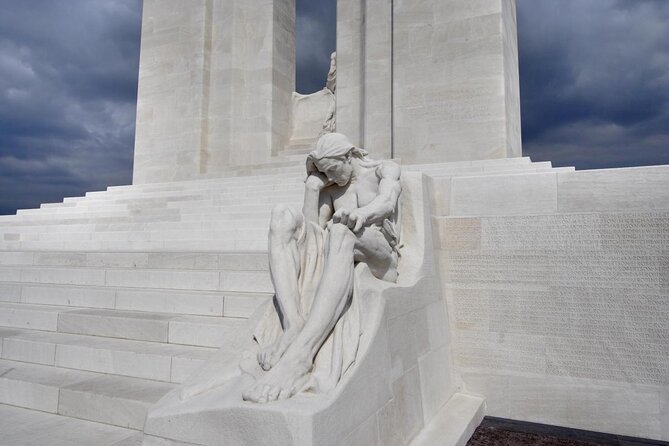
- Walter Seymour Allward’s Canadian Memorial at Vimy: a major monument, fully refurbished in 2007.
- Newfoundland focus at Beaumont-Hamel: Caribou Memorial and Danger Tree with a very well-preserved trench section.
- Somme connection through Courcelette: a quick stop that ties the tanks’ first chapter to the Canadian fight.
Arras to the Western Front: what this private Canadian WWI day really is
If you’re Canadian, or you simply care about WWI history that’s tied to real places, this day has the right structure. It starts with the Canadian story where it matters most—Vimy Ridge—then continues across key sites from the Arras and Somme sectors so the bigger picture clicks.
The private setup matters. With a group capped at three, you don’t get stuck listening to a loud headset while you wait your turn at every viewpoint. You also get a guide who can slow down for the details you actually care about, whether that’s trench layout, troop movements, or why these exact sites still feel so intense today.
The tour is also guided in English, and it includes live commentary during the drive. That’s a big deal on the Western Front, where the distance between stops can make self-guided days feel like you’re always “getting there” instead of actually learning.
You can also read our reviews of more private tours in Arras


The 7-hour rhythm (and why timing is part of the experience)

You’re looking at about 7 hours total, starting around 9:30 am. That length is long enough to do real walking and multiple memorial stops, but not so long that you lose the day to transit. You also get bottled water, which sounds basic until you’re standing outside a memorial in changing weather.
Pickup is flexible within the Amiens, Arras, and Saint-Quentin areas, and the operator contacts you after booking to arrange the best meeting spot. If you’re arriving by train, you’ll be glad to know the guide is used to helping guests figure out how to get to Arras and settle in.
Because this is a small private tour, the schedule tends to feel purposeful. You won’t spend an hour wandering with no context—you’ll know what you’re looking at before you get out of the vehicle.
Vimy Ridge: visitor centre, possible Grange Tunnel, and a trench walk with a purpose
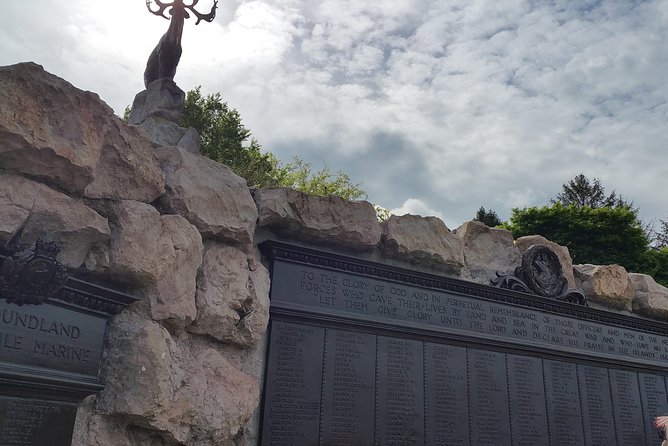
Vimy Ridge is the centerpiece, and the tour treats it like one. You begin at the Canadian National Vimy Memorial visitor area, and then your route branches depending on conditions—especially whether the Grange Tunnel visit can be added.
Visitor centre first, then the trench story
The visitor centre is where your guide sets the stage for what you’re about to experience. From there, you can head into a part of the site that many visitors miss: the Grange Tunnel. The idea isn’t just to see a tunnel; it’s to understand an overlooked side of trench warfare—how men moved, worked, and survived underground.
Walking “no man’s land” into the German trench system
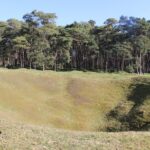
One of the strongest moments is the walk that takes you across no-man’s-land, then into the German trench system while you face the Canadian positions. That arrangement matters. Instead of looking at trenches like museum displays, you experience them like a battlefield geometry problem—line, counterline, and perspective.
It’s the kind of moment where a good guide earns their fee. With Olivier, the explanation stays connected to what you’re physically standing on, and the historical maps in the GPS help you visualize how the front line developed rather than treating everything as static.


The Canadian memorial itself (Walter Seymour Allward, refurbished)
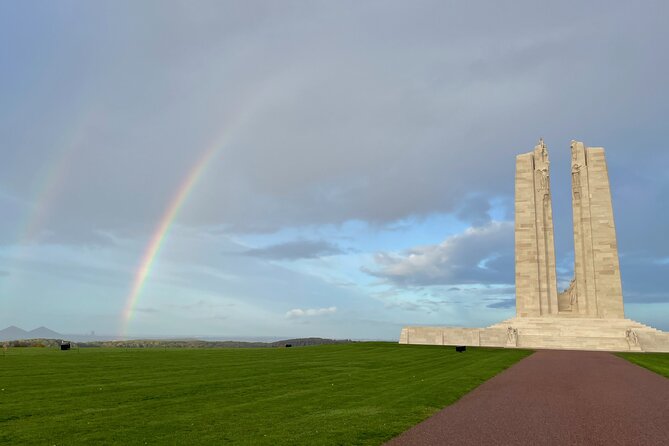
After trench-walking, you move to the Canadian Memorial designed by Walter Seymour Allward, and the stop includes the fact that it was fully refurbished in 2007. This is one of those monuments that hits harder when you’ve already walked the surrounding ground first. You’re not just reading names and dates—you’re placing them in the world that created them.
Quick note on pace at Vimy
Vimy can take over your day if you aren’t ready for it. Here, the route is planned so you get meaningful time without drifting into endless stops. That balance is especially helpful if you’re traveling from outside France and want this day to do its job.
Givenchy Road Canadian Cemetery: a short visit with real specifics
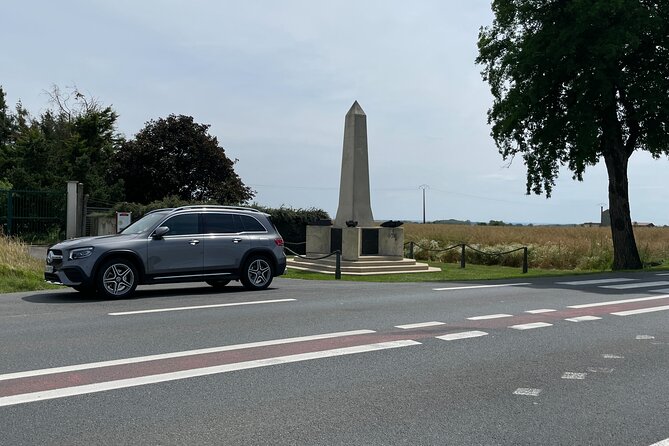
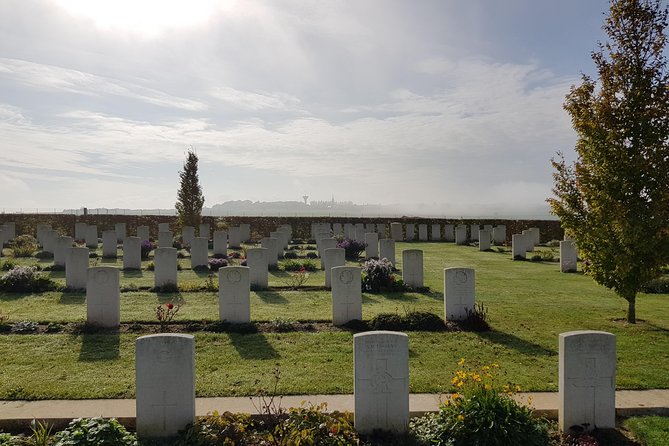
Right after Vimy, the tour heads to the Givenchy Road Canadian Cemetery. This isn’t a long stop, but it’s designed to land.
The cemetery contains the graves of 108 Canadians who fell on 9 April, plus those who died in the following days of the battle. That detail helps you stop treating the cemetery as a generic WWI backdrop. You can focus on a specific moment in time and let the scale sink in.
If you’re the type who likes to understand “how many” and “when,” this is where you’ll feel it most. It’s also a good moment to reset before the Somme sector—because the walk through Vimy’s landscape can leave you emotionally high-strung, and a cemetery gives you something quieter, more direct.
Pozieres lunch break: the missing piece that keeps the day human
Lunch is not included, but you do get a planned break—around 45 minutes—at a local café or restaurant in La Boisselle or Pozières. That time window is actually valuable, because WWI memorial days can feel like you’re always moving. A proper meal break lets your brain absorb what you just learned instead of sprinting to the next site.
One lunch option that comes up in the guide’s approach is Le Tommy, described as a café and war museum where you can even touch some of the items. I can’t guarantee every lunch will be identical, since the tour notes the lunch is in the La Boisselle or Pozières area, but the takeaway is clear: the lunch break can still support the theme instead of becoming a random pit stop.
Practical advice: bring a little patience with you here. If you arrive hungry, you’ll enjoy the meal more. If you arrive mentally full, you’ll still be able to eat, but you may want something simple.
Beaumont-Hamel’s Newfoundland Park: why this stop sticks
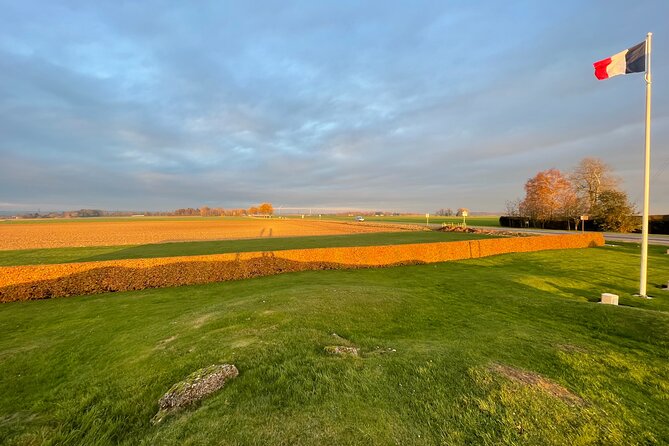
After lunch, the tour goes to the Memorial Terre-neuvien de Beaumont-Hamel, specifically the Newfoundland Park. This is one of those places where you can see why Canada’s WWI story isn’t a single narrative—it’s multiple regiments, multiple areas, and multiple levels of loss.
A key fact that changes how you see the trenches
The tour highlights that the regiment of Newfoundland suffered the second worst casualty level of a regiment on the first day of the Battle of the Somme. That doesn’t just add trivia—it changes what you notice. When you’re standing in preserved trench space, your brain starts connecting dates to human movement and collapse.
Well-preserved trench system and memorial objects
This stop includes a very well-preserved trench system, described as a must for understanding trench warfare. You also get the Caribou Memorial and the Danger Tree, both standing facing toward the German army line.
That “facing” detail matters. It’s not just symbolism. It helps you place where the lines were relative to the terrain and why certain memorial features were built where they are.
Time on site
Expect about 1 hour here. That’s enough to see the trench layout, take in the memorial points, and let the guide explain what matters—without dragging so long that you lose focus.
Courcelette Canadian Memorial: connecting Vimy to the Somme and the tank moment
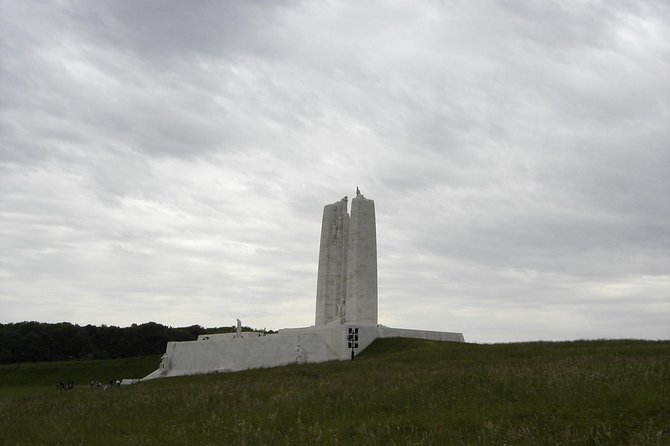
The final historical stop heads to the Canadian Memorial of Courcelette. It’s shorter—about 15 minutes—but it’s chosen to give you a quick, clear link between themes.
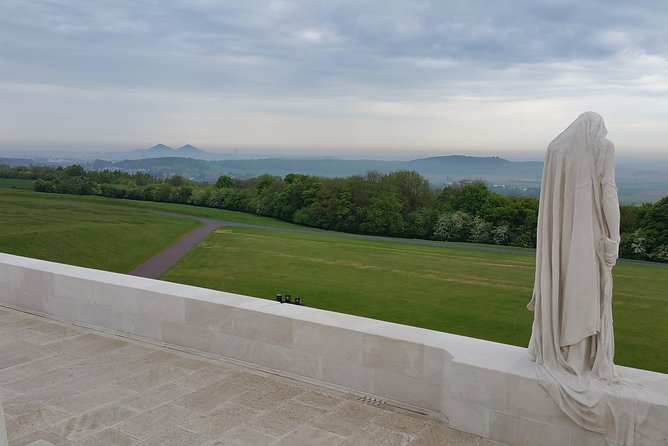
Courcelette is tied to the Battle of the Somme in 1916, and the tour places a specific emphasis on the timing: the village was captured by the Canadians in mid-September 1916, on the same day that tanks were used for the first time in history.
That connection can be powerful if you’ve been thinking about trenches as fixed lines. Here, you’re reminded that new ideas (and new technology) collided with the same brutal ground, and the battle evolved rather than stopped.
Even with a short visit, a good guide helps you leave with a sense of continuity: Vimy’s Canadian actions feed into a broader Western Front story, and Courcelette is one of the points where “history turning” becomes visible in real coordinates.
What you’re paying for: value beyond the ticket price
The price is $372.43 per person, and it’s fair to ask what you’re really buying. Here’s where the value becomes concrete.
You get:
- A private tour (only your group participates) with small-group size up to 3
- A professional licensed local guide
- Driver/guide service with private transportation
- Live commentary all day
- Bottled water
- Multiple stops where admission is listed as Free in the schedule (including Givenchy Road Cemetery and key memorial sites)
The big value isn’t just transportation. It’s the guide’s ability to make the geography and dates line up in your head. From the firsthand comments you can infer a consistent pattern: Olivier uses historical maps through the car’s GPS to show front-line change, and he’s prepared to explain how the pieces fit together—tactics, movement, and why certain memorials were placed where they were.
Also, the tour includes pickup flexibility within a defined region. For many people, that’s the difference between an “okay” day and a well-run day. You’re not trying to coordinate transit between distant sites after a long travel morning.
If you travel as a duo or small group, this price can feel more reasonable than a typical “hire a driver and hope” plan—because you’re also buying interpretation, timing, and a route built around Canadian remembrance.
Who should book this tour (and who should think twice)
You should strongly consider it if:
- You’re Canadian and want WWI sites that specifically emphasize Canadian involvement
- You like your history with structure—dates, locations, and the “why” behind what you see
- You want a guide who can answer questions in plain language and connect battlefield terrain to tactics
- You’re okay with a day that’s emotional and memorial-focused
You might want to think twice if:
- You’re looking for a light or casual sightseeing day
- You don’t want a schedule built around memorial sites and trench spaces
- You need lunch included in the price—because lunch is not included, only a break is provided
For most travelers, the balance works: enough time at the meaningful places, enough movement to feel like a real day on the ground, and enough guidance that you don’t get lost in facts.
My practical call: should you book Chemins d’Histoire Battlefield Tours?
Yes—if your goal is a respectful, clear Canadian WWI day that connects Vimy Ridge to the Somme without wasting hours guessing. The combination of trench walking, major Canadian memorials, and the Newfoundland focus is a strong mix, and the small private group makes a difference in how much you can absorb.
If you book, do one thing before you go: decide what you want most from the day. If it’s Canadian involvement, you’ll get that thread. If it’s trench warfare mechanics and how lines changed, Olivier’s map-based explanations are built for that. And if it’s simply a meaningful walk with context, this route is designed to help you pay respects in a way that feels grounded, not just performative.
FAQ
FAQ
Is this a private tour or a group tour?
This is a private tour/activity. Only your group participates, and the tour is described as a small group with up to 3 people.
How long is the tour and when does it start?
It starts at 9:30 am and lasts about 7 hours (approx.).
Where can pickup happen?
Pickup is flexible within the Amiens, Arras, and Saint-Quentin areas. The operator contacts you after booking to arrange your preferred pick-up location (for example, train station, hotel, or B&B).
Is lunch included in the price?
No. Lunch is not included, though there is a lunch break (about 45 minutes) in the La Boisselle or Pozières area.
What’s included in the tour price?
Included items are the driver/guide, small-group tour up to 3, live commentary on board, a professional licensed local guide, bottled water, and private transportation.
Are admissions included for the stops?
The schedule lists admissions as Free for stops such as Givenchy Road Canadian Cemetery, and for the memorial sites at Beaumont-Hamel and Courcelette. The information provided doesn’t explicitly state every single component’s admission, but the listed stop admissions are free.
Does the tour run in English?
Yes, it is offered in English.
Can kids join?
Children must be accompanied by an adult.
Can I cancel and get a full refund?
Yes. Free cancellation is available if you cancel up to 24 hours before the experience starts for a full refund.