REVIEW · ARRAS
WW1 Canadian focused Tour including Vimy Ridge
Book on Viator →Operated by ALW Battlefield Tours · Bookable on Viator
One ridge can change how you see everything.
This private Canadian WW1 tour ties together Vimy Ridge, memorials, cemeteries, and trench ground in one smooth day, with a guide who can adapt to weather and even tailor stops around a soldier or unit. Two things I really like: the way the day mixes major landmarks with quieter places for reflection, and the fact you’re transported in comfort in a private vehicle so you spend less time navigating and more time looking closely. A consideration: lunch isn’t included, so plan on finding food during the built-in stop or bringing something if your guide suggests it.
The guides on this experience earn their stars.
In past tours, guides such as Diane, Alison, Jon, and John were praised for going beyond facts—like researching a family member ahead of time and walking you through the meaning of what you’re seeing. If you’re sensitive to emotion, also know that this route includes heavy sites like the Canadian Unknown Soldier grave and major cemeteries, so bring a slower pace for yourself when you need it.
In This Review
- Quick take: why this Canadian WW1 day feels worth it
- A Canadian WW1 day from Arras, built for emotion and comfort
- Getting to the start point without stress (and why that matters)
- Vimy Ridge: the memorial, the trench-and-tunnel experience, and time to pay respects
- Cabaret Rouge and the Canadian Unknown Soldier: the quiet weight of names
- Beaumont-Hamel’s preserved trenches: why Newfoundland’s 1916 day hits hard
- Adanac Military Cemetery and the Commonwealth War Graves Commission
- Courcelette Canadian Memorial and the Somme’s Canadian actions
- Tank Corps Memorial: where WW1 tank warfare began
- Lochnagar Crater: walking a scar from the Somme
- What makes the guides shine: customization, family research, and real answers
- Price and value: what $540.11 per group buys you
- Weather, pacing, and what to pack for this kind of day
- Who this tour fits best
- Should you book this Canadian WW1 tour with Vimy Ridge?
- FAQ
- How long is the Canadian WW1 tour from Arras?
- What does the price include?
- Where do we meet the guide?
- Is the tour private?
- Does the tour have a fixed start time?
- Can I cancel if the weather is bad or plans change?
Quick take: why this Canadian WW1 day feels worth it

- Vimy Ridge + visitors centre: guided time to pay respects, plus the tunnel and trench experience
- Cabaret Rouge: original grave site of the Canadian Unknown Soldier and a nearby German cemetery stop
- Newfoundland at Beaumont-Hamel: preserved trenches and a clear focus on 1916 and the Newfoundland Regiment
- War graves focus: Adanac Military Cemetery and Commonwealth War Graves Commission context
- Somme add-ons with variety: Canadian memorials at Courcelette, the Tank Corps Memorial, and Lochnagar Crater
- Custom help: if you share a name/unit early enough, your guide can adjust the day around your story
A Canadian WW1 day from Arras, built for emotion and comfort

This tour is designed for one big goal: making the Canadian WW1 story feel real, not like a textbook. You start in the Arras area (or near Arras/Albert station), then spend the day moving between sites tied to Vimy and the Somme—memorials, cemeteries, trenches, and a couple of places that explain how the war’s technology and tactics changed.
The value here isn’t just that you get many famous stops. It’s how the guide manages the flow. You’re in a private, air-conditioned vehicle with a guide, so you don’t have to solve logistics while your brain is trying to process history. And since this is a small private group (up to 3 people per group), the day tends to feel less rushed than the usual big-bus version.
One more practical plus: the sites you’re visiting have free admission listed for this experience, so your money goes toward the guide and transport, not ticket fees. You’ll still want to budget for your meal, since lunch itself isn’t included.
You can also read our reviews of more tours and experiences in Arras.


Getting to the start point without stress (and why that matters)

The tour starts at 9:00 am. If you don’t arrange hotel pickup, you’ll meet your guide outside Arras or Albert train station—easy to reach from Paris, Lille, or Amiens by train. If you do arrange a pickup, it saves you time and reduces the chance of starting the day frazzled.
This matters more than it sounds. When you’re heading to memorial sites, your best day starts with calm legs and a clear head. A 9-hour day in winter or shoulder season can wear you down fast, so fewer complicated transfers helps you stay present.
Also note the “mobile ticket” detail. That’s handy because it reduces paper juggling while you’re out in busy station areas.
Vimy Ridge: the memorial, the trench-and-tunnel experience, and time to pay respects
Vimy Ridge is the emotional anchor of the day. You’ll get a guided visit and dedicated time to pay your respects at the Canadian National Vimy Memorial to the Missing. This is where the design and the scale of the memorial do most of the heavy lifting: it’s meant to hold memory, not just information.
You also get time in the visitors centre, including a tunnel and trench experience. That part is particularly valuable because it changes how your brain imagines what happened here. Instead of only seeing names and dates, you get a structured way to understand the setting—what soldiers might have moved through, how ground and defenses shaped the battle, and why 1917 at Vimy mattered so much.
Practical tip: Vimy can be cold and windy. One review specifically called out the weather, so pack layers and something windproof. Even if you think you’re dressed for a “normal” day, the ridge can be a different story once the wind finds you.
Cabaret Rouge and the Canadian Unknown Soldier: the quiet weight of names
After Vimy, the tone shifts into something even more personal. At Cimetiere du Cabaret Rouge, you visit the original grave site of the Canadian Unknown Soldier, and you’ll also see the resting place of thousands of comrades. This stop doesn’t feel like a checkbox. It’s the kind of place where you naturally slow down and look longer than you planned.
The tour also includes a nearby stop at Neuville St Vaast German cemetery. That’s an important balancing choice. It reminds you the cemeteries aren’t only Canadian spaces. The war took human lives across lines, and the grounds hold that reality in a way that stats never will.
Because this is a free admission stop in the schedule, your time is effectively “spent with purpose,” not spent queuing or paying. You’ll have about 45 minutes here, which is enough to take in the main points and still leave room for quiet.
Beaumont-Hamel’s preserved trenches: why Newfoundland’s 1916 day hits hard
Next comes Memorial Terre-neuvien De Beaumont-hamel, with a guided focus on the Newfoundland Regiment and the tragic day in 1916. This stop is built around walking through preserved trenches—so you’re not just looking at a monument. You’re moving through ground shaped by the war’s reality.
This is a smart pairing with the rest of the day because it connects the dots. You’ve already seen major Canadian memorial space at Vimy. Now you’re stepping into a place where the battle played out with a specific unit history attached to the terrain.
Time-wise, you’ll have about 1 hour. That’s enough for a guided walkthrough and a few moments to stand and think without feeling like you’re being shoved along.


Adanac Military Cemetery and the Commonwealth War Graves Commission
At Adanac Military Cemetery, the tour shifts to the long-term work of remembrance. You’ll learn about the Commonwealth War Graves Commission and then pay respects to the fallen.
This stop is valuable for two reasons:
- It gives context for why cemeteries look the way they do—order, uniform care, and the effort required to maintain them over generations.
- It turns a battlefield story into individual human stories, one headstone at a time.
You’ll have about 30 minutes. It’s short enough that the day keeps moving, but long enough to let the tone settle. If you’re traveling with someone who gets emotional at these sites, this is also a good place for a slower conversation, since you can take your time without losing the rest of the schedule.
Courcelette Canadian Memorial and the Somme’s Canadian actions
Courcelette is next, with a visit to the Courcelette Canadian Memorial. Here, your guide explains the actions undertaken by Canadian forces in 1916—giving you a clearer sense of how Canada’s role fit into the larger Somme story.
This stop is only about 30 minutes, but it works because you’ve already learned how to read the ground. Earlier you were on Vimy, then in trenches and cemeteries. By the time you reach Courcelette, you’re more prepared to connect the memorial’s location with what you’re being told.
If you like history that feels tied to geography, you’ll probably find this part satisfying because it turns “Somme” from a big name into a set of specific places.
Tank Corps Memorial: where WW1 tank warfare began
The Tank Corps Memorial is short on time—around 15 minutes—but it helps round out the WW1 story. Tanks were born in WW1, and this stop points you to the ground where that beginning is marked.
Why it’s worth including: it reminds you the war wasn’t only about static lines and trenches. It was also about trying to solve tactical problems with new technology, often with huge costs.
Even if tanks aren’t your main interest, this is a quick, focused way to broaden your understanding of how quickly the war changed.
Lochnagar Crater: walking a scar from the Somme
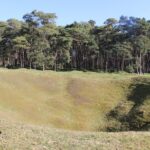
The day ends with Lochnagar Crater, described as the largest crater caused by man in anger. You’ll visit and then walk the scarred ground, with more of the Somme battle unfolding in your guide’s explanation.
This stop is around 30 minutes. It’s long enough to feel the “scale” effect and absorb what the ground represents, but not so long that you turn the place into a photo-fun detour. If you’re the type who likes to walk slowly and look at details, Lochnagar rewards that.
One thing to keep in mind: weather can make or break how enjoyable this walk feels. If it’s wet or windy, wear grippy shoes and plan for uneven ground.
What makes the guides shine: customization, family research, and real answers
The most praised part of this experience is the human factor. In guides’ work across similar days, Diane, Alison, Jon, and John were singled out for being friendly, asking (and answering) questions, and—big one—doing extra preparation when you give them something to work with.
Here’s what I’d do if you want the day to feel personal: before you go, share a soldier name, unit, or any clue you have. The tour’s highlight notes that with enough notice the guide can prepare a bespoke tour on a soldier or unit. Based on guide stories from past experiences, that preparation can become a real moment where you recognize names or connect places to the people you’re trying to remember.
Another practical strength: when weather changes plans, guides adjust. One review praised a guide for modifying the day due to the forecast and still delivering a full, satisfying route. That’s not just convenience—it protects your sense of time and momentum during a day that’s already emotionally intense.
Price and value: what $540.11 per group buys you
The price is $540.11 per group, up to 3 people. That might look high if you compare it to per-person group tours. But this is a private experience with a guide and an air-conditioned vehicle, and it’s built around multiple long-distance stops that would be time-consuming to coordinate on your own.
Here’s how the math tends to make sense in real life:
- If you travel as two or three people, you spread the cost across the group.
- You’re paying for transportation plus guided interpretation at each site, including time at Vimy and visitors centre.
- Since admission at stops is listed as free, you’re not paying extra site-by-site fees.
Think of it as buying back your day. You’re buying less stress, more guidance, and a route that’s paced for reflection.
If you’re traveling solo, the per-person cost can be steep—but for people who want a tailored experience (especially family research), it can still feel like good value.
Also, lunch isn’t included. You’ll have a lunch stop built into the tour time, but you’ll pay for your meal. If you prefer to control what you eat and where, ask your guide for a nearby recommendation—some guides have been praised for excellent restaurant suggestions in Arras.
Weather, pacing, and what to pack for this kind of day
This experience requires good weather, and if it’s canceled due to poor weather you’ll be offered a different date or a full refund. That’s a simple signal: plan for cold or changeable conditions, especially at Vimy and around open ground.
Bring:
- layers and a windproof layer for the ridge
- comfortable shoes for walking craters and trench ground
- water and a small snack for gaps between stops, just in case lunch timing slips
Pacing is another factor. You’ll be on the move all day, but the tour includes guided time and time to pay respects. The stops are short where they need to be, longer where the site needs attention. That balance is part of why this day gets such strong reviews.
Who this tour fits best
This is ideal if:
- you’re Canadian or you care deeply about Canada’s role in WW1
- you want Vimy Ridge with a guide who can explain what you’re seeing without turning it into a lecture
- you’re traveling as a small group (up to 3) and want private transport instead of public transit juggling
- you have a family connection and want to ask real questions on the ground
It’s also a strong choice if you’ve already visited one memorial and want the rest of the story—Trenches at Beaumont-hamel, cemeteries in the Cabaret Rouge area, and Somme sites like Courcelette and Lochnagar Crater.
If you need lots of free time to roam on your own for hours, this probably won’t be your style. This day is guided and structured. For many people, that’s exactly why it works.
Should you book this Canadian WW1 tour with Vimy Ridge?
Yes, if you want a guided, private Canadian WW1 route that spends time where it matters: Vimy Ridge, trench ground, cemeteries, and the Somme scars like Lochnagar Crater. I’d book it especially if you can give your guide enough notice to prepare around a soldier or unit—because that’s where the day often turns from informative to personal.
Consider booking early too. It’s commonly reserved about 88 days in advance, so if you have specific dates in mind, don’t wait until the last minute.
If you’re comfortable paying for a private guided day and doing a bit of walking in potentially cold weather, this tour is a strong value for what you get: transport, a small group, and interpretation that helps the places land in your heart, not just your head.
FAQ
How long is the Canadian WW1 tour from Arras?
The tour runs for about 9 hours.
What does the price include?
It includes a guide and an air-conditioned vehicle. Admission tickets for the stops listed are also free. Lunch is not included.
Where do we meet the guide?
Unless you arrange hotel pickup, you meet the guide outside Arras or Albert train station. The tour ends back at the meeting point.
Is the tour private?
Yes. It’s a private tour/activity, and only your group participates.
Does the tour have a fixed start time?
Yes. The start time is 9:00 am.
Can I cancel if the weather is bad or plans change?
There is free cancellation up to 24 hours in advance for a full refund. If the experience is canceled due to poor weather, you’ll be offered a different date or a full refund.