REVIEW · ARRAS
Australian – Out in the Somme Day Tour – from Arras
Book on Viator →Operated by Sacred Ground Tours · Bookable on Viator
Somme battlefields don’t sugarcoat history. This day trip from Arras links major Australian memorials with the places where the fighting still feels immediate, from preserved trenches at Beaumont-Hamel to the crater that started the Somme offensive. I love the way the tour is built for focus (short, well-timed stops) and the personal care shown when families are trying to track relatives. The main drawback to plan for: the schedule is packed, so if you want lots of unhurried wandering at every site, you may feel slightly rushed.
You’ll travel in an air-conditioned vehicle with bottled water, plus entry fees are handled. The group size is capped at a maximum of 7, which matters on a day this emotional and information-heavy. You can even use a mobile ticket, and English is offered—handy if you’re not traveling with French.
You’re looking at about 8 to 9 hours total, start time 9:00 am, with most stops having free admission. Lunch is not included (and the Franco-Australian Museum is extra), so budget a bit and you’ll have a smoother day.
In This Review
- Key things to know before you go
- A smooth start from Arras, with small-group pacing
- The guide matters more than you think (hello, Phil)
- Stop 1: Serre Road Cemetery No. 2 and the weight of names
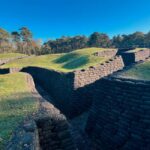
- Stop 2: Beaumont-Hamel and walking trenches used on 1 July 1916
- Stop 3: Thiepval Memorial and the scale of the missing
- Stop 4: The Windmill Memorial and what the ground reveals
- Stop 5: Pozieres and the Australian 1st Division’s first Western Front action
- Stop 6: Lochnagar Crater—the biggest scar from the underground mine
- Stop 7: The 3rd Australian Division Memorial and Monash-era momentum
- Stop 8: Villers-Bretonneux Military Cemetery and the Australian National Memorial
- Stop 9: Sir John Monash Centre—the most practical way to interpret everything you saw
- Stop 10: Franco-Australian Museum in Villers-Bretonneux (extra ticket)
- Stop 11: Australian Corps Memorial and Monash’s tactical message
- Price and value: what $318.40 gets you (and what to budget for)
- Timing, comfort, and how to set yourself up for a good day
- Who this tour fits best (and who might want a different pace)
- Should you book the Australian Out in the Somme tour from Arras?
- FAQ
- What time does the tour start from Arras?
- How long is the tour?
- Is pickup available?
- What’s included in the price?
- Is lunch included?
- Are the memorial sites admission tickets included?
- How big is the group and what language is it in?
Key things to know before you go

- Serre Road Cemetery No. 2 is the largest Commonwealth War Graves cemetery in the Somme, and the visit is free and timed well.
- Beaumont-Hamel’s preserved trenches let you walk through the battlefield as it was used on 1 July 1916.
- Thiepval memorial marks over 73,000 missing of the British Army, mainly from the brutal year of 1916.
- Pozieres and the Australian lead-in are covered directly, including the 1st Australian Division going into battle on 23 July 1916.
- Sir John Monash Centre is built for Australians—practical, modern interpretation before you head into more memorial sites.
A smooth start from Arras, with small-group pacing

This tour runs from Arras, starting at 9:00 am. If you’re meeting at Arras Train Station, the pickup point is Pl. du Maréchal Foch, near the taxi stand—easy to find once you’re there. You’ll be in a vehicle with air-conditioning, and you’ll get bottled water along the way. That sounds like a small thing, but on a long day across the Somme, it helps you stay steady instead of cranky.
The other big practical win is the small group size. With a maximum of 7 travelers, you’re not lost in a crowd. You can ask questions, and the guide can actually adjust for different interests—especially if someone is there to find a relative or understand a specific unit.
Total time is listed as 8 to 9 hours including travel. That’s the right kind of long for a Somme day: enough time to hit multiple sites, without it turning into a two-day marathon. If you’re traveling from elsewhere in France, try to schedule your day so you’re not forced into a stressful rush right after.
You can also read our reviews of more tours and experiences in Arras.


The guide matters more than you think (hello, Phil)

The strongest theme in the experience is the human one. Guides on this tour can go beyond the scripted explanations, and that difference is huge at memorial sites. One guide specifically highlighted is Phil, praised for being engaging and for taking real effort to support families. If you’re traveling with a personal connection—like a name you’ve researched—this matters.
You’ll also get a sense of how the fighting fit together, not just what’s carved in stone. The tour is designed so you hear the story, then see the physical place it connects to. And if you’re worried about getting back smoothly to Arras, you’ll be glad to know the guide support can extend to helping plan transport back after the tour.
If you like history as a living puzzle—where the details connect—you’ll probably love this structure. And if you prefer a more distant, quiet approach, you’ll still have space to absorb, but you may want to mentally prepare for the day’s emotional intensity.
Stop 1: Serre Road Cemetery No. 2 and the weight of names

You start at Serre Road Cemetery No. 2. This is the largest Commonwealth War Graves cemetery in the Somme, and the visit is free with a scheduled time of about 20 minutes. It’s the kind of stop that sets the tone fast: you’re not easing into the subject with museum fluff. You’re meeting it head-on.
What I like about this as a first stop is how it gives the day a backbone. Instead of treating the tour like a list of landmarks, you begin with a place that’s built around remembrance. The guided context helps you read the cemetery with purpose—who these soldiers were, and why Commonwealth War Graves sites matter.
A consideration: cemeteries move slowly emotionally, even when the clock says you have 20 minutes. If you tend to linger, the tour pace can feel tighter here. Still, the time allotment is short enough to keep the day from turning into a single-site visit that steals time from everything else.
Stop 2: Beaumont-Hamel and walking trenches used on 1 July 1916

Next is Memorial Terre-neuvien de Beaumont-hamel, scheduled for about 40 minutes. It’s a memorial park for the Newfoundland Regiment, and the key experience is the preserved battlefield. You’ll walk through authentic trenches used on 1st July 1916, the first day of the Battle of the Somme.
This is one of those stops where “seeing” becomes “understanding.” The guide’s job here is to connect the physical layout to what it meant that day—why the terrain mattered, what the trenches were like in reality, and how the first day unfolded.
The free admission is a nice bonus, but the real value is that you get a tactile sense of place. You’re not just looking at a monument. You’re moving through the same kind of ground that shaped survival and suffering.
Because it’s a trench-and-memorial setting, plan for outdoor time and keep your expectations realistic: the goal isn’t long wandering, it’s a guided, meaningful walk with context.
Stop 3: Thiepval Memorial and the scale of the missing

Then it’s Memorial de Thiepval, again about 40 minutes. This memorial commemorates over 73,000 missing of the British Army, mainly from 1916 and the Battle of the Somme.
This stop can be confronting in a different way than a cemetery. Cemeteries often give you a physical grave or a clear final resting place. A memorial to the missing shifts the focus to absence—the way families never got closure, and how names remain a responsibility for later generations.
I like that the tour includes this right after Beaumont-Hamel. The preserved trenches help you understand what soldiers faced on the ground; Thiepval expands it out to the larger human outcome—how that fighting turned into mass uncertainty.


Stop 4: The Windmill Memorial and what the ground reveals

You’ll visit the Windmill Memorial for about 15 minutes. This point is described as the highest point in the Somme, and the important detail for Australians is the concentration of Australians fallen in the triangle of farm fields facing the windmill site, across battlefields on the Western Front.
Even with a short time slot, this stop helps you understand why some places mattered more than others. Terrain wasn’t background. It was part of the battle plan, and it shaped who could hold positions and who had to pay to take them.
If you’re the type who likes to “read” a battlefield, this is one of the quick stops that pays off. If you’re exhausted by then, 15 minutes still feels short enough to be bearable.
Stop 5: Pozieres and the Australian 1st Division’s first Western Front action

Next you’ll head to 1st Australian Division Memorial in Pozieres for about 10 minutes. The key historical anchor here is direct: Pozieres is where the Australian 1st Division first went into battle on the Western Front on 23 July 1916.
This is a brief stop, but it’s strategically placed. After Thiepval and the Windmill site, you shift into the Australian story with a clear date and a clear entry point. For many Australians, that’s an emotional turning point—because now you’re not only learning about someone else’s war. You’re seeing where your country’s soldiers were pulled into it, early and decisively.
If you want deeper context, the guide’s job is to connect this to the surrounding sites so it doesn’t feel like a standalone plaque. In a small group, you can also ask follow-up questions right there.
Stop 6: Lochnagar Crater—the biggest scar from the underground mine

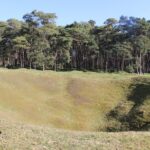
The day takes a dramatic turn at Lochnagar Crater, scheduled for about 20 minutes. This is described as the largest scar on the land of the Western Front—an underground mine blown on 1 July 1916, starting the Battle of the Somme.
Crater sites can feel almost surreal at first glance. But the value here is the interpretation: the crater isn’t just a hole, it’s evidence of how the battle began, and how engineering and violence were fused into one opening move.
I’d treat this stop as a moment to slow down mentally, even if the timeline doesn’t. It’s one of the places where the history isn’t abstract—it’s physically carved into the ground.
Stop 7: The 3rd Australian Division Memorial and Monash-era momentum
After the crater, you’ll visit the 3rd Australian Division Memorial for about 10 minutes. This ties the story to General John Monash and the later fighting in 1918, when Australian forces helped stall the last German advance on ridges and valleys north of Viller-Bretonneux.
This short stop matters because it prevents the tour from becoming only a 1916 story. It brings the timeline forward and shows how tactics evolved. The Monash connection also helps you understand why some later Australian actions are often discussed in terms of planning and adjusted methods.
If you’re a history nerd (respect), you’ll likely appreciate how the tour keeps making time jumps without making it confusing.
Stop 8: Villers-Bretonneux Military Cemetery and the Australian National Memorial
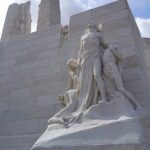
Next is Villers-Bretonneux Military Cemetery, about 30 minutes. The centerpiece here is the Australian National Memorial for the Missing, with remembrance of over 11,000 Australian fallen with an unknown grave.
This is one of the most important stops for Australians on the Somme, because it connects personal loss to a public act of remembrance. Even if you’re not sure exactly which soldier you’re looking for, the site gives you a way to understand scale and meaning.
The location also reinforces a key theme that comes up again later: this isn’t only history stored in archives. It’s still remembered by locals and students, generation after generation.
A consideration: this stop is emotionally heavy for many people. The guided explanations can make it easier to process, but give yourself permission to feel it.
Stop 9: Sir John Monash Centre—the most practical way to interpret everything you saw
Then comes Sir John Monash Centre for about 1 hour. The tour description calls it a must visit for Australians on the Somme, and it’s framed as the most advanced information centre on the Western Front commemorating Australian action.
This timing is smart. By now you’ve seen trenches, memorials, the scale of missing, and key battlefield points. The centre then helps you connect those stops into one coherent story.
This hour is also where a lot of people catch up on understanding. If you’re the kind who likes “why” not only “what,” this is where that clicks into place.
Stop 10: Franco-Australian Museum in Villers-Bretonneux (extra ticket)
After the Monash Centre, you’ll visit the Franco-Australian Museum for about 30 minutes. Admission here is listed as not included, so expect an extra cost on top of the tour price.
What I like is the specific angle given for this museum: it’s in a French town where locals, schools, and students all remember Australia. The tour framing mentions mateship born in the battles around ANZAC Day 1918, which gives the museum a human, educational purpose rather than only a military one.
If you’re on a tight budget, you can still understand most of the broader story without it. But if you want the Australia–France connection in a more everyday, educational setting, this museum stop is worth considering.
Stop 11: Australian Corps Memorial and Monash’s tactical message
The final battlefield-focused stop is the Australian Corps Memorial, about 20 minutes. It highlights General Monash’s battle at Le Hamel and the idea of how the battle should be fought—through adjusted tactics that helped end the war only a few months later.
This closing works because it changes the tone slightly. You’re still in remembrance mode, but the guide uses the site to point toward the practical lessons and the strategic shift that came after heavy losses.
It’s a fitting wrap-up: you’ve seen what the Somme did in 1916, and you’ve also seen how Australian forces and leadership helped shape later outcomes.
Price and value: what $318.40 gets you (and what to budget for)
At $318.40 per person, this tour sits in the “serious day trip” category. The best way to judge value is by what’s included and what’s not.
Included:
- Air-conditioned vehicle
- Bottled water
- Entry fees
Not included:
- Lunch (a sit-down local restaurant or café at 15–20 euro per person is the expectation)
- Franco-Australian Museum admission
Most other stops list free admission, so your extra spending is mainly lunch plus the museum ticket. When you add in the small group size (max 7), the time with a guide who can personalize the day, and the fact that entry fees are taken care of, the price starts to make a lot more sense.
For me, the biggest value isn’t the bus. It’s the guide’s ability to respond to real needs—especially when people are looking for relatives and trying to understand which unit connected to which place.
Timing, comfort, and how to set yourself up for a good day
Start at 9:00 am, return after a full 8 to 9 hours. That’s long enough that you’ll want to arrive rested. Since the day includes multiple outdoor memorial sites—plus at least one information centre—you’ll be shifting between standing, walking, and sitting throughout.
A smart approach:
- Carry patience for brief stops. Each site gets a focused window so you can cover the arc of the story.
- Budget lunch and plan for the museum ticket.
- Bring water habits into your day. Bottled water is included, but having a small plan for snacks and hydration keeps you steady.
Also, if you’re relying on public transport, the meeting details place you near Arras Train Station, and the tour confirms details at booking with mobile tickets. That reduces day-of stress.
If you’re deciding last minute, note that free cancellation is offered up to 24 hours before the start time—handy if your travel plans wobble.
Who this tour fits best (and who might want a different pace)
This is a strong match if you:
- want an Australian-focused Somme day from Arras
- like guided interpretation that ties places to dates and units
- have family research questions and want real help, not just generic history
- appreciate a small group for personal attention
It’s also a good choice if you’re traveling solo or as a couple and want meaningful structure without needing to drive across the region yourself.
If you’re someone who needs long, slow time at every stop, the tight stop durations may feel limiting. In that case, you might prefer a more self-paced approach. But if you can handle a guided day with brief moments to reflect, you’ll likely find this format lands well.
Should you book the Australian Out in the Somme tour from Arras?
If your goal is a moving, well-organized Somme day that connects Australian history to the actual battlefield geography, this is a clear yes. The value comes from more than the route: the tour’s strength is the guide support and the way the day can be tailored when families are trying to find relatives and make sense of names, units, and sites.
Booking makes sense early too. The average booking window is about 140 days in advance, which is a hint that spots can fill, especially in peak travel seasons.
So here’s my practical verdict: book it if you want a guided, emotionally resonant itinerary that’s efficient without feeling rushed, and where care for real personal connections is part of the experience. If you want total quiet and hours of independent wandering at each site, you might want a different style of visit. For most people, though, this strikes a great balance between meaning and logistics.
FAQ
What time does the tour start from Arras?
The tour start time is 9:00 am. If you’re meeting at Arras Train Station, you’ll go to Pl. du Maréchal Foch near the taxi stand.
How long is the tour?
The duration is listed as 8 to 9 hours, including travel time.
Is pickup available?
Yes. Pickup is offered, and if you’re meeting at Arras Train Station, you’ll meet near the taxi stand at Pl. du Maréchal Foch.
What’s included in the price?
Entry fees are included, along with an air-conditioned vehicle and bottled water.
Is lunch included?
No. Lunch is not included. You should plan for a sit-down lunch at a local French restaurant or café, typically 15–20 euro per person.
Are the memorial sites admission tickets included?
Most stops list free admission, but the Franco-Australian Museum admission is not included.
How big is the group and what language is it in?
The tour is offered in English, with a maximum of 7 travelers. Mobile tickets are provided, and confirmation is received at booking.