REVIEW · ARRAS
Private Tour of the WW1 Somme Battlefields from ARRAS
Book on Viator →Operated by Terres de Mémoire · Bookable on Viator
Eight stops, one day, and lessons in loss. I like how this private Somme day strings together memorials and surviving 1916 sites into a clear, time-friendly route. I also love that you get built-in site access where it matters, especially the Musee Somme 1916 stop. One drawback to plan for: it is a full 8-hour itinerary with no lunch or snacks included.
You meet in central Arras at 9:00am and head out by comfortable minibus with a WW1 expert guide. The tour is customizable for your group and runs in English, so you can ask questions and keep the pace where you want it. Just remember it is weather-dependent, since the day centers on outdoors memorial grounds and crater sites.
In This Review
- Key points before you go
- Why this Somme route works from Arras
- Price and what $337.34 really covers
- Start at 9:00am in Arras: timing that respects the sites
- Stop 1: Terre-neuvien De Beaumont-hamel and its preserved trenches
- Stop 2: Thiepval Memorial and the weight of names
- Stop 3: Lochnagar Crater and the reality of a mine blast
- Stop 4: The Gibraltar bunker site and the feel of defense
- Stop 5: Musee Somme 1916 in Albert’s original tunnel
- Stop 6: Proyart German cemetery and a hard kind of balance
- Stop 7: Sir John Monash Centre and an interactive way to learn
- Stop 8: Australian National Memorial at Villers-Bretonneux
- Customization and the role of your guide
- What to bring and how to get the most out of each stop
- Who this Somme private tour is best for
- Should you book this private WW1 Somme tour from Arras?
- FAQ
- What is the duration of the Private Tour of the WW1 Somme Battlefields from Arras?
- Where is the tour meeting point?
- What time does the tour start?
- How much does the tour cost per person?
- Is this a private tour or shared with other people?
- What language is the tour offered in?
- Is lunch included?
- Are admission tickets included?
- Does the itinerary include museum time?
- Is there any weather requirement?
Key points before you go

- Private guide, private minibus: you control the pace and questions instead of fighting for space.
- Ticket-handled stops: you spend time at the sites rather than working out admissions.
- Real battlefield remains: preserved trenches and the Lochnagar crater bring 1916 into focus.
- Balanced remembrance across sides: Australian memorials pair with Proyart’s German cemetery.
- A tunnel museum in Albert: Musee Somme 1916 adds context in an unusual setting.
- Time-boxed stops: eight locations in about eight hours, including a longer museum window.
Why this Somme route works from Arras
The Somme can feel huge. On your own, you can easily end up driving a lot and reading a little. This tour is built to solve that problem by stacking key sites into a sensible one-day loop that starts and ends right back at Pl. du Maréchal Foch in Arras.
What makes it especially useful is the mix: you get preserved battlefield remains, memorial walls and name lists, and museums that explain what you are seeing. That matters because Somme sites can look like fields and stone without guidance. With an expert guide in the minibus, the route becomes a story you can actually follow.
Two practical perks also help: admission is included where it counts (like the Albert museum), and the drive between locations is handled. When you are short on time, that is real value, not just convenience.
You can also read our reviews of more private tours in Arras


Price and what $337.34 really covers

At $337.34 per person for an 8-hour private tour, you are paying for three things: a dedicated guide, private transportation, and access fees for the included sites. Most of the stops listed are free-entry, but the tour still provides the time and coordination to get you to all of them in one day.
The big “value” angle is that you are not separately buying a bunch of tickets while also trying to navigate the geography. The Musee Somme 1916 admission is included, and the schedule is set so you actually have time on site (for example, 1 hour 30 minutes at the museum). For people trying to cover the Somme quickly without losing a day to logistics, this price is easier to justify.
What is not included is also clear: lunch and snacks. So think of the tour cost as the day’s transport, expert interpretation, and entry fees, not as a full meal plan.
Start at 9:00am in Arras: timing that respects the sites

You begin at Pl. du Maréchal Foch, 62000 Arras, at 9:00am, and you finish back at the same meeting point. That “back where you started” detail is more important than it sounds, because you avoid the usual end-of-day puzzle.
The stop order is logical, moving from preserved trench ground to crater and bunkers, then into Albert for a deeper museum visit, and finally toward later memorials and cemeteries. The duration at each stop is also practical:
- 1 hour at Terre-neuvien De Beaumont-hamel
- shorter but focused windows for Thiepval, Lochnagar, and the Gibraltar bunker area
- the longest museum block in Albert
- then a steady wrap-up with cemetery and commemoration sites
If you want a day that feels structured without being rushed, this format tends to work well. If you are the type who needs long, quiet reflection without any clock watching, you may still appreciate the longer museum stop, but you should know the overall schedule is tightly managed.
Stop 1: Terre-neuvien De Beaumont-hamel and its preserved trenches
Your first stop is Memorial Terre-neuvien De Beaumont-hamel, with about 1 hour on site. This is one of the most powerful openings for a Somme day because it is built around surviving trench features from the 1916 battle.
Why that matters: when you see trenches and earthworks that have been preserved, you stop thinking abstractly about the Somme. You start visualizing how soldiers moved, how ground shaped decisions, and why the terrain itself mattered. A guide helps you read what you are seeing instead of just walking past it.
A small consideration: an hour goes fast here, especially if you are moved by the memorial setting. If you want deeper silence, you might notice that the tour’s rhythm prioritizes keeping the full loop intact.
Stop 2: Thiepval Memorial and the weight of names

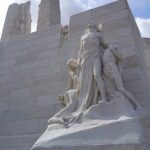
Next is Memorial de Thiepval for about 30 minutes. This is the Thiepval memorial dedicated to those missing from the Somme.
This stop is different from crater-and-trench sites. Instead of looking at physical remains of fighting, you are confronting the idea of absence: people who did not return, and whose names stand as the record. In a guided setting, you get context for what a missing-person memorial means and how it was intended to function for families.
For a practical experience tip: use this stop to slow down mentally. Even with a short time window, it can anchor the emotional tone of the rest of the day.


Stop 3: Lochnagar Crater and the reality of a mine blast

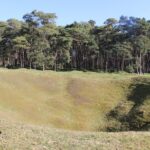
Then you head to Lochnagar Crater for around 30 minutes. This is the site of the famous mine crater, created when a huge underground mine was blown on July 1, 1916.
A crater can sound like just a hole in the ground until you stand near it. At Lochnagar, the scale and shape help you understand why certain battles unfolded the way they did. With a WW1 expert guide, you also connect the crater to the wider attack plan rather than treating it like a standalone spectacle.
The main drawback to keep in mind is the “stop is short” element. You will have time for the key views and explanation, but if you want multiple angles and long wandering, you will have to balance your curiosity with the tour schedule.
Stop 4: The Gibraltar bunker site and the feel of defense
Stop four is the 1st Australian Division Memorial, focused on the site of the Gibraltar bunker, with about 20 minutes here.
This is a brief stop, but it is chosen for a reason: bunker and defense structures help you understand the enemy side of the battle story. Instead of only thinking about offensives and craters, you get a reality check about how fortified positions affected everything that happened next.
Because the time window is tighter, you will want to arrive ready with questions. When you do, your guide can steer you toward what to notice quickly so you do not leave feeling like you only saw part of the picture.
Stop 5: Musee Somme 1916 in Albert’s original tunnel
If you want one stop that gives you structure for the entire day, it is Musee Somme 1916 in Albert. You get about 1 hour 30 minutes, and museum admission is included.
The museum is located in an original tunnel under the town of Albert, which makes it more than a collection of signs. The setting supports the subject: you are learning about the Somme in the physical language of underground space, passages, and shelter.
This is where the tour shifts from outdoor remains to explained context. You will see scenes and interpretive displays that break down aspects of the battle. For many people, this museum stop turns the earlier stops from “places I saw” into “places I understand.”
One consideration: with 1 hour 30 minutes, you can read and look, but it is still a guided, moving schedule. If you are the type who loves slowing down for every display panel, you might want to prioritize the sections your guide points out and accept that you cannot do everything.
Stop 6: Proyart German cemetery and a hard kind of balance
After Albert, you head to Proyart, a German cemetery where 4,600 soldiers are laid to rest. The stop is about 30 minutes.
This is one of the tour’s more important balance elements. Many battlefield days focus heavily on one national narrative. Here, you acknowledge the other side’s loss too, and that can change how you process the whole Somme story.
A practical reality: cemetery grounds can be emotionally heavy. The upside is that the guide’s framing helps keep the visit respectful and grounded, rather than turning it into a checklist stop.
Stop 7: Sir John Monash Centre and an interactive way to learn
Next is the Sir John Monash Centre, with about 45 minutes. This is a newer stop and includes an interactive-style room experience, designed to help you understand Australian involvement and key Somme themes in a modern way.
What I like about this kind of center in a Somme itinerary is that it bridges past and present. After seeing trenches, craters, and cemeteries, you get a place where the information feels organized and usable.
Because the tour keeps a 45-minute window, you will want to treat this as your learning reset. Ask questions that connect earlier stops to the Australian story you are seeing today.
Stop 8: Australian National Memorial at Villers-Bretonneux
You wrap up at the Australian National Memorial in Villers-Bretonneux, with about 30 minutes. It commemorates 11,000 Australians missing in France in World War One.
This final stop ties the day together with a clear remembrance focus. If Thiepval reminded you of the scale of missing from the Somme battle itself, this memorial expands that idea to a broader Australian context in France during World War One.
It is a good closing note because you can end with names and meaning rather than ending on a physical feature like a crater or bunker. Even with only 30 minutes, it can feel like the emotional landing point.
Customization and the role of your guide
A private tour is only as good as the person leading it. Here, the guide is an expert in WW1, and the experience can be customized to your group. That flexibility matters on battlefield days, because interests vary:
- some people focus on specific sites or structures
- others want broad explanation and context
- many want to ask questions as they walk
English is offered, so you can follow confidently without relying on translations. And because you travel by minibus, you are not stuck waiting for public transport or figuring out how to connect sites efficiently on your own.
What to bring and how to get the most out of each stop
Since lunch and snacks are not included, I suggest planning a simple food strategy before you go. Pack something you can eat without stress, especially because you will spend most of the day moving and walking outdoors.
Also, bring layers. Even when it is not cold, battlefield sites and memorial grounds can feel exposed. And bring a notebook or notes app because with a WW1 expert guide, you may want to capture names and details as they come up.
Finally, this is a day where questions pay off. If there is a specific moment in 1916 you are curious about, ask early. Your guide can connect it across multiple stops so the story sticks.
Who this Somme private tour is best for
This works especially well if you:
- want a structured one-day Somme experience with a private expert guide
- are short on time and do not want to drive between distant sites
- like a mix of preserved battlefield areas, memorials, cemeteries, and museums
- prefer clear timing (about eight hours) instead of an open-ended self-drive plan
It may feel less ideal if you want a very slow day with lots of unstructured roaming. The itinerary is tightly timed, and the order matters because each stop supports the next.
If you care about both the physical reality of the fighting and the human cost through memorials, this route is built for you.
Should you book this private WW1 Somme tour from Arras?
I would book it if you want your Somme day to feel guided, coherent, and efficient. The strongest reason is the pairing of preserved sites with interpretation: trenches at Terre-neuvien, a crater created from a mine on July 1, 1916, key defensive context at the Gibraltar bunker area, and then the Musee Somme 1916 tunnel museum in Albert that gives you the framework to understand what you saw.
The biggest reason to hesitate is practical: no lunch or snacks means you need to plan your own breaks, and the day is long. If you are expecting a relaxed stroll with no schedule pressure, you might find the pacing a bit tight.
Still, with private transport, English guidance, included access where it matters, and consistently high satisfaction reflected in the ratings, this is one of the cleaner ways to experience the Somme without turning your vacation into a navigation project.
FAQ
What is the duration of the Private Tour of the WW1 Somme Battlefields from Arras?
The tour is approximately 8 hours.
Where is the tour meeting point?
The meeting point is Pl. du Maréchal Foch, 62000 Arras, France.
What time does the tour start?
The tour starts at 9:00am.
How much does the tour cost per person?
The price is $337.34 per person.
Is this a private tour or shared with other people?
This is a private tour/activity, with only your group participating.
What language is the tour offered in?
The tour is offered in English.
Is lunch included?
No. Lunch and snacks are not included.
Are admission tickets included?
Admission fees are included for the included museum stop, and the other listed stops are marked as free admission in the itinerary. Musee Somme 1916 admission is included.
Does the itinerary include museum time?
Yes. Musee Somme 1916 includes about 1 hour 30 minutes with admission included.
Is there any weather requirement?
Good weather is required, and if the experience is canceled due to poor weather, you’ll be offered a different date or a full refund.