REVIEW · PARIS
Clos Montmartre ‘Paris in your Glass’ Wine Tasting
Book on Viator →Operated by Paris Wine Walks · Bookable on Viator
A rare Paris wine, with Montmartre views. This Montmartre walk turns Clos Montmartre into a story you can taste, with classic stops on the hill and a final sit-down tasting in Place du Tertre.
It’s also paced like a proper stroll: about 2 hours 20 minutes to 3 hours, led in English, with a mobile ticket.
I love how the route is built from places you can actually picture in your mind. You’ll pass Roman-era elements at Église Saint-Pierre de Montmartre and the artist-café vibe of La Bonne Franquette, then connect those moments to the wine world around them. And I really like that the tasting includes a blind tasting of two additional wines alongside the prized Clos Montmartre pour.
The one real drawback is the climb. Montmartre sits on a hill, and this tour requires uphill walking and stairs, so it’s best for people with moderate fitness.
In This Review
- Key things to know before you go
- Montmartre at 3:30 pm: how this tour works
- What you’ll get from the tasting: wine, bread, and a fair blind test
- The uphill route: why Montmartre changes the way you see wine
- Stop-by-stop: what each landmark adds to the wine story
- 1) Église Saint-Pierre de Montmartre: Roman bones under a church
- 2) La Bonne Franquette: artists, courtyard art, and community
- 3) Commanderie du Clos-Montmartre: a water tower turned wine headquarters
- 4) Le Passe-Muraille: the wall-walker and a literary wink
- 5) Le Moulin de la Galette: mills, bread, and the taste of a place
- 6) Square Suzanne-Buisson: grapes, pruning, and vine education
- 7) Dalida Statue: the view that puts Sacré-Cœur in context
- 8) Musée de Montmartre: the Renoir Garden vantage point
- 9) Vigne du Clos Montmartre: the vineyard walk before the tasting
- Your guide: Geoffrey’s style and why it matters
- Price and value: what $126.17 is really paying for
- Who this tour suits best (and who might skip it)
- Quick tips to make the most of your afternoon
- Should you book Clos Montmartre Paris in your Glass?
- FAQ
- How long is the Clos Montmartre wine tasting tour?
- What are the start and end points?
- Is the tour offered in English?
- Does the price include wine and food?
- Is there any admission included during the tour?
- Does the tour involve uphill walking?
- How big are the groups?
- What do I need to bring for check-in?
- What’s the cancellation policy?
Key things to know before you go

A rare Clos Montmartre wine tasting plus a blind tasting of two other wines
Scenic Montmartre viewpoints from the Renoir Garden at the Musée de Montmartre
Vineyard details you can see from the garden parapet and then taste later
A guided stroll of wine-linked landmarks like the Commanderie du Clos and Le Moulin de la Galette
Expect uphill walking—plan your shoes and energy level
Montmartre at 3:30 pm: how this tour works
This tour is timed for the afternoon, starting at 3:30 pm in Montmartre. You’ll meet at Église Saint-Pierre de Montmartre (2 Rue du Mont-Cenis, 75018 Paris) and finish at 17 Pl. du Tertre. The flow is straightforward: you move from landmark to landmark, build context about the vineyard and village life, then end with wine and cheese in one of the square’s well-known winebar bistros.
The group size is capped at 110, so you’ll likely be in a bigger walking group than you’d get with a tiny private tour. That’s not a deal-breaker—it just means you’ll want to pay attention during each stop and keep expectations realistic for conversation depth.
The tour language is English, and you’ll get a mobile ticket. Service animals are allowed. If weather looks rough, wear layers you can manage, since Montmartre is outdoors for the walk.
You can also read our reviews of more food & drink experiences in Paris



What you’ll get from the tasting: wine, bread, and a fair blind test

This is not just a sample-and-skip. The tasting portion is designed to connect place to flavor.
At Place du Tertre, you’ll try:
- the very rare wine of Clos Montmartre
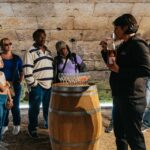
- two additional wines—one white and one red—served as a blind tasting
- shared plates of cheeses and bread, described as rustic fermented bread
That setup matters. Blind tasting forces you to slow down and stop relying on the story in your head. Then the rare Clos Montmartre wine brings the narrative home: you’ve spent the walk learning how local vines and grape varieties connect to what gets poured.
And yes, the cheese and bread are part of the point. Wine tastes better when you have something salty, creamy, and bread-based alongside it, not just a dry sip. For most people, this is the kind of tasting you’ll actually remember.
The uphill route: why Montmartre changes the way you see wine

Montmartre is a hill town. This walk runs on foot, with uphill walking and stairs. That doesn’t just affect comfort—it changes the experience.
You’ll be climbing through a neighborhood that still feels like a village perched above Paris, and the viewpoints show up just when your legs start to feel it. The tour leans into that. When you reach the Renoir Garden area and look toward the Clos Montmartre vineyard, it makes the idea of an “intra-muros” vineyard feel real, not theoretical.
Practical advice:
- Wear shoes with good grip. The streets and steps can be uneven.
- If you get tired easily, plan to take slower breaks during the stops (you’re not racing; the tour is timed).
- Don’t schedule this back-to-back with another long walking activity. You’ll already be spending energy on the slope.
Stop-by-stop: what each landmark adds to the wine story

1) Église Saint-Pierre de Montmartre: Roman bones under a church
You start at Église Saint-Pierre de Montmartre, built on the site of a Roman temple. Inside, you can see Roman columns recovered from a temple to Mars that once stood there. This church was part of the Abbey of Montmartre, and it was surrounded by vineyards.
Why it works: the stop shows how long the area has been tied to cultivated land and sacred space. It’s a reminder that the vineyard story didn’t begin with the modern revival—it sits on a much older footprint.
You can also read our reviews of more wine tours in Paris


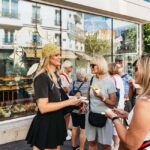

2) La Bonne Franquette: artists, courtyard art, and community
Next is La Bonne Franquette, a café that served as a meeting place for the artistic community in Montmartre. Its inner courtyard is painted by Van Gogh.
Why it matters for wine: this isn’t just about grapes. It’s about the culture around them—people gathering, talking, creating, and shaping what Montmartre became. Wine fits naturally into that kind of community life.
3) Commanderie du Clos-Montmartre: a water tower turned wine headquarters
You then reach Commanderie du Clos-Montmartre. The commandery was once a water tower, and now it’s the headquarters of one of the only wine fraternities in Paris.
This stop is a nice shift from “history details” to “wine as living tradition.” You’re seeing a structure that changed jobs over time—like the neighborhood’s identity itself.
4) Le Passe-Muraille: the wall-walker and a literary wink
A short walk brings you to Le Passe-Muraille, a bronze sculpture of a man walking through—or caught in a wall. It’s tied to Marcel Aymé, who lived on this square.
Why it fits the theme: Montmartre has always been about imagination and reinvention. A vineyard tucked inside city limits is a similar idea—something unusual that feels storybook once you’re standing there.
5) Le Moulin de la Galette: mills, bread, and the taste of a place
At Le Moulin de la Galette, you’re in windmill country. The windmills once milled grains, and the Moulin de la Galette became associated with a small brown bread called a galette. The bread was served by the Debray family of millers with a glass of milk.
This stop gives you a food anchor. You’ll later eat bread with your wine, and it helps to know that Montmartre’s food traditions weren’t random—they came from what the area could produce.
6) Square Suzanne-Buisson: grapes, pruning, and vine education
Next is Square Suzanne-Buisson, where you’ll see a statue of Saint-Denis. The entrance is adorned with a grape vine about 30 meters long, and this is where you get a vine-focused lesson: the life of the vine, cultivation, pruning, and how many grape varietals exist, plus how many are used in wine making.
This is one of the most practical educational parts of the walk. Even if you’re not a wine expert, you’ll leave understanding that grapes aren’t just picked—they’re trained, managed, and shaped over time.
7) Dalida Statue: the view that puts Sacré-Cœur in context
You’ll stop at the Dalida statue in Place Dalida. From here, you get a spectacular view up the rue de l’Abreuvoir toward the Butte Montmartre and Sacré-Cœur. It’s also right next to Chateau des Brouillards.
This is your “catch your breath” view-stop. Use it to reset mentally before the vineyard portion—because the next steps move from landmarks to the specific story of Clos Montmartre.
8) Musée de Montmartre: the Renoir Garden vantage point
At the Musée de Montmartre, you’ll spend time in the Renoir Garden, which offers a vantage for an overview of the Clos Montmartre. This is where the guide recounts the vineyard history.
This is the turning point. Up until now, you’ve been collecting the neighborhood context. Here, the tour zooms in and helps you see the vineyard as a real, specific place—not just a label.
9) Vigne du Clos Montmartre: the vineyard walk before the tasting
Then you move to the Vigne du Clos Montmartre. This is described as Paris’s most celebrated intra-muros vineyard, tied to the sense of “old Paris,” and it gives you the feeling that you’re away from the crowds.
From the description of what’s included, the walk focuses on:
- the wine history of Montmartre and the Abbey de Montmartre
- anecdotes tied to artistic, literary, and cultural village life
- a view of the vineyard from a parapet in the garden area
After that, you make the short walk to Place du Tertre for the tasting.
If you like wine, this is the moment the whole experience clicks. You’re not tasting in a vacuum—you’re tasting something tied to an actual patch of ground you’ve just looked at.
Your guide: Geoffrey’s style and why it matters

The best tours feel like someone cared enough to bring the subject to life. In the reviews, the guide Geoffrey comes up again and again. The consistent theme: he’s personable, shares information about Montmartre and the wine history in a way that feels connected, not lectured. One review notes he has background and experience in the subject, which helps explain why the tasting doesn’t feel random.
If you’re a wine beginner, you’ll still get value because the walk builds context before the tasting. If you already know wine, the rare Clos Montmartre element plus the blind tasting gives you something more engaging than a standard flight.
Price and value: what $126.17 is really paying for

At $126.17 per person, this isn’t a low-cost casual stroll. So here’s what you’re getting for your money:
- a 2 hours 20 minutes to 3 hours guided experience across multiple landmark stops in Montmartre
- museum garden time included at the Musée de Montmartre
- a tasting that includes the rare Clos Montmartre wine plus two other wines
- a blind tasting format
- shared plates of cheeses and rustic fermented bread
Also, most of the individual landmark admissions mentioned are free (at least for the listed stops), so you’re mostly paying for the guiding + interpretation + the wine-focused finale.
Is it worth it? If you want wine education that’s tied to place—rather than just a tasting room experience—this is priced in the right range. If you’re purely chasing photos and Montmartre atmosphere, a cheaper walking tour might satisfy you. But for wine-minded travelers, this one has a strong “what you pay for” match.
Who this tour suits best (and who might skip it)

Best fit if you:
- like wine but want a guided way to learn without getting technical
- want the rare Clos Montmartre experience, not just a generic French tasting
- enjoy walking in neighborhoods with real character
- want a structured afternoon plan in Montmartre that ends with food and wine
You might skip it if you:
- struggle with uphill walking and stairs
- prefer very small groups and lots of time to ask questions at each stop
- don’t care about wine beyond sampling a drink or two
Quick tips to make the most of your afternoon

- Go with a light buffer before you start. The tour ends with wine, cheese, and bread, but you’ll still be walking uphill.
- Plan on wearing comfortable shoes that can handle steps. Montmartre is beautiful, but it’s not flat.
- At the blind tasting, don’t rush. Use the food pairing and slow down long enough to notice differences between the white and red.
Should you book Clos Montmartre Paris in your Glass?
If your goal is to connect Montmartre, vineyard history, and a real tasting in one afternoon, this is an easy yes. The walk builds context step-by-step, then the tasting delivers with the rare Clos Montmartre wine plus a blind tasting and shared cheese plates.
Book it if you’re willing to handle the climb and you want more than a simple pour. Skip it if stairs and hills are a real challenge for you, or if wine isn’t really your priority.
FAQ
How long is the Clos Montmartre wine tasting tour?
It runs about 2 hours 20 minutes to 3 hours.
What are the start and end points?
You start at Église Saint-Pierre de Montmartre, 2 Rue du Mont-Cenis, 75018 Paris, and finish at 17 Pl. du Tertre, 75018 Paris.
Is the tour offered in English?
Yes, it’s offered in English.
Does the price include wine and food?
Yes. The tasting includes the rare Clos Montmartre wine, a blind tasting of two additional wines (one white and one red), plus shared plates of cheeses and rustic fermented bread.
Is there any admission included during the tour?
The Musée de Montmartre garden portion is included, and the other listed landmark admissions are free as described.
Does the tour involve uphill walking?
Yes. Montmartre is on a hill, and this tour requires uphill walking and stairs.
How big are the groups?
The tour has a maximum of 110 travelers.
What do I need to bring for check-in?
You’ll use a mobile ticket, and confirmation is received at booking.
What’s the cancellation policy?
You can cancel for a full refund up to 24 hours before the experience’s start time. After that, refunds aren’t available.
If you want, tell me your travel dates and how comfortable you are with hills, and I can help you decide whether a 3:30 pm Montmartre wine walk fits well with the rest of your day.