REVIEW · MONTPELLIER
Montpellier: St. Guilhem le Désert and Moureze Day-Trip
Book on GetYourGuide →Operated by wisud · Bookable on GetYourGuide
A surprising mix of rock, water, and medieval streets. This day trip from Montpellier pairs surreal limestone formations near Mourèze with a relaxed picnic stop at Salagou Lake, all guided by a local who tells the stories in plain, human terms. It’s the kind of outing where you feel you’re driving through real Occitanie, not just ticking off famous places.
I also like how the small group format keeps things unhurried. You get time to walk the old lanes, ask questions, and take in viewpoints without feeling like you’re being processed. One consideration: this trip involves some walking and there’s a climb of about 50 steps to a viewpoint (optional), so it may not work well if you have mobility issues.
In This Review
- Key Highlights You’ll Feel Immediately
- Meeting the Day: Mosson Tram Stop and a Black Van
- Mourèze Cirque: Limestone Towers and a Village That Feels Off-Map
- Salagou Lake: Your Picnic Moment Beside the Water
- Devil’s Bridge and the UNESCO Stop You Can Actually Enjoy
- Saint-Guilhem-le-Désert: Medieval Lanes and an Abbey With Weight
- Timing and Comfort: What an 8-Hour Day Really Means
- Small-Group Guiding: Why This Tour Scores So High
- Price and Value: Is $92 Worth It?
- Who Should Book This Montpellier to Mourèze Day Trip?
- Final Call: Should You Book This Day Trip?
- FAQ
- What’s the meeting point in Montpellier?
- How long is the day trip?
- Is the tour in English?
- Is lunch included?
- Where does the tour visit?
- Do I need to climb stairs?
- Is the group size small?
- What should I bring?
- Is the tour suitable for mobility impairments?
Key Highlights You’ll Feel Immediately
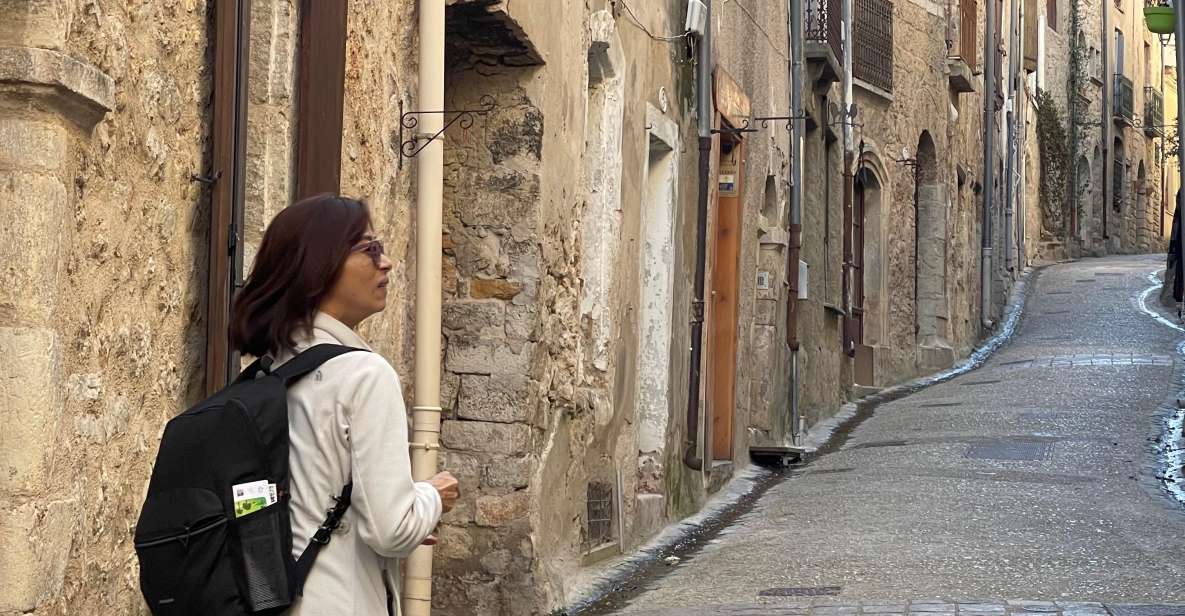
- Mourèze cirque walk among other-worldly limestone rock formations
- Salagou Lake picnic time with a guide-led stop right by the water
- Devil’s Bridge (UNESCO-listed) for a gorge-and-bridge moment you’ll remember
- Saint-Guilhem-le-Désert with medieval streets and an abbey that anchors the town’s history
- English/French guiding that makes the day easy to follow and hard to forget
Meeting the Day: Mosson Tram Stop and a Black Van
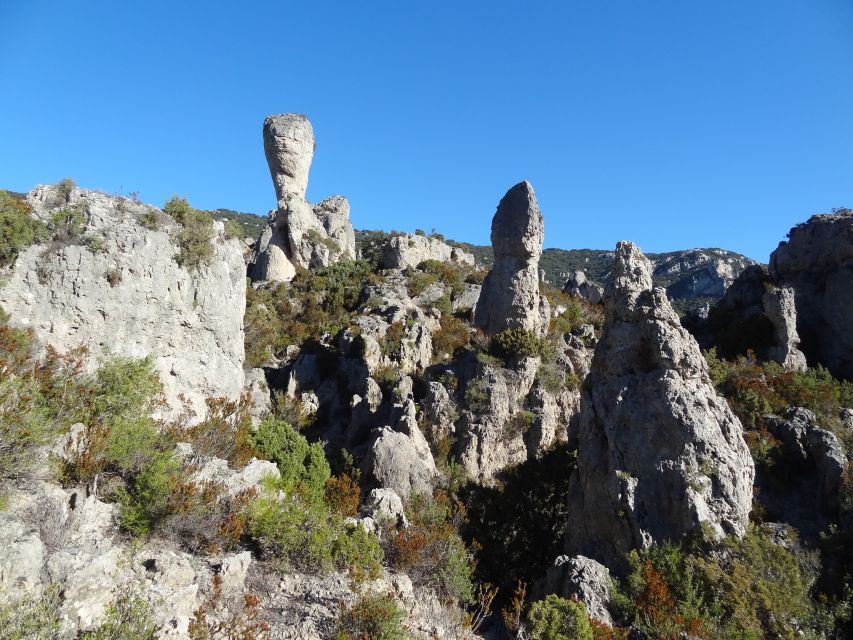
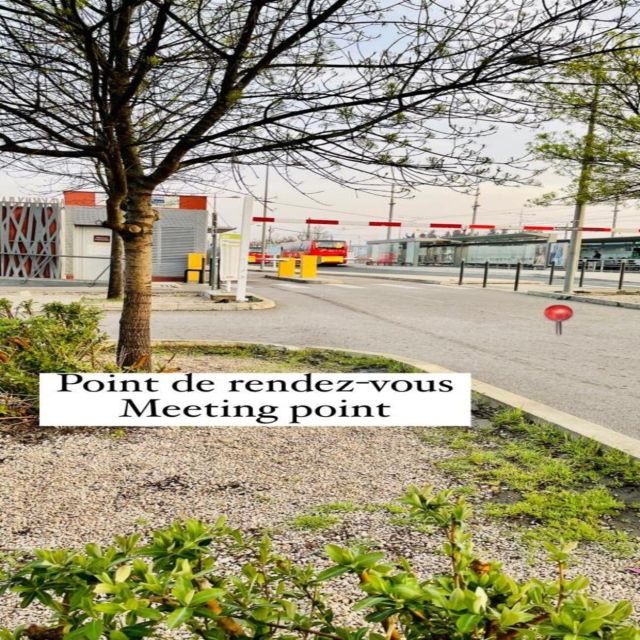
The day starts in Montpellier at the Mosson tram stop. Do not mix it up with the Stade de la Mosson—Mosson is a key orientation point, and it’s an easy one to find if you’re already using tram line 1 or line 3. Line 3 is faster, which matters here because you’ll want to start on time and not spend your morning wandering.
You’ll wait at the streetcar stop, and your guide will find you. Past guidance notes that the van is black, and you’ll see it once the group is assembled. If you’re a little unsure about public transit, this is still manageable: the meeting point is straightforward, and the guide connection is designed to keep you from being stuck on your own.
This setup is a big part of the value. You get the convenience of not renting a car, and you still get a local guide to translate the region’s meaning into everyday language. For an 8-hour day, that’s the difference between seeing places and actually understanding what you’re looking at.
You can also read our reviews of more tours and experiences in Montpellier.



Mourèze Cirque: Limestone Towers and a Village That Feels Off-Map
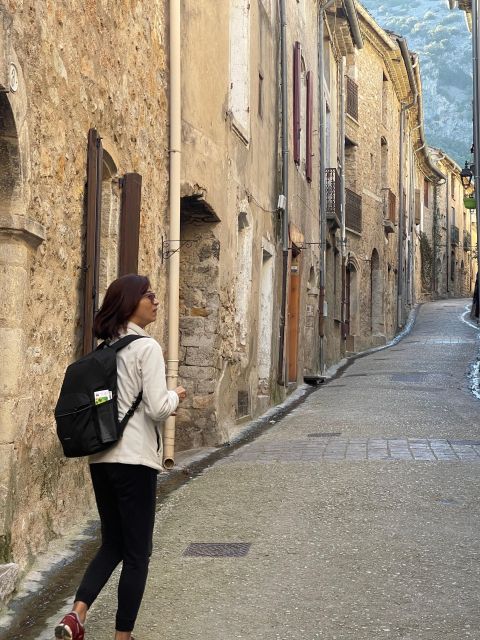
Mourèze is the first real wow. Think medieval village streets plus a cirque of dramatic, wind-sculpted-looking limestone. The setting makes you slow down without anyone having to tell you to. After about 1.5 hours, you’ll see why this part of the south of France is famous with photographers and hikers alike.
What I love here is the contrast: you’re walking stone passages and then, suddenly, the rock formations open into a wider view. It feels like the village is tucked right under a natural sculpture. Your guide’s role is what turns that into more than a photo stop. You’ll get context for what you’re seeing and why it matters—especially if you’ve never studied the geology or local history of Occitanie before.
A practical note: the area invites easy wandering, but you should still wear comfortable shoes. Even when the walking is not extreme, the surfaces can be uneven and you’ll want your feet to feel calm, not clumsy.
Also, this stop sets the rhythm for the whole day. Mourèze gives you a sense of place early, so the later stops—bridge, lake, abbey—don’t feel random. They start to feel like different chapters of one region.
Salagou Lake: Your Picnic Moment Beside the Water
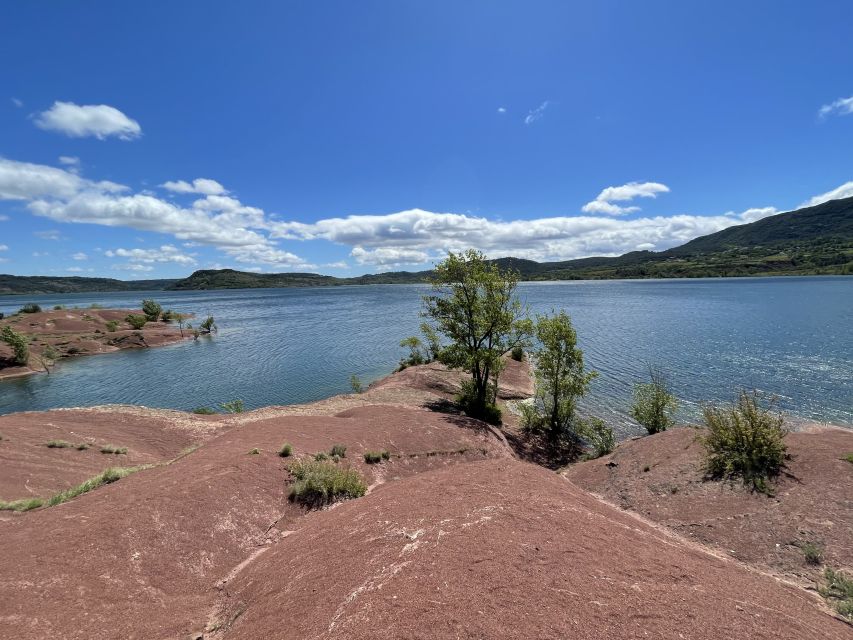
Soon after Mourèze, you’ll head to Salagou Lake. This is where the trip slows down in a good way. You’ll get a guided visit (around 1.5 hours), and then you’ll have time to enjoy a picnic near the water while you chat with your guide.
This is not a tour where lunch happens to you. No lunch is included, so you’ll bring your own picnic. That sounds like a burden until you realize why it works. Eating at Salagou Lake turns the meal into part of the scenery. Instead of rushing to find a restaurant or worrying about timing, you settle in for a calmer break.
What to bring:
- Enough water for an outdoor day
- A simple picnic setup (a blanket helps)
- Comfortable clothes for sun or breeze
One helpful detail: a few groups have described their guide providing extra picnic seating like chairs and a table. It’s not guaranteed, but it’s a nice possibility to plan for—at minimum, bring your own blanket so you’re never stuck.
If you’re the type who likes photography, Salagou is also great for that. The lake area gives you wide views and softer light than the earlier village streets. If your phone camera struggles with landscapes, this is still a winner because the setting gives clear separation between water, terrain, and sky.
Devil’s Bridge and the UNESCO Stop You Can Actually Enjoy
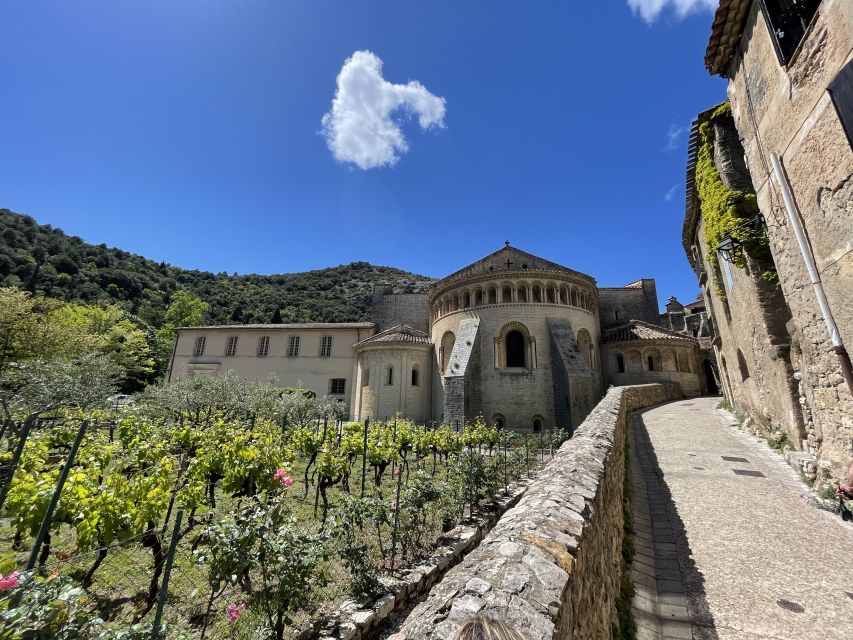
Next up: Devil’s Bridge, a UNESCO World Heritage site. The official name and the famous nickname often get treated like trivia, but standing here is different. The bridge works as a natural “pause point” between long driving sections and the next medieval town walk.
You’ll have a shorter guided visit (about 40 minutes). That’s enough time to take the main viewpoints seriously without turning the day into a marathon. Your guide will help you understand the significance of the structure and the surrounding gorges, so you’re not just looking at stone and thinking, Okay, that’s nice.
Here’s how I’d frame it for you: Devil’s Bridge is the tour’s proof that this region isn’t only scenery. It’s also engineering, routes, and the human need to cross difficult terrain. The gorge-and-bridge combination is exactly the kind of place where a guide’s commentary gives you a new lens.
If you like history but hate slow museum energy, you’ll probably enjoy this stop. It’s outdoors, it’s time-limited, and it stays connected to the physical world around you.
Saint-Guilhem-le-Désert: Medieval Lanes and an Abbey With Weight
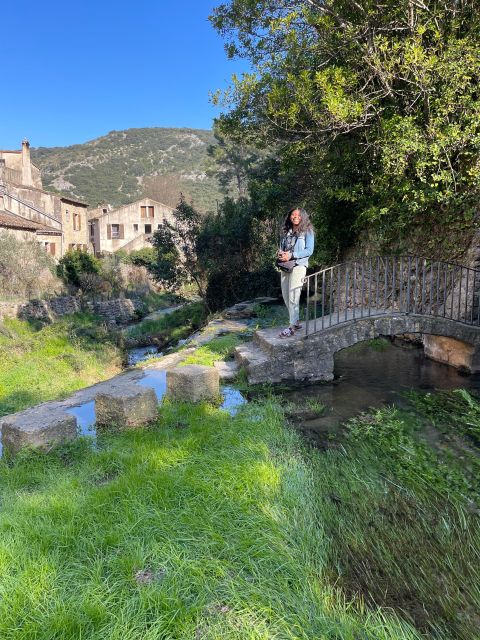
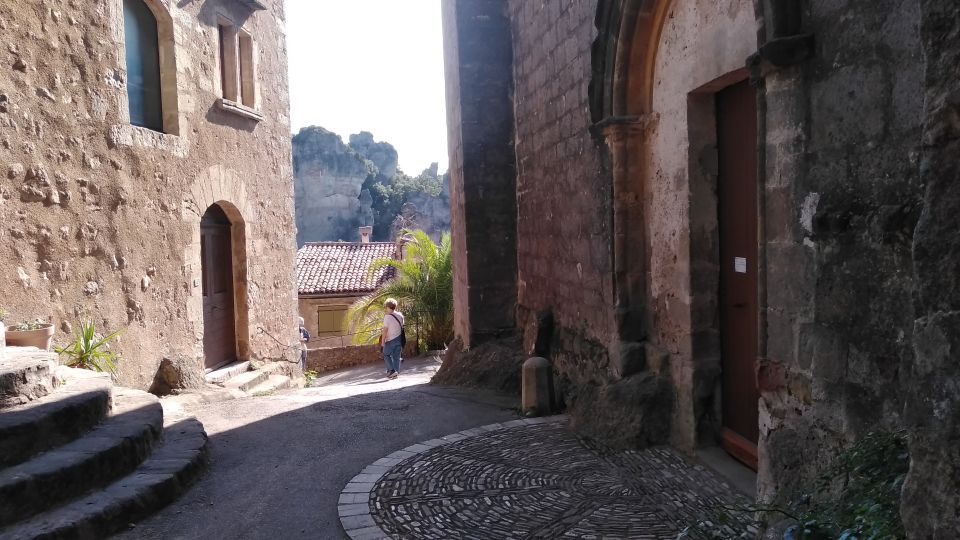
By the early afternoon you’ll be in Saint-Guilhem-le-Désert, one of those small places where the streets feel like they were designed for slow walking. You’ll get about 2 hours here with a guided tour.
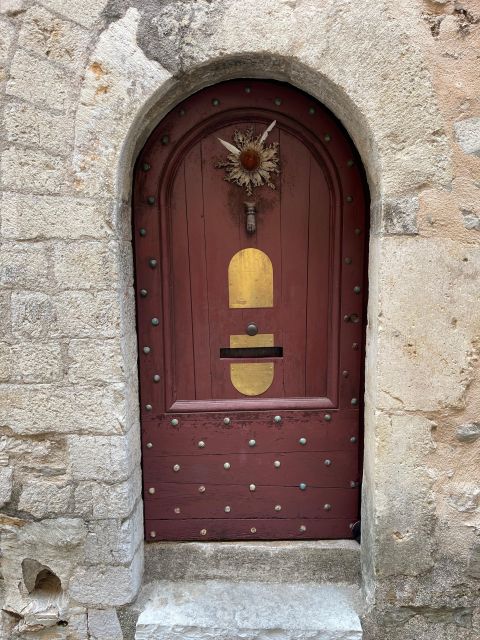
The town’s medieval character comes through immediately: winding lanes, old stone, and artisanal shops that make it feel like you’re wandering rather than rushing. If you’re shopping for small regional items, this is one of the best times to do it. The guides don’t treat it like a sales stop—they keep the pace so you can browse without losing the context of what you’re seeing.
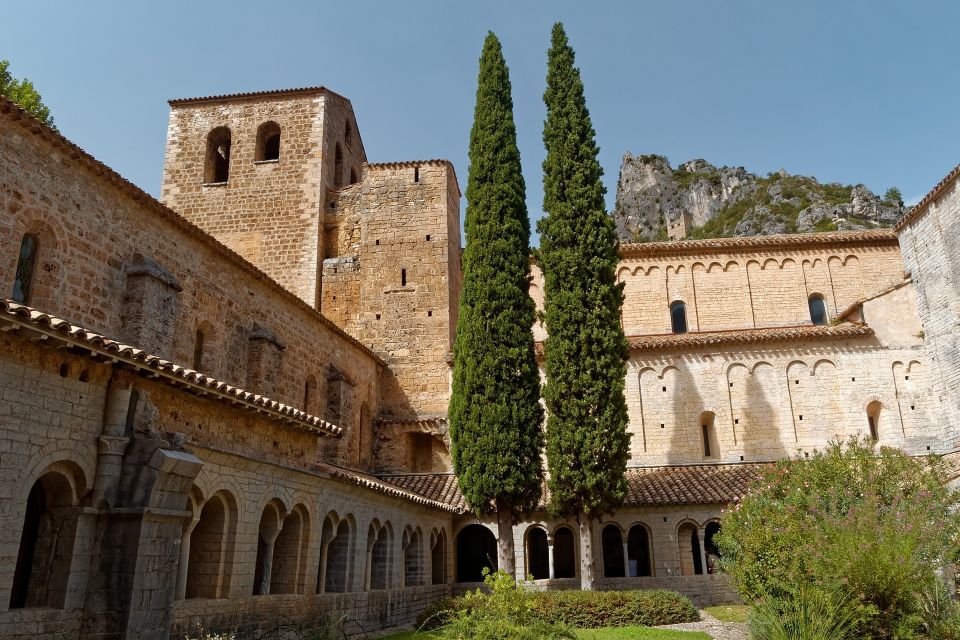
And the abbey matters. The area has a powerful history, and the abbey is a major anchor for why people still come here. Your guide’s commentary helps you understand the abbey’s past and how it shaped the town. Even if you don’t want to read plaques, the explanations give you something to hold onto as you walk.
One more physical note: there’s a climb of around 50 steps to reach a viewpoint during this part of the day. It’s not mandatory, but it’s useful to know in advance. If you want the extra perspective, you’ll likely feel rewarded. If you prefer to conserve energy, you can skip it and still get plenty from the town walk.





Timing and Comfort: What an 8-Hour Day Really Means
This is an 8-hour format with van transfers built in, so you’ll spend some time on the road. The first drive is around 45 minutes to Mourèze, and later you’ll have shorter transfers between stops (including about 30 minutes back toward the end of the day). That pacing is part of the plan: you’re not driving the entire day, but you are using the van to maximize the number of meaningful sights you can see from Montpellier.
The comfort factor is real. You’ll be in an air-conditioned minibus, which is a lifesaver in warm weather. It also reduces the stress of navigating unfamiliar roads and finding parking yourself.
What I’d do before you go:
- Wear comfortable shoes you can walk in for a couple hours total across the day
- Bring water, even if you plan to snack lightly
- Pack a picnic for lunch—this is not a buy-something-on-the-way situation
- Bring a layer if you tend to get chilly in shaded lanes or near water
The tour is best for people who enjoy walking at a relaxed pace and who like learning the story behind what they see. It’s not a fit if you need step-free access, since the trip is listed as not suitable for people with mobility impairments.
Small-Group Guiding: Why This Tour Scores So High
A lot of day trips promise local guidance. This one tends to deliver because the guide isn’t just reciting facts. The guiding style described in multiple experiences is patient, attentive, and genuinely proud of the Occitanie region. You’ll likely notice that the timing at each stop feels intentional—enough time to breathe, not enough to lose the day.
In the group feedback, English and French delivery comes up again and again, including guides like David and Sebastian. If you’re bilingual, it’s fun to catch the switching. If you only speak English or only speak French, you still get a clear flow of information at each site.
Safety is also part of the picture. Walking areas can be uneven, and your guide should help keep everyone confident. In one example, even very elderly walkers were comfortable with the pace and support. That doesn’t mean the day is effortless, but it does suggest the guiding approach is considerate.
For me, this is the standout value: you’re not paying just for transport to famous places. You’re paying for interpretation, pacing, and the human touch of someone who knows what to point out.
Price and Value: Is $92 Worth It?
At $92 per person for about 8 hours, this trip can be excellent value if you want four key elements in one day: transport from Montpellier, a local guide, multiple guided stops, and parking during the tour.
Here’s how to judge the price realistically:
- If you tried to do this on your own, you’d spend time figuring out routes, parking, and timing between far-flung stops.
- You’d also miss the context that turns Devil’s Bridge and an abbey town into more than scenic scenery.
- A guided picnic break at Salagou Lake is less about food and more about structuring your day.
So yes, $92 isn’t cheap-cheap, but it’s fair for what you get. The best “value test” is simple: you’re buying convenience and meaning. If you want both, you’ll probably feel like your day was well-used.
Who Should Book This Montpellier to Mourèze Day Trip?
I’d point this trip toward travelers who:
- Want a high-structure day without being rushed
- Like medieval towns but also want nature stops that feel truly different
- Prefer small-group guiding over self-guided wandering
- Are okay bringing a picnic and doing moderate walking
- Want English or French interpretation with a local angle
If you’re traveling as a couple, this is also a good match. The small group format means you get the benefits of a guided tour without feeling like you’re stuck in a giant coach crowd.
If you’re traveling with kids, it can work if your kids enjoy short walks and you pack snacks for energy. But because the tour is not described as kid-focused and includes a viewpoint climb possibility, you’ll want to gauge your family’s comfort with steps and uneven surfaces.
Final Call: Should You Book This Day Trip?
If you’re in Montpellier and you want a single day that covers rock formations, a scenic lake picnic, a UNESCO bridge, and a medieval abbey town—this is a strong choice.
I’d book it if:
- You like guided stops and want your time to feel organized
- You’re comfortable with walking and you don’t need step-free access
- You can pack a picnic and a water bottle
I’d hesitate if:
- Your mobility limits make steps and uneven ground hard
- You’re expecting lunch provided, since you’ll need to bring your own
Overall, this is the kind of day trip where the guide’s connection to the region is what makes the schedule feel alive. You won’t just see the south of France—you’ll understand it a little better as you go.
FAQ
What’s the meeting point in Montpellier?
Meet at the Mosson tram stop in Montpellier. The guide will be outside and arrives in a black van.
How long is the day trip?
It lasts about 8 hours.
Is the tour in English?
Yes. The live guide offers English and French.
Is lunch included?
No. You need to bring your own picnic for lunch.
Where does the tour visit?
You’ll visit Mourèze, Salagou Lake, Devil’s Bridge, and Saint-Guilhem-le-Désert, with guided time at each.
Do I need to climb stairs?
There’s a climb of about 50 steps to reach a viewpoint, but it is not mandatory.
Is the group size small?
It’s run as a small group, with a van transfer. Private or small-group options are available.
What should I bring?
Bring comfortable shoes, water, and comfortable clothes. Also bring a picnic since lunch isn’t included.
Is the tour suitable for mobility impairments?
No. It’s not suitable for people with mobility impairments.