REVIEW · AIX EN PROVENCE
Historical visit/Treasure Hunt of Aix en Provence
Book on Viator →Operated by Edouard PAUL-CAVALLIER (Ted Aix Tours) · Bookable on Viator
Aix feels like a puzzle box. This 2-hour treasure hunt turns a casual afternoon walk into a focused route through Aix’s symbols in stone, paint, and water. I like how Edouard PAUL-CAVALLIER (Ted Aix Tours) keeps things lively while connecting each stop to the city’s look and past.
Two things I really enjoyed: the mix of iconic fountains and key churches (not just one type of sight), and the way the clues make you pay attention to details you’d otherwise miss. One consideration: this is a walking tour, so if you prefer minimal pavement, you may want to pace yourself and plan footwear accordingly.
In This Review
- Key highlights you should know
- 2 Hours of Aix City Clues: How the Treasure Hunt Walk Works
- Where You Start and Where You End in Central Aix
- Stop 1: Fontaine de La Rotonde’s Stone Lions and the Justice–Agriculture–Fine Arts Star
- Stop 2: Hotel de Caumont Art Centre and the Mazarin District Courtyard-and-Garden Idea
- Stop 3: Eglise Saint-Jean-de-Malte for Delacroix and the 1854 Stained Glass
- Stop 4: Fontaine des Quatre-Dauphins and the Story Behind the Changing Crown
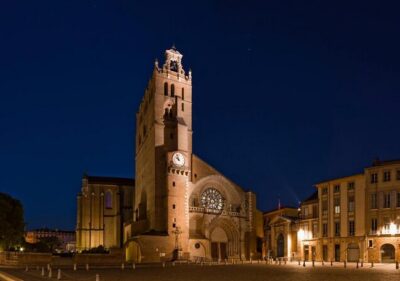
- Stop 5: Cathedrale St.-Sauveur and the Roman Apollo Legend
- Price and Value: What $42.10 Buys You in Real Terms
- What I’d Plan Around This Tour in Your Aix Day
- Who Should Book This Aix Treasure Hunt
- Should You Book This Treasure Hunt Tour?
Key highlights you should know

- A small group capped at 10 travelers means you’re not lost in the crowd
- English tour with a mobile ticket, easy to access on the spot
- Five major stops across central Aix, mostly free admissions
- A treasure surprise at the end, which adds a fun finish to the sightseeing
- Art and architecture mix, from stained glass to 18th-century hotel design
- Short, timed visits (around 10–15 minutes each) keep the afternoon moving
2 Hours of Aix City Clues: How the Treasure Hunt Walk Works

This experience is built like a smart afternoon stroll: you move through central Aix in a steady rhythm, stopping often enough to reset your eyes and brain. The total time is about 2 hours, starting at 2:30 pm, so it’s a good option if you want something planned without committing to a whole day.
You’ll get an English guide and a mobile ticket, so you’re not juggling paper confirmations. And with a maximum group size of 10, Edouard can keep the energy up while still answering your questions.
The treasure-hunt angle matters. Instead of passively looking at landmarks, you’re gently prompted to notice what’s unusual—figures, directions, symbols, and small design choices. It’s a cozy way to get your bearings fast in a city that can feel dense if you wander without a plan.
You can also read our reviews of more historical tours in Aix en Provence



Where You Start and Where You End in Central Aix
You begin at 2 Place du Général de Gaulle in Aix-en-Provence. The route then winds toward the cathedral area, and you finish at Paroisse Cathédrale Saint Sauveur, at 34 Pl. des Martyrs de la Resistance.
That end point is handy. If you’re continuing your day on foot, you land near one of Aix’s main anchors, so you can easily fold the tour into a broader self-guided loop afterward.
Stop 1: Fontaine de La Rotonde’s Stone Lions and the Justice–Agriculture–Fine Arts Star

The tour kicks off at the Fontaine de La Rotonde, a fountain about 12 meters high made of cold stone and built with two basins. Lions, dolphins, swans, and children decorate the scene, so even from a distance you can start “reading” the artwork.
What I love here is the symbolism. Three statues sit above the fountain and point in three directions, forming a road-star concept: Justice toward Le Cours, Agriculture toward Marseille, and Fine Arts toward Avignon. Edouard’s storytelling helps you see how the city’s geometry and art work together, instead of treating this as just a pretty monument.
A small timing detail: you spend about 10 minutes here. That’s enough for first impressions and key facts, but if you’re the type who wants long photo sessions, you’ll want to take a quick second pass on your own afterward.
Stop 2: Hotel de Caumont Art Centre and the Mazarin District Courtyard-and-Garden Idea

Next comes the Hôtel de Caumont, located in the Mazarin district, which has an aristocratic feel in the old town. The big architectural idea is the layout between courtyard and garden, a scheme influenced by Paris that appeared in the 16th century.
I like this stop because it’s not only about what you see—it’s about how styles travel. In Aix-en-Provence, that “between courtyard and garden” approach disappeared around 1680, giving way to hôtels on the street that leaned more into a southern baroque taste. Even if architecture isn’t your main interest, the logic behind the buildings helps you understand why Aix looks the way it does.
This one is also a practical note for your planning: admission is not included. So treat this stop as a “peek and context” moment unless you’re ready to pay the entry fee on the spot.
The building is significant too. The carriage gate, the façade, and even the wrought iron stair railing were listed in a historical inventory in 1925, and the entire hotel was listed in 1987. That kind of detail is exactly where a good guide earns their keep.
Stop 3: Eglise Saint-Jean-de-Malte for Delacroix and the 1854 Stained Glass

You then move into Eglise Saint-Jean-de-Malte, where religious art becomes a visual highlight of the afternoon. A painting attributed to Delacroix, Crucifixion, is the piece most visitors focus on, and it’s the kind of artwork that can shift how you experience a church interior.
If you care about light and color, pay attention to the stained glass windows inside. There’s a stained glass work from 1854 with the Baptism of Christ as its main theme, and it changes the mood of the space when you look from different angles.
This stop is about 15 minutes, which gives you a reasonable chance to find the right viewing points without rushing. One consideration: churches depend on opening hours and crowd flow, so if the interior is busy, keep your time flexible and don’t feel you have to see every corner at once.





Stop 4: Fontaine des Quatre-Dauphins and the Story Behind the Changing Crown

The route brings you to Fontaine des Quatre-Dauphins, in the center of its square. Created by sculptor Jean-Claude Rambot in 1667, it shows four “architectural dolphins” surrounding a pyramid.
One detail I appreciate is how the top of the pyramid has changed over time. The original statue of Saint Michael was later replaced by a fleur-de-lis, then a Maltese cross, and later a pinecone. It’s the kind of history-by-detail that makes fountains feel alive, like a monument with chapters.
This stop is short—about 10 minutes—so focus on shape and symbolism first. If you’re a photographer, you’ll likely want one steady look from street level, then another angle from the edge of the square to catch the composition.
Stop 5: Cathedrale St.-Sauveur and the Roman Apollo Legend

The final big stop is Cathedrale St.-Sauveur, tied to the route of the old via Aurelia. There’s even a legend that links it to an earlier temple dedicated to Apollo, with a claimed Roman wall fragment and baptistery columns used to support that story.
A specific historical claim is part of the local lore: historian Pitton from 1654 said the temple was dedicated to a solar deity, based on a discovered statue said to show an uncovered thigh. I like that Edouard shares this type of thread—part architecture, part rumor, part interpretation—because it shows how places gather meaning through centuries.
Expect around 15 minutes at the cathedral. With that time, you should get enough to absorb the key context and enjoy the interior atmosphere if it’s accessible. If you want a slower museum-style visit, plan to return after the tour ends.
Price and Value: What $42.10 Buys You in Real Terms

At $42.10 per person for about 2 hours, the value comes from the human part: Edouard’s ability to connect art, architecture, and symbol to what you’re seeing in front of you. The route is compact, with frequent stops, so you’re not paying for a long bus ride or filler.
Most admissions at the listed stops are free, which helps the price feel fair. The one clear exception is Hotel de Caumont, where admission is not included—so your final cost might be slightly higher if you choose to go inside.
If you’re visiting Aix for the first time, this is the kind of tour that can save you time. It gives you a mental map, a vocabulary for what you’re looking at, and a short list of places that are worth revisiting on your own.
What I’d Plan Around This Tour in Your Aix Day
This works best when you keep the rest of your afternoon light. You’ll walk between central sights, so after the tour, pick nearby self-guided options rather than jumping across town.
Because it’s an afternoon start, it can also set you up for a good evening. You’ll leave with a clearer sense of where the major streets and public spaces are, which makes casual wandering feel purposeful instead of random.
Also, consider how you like to travel. If you prefer structured “see-and-know” sightseeing without a huge time commitment, this fits nicely. If you hate walking and need long seated stops, you may find the pacing a bit brisk.
Who Should Book This Aix Treasure Hunt
I’d recommend it if you want a cozy, art-and-architecture walk that gives you something to do besides just look. It’s also ideal when you’re traveling with someone who loves details—fountains, iconography, stained glass, and the small stories buildings carry.
It’s a solid pick for families too, since the tour format includes a treasure hunt element that adds play to the history. And with a maximum of 10 people and service animals allowed, it’s built to feel manageable rather than chaotic.
If you’re already a die-hard Aix expert, you might still enjoy the route, but you may find you know some of the basics. The real magic is in how the clues nudge you into noticing the city’s design choices.
Should You Book This Treasure Hunt Tour?
If you’re in Aix for a short visit and you want the city to make sense quickly, I think this is an excellent buy. The small group, the English guide, and the mix of fountains, churches, and an art-focused stop create a satisfying afternoon without dragging on.
Book it if you like guided walking, enjoy symbolic details, and want a fun ending rather than stopping at photos only. Skip it only if you strongly prefer minimal walking or you don’t want to think about the one stop where admission is not included.
If you’re deciding between wandering aimlessly and paying for direction, this tour gives you structure, stories, and a treasure moment to close the loop.