REVIEW · MONTPELLIER
8 Hours Visit to the Camargue and the Salins d’Aigues-Mortes
Book on Viator →Operated by WISUD · Bookable on Viator
The most striking part of this day is the pink salt marshes at Aigues-Mortes, where changing light turns the pools into shades of rose and copper. You also get a good sample of the Camargue beyond the postcard view: birds, ponds, rice fields, fortified towns, a beach village, and a medieval tower.
I like the small group of no more than eight because the day should feel more personal than a large coach outing. I also like the mix of stops. You are not spending eight hours on one attraction, but moving between nature, local towns, and historic sights, with a guide such as David explaining what you see.
The main drawback is the pace. Five stops in about eight hours leave limited time at each place, and the bird-watching walk depends on weather and luck. Bring your own picnic, too, since lunch is not supplied.
In This Review
- Key points to know before booking
- Why the pink salt ponds make the day special
- Aigues-Mortes, where stone walls shape the visit
- Scamandre ponds and a picnic with the birds
- Saintes-Maries-de-la-Mer adds the sea
- Carbonnière Tower and the final wide view
- A small group makes the long route easier
- Is $98.40 a fair price?
- Who will enjoy this Camargue day most?
- Should you book the Salins d’Aigues-Mortes and Camargue tour?
- FAQ
- Where does the tour begin?
- What time does the tour start?
- Does the tour return to Montpellier?
- How long does the experience last?
- How many people can join the tour?
- Is transportation included?
- Is lunch included?
- Are admission fees included?
- Can I cancel for a full refund?
Key points to know before booking
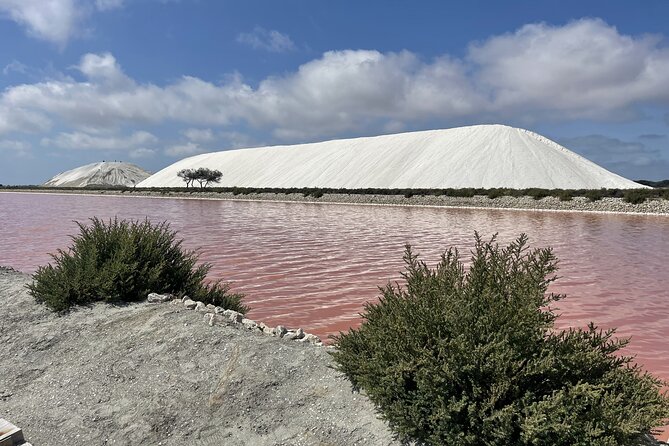
- The saltworks are the visual high point: You can visit the Salins d’Aigues-Mortes on foot or by the characteristic little train, with admission included.
- The group is capped at eight people: That makes the long day more flexible and helps you hear the guide.
- You see several sides of the Camargue: Salt ponds, wildlife, medieval walls, a beach village, rice fields, and a lookout tower all fit into one outing.
- Bring lunch to Scamandre: The picnic is eaten together at the Parc de la Scamandre during the pond and bird-watching stop.
- The guide stays with you all day: David has been praised for his broad knowledge, and the driver has also been singled out as pleasant.
- Plan for an outdoor day: Walking takes place around ponds, villages, the saltworks, and Carbonnière Tower, so comfortable shoes matter.
Why the pink salt ponds make the day special
The Salins d’Aigues-Mortes are a strong opening to the excursion. The saltworks are not simply a pretty collection of pools. You learn about the work and history behind salt production while also seeing the plants and wildlife that live around the marshes.
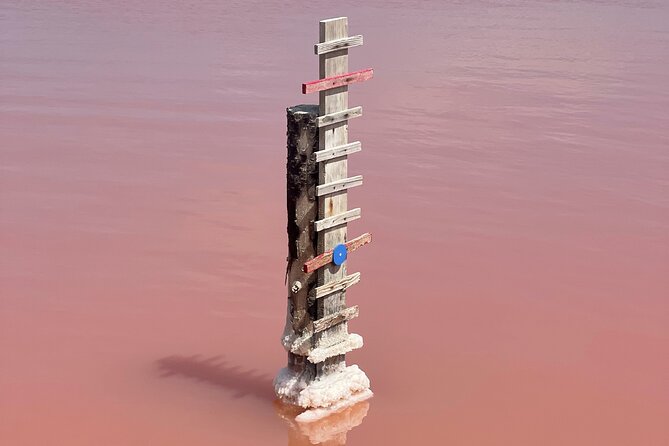
The color is the draw. Depending on the light and the conditions, the water can look pink, mauve, or reddish. It is a natural effect, not painted scenery, and the color can change as you move through the site. That gives the visit a different feel from a standard historic attraction.
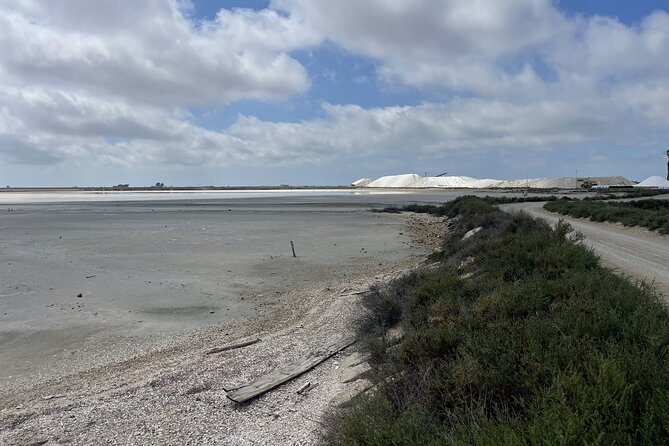
You visit for about two hours, either on foot or aboard the small train. The train is likely the easiest choice if you want a broad view without using up too much energy early in the day. It is also the most distinctive part of the saltworks visit, thanks to its bright pink color and its route through the marshes.
Walking gives you a closer look at the ponds and the surrounding plants. The trade-off is simple: the saltworks are open and exposed, so the weather will shape your comfort. The tour requires good weather, and that is sensible here. If conditions are poor, the operator offers another date or a full refund.
You can also read our reviews of more tours and experiences in Montpellier.



Aigues-Mortes, where stone walls shape the visit
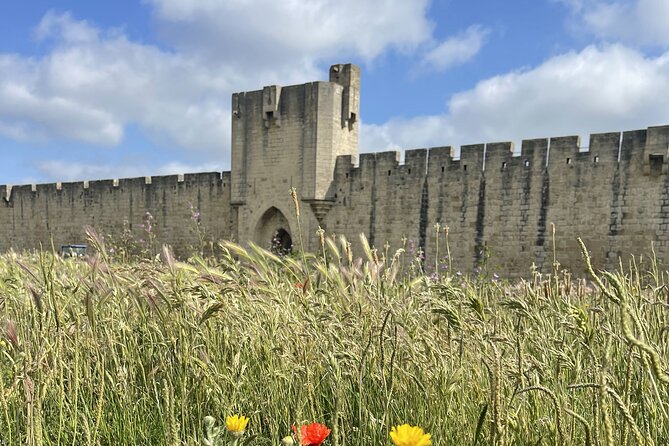
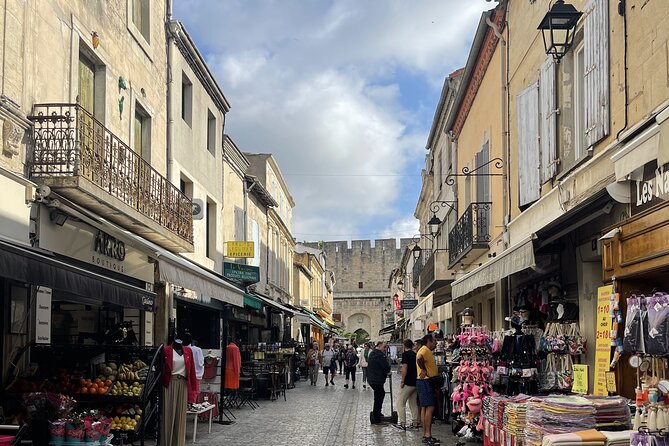
After the saltworks, you spend about an hour and a half in Aigues-Mortes. This fortified town is one of the day’s most rewarding stops because it gives you time to leave the vehicle and wander through an old center with a clear sense of place.
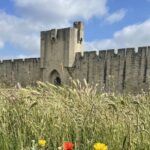
The medieval walls and Constance Tower give the town its strong outline. Inside, the streets lead toward a square with a statue of Saint Louis, and you can visit Notre Dame des Sablons church. The stop is not only about taking photographs of the ramparts. It is a chance to slow down and see how the historic town works at street level.
Make room for a local bite if you can. Fougasse from Aigues-Mortes is a specialty worth seeking out, and the tour specifically points you toward it. This is one reason I like the town stop: it adds a small local food detail to a day otherwise centered on scenery and wildlife.
You should keep your expectations realistic. The visit is free, but the time is limited, so you may not have room for a long museum visit or a leisurely meal. Use the guide’s orientation to choose what matters most to you, then enjoy the streets at your own pace.
Scamandre ponds and a picnic with the birds
The Centre de Découverte du Scamandre brings the day back to nature. You walk among ponds, look for birds, and eat the picnic you brought at the Parc de la Scamandre. This is a useful middle section because it breaks up the town visits and gives you a quieter place to observe the Camargue.
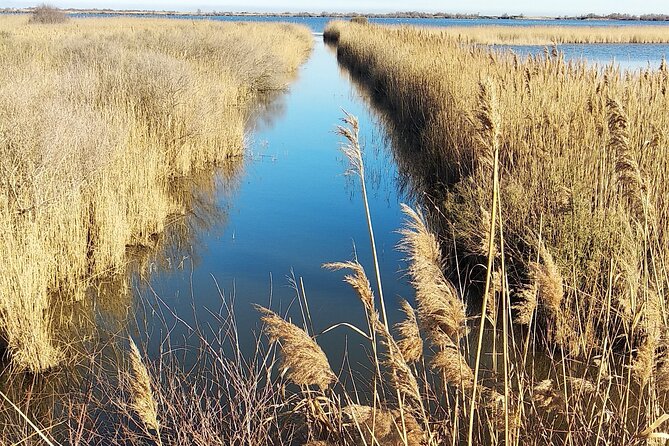
Pink flamingos are one of the hoped-for sights, but they are not guaranteed. The wetlands also support other birds, and the day can include animals such as Camargue bulls, horses, and even a coypu, a large semi-aquatic rodent. The guide has joked about remembering the English word for ragondin, the French name for coypu, which gives you an idea of the sort of natural detail that may come up during the day.
Bring a picnic that is easy to carry and eat outdoors. The schedule specifically includes a shared picnic at Scamandre, but food is not included in the $98.40 price. This is a small planning task, yet it matters. A prepared sandwich, fruit, and water will make the stop more comfortable than trying to improvise lunch during a full-day excursion.
Bird watching also asks for patience. You may see flamingos right away, or you may spend more time noticing the ponds and smaller birds. If you want a guaranteed wildlife show, this is not the right kind of outing. If you enjoy looking carefully and letting the guide point out what is around you, this stop adds real value.
Saintes-Maries-de-la-Mer adds the sea
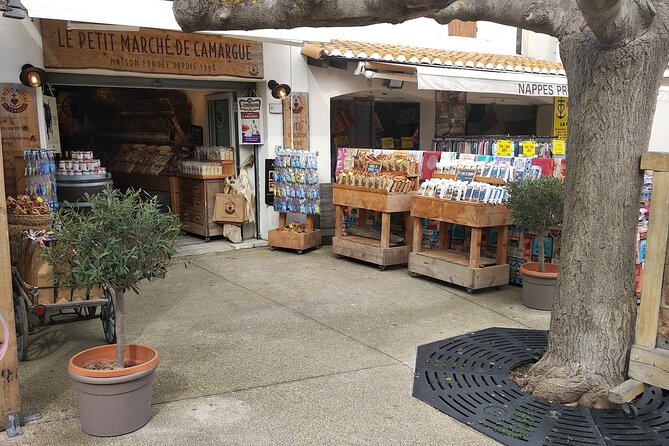
The two-hour visit to Saintes-Maries-de-la-Mer changes the mood again. You see the village, its church, and the beach, giving you a coastal counterpoint to the inland salt marshes and historic walls.
The church is an important part of the village visit, while the beach gives you room to breathe after several structured stops. You can expect a walk through the village rather than a long, dedicated beach day. Two hours is enough to get a feel for the place, but not enough for every shop, side street, and extended swim.
This stop helps explain why the Camargue appeals to many different kinds of visitors. You have nature, local life, religious architecture, and the coast in one place. I would especially recommend the tour to you if you want an introduction to the region but do not want to arrange several separate day trips from Montpellier.
The compromise is that no single place receives a full day. Saintes-Maries-de-la-Mer may leave you wanting more time, particularly if you prefer slow village visits. Still, the schedule gives you a useful first look and lets you compare it with Aigues-Mortes.
Carbonnière Tower and the final wide view
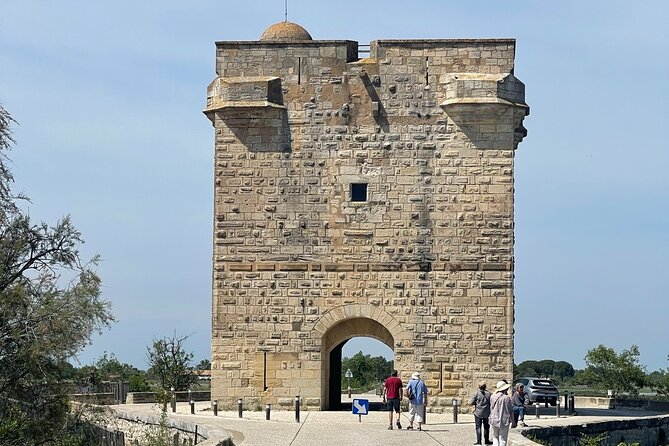
The last stop is Tour Carbonnière, a square tower dating from the 13th century. It sits alone among swamps and rice fields, which makes the setting feel very different from the fortified town earlier in the day.
You climb the stairs for a view across the region. The tower visit lasts about an hour, so the climb and lookout are the main event. This is a good final stop because it pulls together the day’s geography: the marshes, fields, waterways, and towns make more sense when you see them from above.
The tower is not a large complex with many rooms to explore. Its appeal comes from the isolated position and the view, so it will suit you best if you enjoy short historic stops with a strong visual payoff. If stairs are difficult for you, keep in mind that the experience includes taking the stairs to the lookout.






A small group makes the long route easier
The outing begins at 9:00 a.m. at Place de France in Montpellier and returns to the same meeting point after about eight hours. Transport is in an air-conditioned vehicle, and a guide accompanies you throughout the day.
A maximum of eight people is one of the better features here. A small group means less time gathering people at each stop and more chance to ask questions. It also matters on a route with several short visits. The schedule has little spare time, so a compact group helps the day keep moving.
The guide is part of the value. David has been described as having broad knowledge of the Camargue, and the day’s wildlife sightings included flamingos, bulls, horses, and a coypu. The driver has also been praised as pleasant, which is no small thing when you spend much of the day on the road.
The trip has received a 4.2 rating from five published ratings. That is a positive signal, but it is a small sample, so I would not treat the score as a guarantee. The strongest pattern is clear enough: the combination of guide, small group, wildlife, villages, tower, and saltworks is the reason to book.
Is $98.40 a fair price?
At $98.40 per person, this is not the cheapest way to see one Camargue sight. It is a reasonable price if you want transportation from Montpellier, a guide for the full day, admission to the saltworks, the Carbonnière Tower, and a route that links several places that would be awkward to combine independently.
The value improves if you are staying in Montpellier without a car. You avoid arranging transport to Aigues-Mortes, Scamandre, Saintes-Maries-de-la-Mer, and Tour Carbonnière on your own. You also get context along the way rather than simply being dropped at each stop.
Lunch is the main extra cost to plan for, since you bring your own picnic. Personal insurance is not included either. These are not unusual exclusions, but you should add them to your budget before comparing the tour with a self-guided day.
The tour is booked about 35 days ahead on average, which suggests you should not leave it until the last minute if your Montpellier dates are fixed. Confirmation arrives at booking, and free cancellation is available until 24 hours before the 9:00 a.m. start. A cancellation made later is not refunded. Since the trip depends on good weather and a minimum number of participants, the operator offers a different date or a full refund if it must cancel.
Who will enjoy this Camargue day most?
I would choose this trip if you want a broad first look at the region and prefer someone else to handle the driving. It suits you if you like switching between outdoor walks, villages, historic buildings, and wildlife stops rather than spending a whole day in one town.
It is also a good match for curious families and couples who enjoy small-group outings. Most people can take part, and service animals are allowed. The day runs near public transportation at the Montpellier meeting point, though the activity itself uses the supplied vehicle to connect the regional stops.
You may want a different plan if you prefer a slow pace, long meals, or serious bird photography. Five stops in eight hours create a full schedule, and wildlife sightings cannot be promised. You should also be comfortable spending time outside and climbing the Carbonnière Tower stairs.
Pack comfortable walking shoes, sun protection, water, and a picnic. Keep your phone or camera ready at the saltworks, but do not let the pink pools become the only thing you notice. The villages, birds, horses, bulls, and wide views are what make the day feel like a visit to the Camargue rather than a quick stop at one attraction.
Should you book the Salins d’Aigues-Mortes and Camargue tour?
Book it if you want a well-filled day from Montpellier, a group no larger than eight, and a guide who can connect the salt marshes with the towns and wildlife around them. The pink saltworks and the view from Carbonnière Tower are the most memorable anchors, while Aigues-Mortes and Saintes-Maries-de-la-Mer give the day human scale.
Skip it if you want long, unhurried time in one village or a guaranteed close look at flamingos. For everyone else, $98.40 is a fair exchange for air-conditioned transport, full-day guiding, several admission fees, and a practical introduction to one of southern France’s most distinctive regions.
FAQ
Where does the tour begin?
The tour begins at Place de France, 34000 Montpellier, France.
What time does the tour start?
The scheduled start time is 9:00 a.m.
Does the tour return to Montpellier?
Yes. The activity ends back at the meeting point in Montpellier.
How long does the experience last?
The excursion lasts approximately eight hours.
How many people can join the tour?
The group has a maximum of eight participants.
Is transportation included?
Yes. The tour includes an air-conditioned vehicle and a guide throughout the day.
Is lunch included?
No. You should bring your own picnic, which is eaten together at the Parc de la Scamandre.
Are admission fees included?
Admission to the Salin d’Aigues-Mortes and Tour Carbonnière is included. The listed visits to Aigues-Mortes, Scamandre, and Saintes-Maries-de-la-Mer do not have an additional admission charge.
Can I cancel for a full refund?
Yes, if you cancel at least 24 hours before the experience begins. Later cancellations and changes are not refunded or accepted. If poor weather or an insufficient minimum group causes the operator to cancel, you are offered another date or a full refund.