REVIEW · PARIS
Small-Group Louvre Museum Masterpieces Tour with Access
Book on Viator →Operated by City Wonders Ltd · Bookable on Viator
The Louvre feels smaller with a guide. This 3-hour, English-led small-group tour is great because you get a small-group cap and audio headsets so you can hear every story while you move between the big-ticket works. The tradeoff: the route hits a lot in a short time, and you’ll be on your feet amid crowds and stairs.
You start at Arc de Triomphe du Carrousel, enter with reserved access, then you’re free to keep exploring after the guided loop. I like that the tour is built for first-timers who don’t want to wander for hours with no plan, but still want time afterward to chase your own interests.
In This Review
- Key Highlights You’ll Feel Right Away
- Why This Louvre Tour Feels Manageable
- The 3-Hour Route: From Medieval Louvre to Mona Lisa
- Start in the Louvre’s older bones
- Venus de Milo, up close and explained
- The Apollo Gallery and Napoleon’s royal display
- Canova’s Psyche and Cupid: love, carved
- Delacroix’s Liberty Leading the People
- Italian sculpture hall and Michelangelo’s work
- The Mona Lisa: the most explained portrait in the world
- What this “route” really means for you
- Small-Group Access: What the 12-Person Cap Changes
- Meeting at the Carrousel and Surviving Security Lines
- Guides Matter: The Stories—and the Human Touch
- What You’ll See vs. What You’ll Choose Afterward
- Price and Value: What You’re Actually Paying For
- Who This Louvre Tour Fits Best
- Should You Book This Louvre Masterpieces Tour?
- FAQ
- How long is the Louvre small-group tour?
- Where do we meet, and what time does the tour start?
- What’s included in the price?
- Is the tour guided in English?
- How many people are in the group?
- Is there a lot of walking and stairs?
- Can I cancel and get a full refund?
Key Highlights You’ll Feel Right Away
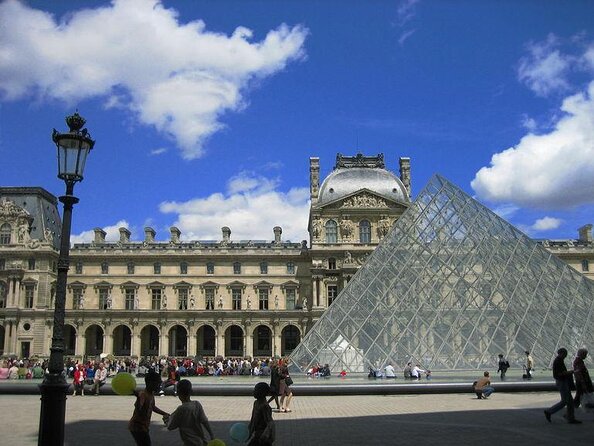
- Small group (12 or fewer) means the guide can actually steer the group and answer questions
- Audio headsets help you catch every explanation, even when you’re squeezed in by crowds
- A focused “greatest hits” route from medieval halls to the Italian sculpture galleries and the Mona Lisa area
- After the tour, you roam on your own with the context you need to keep seeing more
- Reserved entry with security screening still in play so you should plan for possible delays
Why This Louvre Tour Feels Manageable
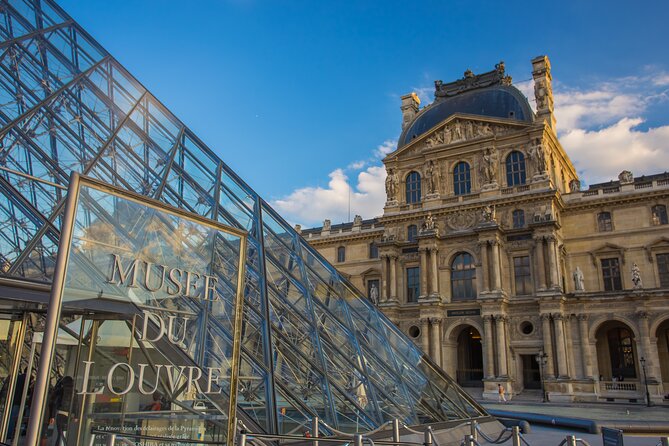
The Louvre is famous for two things: world-class art and “where did my day go?” wandering. This tour is designed to fix that second problem. In just about 3 hours, you get an ordered path through the museum’s most recognizable masterpieces, without feeling like you’re sprinting blind.
I also like the small-group approach. When the tour is capped at 12 people or less, you can move as a unit and actually hear the explanations. If you’ve ever tried to watch anything in the Louvre while everyone stands in a perfect circle, you already know why that matters.
One more practical win: the included audio headsets. Even when you’re near other groups or stuck behind a wall of visitors, you don’t lose the guide’s commentary. That makes the whole experience smoother, and it reduces the usual stress of trying to hear over foot traffic.
You can also read our reviews of more museum experiences in Paris



The 3-Hour Route: From Medieval Louvre to Mona Lisa
This is an “edited highlights” tour, so think of it as a guided sampler. You won’t see everything, but you’ll see the works that anchor the museum and understand why people obsess over them.
Start in the Louvre’s older bones
You begin with the medieval foundations of this former royal residence. That opening matters because it gives you a sense that the Louvre isn’t just a container for paintings; it’s also a historical building with layers of power and changing tastes. It also gives your guide a launch point for explaining how art collections became royal symbols.
Venus de Milo, up close and explained
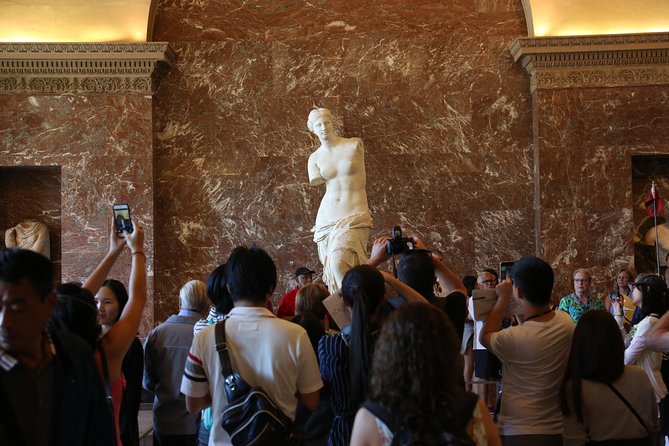
Next comes the graceful Venus de Milo. Even if you’ve seen her in books, the museum version hits differently—because scale, stone surface, and surrounding context do real work. Your guide’s stories help you connect the sculpture to the larger myth-and-modernity flow that the Louvre does so well.
The Apollo Gallery and Napoleon’s royal display
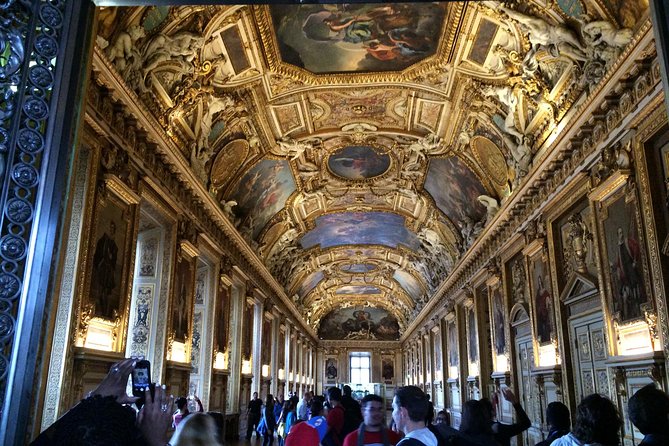
Then you move to the Apollo Gallery. This stop centers on the ornate royal crowns connected with Napoleon and King Louis XV. It’s a clever shift from “single artwork” viewing into “art as power.” Crowns and ceremonial objects aren’t just decorative; they’re political theater made solid.





Canova’s Psyche and Cupid: love, carved
After that, you’ll see Canova’s Psyche and Cupid. Sculpture lets you study gesture and emotion in a way flat images can’t match. This is one of those stops where you’ll likely slow down, because it’s easier to notice form when you’re not fighting a sea of screens and signs.
Delacroix’s Liberty Leading the People
A major emotional pivot follows with Delacroix’s Liberty Leading the People—a painting tied to the French struggle for freedom. Your guide’s job here is to frame the work so it’s more than a familiar image. When the story lands, you start seeing how composition and symbolism push your eye through the scene.
Italian sculpture hall and Michelangelo’s work
You also reach the Italian sculpture hall to see Michelangelo’s work. This is where many people realize the Louvre isn’t only about paintings. Sculpture here can feel dramatic and physical, like the artist is still in the room with you.
The Mona Lisa: the most explained portrait in the world
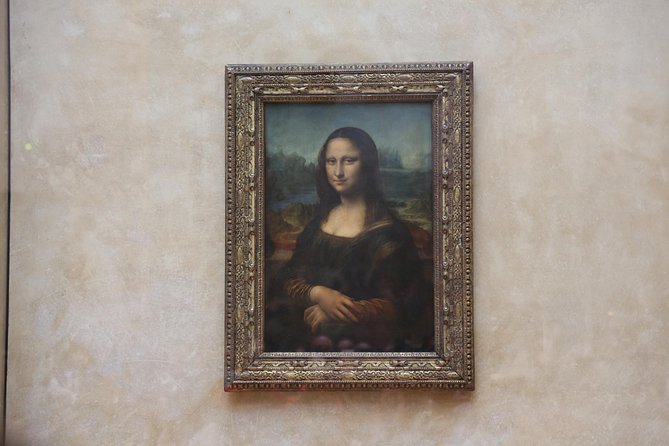
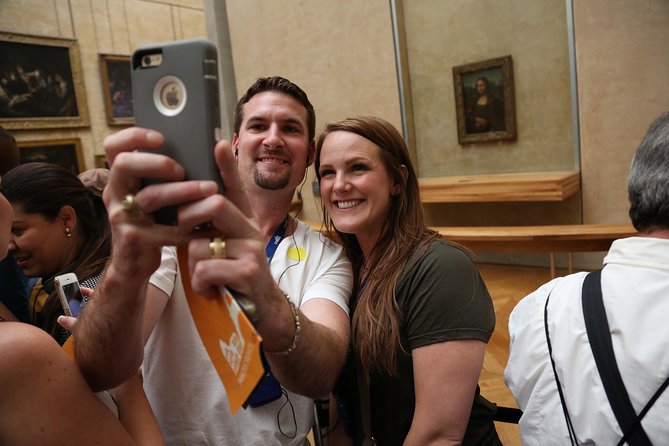
Finally, you’re in the orbit of Leonardo da Vinci’s Mona Lisa. Expect crowds—this is the part of the Louvre that turns into a standing-spotting challenge. The value of a guide at this moment is timing and explanation, so you don’t just show up, squint, and move on.
What this “route” really means for you
If you like structure, you’ll appreciate the flow. If you hate being rushed, you’ll want to treat the guided part as your foundation, then use the time afterward to linger. The tour ends after the highlights are hit, and the real magic is what you choose next.
Small-Group Access: What the 12-Person Cap Changes
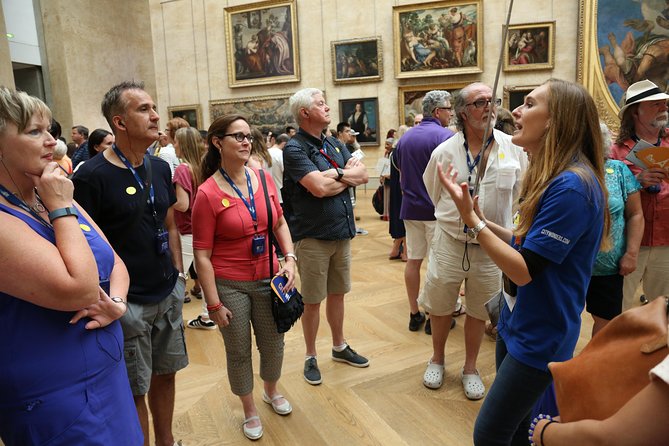
The advertised maximum is 12 travelers, and that’s not a small detail—it changes your entire experience at a giant venue.
When the group is small:
- You can actually pause for a closer look without losing the guide immediately.
- The guide can respond if someone asks a question.
- You’re more likely to move as a unit instead of getting stretched thin.
That said, I’ll be straight with you. Some situations can force changes. There are instances of groups being combined due to guide illness, which can bump the group size beyond what the label promises. On those days, it won’t be as intimate, and you may find it harder to keep up.
The good news is that the tour still keeps its core mission: get you to the major works with clear stories and then let you roam afterward with better instincts for what to prioritize.
Meeting at the Carrousel and Surviving Security Lines
You meet at Arc de Triomphe du Carrousel, Pl. du Carrousel, 75001 Paris, and the tour ends at the Musée du Louvre, 75001 Paris. The listed start time shown here is 10:30 am (and the experience is offered in a morning or afternoon option).
Two practical notes that matter in the real world:
- Mandatory security checks can slow you down. Even with reserved entry, security screening is still security screening. Build in a little patience.
- Arrive early. I know, it sounds obvious, but the Louvre punishes late arrivals fast. The meeting spot is outside, and once you’re inside the flow gets complicated.
Also keep in mind: there’s no hotel pickup/drop-off. This is a “show up and meet your guide” tour. If you’re connecting by metro, aim to give yourself extra buffer time for transfers and walking.
Guides Matter: The Stories—and the Human Touch
This kind of tour lives or dies on the guide. The strongest praise here isn’t just about knowing art; it’s about making the museum walkable and understandable.
I’ve seen examples of guides who:
- picked the best exhibits for the group’s pace,
- explained art without drowning you in information,
- and handled the crowding with actual tactics.
Some guide names you may recognize from past groups include Maryam, Addie, Hamish, Toni, Florence, Nazli, Severine, Omar, and Maxim. People singled out how easy the commentary was to follow, including accents described as clear.
One especially useful theme: accommodation when walking is harder. A couple of people mentioned the guide adjusting pace and even scouting for seating or elevators at the exit. Another review warned that there are lots of stairs and that mobility limitations could be a problem.
So here’s my practical take: if you have mobility constraints, don’t assume “guided” means “gentle.” Ask yourself honestly how you handle standing, tight crowd spaces, and stair-heavy routes inside the Louvre.
What You’ll See vs. What You’ll Choose Afterward
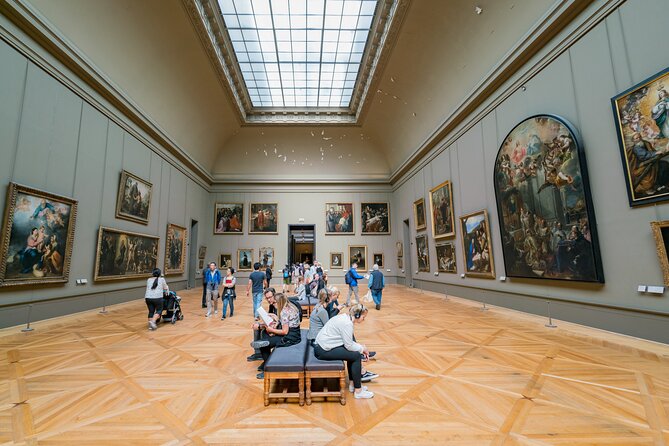
After the 3-hour guided portion, you’re free to explore at your own pace. That’s a big part of the value: you get orientation first, then you steer your own time.
Because this tour focuses on the biggest names, you may find you want:
- more time with the works you loved most on the route,
- extra stops in nearby galleries you didn’t know to target,
- or a second pass through the areas where the guide set context.
Also, the tour is intentionally edited. One reason people appreciate it is that the Louvre can cause information overload fast. A tight highlight route helps you leave with a mental map and a shortlist of what to hunt next.
Price and Value: What You’re Actually Paying For
At $118.27 per person for about 3 hours, this isn’t a budget “wander with a map” deal. It’s priced for a guided experience that includes real on-site value.
Here’s what your money covers based on what’s included:
- An English-speaking expert guide
- Small group size capped at 12 people or fewer
- A museum entrance ticket for adults (listed as €22)
- Audio headsets (so you can hear the guide)
- The tour price also notes the reservation fee is included for the group
When you add that up, the ticket component is built in, so you’re not juggling separate purchases. You’re also buying time and clarity: the guide helps you get to key works without spending your energy figuring out what to see first.
Could you do it cheaper by going on your own? Sure. But the Louvre’s size turns “cheap” into “hours of confusion” for many first-timers. If you want a fast on-ramp and then freedom afterward, this price can feel fair.
Who This Louvre Tour Fits Best
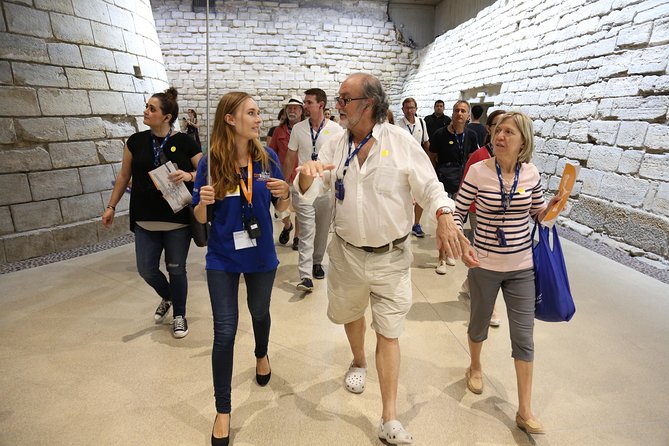
This tour suits you if you want:
- an art-and-history explanation without planning every hour,
- a curated path through top masterpieces,
- and a chance to roam after you’ve built a mental map.
It can also work well for families with kids who can handle a focused museum walk for a few hours. One family noted that two children ages 9 and 11 stayed engaged for the full 3-hour guided portion.
On the other hand, think twice if:
- you need a low-stairs route (there are lots of stairs inside the Louvre),
- you want a slow, unstructured visit with plenty of time for every gallery room,
- or you’re highly sensitive to crowding and constant standing.
And one more honest point: this tour can’t control the Louvre crowds. Even with reserved access, the Mona Lisa area is a magnet. Your guide can help you manage it, but you’ll still feel how popular the Louvre is.
Should You Book This Louvre Masterpieces Tour?
Book it if this sounds like your ideal Paris day: show up, get guided through the major works in a tight loop, hear clear stories, and then have the freedom to explore what pulls you in after the tour ends.
Skip it (or at least ask tougher questions before booking) if mobility and stairs are a major concern or if you dislike standing in busy museum pockets. And always arrive early to the meeting point at Arc de Triomphe du Carrousel so you don’t get trapped by the clock.
If you’re a first-time Louvre visitor, this tour is one of the most practical ways to turn a huge museum into a satisfying, memorable art story.
FAQ
How long is the Louvre small-group tour?
The tour runs for approximately 3 hours.
Where do we meet, and what time does the tour start?
The meeting point is Arc de Triomphe du Carrousel, Pl. du Carrousel, 75001 Paris. The listed start time shown here is 10:30 am. There’s also an option to choose a morning or afternoon tour.
What’s included in the price?
It includes an English-speaking guide, a small-group tour (limited to 12 travelers or fewer), the audio headsets, and the museum entrance ticket for adults (with the reservation fee included as well). Mobile tickets are provided.
Is the tour guided in English?
Yes. The tour is offered in English, with an English-speaking guide.
How many people are in the group?
The tour is capped at a maximum of 12 travelers.
Is there a lot of walking and stairs?
The Louvre involves a lot of walking and stairs. If you have mobility limitations, you may want to think carefully before booking.
Can I cancel and get a full refund?
Yes. Free cancellation is available up to 24 hours in advance of the experience start time for a full refund.