REVIEW · LYON
Storytelling tour of the Vieux-Lyon in French
Book on GetYourGuide →Operated by Cybèle · Bookable on GetYourGuide
Catherine’s story walks you through Old Lyon. This is a 90-minute storytelling tour in French where a professional actor turns the Renaissance back on, and the traboules (hidden passageways) stop being just a cool word. I love how the guide’s performance makes places feel linked, not random. I also like that the theme is specific: Lyon’s printing world and the pressure of a rival printer—so history comes with stakes, not a lecture.
One thing to consider: you’ll be moving through cobblestones in the Old Town, so wear shoes you can trust. If you need lots of quiet time for reading plaques or want a full historical museum style breakdown, this format may feel short or story-heavy.
In This Review
- Key highlights (what you’ll remember most)
- Catherine’s 16th-Century Lyon: The point of this tour
- Getting to the start: the Vieux-Lyon metro exit (Cybèle badge)
- Renaissance Vieux-Lyon streets: what the guide makes you notice
- Traboules: the hidden passages that make Old Lyon feel secret
- Printing industry in the Renaissance: history with consequences
- Actor-led storytelling: why it works better than a standard walking guide
- “90 minutes” in Old Lyon: pacing, wear-and-tear, and group energy
- What’s included—and what isn’t (so you don’t expect the wrong thing)
- Who this tour suits best (and who should pick something else)
- Booking value: is $20 for 90 minutes actually worth it?
- Should you book the Catherine of the Printer storytelling tour?
- FAQ
- Is the tour guided in English?
- How long is the Vieux-Lyon storytelling tour?
- What is the price?
- Where do I meet the guide?
- Does the tour include traboules?
- Will I visit a printing house during the tour?
- Is this tour suitable for young children or mobility needs?
Key highlights (what you’ll remember most)
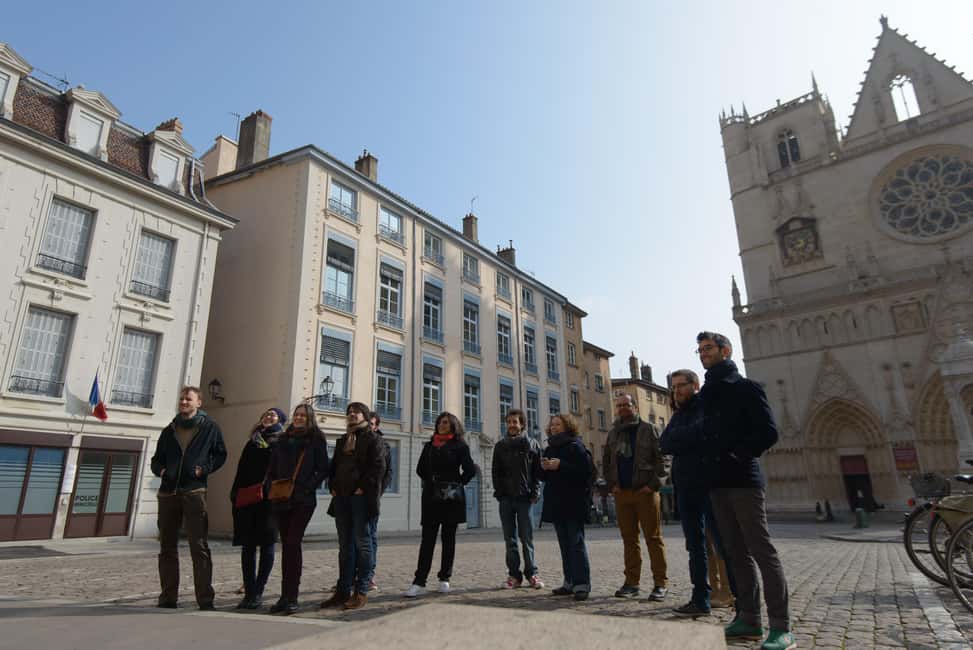
- An actor as your guide: performance first, history delivered through scenes and emotion.
- Catherine the printer: you follow her from the print shop bustle to darker stops in the tale.
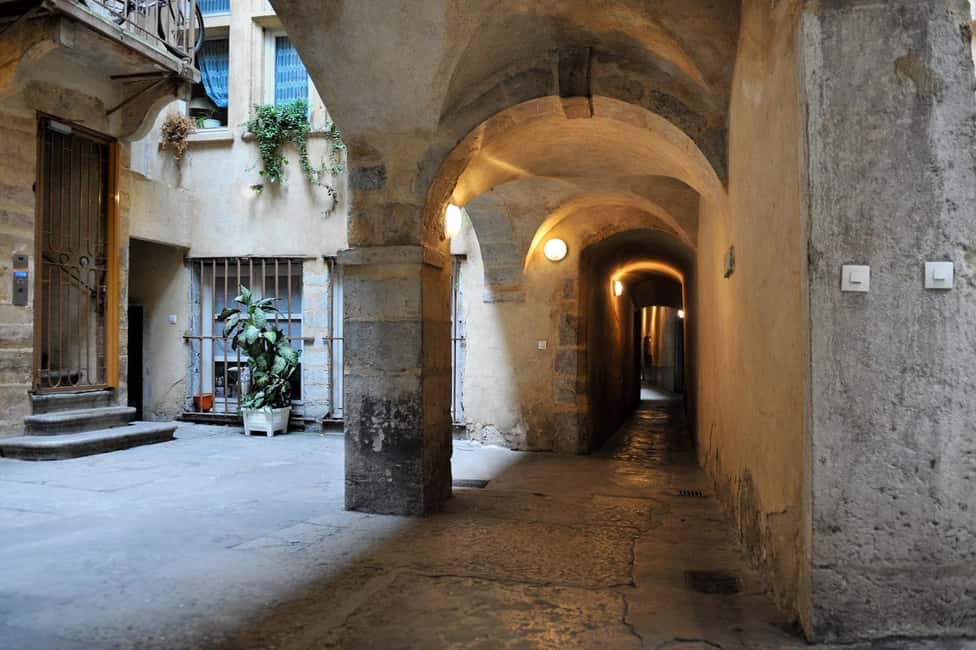
- Traboules on foot: you’ll actually walk these secret corridors instead of only hearing about them.
- Renaissance printing context: the competition between printers becomes your story engine.
- UNESCO Old Lyon, brought to life: the buildings feel like part of the plot, not a backdrop.
- 90 minutes that move fast: fun and focused, but don’t expect a slow, long museum-style pacing.
Catherine’s 16th-Century Lyon: The point of this tour
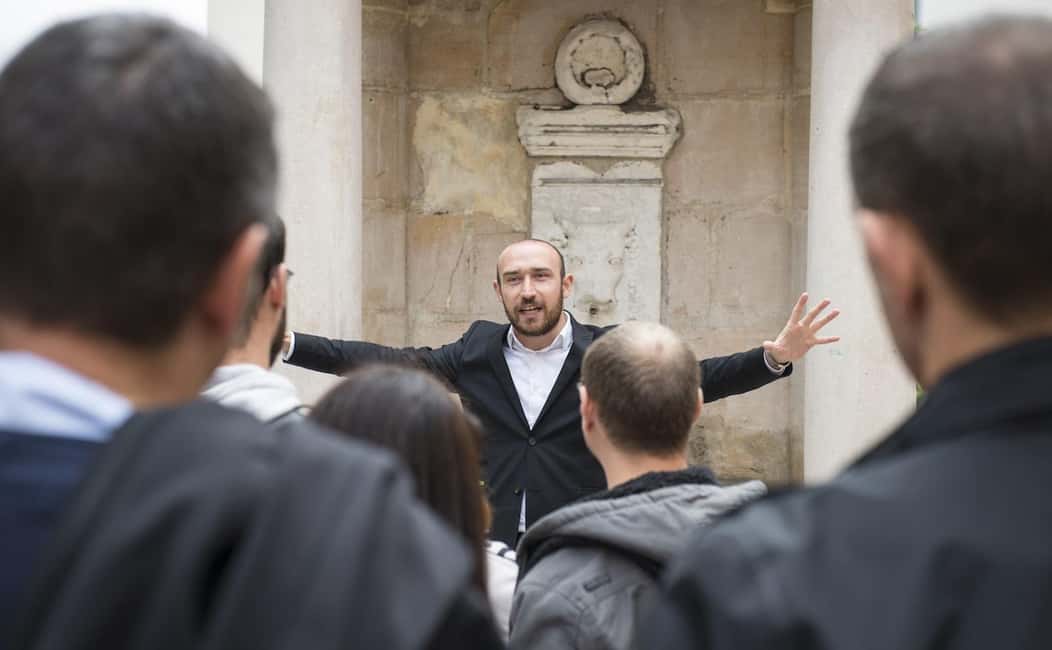
This is not your typical “here’s a church, here’s a view” walk. The value is the format: you’re touring Vieux-Lyon as a moving set for a fictional story built on real 16th-century printing life. Instead of memorizing dates, you’re tracking what happens to a woman printer named Catherine and how a competing printer tightens the noose.
That matters because Lyon’s Old Town can feel like a maze if you don’t have a thread. The actor gives you that thread. You’re guided through the district as if you’re watching scenes unfold: the world of the print shop, the tension with rivals, and the public moments around power and celebration. It’s a way to learn the geography of Old Lyon and the vibe of Renaissance work at the same time.
I also appreciate the tone. The guide isn’t just doing accents for fun. The best moments connect the story to real spaces you’re walking through, so you leave with a map in your head: “I remember this street because it belonged to Catherine’s situation.”
You can also read our reviews of more tours and experiences in Lyon.



Getting to the start: the Vieux-Lyon metro exit (Cybèle badge)
You’ll meet at the main exit of the Vieux-Lyon metro, on avenue du Doyenné. The guide waits there and you’ll recognize them by a Cybèle badge.
This setup is practical if you’re using the metro to hop around Lyon. It also means you won’t spend the first 20 minutes stuck in “Where exactly is it?” mode. Still, I’d show up a few minutes early—Old Lyon streets can be easy to misread at first, especially with the cobblestones and narrow lanes.
Tip: once you’re near the metro exit, keep an eye out for that badge rather than relying on generic tour-group behavior (people often cluster and it’s not always obvious who’s with whom).
Renaissance Vieux-Lyon streets: what the guide makes you notice
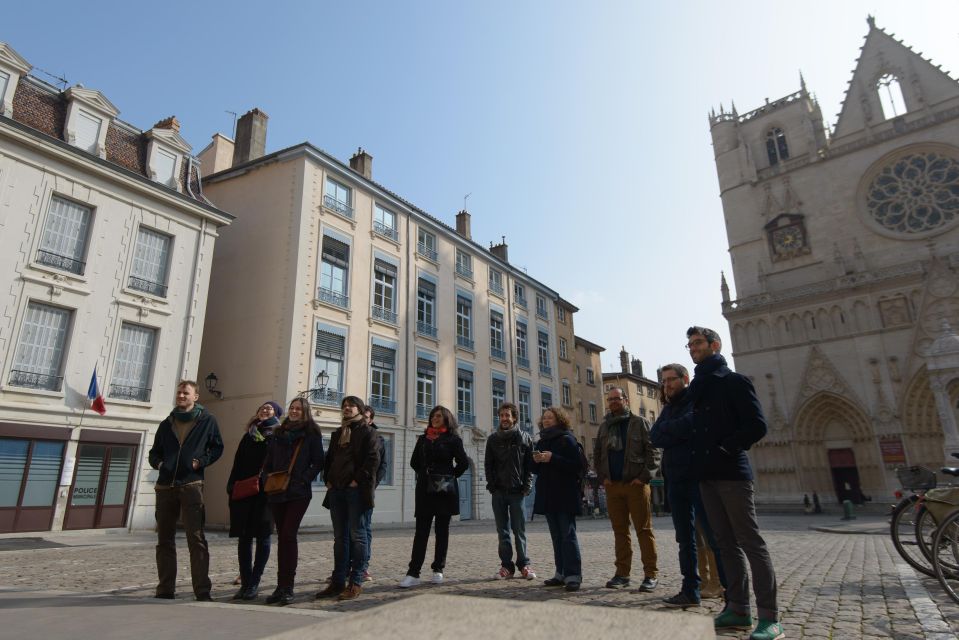
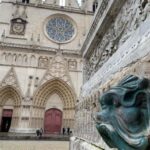
The tour’s core is walking through Old Lyon’s Renaissance district, a UNESCO-listed area. On your way, you’ll see the kind of architectural density that makes this neighborhood feel like a time capsule. But the twist is that you’re not just looking at façades; you’re watching how the buildings relate to printing work and the social world around it.
The story centers on Catherine, a woman printer in the Renaissance. As the guide moves you through the neighborhood, you’ll feel the contrast between:
- the busy, working energy of the print shop world, and
- darker, lower-visibility moments in the tavern settings of the tale.
That contrast is more than drama. It helps you understand why printing in that era wasn’t a clean, isolated craft. It was tangled up with business risk, reputation, and competition—exactly the kind of tension that turns a walk into a narrative you can follow.
One practical upside: even when the tour is fictional, the district itself gives you real anchors. You’ll start to connect what you’re hearing to what you see: street scale, building proximity, and how the narrow passages let the city feel enclosed, almost like a workshop maze.
Traboules: the hidden passages that make Old Lyon feel secret
If you’ve heard the word traboules before, you already know they’re special. But this is where they become meaningful. The tour doesn’t treat traboules like a quick photo stop. You actually move through them, so you feel the shift from open street to sheltered corridor.
That physical change helps you understand why traboules mattered historically. They’re not just clever shortcuts; they reflect a city built for movement through private or semi-private spaces. On this tour, the corridors also support the narrative tension—especially as Catherine navigates a world where control can shift fast.
In a 90-minute format, this is smart. The traboules are the kind of attraction where a traditional guide might skim: “Here’s one, interesting, moving on.” Here, they become part of the story’s rhythm. You’ll remember them because you’ll associate them with particular beats of Catherine’s situation—escape, pursuit, or sudden direction changes.
If you’re the kind of traveler who likes “how did people actually live and move?” rather than just “what’s the postcard view?”, this portion delivers.
Printing industry in the Renaissance: history with consequences
The printing theme is the tour’s backbone. You’ll learn about Lyon’s printing world during the Renaissance, and you’ll experience it through a plot built around rivalry. That choice does two things:
1) It makes the business side easier to grasp. Competition isn’t an abstract idea. In Catherine’s story, the pressure feels personal—because the rival printer isn’t just competing on quality, they’re trying to control outcomes.
2) It gives you a reason to care about spaces you might otherwise ignore. The print shop is part of the plot, not a random workplace detail. Taverns, public moments, and the surrounding urban landscape all tie into what printers faced: reputation, risk, and the need to keep production going.
The tour also mentions royal pageantry in the story—construction of sets for a royal entrance and a parade welcoming the king. Even if you don’t already know the timeline, you’ll get a sense that printing didn’t happen in a vacuum. Public power created demand and attention, and that attention could help—or complicate—people’s lives and careers.
Just keep expectations realistic: this is not a full academic class on Gutenberg-era diffusion or typography history. It’s a narrative introduction to the printing atmosphere in 16th-century Lyon, anchored in the Old Lyon district you’re walking through.

Actor-led storytelling: why it works better than a standard walking guide
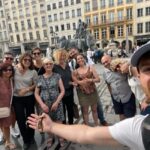
The guide is a professional actor, and that’s not a throwaway detail. You’re paying for a performance style that uses emotion and suspense to keep the walk moving.
The reviews point to exactly what matters here: the acting quality and the ability to handle real-life timing. Improvisation during live tours is a real skill, and in this case it’s treated like part of the experience rather than a flaw.
Also, one guide name you may see is Chlore, referenced in positive feedback for both substance and delivery. That’s a helpful clue if you’re browsing options elsewhere—look for the actor’s name and the overall emphasis on storytelling quality, because that’s the product.
What you’ll likely feel on the ground:
- you’ll look at streets like they’re scenes
- you’ll remember the neighborhood via plot points
- you’ll leave with a clearer mental “map” than you’d get from a standard itinerary
“90 minutes” in Old Lyon: pacing, wear-and-tear, and group energy
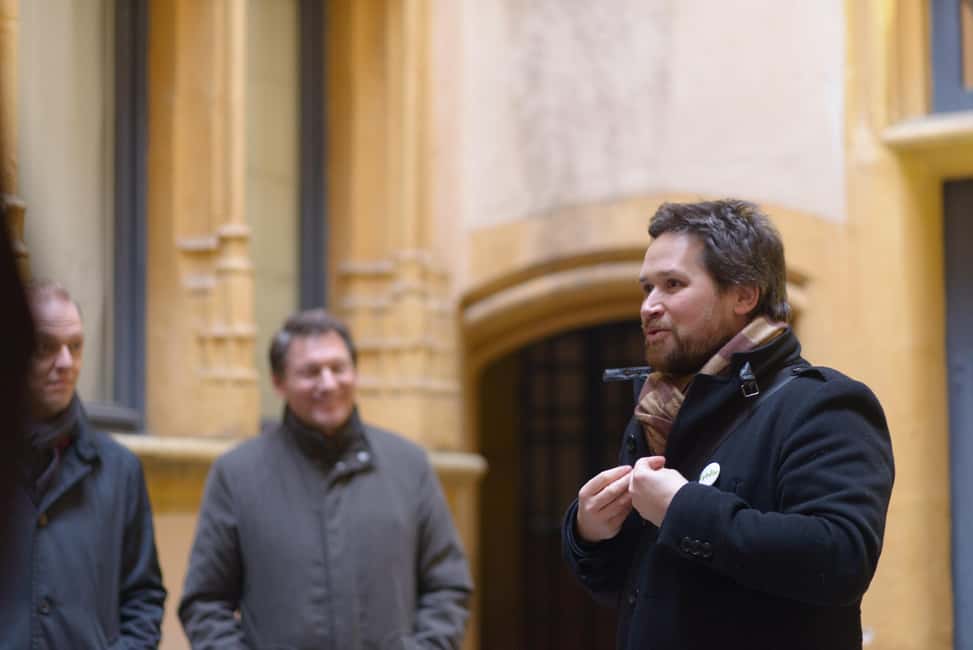
This tour runs 90 minutes, so it’s designed to be tight. The upside is focus. You won’t feel dragged through every minor corner of Vieux-Lyon. The downside is also predictable: there’s limited time for detours or lots of extra side explanations.
That’s worth thinking about if you prefer deep historical talk over character-led narrative. Some people love the story so much they don’t mind extra context being lighter. Others want more “why this matters” historical detail at each spot. If you fall in the second group, consider pairing this with one additional self-guided stop after, where you can read slowly and explore at your own pace.
Logistics you can’t ignore:
- The streets are paved with cobblestones, so plan for footing and comfort.
- This is in old Lyon, meaning you’ll walk in a compact area, but the surface can be uneven.
- The tour is wheelchair accessible per the activity notes, but it also lists “not suitable for people with mobility impairments.” If you or someone in your group uses a mobility aid, it’s smart to confirm with the operator directly before booking.
What’s included—and what isn’t (so you don’t expect the wrong thing)
Included:
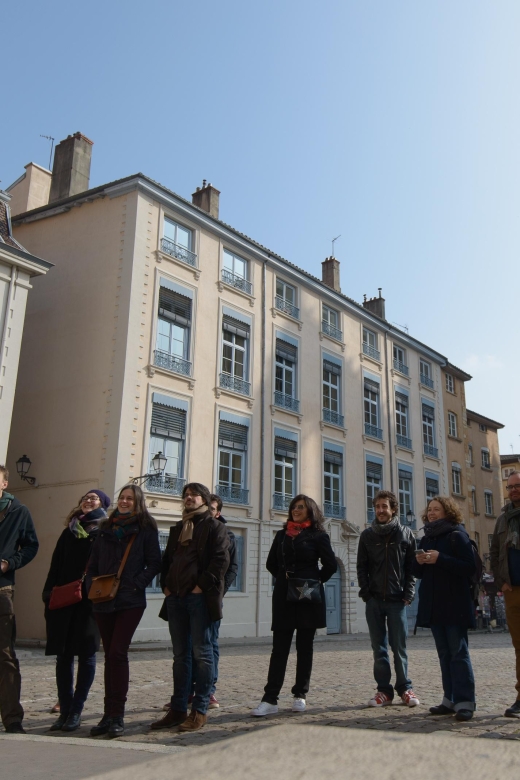
- walking through the ancient streets of Old Lyon
- access to traboules (hidden passageways)
- a professional actor as your guide
- French-only narration
Not included:
- a visit to a printing house
That last point is important for expectations. If you’re hoping to see machinery up close, a shop interior, or a functioning press, this tour isn’t that. Instead, it offers the streetscape view of printing-era Lyon and uses the story to recreate the feel of work life around printing.
For many visitors, that trade-off is exactly right. Visiting a printing house can be hard to schedule and often depends on what’s open. A storytelling walk through the UNESCO area is more predictable, and it also gives you something that a museum visit doesn’t: the city layout itself.
Who this tour suits best (and who should pick something else)
This tour is ideal if you:
- like story-based learning
- enjoy theater-style guides who keep energy high
- want an easy way to “get your bearings” in Vieux-Lyon
- care about history, but prefer it in an entertaining frame
It may be less ideal if you:
- want a lot of slow, detailed historical explanation at each stop
- get impatient when the experience leans hard into suspense and character action
- need a fully quiet walking pace
And if you’re traveling with younger kids: it lists children under 10 as not suitable. That’s usually due to timing, walking surfaces, and the story format.
Booking value: is $20 for 90 minutes actually worth it?
At $20 per person for 90 minutes, the value is strong if you want a performance-driven introduction to Old Lyon. You’re not just paying for a route—you’re paying for an actor-led storytelling engine, plus guided access through the traboules and historic Renaissance streets.
Where value can feel different:
- If you specifically want hands-on printing history or a printing facility visit, you’ll feel the gap because the tour does not include a printing house.
- If you’re a fan of guided storytelling, this price is a bargain compared to attractions that charge more for less personality.
One more practical point: since it’s French-only, your comprehension matters. If you understand basic French or you’re comfortable following a narrative, you’ll get more out of it. If you don’t, consider whether you’d rather choose another tour in your preferred language.
If you like keeping plans flexible, you may find this easier to fit in. The tour offers free cancellation up to 24 hours in advance and reserve now & pay later.
Should you book the Catherine of the Printer storytelling tour?
I’d book it if you’re curious about Old Lyon but don’t want a generic walk. The combination of actor-led performance, a focused theme (printing in the Renaissance), and the practical payoff (you walk the traboules) creates a fast, memorable way to understand a dense district.
I’d skip or rethink it if you’re the type who needs deep factual explanations and long stops, or if you’re expecting a visit to a functioning printing house. In that case, look for something more museum or workshop oriented.
If you’re somewhere in the middle—want history, but you also want a story that keeps your attention—this one is a smart use of time.
FAQ
Is the tour guided in English?
No. The tour is in French only.
How long is the Vieux-Lyon storytelling tour?
The duration is 90 minutes.
What is the price?
It’s $20 per person.
Where do I meet the guide?
Meet at the main exit of the Vieux-Lyon metro on avenue du Doyenné. You’ll recognize the guide by a Cybèle badge.
Does the tour include traboules?
Yes. The tour includes ancient streets and traboules (hidden passageways).
Will I visit a printing house during the tour?
No. A visit to a printing house is not included.
Is this tour suitable for young children or mobility needs?
It’s not suitable for children under 10 and it notes not suitable for people with mobility impairments. At the same time, it is listed as wheelchair accessible, so if mobility is a concern, it’s wise to confirm details with the operator before booking.