REVIEW · PARIS
Skip-the-line Rodin Museum – Exclusive Guided Tour
Book on Viator →Operated by Babylon Tours Paris · Bookable on Viator
Rodin is faster with a guide. This skip-the-line tour takes you straight into the Musée Rodin and keeps the focus on what matters—Rodin’s process, his subjects, and the details you’d miss wandering alone. I especially like how the guide routes you past the crowds and into the collection highlights without the usual museum drift, and how you get clear context for works like The Thinker and The Gates of Hell. One thing to consider: it’s a time-saver, but you still have to follow museum security rules, including no large bags inside.
This is also a tour that leans hard on story, not just sightseeing. In the past, guides such as Donja, Ana, Julien, and Barbara have been praised for turning Rodin’s era—artists, writers, and ideas—into something you can actually see in the sculptures. The garden component is not just a pleasant walk either; it’s part of the experience, with additional sculptures in the manicured grounds after the museum rooms.
My main caution is simple: this is only great if your guide is a strong explainer. One participant described a tour that felt too much like a pass-through of rooms with less interpretation than expected. If you’re the type who likes your art with solid commentary, come with a couple of questions ready and watch how your guide handles them.
In This Review
- Key highlights worth planning for
- Why skip-the-line at Musée Rodin saves your time (and your energy)
- Getting there: meet at 77 Rue de Varenne, then go straight in
- Inside the museum: how Rodin’s studies and drawings tell the story
- The Gates of Hell and The Thinker: what to look for beyond the famous faces
- The Walking Man, hands, and why the human body is Rodin’s main theme
- After the galleries: Rodin’s garden walk with more sculptures
- Guides and group options: what the best tours do differently
- Price and value: is $142.89 worth it?
- Packing, security, and museum rules that affect your comfort
- What if the museum closes or starts late?
- So who should book this Rodin skip-the-line tour?
- Should you book this tour?
- FAQ
- How long is the Rodin Museum skip-the-line guided tour?
- Where does the tour start?
- What’s included in the tour price?
- Is it in English?
- Do I need to bring a mobile phone number?
- Are there group discounts?
- Can I bring a big bag into the museum?
- Are the gardens included?
- What happens if the museum closes or opens late?
- Is gratuity included?
- What is the cancellation policy?
Key highlights worth planning for

- Skip-the-line access so you start seeing art instead of standing in line
- Story-first guiding that ties paintings, sculpture studies, and major works into one thread
- Inside-to-outside flow: museum rooms first, then gardens with more sculptures
- Quiet-room etiquette: some areas limit talking, and your guide will prep you
- Small-group vs semi-private options, with the guide format changing by option
- Security-friendly packing: you’ll be expected to travel light (handbag/small thin bag only)
Why skip-the-line at Musée Rodin saves your time (and your energy)
Rodin’s museum can feel like a classic Paris “line-and-then-hope” situation, especially in prime visiting hours. This tour removes that frustration. You’re meant to get in quickly and go to the important parts early, which matters because the museum experience is sensory and detailed. If you’re already tired from waiting, it’s harder to notice the small stuff—hands, gestures, the way Rodin carved movement into stone.
Also, the skip-the-line isn’t just about speed. The best value is that you don’t waste your limited two hours deciding where to start or trying to decode what you’re looking at. You’re guided past crowds and toward the collection highlights, so your time is spent looking, not re-orienting.
Finally, the tour is built around flow. You’re led through the interior spaces, then you have time for the garden sculptures afterward. That inside-to-outside pacing is a good match for how Rodin’s work lives both in close-up details and in open space.
You can also read our reviews of more guided tours in Paris

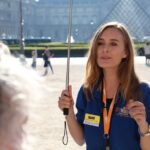

Getting there: meet at 77 Rue de Varenne, then go straight in
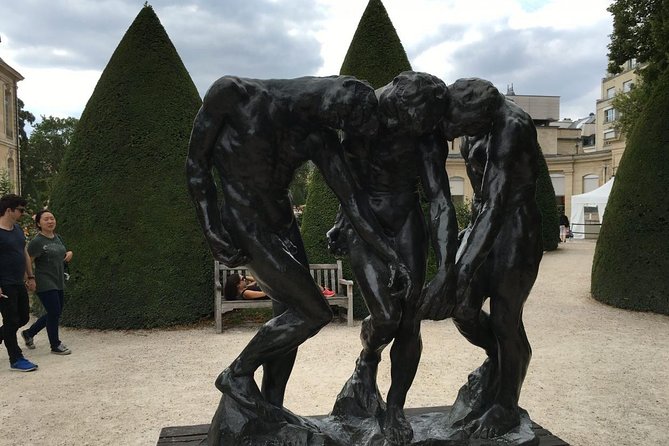
The meeting point is at Musée Rodin, 77 Rue de Varenne, 75007 Paris. It’s near public transportation, which helps if you’re bouncing between stops on foot or by metro.
There’s no hotel pickup or drop-off included. If you’re coming from a hotel that’s a bit off the center, I’d plan on a quick taxi or rideshare to avoid dragging luggage through busy streets. (And you’ll be happier if you keep your bag small, since security rules inside are strict.)
Time-wise, expect about 2 hours total (listed as roughly 1.5–2 hours). That duration is right for this museum because you’ll cover the main galleries and Rodin’s story arc without turning it into a marathon. If you’re pairing it with another afternoon activity, build in buffer time for arriving a few minutes early.
Inside the museum: how Rodin’s studies and drawings tell the story

The museum rooms are filled with sculptures and an impressive display of more than 200 paintings Rodin accumulated over his lifetime. This matters because Rodin wasn’t only a sculptor who worked in one medium. The tour helps you see how he studied the human form obsessively, and how those studies show up in the finished pieces.
You’ll focus on Rodin’s investigations of the body—especially the ways he treated hands and gestures. That might sound like a small detail until you stand in front of a sculpture and realize how much expression can live in a single pose.
You’ll also encounter the life-sized “The Walking Man.” It’s the kind of work that makes you think, wait, how does he control weight and motion like this? The guiding layer helps connect that question to Rodin’s wider interest in bodies in motion, not frozen snapshots.
Along the way, you’ll get context about Rodin’s contemporaries—people he depicted in clay, including the French writer Balzac. If you usually skip the background notes in museum guides, this portion is exactly where you’ll feel the difference. When you know who’s being represented and why, the sculpture stops being only impressive and starts being meaningful.
The Gates of Hell and The Thinker: what to look for beyond the famous faces
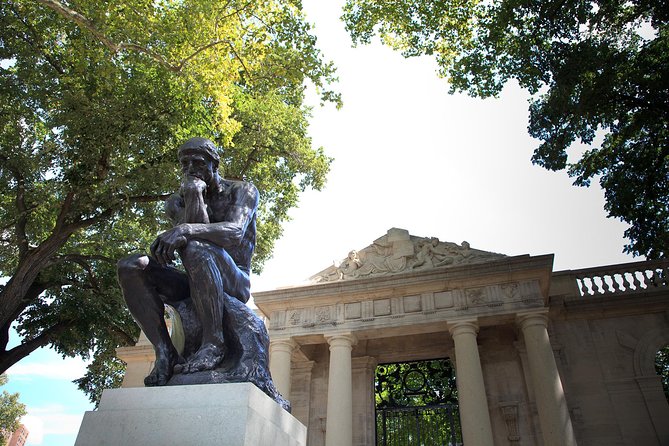
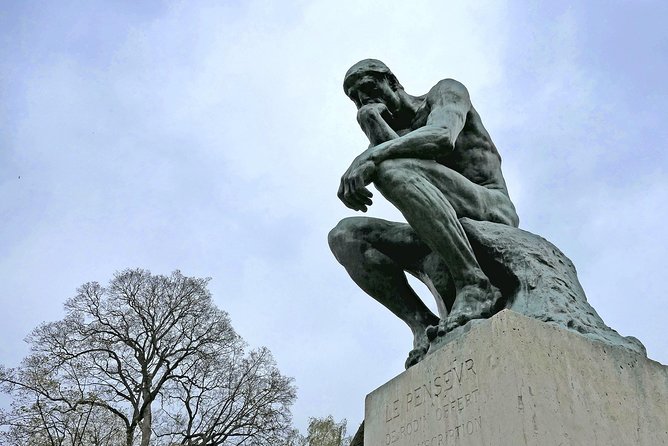
Some artworks are famous enough that you might think you already know them. The Gates of Hell and The Thinker fall into that category. The trick is that Rodin’s masterpieces aren’t just icons—they’re built from experiments, revisions, and ideas that evolved over time.
In this tour, you’ll learn the story behind The Gates of Hell and then meet the most recognizable work tied to it, The Thinker. The guide’s job here is to make the piece feel less like a postcard and more like a concept in motion.
What you should look for is not only the pose. Pay attention to the mood and the human drama in the figures—how bodies crowd and strain and suggest different emotional states. When you get the interpretation from your guide, it helps you “read” the sculpture the way Rodin intended: like a work full of tension, not a single frozen thought.
The Walking Man, hands, and why the human body is Rodin’s main theme
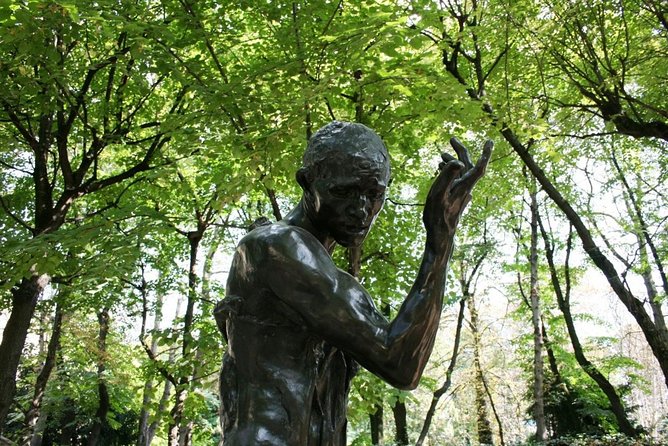
Rodin’s genius often gets simplified to famous names and dramatic works. This tour nudges you into the deeper logic: the human body as a study tool.
You’ll spend time on the repeated motifs—hands, the anatomy of movement, and the way faces and bodies can communicate even when the expression is restrained. If you’ve ever stood in front of a sculpture and thought it looked beautiful but didn’t know why it moved you, this is where the tour helps.
The “hands” focus is especially useful. It’s a shortcut into Rodin’s language. Instead of treating sculptures as static objects, you start noticing them like moments: a grip, a reach, a turn. That makes his larger masterpieces easier to understand, because you see the same thinking at different scales.
You can also read our reviews of more museum experiences in Paris



After the galleries: Rodin’s garden walk with more sculptures
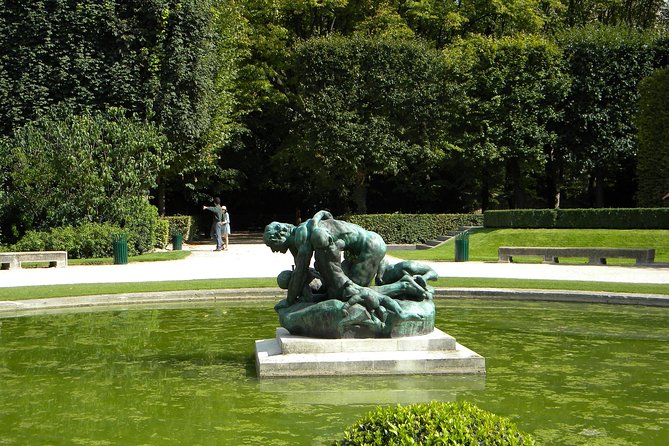
Once you’ve explored the museum rooms, you can stroll the gardens, where more sculptures are displayed. This is not filler time. Rodin’s work changes outside. Light hits differently. Perspective shifts. The sculptures can feel more open to interpretation when you’re not stuck under indoor lighting and crowds.
The gardens are also a nice counterbalance after the “look closely” museum portion. You can slow down and take in the way sculptures relate to space—how the works hold their shape and character in real air and real weather.
If you tend to get mentally overloaded in museums, this garden stop is a good reset. It also helps you remember what you saw inside, because you’ll be able to connect specific pieces to how Rodin wants them framed.
Guides and group options: what the best tours do differently

The experience is designed around a guide leading you past crowds and through collection highlights. But the format depends on which option you choose. The included version is described as skip-the-line and a guide exclusively for you, plus wheelchair friendly access. That said, the “SAVE! BOOK SEMI-PRIVATE” option changes some of those elements: the guide exclusively for you and wheelchair friendly parts do not apply.
That difference can matter if you need quieter pacing or physical accessibility support.
On the guiding side, the strongest moments come from art history explained in plain language tied to context you can actually see. Guides named in participant feedback include Donja, Ana, Julien, Floriant, Sunday, Balen, Barbara, and Malaika, and the common thread in their praise is how they connect Rodin’s work to cultural history and the people around him.
So here’s my practical advice: if you’re choosing between options, go with the one that matches how you like to learn. If you want more direct Q&A and a slower “follow my eyes” pace, the more private feel is likely a better fit. If you’re comfortable sharing attention in a group setting, a semi-private format may still work well for you.
Price and value: is $142.89 worth it?
At $142.89 per person for about two hours with admission included, this isn’t a “cheap add-on.” It’s a value purchase based on time and guidance quality.
You’re paying for three things:
- Skip-the-line entry, which saves waiting time that can otherwise eat into your museum focus
- Guided interpretation, which helps you understand why Rodin’s details matter
- A structured route, so you’re not spending your limited time figuring out what to prioritize
If you’re visiting on a tight schedule, planning to pair Rodin with other sights the same day, or you want to get real meaning out of the famous works, the price can feel fair.
If you’re the type who loves museums completely on your own—reading plaques slowly, mapping galleries, and moving at your own pace—you might feel the cost more sharply. In that case, you might prefer self-guided museum time plus an audio guide. But if you want the museum to feel like a guided story with key works explained, this is the kind of ticket you’ll usually be glad you bought.
Packing, security, and museum rules that affect your comfort
Musée Rodin security impacts what you can carry. The rules are clear: no large bags or suitcases inside. You’re limited to handbags or small thin bag packs that fit through security.
Dress matters too. “Appropriate dress” is required for entry into some sites on the tour. I’d interpret that as: avoid overly casual or problematic footwear/clothing if you’re unsure, and plan to look presentable.
One more small but real factor: some rooms are very quiet or have restricted rights to speak. Your guide will tell you which areas are different before you enter them. This is one of those museum details that can surprise people—so it’s good to know you’re not going to accidentally break a rule just by being talkative.
What if the museum closes or starts late?
Museums do sometimes change plans. This tour notes that Rodin may be subject to occasional closures without prior warning. If the museum opening is delayed more than 1 hour from the tour start time, the operator says it will provide an appropriate alternative.
In those cases, they also state that no refunds or discounts are available. So if you’re someone who’s locked into strict sightseeing logistics (like a hard dinner reservation or a later train), build a little flexibility into your schedule.
So who should book this Rodin skip-the-line tour?
I think this tour fits best if you:
- Want to see Rodin’s most important works without losing time in queues
- Like interpretation with your art, not only photographs and names
- Have limited time in Paris and want a smart route through key sections
- Enjoy context—Rodin’s contemporaries and the cultural setting around him
It may be less ideal if:
- You prefer a totally self-directed museum visit with no guidance
- You’re extremely sensitive to walking pace and prefer long breaks (the tour assumes moderate physical fitness)
- You strongly want temporary exhibitions included (they’re not included in this tour)
If you like structured art time—focused, guided, and paced to get you through the big ideas—this is a strong use of an afternoon.
Should you book this tour?
If your goal is to understand Rodin, not just see him, I’d book it. The main reason is practical: you save line time and you get a guided story that explains why the details matter, from hands and studies to The Gates of Hell and The Thinker. At $142.89 for about two hours, that’s a reasonable rate for admission plus guide-led priority entry.
If you’re worried about getting less explanation than you hoped, take the simplest step: arrive with curiosity. Ask your guide about how Rodin built meaning in the body—hands, movement, and those major masterpieces that people think they already know. When a guide is strong (and the feedback names several who are), this is one of the most efficient ways to make the Rodin Museum click.
FAQ
How long is the Rodin Museum skip-the-line guided tour?
It’s listed as about 2 hours (with a stated duration range of 1.5 to 2 hours).
Where does the tour start?
The tour starts at Musée Rodin, 77 Rue de Varenne, 75007 Paris, France and ends back at the meeting point.
What’s included in the tour price?
You get a skip-the-line guided museum tour, admission, and all entrance fees, plus the stated duration and guide. Temporary exhibitions are not included.
Is it in English?
Yes, the tour is offered in English.
Do I need to bring a mobile phone number?
Yes. You’re required to provide a mobile phone number (including country code).
Are there group discounts?
Group discounts are listed as a feature of this tour.
Can I bring a big bag into the museum?
No. No large bags or suitcases are allowed inside the museum. You can bring a handbag or small thin bag pack through security.
Are the gardens included?
Yes. After exploring the museum rooms, you can stroll the manicured gardens, where additional sculptures are displayed.
What happens if the museum closes or opens late?
Rodin can have occasional closures without prior warning. If opening is delayed more than 1 hour from tour start time, you’ll be offered an appropriate alternative. In those cases, refunds or discounts are not provided.
Is gratuity included?
No. Gratuities are optional and not included in the tour price.
What is the cancellation policy?
You can cancel for a full refund up to 24 hours before the experience starts. Cancellation within 24 hours of the start time is not refunded.