REVIEW · REIMS
Gold Champagne Experience from Reims (Private Full day tour)
Book on Viator →Operated by Aÿ-Champagne Experience · Bookable on Viator
Hautvillers gives this private day its heart: Dom Pérignon’s grave, the village known as the Cradle of Champagne, and a fine view over the Marne Valley. I like the small-producer tastings, which bring you closer to how Champagne is actually made, and the route through Grand Cru villages such as Cramant, Oger, and Aÿ-Champagne.
I also like the mix of famous names and working vineyard country. You see Epernay’s grand mansions, then visit family producers, presses, wineries, and cellars. The main drawback is the price, $666 per person, and the day includes a good deal of driving. It makes the most sense for a private group that wants a full regional overview rather than one cellar visit.
In This Review
- Key points of the Champagne day
- Why this private Reims tour works
- Hautvillers, the village linked to Dom Pérignon
- The first grower visit and three Premier Cru tastings
- Epernay and the grand Avenue of Champagne
- Cramant and lunch in the Côte des Blancs
- Oger and the character of Blanc de Blancs
- Aÿ-Champagne and the older roots of the wine trade
- Three regional spirits beyond the bubbles
- Is $666 per person good value?
- Who should book this Champagne experience?
- Should you book it?
- FAQ
- Where does the Champagne tour begin and end?
- How long does the private tour last?
- What Champagne tastings are included?
- Is lunch included?
- Which other drinks are tasted?
- Is the tour private and what vehicles are used?
Key points of the Champagne day
- Hautvillers and Dom Pérignon: Visit the church containing the famous monk’s grave and hear the story behind his connection to Champagne.
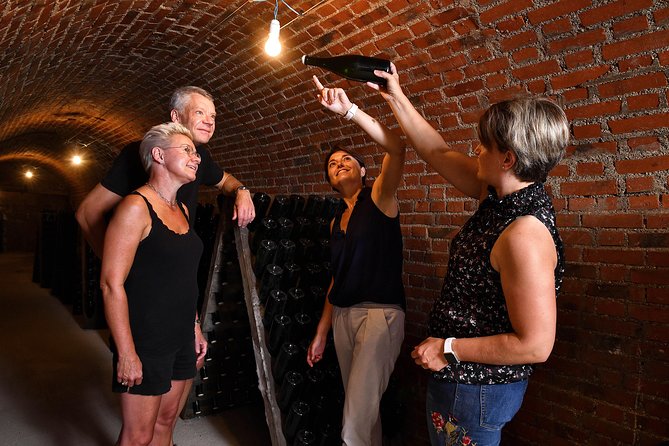
- Two independent grower-producers: Tour production areas, presses, wineries, and cellars, then taste three Champagnes at each stop.
- Grand Cru Chardonnay country: Explore Cramant, Oger, Avize, and Chouilly in the Côte des Blancs, known for 100 percent Chardonnay Champagnes.
- A private route through Champagne: Travel from Reims through the Montagne de Reims, Epernay, the Marne Valley, and Aÿ-Champagne.
- Lunch with local flavor: Stop at a Champagne or dining bar for food such as charcuterie, cheese, bread, salad, farm dishes, and regional biscuits.
- More than Champagne: Taste Ratafia, Fine de la Marne, and Marc de Champagne from the Goyard Distillery.
Why this private Reims tour works
This is not a quick stop at one famous Champagne house. It is a full day built around the places that explain the region: vineyard villages, old hillsides, family cellars, historic production towns, and the people who still make wine here.
You begin in or near Reims and spend roughly 7 to 8 hours on the road. Pickup is available within a 6-kilometer, or 3.7-mile, area around Reims. The exact vehicle depends on the group, weather, and season. Options include a premium van, minivans, or an electric red E-Mehari Jeep-style vehicle.
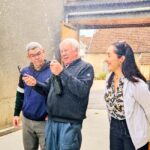
That private format matters. Your group controls the pace more than it would on a large coach tour, and the guide can explain the differences between Pinot Noir, Chardonnay, vineyard sites, dosage, aging, and local spirits as you go. The guide is local and was born in Epernay, which is useful here. Champagne is not one single wine style, and a guide with roots in the area can connect the villages and producers to the wider story.
The route covers a lot of ground. That is its strength, but also its cost. You will see more of the region in one day, yet some stops are short and the experience is not designed for long, quiet visits at every location.
You can also read our reviews of more private tours in Reims

Hautvillers, the village linked to Dom Pérignon
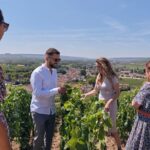
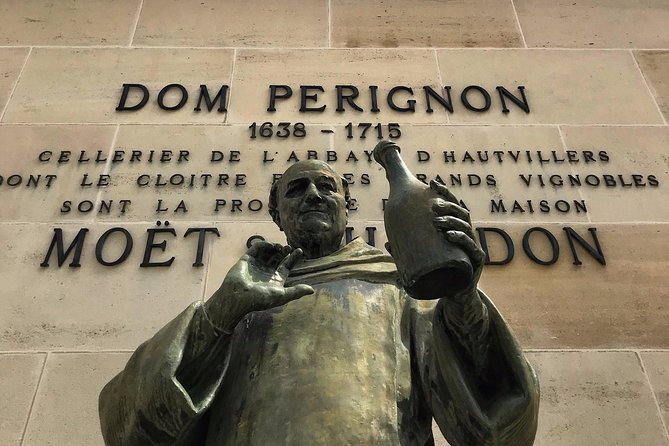
The first major stop is Hautvillers, often called the Cradle of Champagne. The village is closely tied to Dom Pérignon, the Benedictine monk whose work with wine is central to the region’s story.
At the Abbaye Saint-Pierre d’Hautvillers, you visit the church and see Dom Pérignon’s grave. The visit lasts about 30 minutes, and admission is included. This is not a grand cathedral visit. Its value comes from the story and the setting, especially if you want to understand how Champagne’s origin story grew around one historic figure.
Your guide explains whether Dom Pérignon actually invented Champagne. The honest answer is more interesting than the usual legend. This stop helps separate the popular tale from the complicated development of sparkling wine.
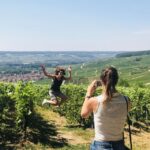
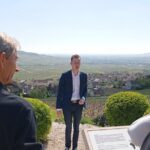
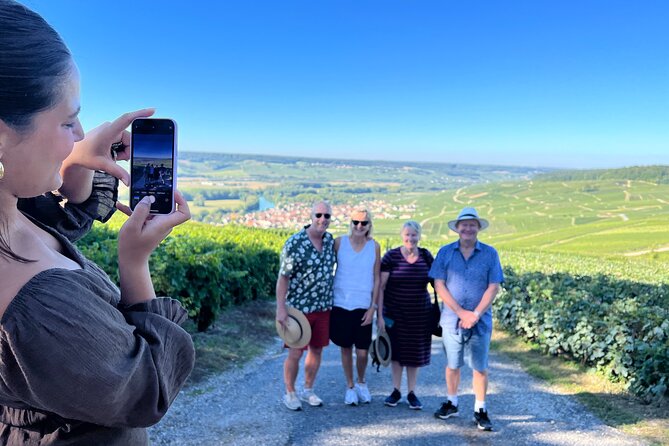
Hautvillers also gives you one of the day’s best photo stops. From the historic hillsides, you look across the Marne Valley and the vineyards where Dom Pérignon carried out his winemaking experiments. These hillsides are listed as a UNESCO World Heritage Site.
Bring a jacket if the weather is cool and shoes that work on uneven ground. The stop is outdoors as well as inside the church, and the point is the view, not simply checking off a religious building.
The first grower visit and three Premier Cru tastings
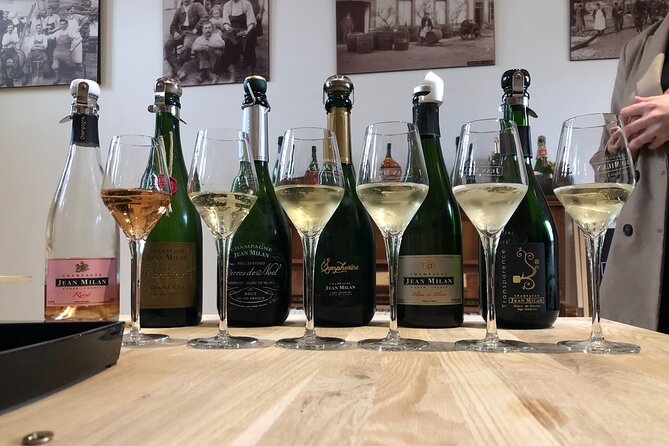
In or around Hautvillers, you visit the first of two independent producers. Depending on the season and availability, this visit may instead take place in a village in the Côte des Blancs or in Aÿ-Champagne.
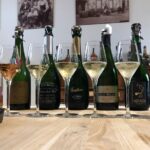
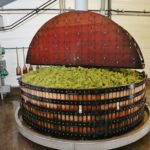
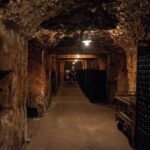
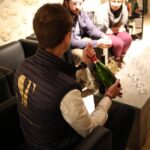
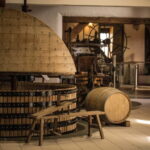
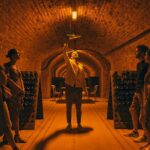
The visit covers the working side of Champagne production. You see the presses, wineries, and cellars, then taste three different Premier Cru Champagnes with commentary. That sequence is important. You are not simply handed three glasses and left to guess at the differences. The production explanation gives you a frame for what you are tasting.
Premier Cru is a vineyard classification below Grand Cru in the traditional hierarchy. For someone new to Champagne, tasting several wines from this level can show how much variety exists even before you reach the top classification.
I like this part of the day because independent growers offer a useful counterpoint to the big Champagne houses. The scale is usually more personal, and the conversation centers on the vineyard, the harvest, and the producer’s own methods. You should not expect the grand public spaces or polished showrooms associated with major brands. You get a closer look at production instead.
The first tasting is three Champagnes. Later, the second producer offers another three. Six wines give you enough range to compare styles without turning the day into a single long drinking session.
Epernay and the grand Avenue of Champagne
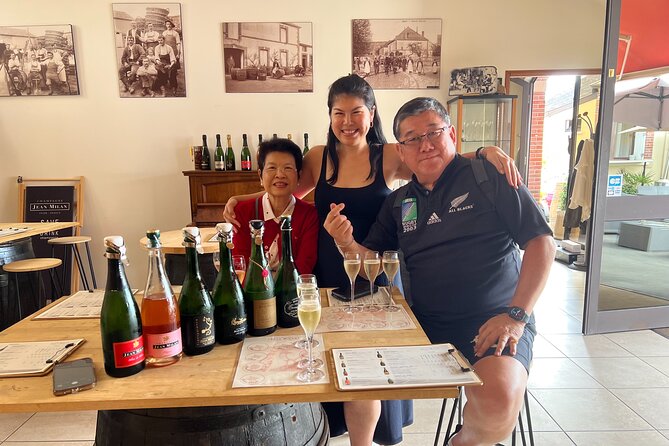
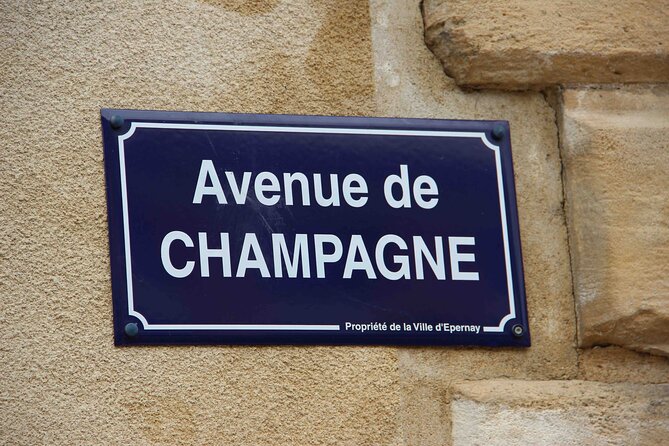
The route then reaches Epernay, the Champagne vineyard capital. The guide takes you along the Avenue de Champagne, a broad historic street lined with grand Champagne houses, mansions, and production buildings.
Names connected with the avenue include Moët & Chandon, Perrier Jouët, and Pol Roger. Beneath the street are about 100 kilometers of cellars holding roughly 200 million bottles. You do not tour those cellars on this day, so keep your expectations clear. This is a commented drive-through or passage with an explanation of the buildings and their role in Champagne history.
The avenue is a good contrast to the independent producer visits. Here, the wine business appears on a grand scale, with impressive facades and famous labels. At the grower visits, you focus on grapes, presses, cellars, and production. Together, the two views explain how both small families and major houses shape Champagne.
Because this is a private tour, you can ask the guide to slow down for a particular building or explain a house that interests you. Still, the route is not a dedicated architectural walking tour. The avenue is one part of a much larger day.
Cramant and lunch in the Côte des Blancs
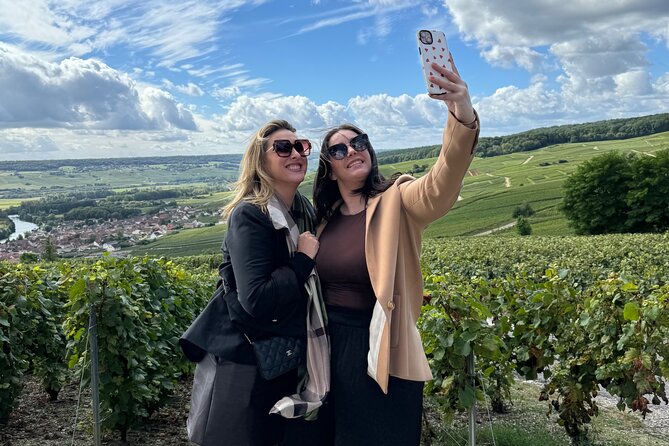
After Epernay, the route continues through the Côte des Blancs, an area known for Chardonnay Grand Cru villages. Cramant is one of the key stops.
The phrase Kingdom of Chardonnay Grand Cru is a useful shorthand for this part of Champagne. Chardonnay is the only grape variety used in the Blanc de Blancs wines you taste later. If you usually drink Champagne without thinking about grape varieties, this is where the distinction becomes clearer.
Lunch is arranged at a Champagne or dining bar appreciated by local residents. The exact place can change by day. Food may include charcuterie and cheese platters with bread and salad, prepared farm dishes, pâtés, regional biscuits, and coffee. A bottle of Champagne for two people accompanies the meal.
This is a relaxed pause rather than a formal gourmet lunch. That can be a plus. The food is regional and social, and it keeps the day connected to everyday Champagne life instead of turning every stop into a luxury presentation.
Tell the provider about allergies or dietary needs when you book. The tour specifically asks for that information in advance. Since the lunch location can vary, you should not assume a particular menu or restaurant style.
You can also read our reviews of more wine tours in Reims
Oger and the character of Blanc de Blancs
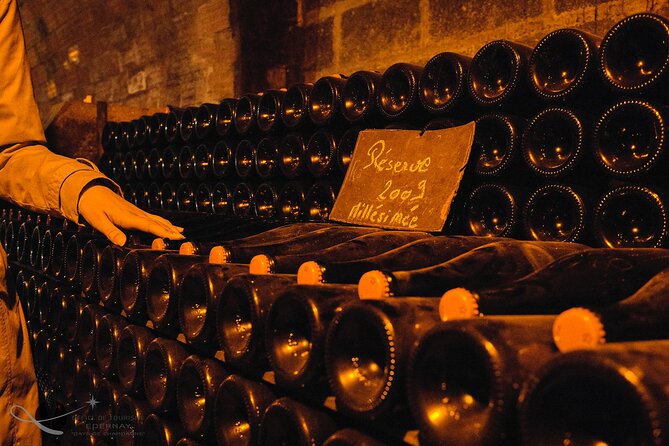
Oger is another Grand Cru village in the Côte des Blancs. Here you visit the second independent producer and taste three 100 percent Grand Cru Blanc de Blancs Champagnes.
The tasting selection may include natural Champagne without dosage, extra brut, wines from old vines, vintage Champagne, or a cuvée aged in oak barrels. These terms can sound technical, but they offer a clear way to compare how production choices affect the finished wine.
Dosage refers to the small amount of wine and sugar added after the bottle has been disgorged. A Champagne without dosage is very dry and shows the wine with little added sweetness. Extra brut is also dry, though the permitted sugar level differs. Oak aging, old vines, and vintage conditions add more points of comparison.
You do not need to arrive with a trained palate. The guide provides tasting advice, and the best approach is to pay attention to what changes from glass to glass. Notice the dryness, fruit, texture, and finish rather than trying to find the correct answer.
The stop also includes travel through Chouilly and Avize. You pass the area’s largest bottle factory and come near Château de Saran, a private property used by the LVMH group for important customers and VIPs. You also pass the Montaigu site connected with Moët & Chandon production.
These sights are viewed from the route, not entered as public attractions. They add context to the Champagne business, but the grower visit and tasting are the main event.
Aÿ-Champagne and the older roots of the wine trade
The final major village is Aÿ-Champagne, a Grand Cru area mainly planted with Pinot Noir. Its hillsides are also listed as UNESCO World Heritage territory.
Aÿ has a special place in Champagne’s past. It was a major center of the Champagne industry in the 16th century, and the wines were once called Wines of Aÿ. French kings even had their own presses there.
The guide explains the local grape varieties, vineyard work, sustainable viticulture, and the character of the soil and growing area. You also pass the headquarters of famous houses such as Bollinger, Deutz, and Ayala.
This section helps balance the Chardonnay focus of the Côte des Blancs. Aÿ is strongly associated with Pinot Noir, while Oger and Cramant show the character of Chardonnay. By the end of the day, you have seen that Champagne is a patchwork of villages and grape-growing zones, not a single uniform product.
The route may also include Mareuil-sur-Aÿ, a Premier Cru village in the Marne Valley. Its historic hillsides are mainly planted with Pinot Noir, and the village is linked with Champagne houses including Billecart-Salmon and Philipponnat.
Three regional spirits beyond the bubbles
Champagne is the star, but the day adds three local alcohols: Ratafia, Fine de la Marne, and Marc de Champagne.
Ratafia is a regional aperitif. Fine de la Marne and Marc de Champagne are distilled grape spirits with different traditions and styles. The tasting comes from the Goyard Distillery, described as the oldest distillery in Champagne.
This is a worthwhile extra for anyone who wants to understand the whole local drinking culture. It also breaks up the sparkling wine tastings. If you are sensitive to alcohol, remember that the day includes six Champagnes plus three spirits, in addition to the Champagne served with lunch.
The experience is built around tasting, so moderation matters. You can ask questions about each pour and focus on comparison instead of treating every glass as a full serving.
Is $666 per person good value?
At $666 per person, this is an expensive day. The price is easier to justify for a private group than for one or two people joining a shared excursion, since the vehicle, guide, route, tastings, and lunch are arranged around your party.
You are paying for a long private itinerary, pickup in the Reims area, transport across several parts of Champagne, two independent-producer visits, six Champagne tastings, lunch with a bottle for two, historical guiding, and three regional spirits. Admission to the Hautvillers church visit is included.
The value is strongest if you want a broad introduction in one day and do not want to organize separate taxis, trains, cellar appointments, and tastings. It is weaker if your main goal is one famous-house cellar tour or a slow afternoon in one village.
The day runs Monday through Saturday, from about 9:30 a.m. to 5:30 p.m. Pickup must be within the stated Reims perimeter. If your hotel is outside it, check before booking. The provider uses several vehicle types, including the raised electric E-Mehari, so mention any difficulty getting into a slightly higher vehicle.
Who should book this Champagne experience?
I would choose this tour if you want:
- A private day with only your own group
- A local guide with personal ties to Epernay
- A mix of famous Champagne houses and independent growers
- Vineyard villages and countryside rather than only city attractions
- A structured introduction to Champagne styles and production
- A full day without planning each appointment yourself
It suits first-time visitors who want to understand the region quickly. It also works for wine drinkers who already know Champagne but want to compare Premier Cru, Grand Cru, Blanc de Blancs, dosage levels, old-vine wines, and oak-aged examples.
I would think twice if you dislike long drives, prefer a fixed gourmet restaurant, or want extensive cellar tours at the major houses. The schedule covers a large area, and some famous properties are seen from the vehicle rather than visited inside.
Free cancellation is available if you cancel at least 24 hours before the start time. Changes made inside that window are not accepted, so check your plans before the cutoff.
Should you book it?
Book this private day if you want the big picture of Champagne in one carefully arranged route. Hautvillers supplies the legend, Epernay supplies the grand commercial face, the Côte des Blancs supplies Chardonnay, and Aÿ supplies older Pinot Noir traditions and historic depth.
The strongest reason to go is the combination of two grower visits and six contrasting tastings. The strongest reason to hesitate is the high cost and the amount of time spent moving between villages.
For a couple or small private group celebrating a special occasion, the price may feel fair because the day includes transport, food, guiding, and a wide range of tastings. For a budget-conscious visitor, a shorter shared tour may offer better value. If you want personal attention and a clear introduction to the real Champagne region beyond the famous labels, this is the more rewarding choice.
FAQ
Where does the Champagne tour begin and end?
Pickup is offered within 6 kilometers, or 3.7 miles, of Reims. The tour ends back at the meeting point.
How long does the private tour last?
The experience lasts approximately 7 to 8 hours. Operating hours are listed as Monday through Saturday, from 9:30 a.m. to 5:30 p.m.
What Champagne tastings are included?
You taste three Premier Cru Champagnes at the first independent producer and three 100 percent Grand Cru Blanc de Blancs Champagnes at the second producer.
Is lunch included?
Yes. Lunch is arranged at a Champagne or dining bar, though the location may vary by day. Possible foods include charcuterie, cheese, bread, salad, farm dishes, pâtés, regional biscuits, and coffee. A bottle of Champagne for two people is included with the meal.
Which other drinks are tasted?
The tour includes Ratafia, Fine de la Marne, and Marc de Champagne from the Goyard Distillery.
Is the tour private and what vehicles are used?
Yes. Only your group participates. Depending on the weather, season, and group size, transport may be in an electric E-Mehari Jeep-style car, a premium van, or a minivan.