REVIEW · PARIS
Pompidou Museum Paris Exterior 90 minutes Private Guided Tour
Book on Viator →Operated by Paris in person · Bookable on Viator
One building can teach you how to see. The Pompidou Centre is famous before you even step inside, and this private guided tour helps you connect the striking façade by Renzo Piano and Richard Rogers to the art inside.
I especially like two things: you get a professional art historian guide who steers you through modern and contemporary work without making it feel like homework, and you start with a skip-the-line entrance so you’re not wasting your Paris time in a queue.
The main drawback to plan around is that entering during reconstruction isn’t included, so some areas may be off-limits depending on what’s currently under work.
In This Review
- Key moments worth booking
- Why the Pompidou’s Piano and Rogers design matters
- Skip-the-line private tour: what you actually gain in 90 minutes to 2 hours
- Meeting at 31 Rue Saint-Merri: your fast start in Paris
- Outside the Pompidou: learn what to look for before the museum
- Inside the Centre Pompidou: how the guide handles modern and contemporary art
- The big-name art you’ll see (and why it helps to have context)
- How guides adapt: humor, big-picture thinking, and even art-making talk
- Customization: make the museum fit your interests
- Price and value: is $270.34 per person worth it?
- Reconstruction note: what might limit entry
- Who this tour fits best
- Should you book the private Pompidou skip-the-line tour?
- FAQ
- What’s the duration of the Pompidou private guided tour?
- Is the tour private?
- Does this tour offer skip-the-line entry?
- Is the tour offered in English?
- Where do we meet for the tour?
- What’s included in the price?
- What is not included?
- Is it easy to get to the meeting point?
- Can I bring a service animal?
- How does cancellation work?
- Is it recommended to book in advance?
Key moments worth booking

- Skip-the-line, private pacing so you can spend your time looking, not waiting
- Art historian guidance that helps you make sense of 20th-century modern art
- Outside-first orientation with the building design by Renzo Piano and Richard Rogers
- Collection focus that spotlights major names like Pollock, Picasso, Matisse, Dubuffet, and Dix
- Guide styles that adapt to your group, including kids (and yes, they can still think about art)
Why the Pompidou’s Piano and Rogers design matters

You can’t ignore the Centre Pompidou. The building looks like it’s been engineered in public: pipes, lines, and a sense of exposed structure that feels almost like an artwork before you even reach the entrance. And that’s exactly why this tour starts with context instead of a rushed walk-through.
I like the way a good guide connects the architecture to the museum’s mission. Modern and contemporary art often asks you to rethink how things are made, how they’re shown, and why they matter. The Pompidou’s look does the same thing: it’s not trying to blend in. It’s insisting you pay attention.
If you’re seeing the museum as a first-timer, this is a smart approach. If you’re returning, it’s still a good reminder of how the building frames the collection you came to see.
You can also read our reviews of more guided tours in Paris



Skip-the-line private tour: what you actually gain in 90 minutes to 2 hours

The timing is listed as about 1 hour 30 minutes, and it’s also described as a private two-hour experience. Either way, you should think of this as a focused highlights tour with expert commentary, not a full museum crawl.
That’s where the value comes from. A private format means you can ask questions while you’re standing in front of the art. No waiting for the slowest person to catch up, and no feeling like you have to pretend you understood everything on the spot.
You’ll also get a guaranteed skip-the-line benefit. On a museum day in Paris, that’s not a small perk—it’s often the difference between enjoying the visit and feeling slightly annoyed at the clock.
Meeting at 31 Rue Saint-Merri: your fast start in Paris
Your meeting point is 31 Rue Saint-Merri, 75004 Paris. Ending the tour back at the same point is convenient: it keeps the plan simple and helps you avoid last-minute navigation stress.
Also, the location is described as near public transportation. That matters because you’ll likely be hopping between neighborhoods. A smooth start means you can arrive, meet your guide, and start seeing right away.
Practical tip: since this is a private experience, show up a little early so you’re not rushing. The guide will move the group through the museum flow at a pace that makes sense for your interests.
Outside the Pompidou: learn what to look for before the museum

Even if your main goal is the art collection, don’t skip the building moment. The tour’s focus on the Pompidou’s façade isn’t random trivia. It’s your visual warm-up.
You’ll look at the architecture designed by Renzo Piano and Richard Rogers, and you’ll likely hear how that design reflects the spirit of modern art: visible systems, bold forms, and a refusal to hide the mechanics. When you understand that, the museum interior often feels less like a maze and more like a deliberate experience.
This is also a good time to set expectations. Modern and contemporary art can move fast—styles change, concepts shift, and not every work tries to please your eyes in the traditional way. A guide helps you slow down just enough to catch what each piece is doing.
Inside the Centre Pompidou: how the guide handles modern and contemporary art

Inside, the museum’s main draw is its large commitment to 20th-century modern and contemporary art. The Pompidou is known for being big on ideas as much as style, including the kind of art that can feel intense—both in subject matter and in how it’s constructed.
A strong art historian guide is what turns that intensity into understanding. You’re not just being shown famous works. You’re being guided through how critics, movements, and artists shaped what modern art could be.
I like the way guides in this format often frame art as a conversation. If you’re unsure where to begin, the tour gives you a path. If you’re confident and want details, your guide can usually adjust how deep to go.
You can also read our reviews of more private tours in Paris





The big-name art you’ll see (and why it helps to have context)

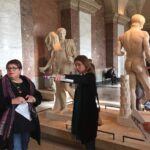
You’ll spend time with a range of major modern artists, including Pollock, Picasso, Matisse, Dubuffet, and Dix. That matters because these names can otherwise become a checklist.
With an art historian’s help, you can shift from recognition to comprehension:
- You start noticing style and technique, not just subject.
- You learn what each artist was responding to in their time.
- You get a clearer sense of how movements connect rather than feeling like unrelated snapshots.
And this is where the private format shines. If one artist grabs you, you can linger. If another feels harder to decode, your guide can explain the concepts in plain language and keep you moving.
How guides adapt: humor, big-picture thinking, and even art-making talk

The tone of the guide can make or break a museum visit. In this experience, the guides’ approach seems consistently reader-friendly—warm, clear, and lightly humorous when it helps you relax.
For example, I’ve seen this tour work particularly well with different group needs. Amy is described as personable, with charming humor, and focused on explaining creative history without talking down. Boris is praised for giving an excellent overview that sets you up for the sheer size of the contemporary collection. Mila is mentioned alongside Boris as part of a guided experience that kept kids engaged and thinking.
One of my favorite takeaways from that type of group success: kids weren’t only learning what to think, they were learning how to think. By the end, they were asking about concepts and also about how sculptures are made and built. That’s the kind of guidance you can benefit from even as an adult—because it helps you look longer and see more.
Customization: make the museum fit your interests

This tour is private, which means it can be customized to your preferences. That’s a big deal at the Pompidou, where the collection can feel huge and slightly intimidating.
If you love paintings, you can focus your attention on key works and the movements behind them. If you’re more into form—sculpture, materials, how something is constructed—your guide can steer your attention in that direction. If you’re traveling with mixed interests, a customized plan helps prevent the classic problem where half the group gets bored.
You’ll also get a more personal flow. Instead of being forced into a group route, your guide can adjust timing based on what grabs your eye.
Price and value: is $270.34 per person worth it?
At $270.34 per person, this isn’t a budget option. But you’re buying something more specific than a generic museum ticket plus a few facts.
Here’s what you’re paying for:
- Private, one-group-only access, so you’re not squeezed into a crowd rhythm
- A professional art historian guide, which changes how the art lands
- Guaranteed skip-the-line, which saves time and frustration
- A museum visit designed around modern and contemporary art highlights (so you’re not trying to figure out the route on your own)
So the value depends on you. If you’re comfortable wandering independently and you enjoy reading wall texts, you may feel fine skipping a guided experience. But if you want your Pompidou visit to feel coherent—like you understand what you’re seeing and why—it’s the kind of paid help that can save hours of guesswork.
This also tends to pencil out better if you’re traveling as a small group and can keep the experience private while splitting the overall cost.
Reconstruction note: what might limit entry
One important consideration is this: entering the building during reconstruction is not included. That doesn’t mean the entire tour is canceled, but it does mean you should be ready for the possibility that parts of the museum aren’t accessible on your day.
If your top priority is getting into every area, you might want to confirm what’s currently open with your provider before you go. If your main goal is to understand the building and focus on highlighted collection stops, this tour still makes sense as a smart way to see more, learn faster, and keep momentum.
Who this tour fits best
This experience is a great fit if:
- You’re visiting the Pompidou for the first time and want fast orientation
- You care about modern and contemporary art and want it explained clearly
- You want a smoother visit day with skip-the-line access
- You’re traveling as a family or group where different ages and interests need guidance
It’s also described as suitable for most travelers, and service animals are allowed. If you have specific mobility needs, it’s still wise to ask questions ahead of time, since museums can have uneven routes and temporary closures during maintenance.
Should you book the private Pompidou skip-the-line tour?
I’d book this if you want your Pompidou visit to feel guided, not chaotic. The biggest reason is simple: you’re paying for time efficiency and expert interpretation. With major artists like Pollock, Picasso, Matisse, Dubuffet, and Dix in the mix, the difference between seeing art and understanding it can be huge—and that’s exactly what an art historian guide helps with.
Book it if you like your museum days structured but not rigid. Skip it if you prefer self-guided roaming and don’t mind spending your time figuring out your own path.
One more practical point: this tour is often booked about 40 days in advance. If you’re traveling in a busy season or on a tight schedule, I’d secure a slot earlier rather than later so you get the time you want.
FAQ
What’s the duration of the Pompidou private guided tour?
The tour is listed at about 1 hour 30 minutes, and it is also described as a private two-hour visit. Plan for roughly 90 minutes to around two hours depending on the pace of your group.
Is the tour private?
Yes. It’s a private tour, so only your group participates.
Does this tour offer skip-the-line entry?
Yes. It includes guaranteed skip-the-line entrance.
Is the tour offered in English?
Yes, the tour is offered in English.
Where do we meet for the tour?
The meeting point is 31 Rue Saint-Merri, 75004 Paris, France, and the tour ends back at the same meeting point.
What’s included in the price?
Included are a professional art historian guide, guaranteed skip-the-line entry, and the private tour. Mobile ticket use is part of the experience.
What is not included?
Food and drinks are not included. Also, entering the building during reconstruction is not included.
Is it easy to get to the meeting point?
The meeting point is near public transportation, which should make it easier to reach.
Can I bring a service animal?
Service animals are allowed.
How does cancellation work?
Free cancellation is available up to 24 hours before the experience starts for a full refund.
Is it recommended to book in advance?
On average, this experience is booked about 40 days in advance, so booking earlier can help you lock in a good time.