REVIEW · PARIS
Paris Small-Group Macaron Making Class with a French Chef
Book on Viator →Operated by Patisserie a la Carte · Bookable on Viator
Paris macarons are finicky, and that’s the fun part. In this 2.5-hour small-group class in English, a French chef walks you through the Italian meringue method and the exact texture cues that make shells crackle and fill right. If you love hands-on food classes, this one is built for that.
I especially like the tight group size (max 6) and the fact that you don’t just watch—you mix, whisk, pipe, and finish. One possible drawback: the method is technical, so if you want something totally casual and low-skill, you may find it a bit intense.
In This Review
- Key takeaways before you book
- Making macarons in Paris without the guesswork
- Where you meet on Rue Thimonnier (and why it’s easier than it sounds)
- Inside Patisserie a la Carte: what the class setting gives you
- The Italian meringue method: the core technique you’ll actually use
- Ganache filling taught the right way: whisk angle and silkiness
- Toppings and flavors: more than one straight recipe
- Gluten-free macarons: what that means for your planning
- How long it takes (and how to fit it into your Paris day)
- Small-group size and instruction quality: why you feel guided
- Price and value: is $114.65 worth it?
- Who this class is best for
- Practical tips to get the best results
- Should you book this Paris macaron class?
- FAQ
- How long is the macaron making class?
- How big is the class group?
- Is the class offered in English?
- Are the macarons gluten-free?
- Can I take the macarons home?
- Where does the class meet?
- What is the minimum age?
- What happens if I cancel or arrive late?
Key takeaways before you book
- Italian meringue technique focused on building the right consistency and judging doneness by feel
- Ganache details that matter, including the right whisk handling for a silky texture
- Chocolate and fruit topping options like pistachios, raspberries, passionfruit, and chocolate shavings
- Gluten-free macarons with recipes and instructions you can repeat at home
- Take-home everything: you can enjoy your creations on the spot or pack them up in bags provided
Making macarons in Paris without the guesswork
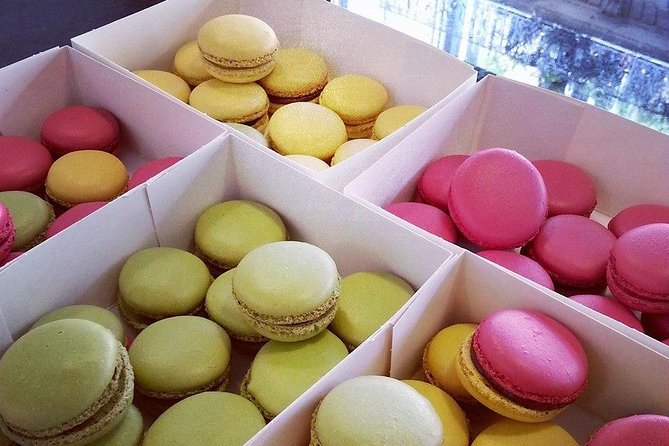
Macarons look simple until you try them. Then you learn the hard way that tiny things—timing, temperature, and mixing strength—can make the difference between feet and flat discs.
This class leans into that reality in a helpful way. You start from scratch and work step-by-step, so you build the skills as you go. And because it’s a small group, you get the kind of correction you need when your batter is almost right but not quite.
Also, macarons are the kind of souvenir that actually tastes better after you learn how to make them. When you leave, you’re not just holding a photo. You’re holding a skill.
A few more Paris tours and experiences worth a look


Where you meet on Rue Thimonnier (and why it’s easier than it sounds)
You’ll meet at 9 Rue Thimonnier, 75009 Paris, and the class ends back there. The location is near public transportation, which matters in a city where every “quick trip” can turn into a detour.
Most people will probably plan a little extra time to find the spot—this is a local neighborhood street, not a giant museum entrance. Still, the upside is you’re in real Paris, not at the edge of nowhere.
If you’re coming with kids (age 12+), this kind of meetup tends to work well because you’re not bouncing around the city. It’s one focused stop for a clear 2.5-hour block.
Inside Patisserie a la Carte: what the class setting gives you
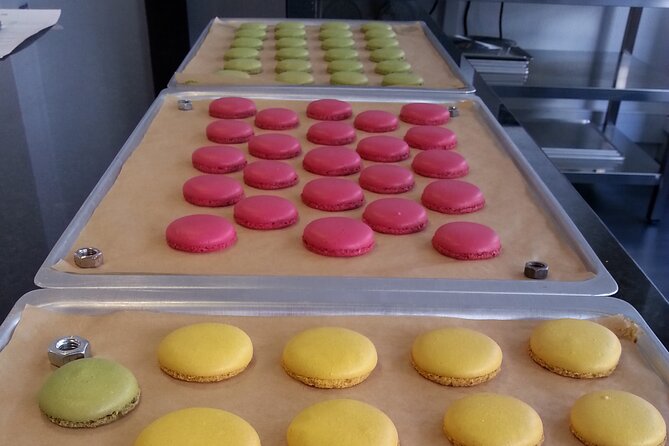
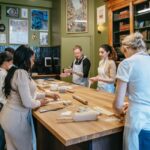
The workshop vibe is practical. You’ll be working with real baking equipment and following recipes in English. Aprons and cooking equipment are included, so you can show up without the panic of packing tools.
The class is hands-on, but for some prep tasks you may work in a group of two. That’s a good thing here. Macaron timing is sensitive, and pairing up helps you stay on track without feeling rushed.
You’ll also get tea and coffee during the session. It sounds small, but it makes a long, active workshop feel like an actual break, not just a cooking marathon.
The Italian meringue method: the core technique you’ll actually use
This class is built around a specific macaron approach: the Italian meringue method. It’s a more technical route than the simplest home methods, but that’s also why it’s so rewarding. When you nail the meringue, the rest gets dramatically easier.
You’ll learn how to:
- create the right paste consistency after the meringue step
- pipe macarons with the right technique so they bake evenly
- judge doneness by touch, not just by time
The touch part is a big deal. Every macaron batch has its own personality depending on oven behavior and humidity. Learning how to tell when the shells are truly ready helps you avoid the common mistake of underbaking or cracking from overbaking.
If you’ve never made macarons before, you’ll still be able to succeed. Several past participants specifically said the instructor set them up for success with precise measures and clear direction.
Ganache filling taught the right way: whisk angle and silkiness
Once your shells are sorted, you move into filling. And this is where the class gets satisfyingly “teacher-smart.”
You’ll learn:
- the one good way of holding your whisk for silky ganache
- little timing and mixing tricks that help the filling set correctly
- how to assemble macaron shells with a filling that tastes smooth, not greasy or broken
Ganache can fail in quiet ways. It might still taste okay, but the texture feels off. Getting the method right here means your macarons don’t just look good—they eat well.
You’ll also hear how to think about garnish choices, which matters because fillings and toppings change the whole flavor balance.






Toppings and flavors: more than one straight recipe
Your finished macarons won’t be stuck in one flavor lane. The class covers different garnish ideas, including:
- chocolate ganache
- pistachios
- vanilla
- raspberries
- chocolate shavings
- passionfruit
This is a nice detail for two reasons. First, it prevents the class from feeling like one long repeat of the same filling. Second, once you’re home, you’ll know how to swap flavors without changing the core technique.
The sample menu centers on macarons with ganache filling, but the flavor customization is part of what makes this feel like a real pastry workshop rather than a generic demo.
Gluten-free macarons: what that means for your planning
The class is gluten-free. That matters because gluten-free baking is usually a whole separate world with different flour behavior. Here, you’re still learning the macaron fundamentals, just adapted for gluten-free results.
If you have dietary needs, you should still advise the operator when you book. You’ll be asked about allergies or special dietary requirements at the time of booking, which is the right time to flag anything beyond gluten.
Also remember: even with gluten-free baking, macaron technique still depends on consistency and timing. This class aims to teach those universal pieces.
How long it takes (and how to fit it into your Paris day)
Plan on about 2 hours 30 minutes. That’s long enough to master the steps without feeling like you’re constantly waiting for the next stage.
The class includes take-home bags, so you can choose what to do with the macarons once you finish. If you can restrain yourself, you’ll be able to pack them and extend the pleasure later.
Booking-wise, you’ll get the best experience by reserving ahead. On average, people book about 31 days in advance, and with a maximum group size, earlier planning helps.
Small-group size and instruction quality: why you feel guided
This is capped at 6 participants, and that tends to be the magic number for classes like this. You aren’t competing with a crowd for attention. You can ask questions without feeling like you’re interrupting a machine.
The coaching also shows up in the kinds of praise the instructors receive. In past sessions, specific chefs like Gaëlle and Hiba were repeatedly highlighted for patience, clear direction, and making technique feel doable—even for first-timers.
One note to keep in mind: while the class is approachable, some people described it as more advanced and intense than other baking classes they’ve taken. That tracks with the focus on Italian meringue and the emphasis on precise texture cues. You’ll learn a lot, but you may want to be mentally ready.
Price and value: is $114.65 worth it?
At $114.65 per person, this isn’t the cheapest Paris activity. But it also isn’t just a cupcake-and-craft moment.
Here’s why the value adds up:
- Professional chef instruction throughout the full process
- Everything provided: recipes in English, aprons, and baking equipment
- Tea and coffee included (small, but it makes a difference during a 2.5-hour workshop)
- Take-home bags so you can leave with your work
- Gluten-free results, plus garnish options covered during the class
- A small group size (max 6) that supports real technique coaching
If you like cooking classes where you come away with repeatable skills, this price is easier to justify. If you mostly want a light snack and photos, you might feel it’s more workshop than treat.
Who this class is best for
This is ideal if you fit any of these:
- you like hands-on food experiences and want real baking technique
- you’ve tried macarons before and want the method corrected
- you’re baking-curious and want to learn why each step matters
- you’re traveling with teens (age 12+ is welcome, and children must attend with a registered adult)
If you’re the type who loves strict directions and measurable texture cues, you’ll probably thrive here. If you hate structured practice, you might feel the intensity.
Practical tips to get the best results
You can’t control everything in a classroom oven—but you can control your readiness.
- Wear comfortable clothes. Aprons are provided, but you’ll still be leaning in and moving around.
- Take notes on texture cues. The touch-and-judge part is taught for a reason, and it’s what helps you later.
- Don’t rush the meringue or ganache. The class is teaching timing and consistency, not just steps.
- Be clear about allergies or dietary needs when booking. That’s specifically encouraged.
And give yourself a little mental breathing room for the intensity. The upside is you’ll leave knowing how to repeat the process, not just how to finish a batch in one go.
Should you book this Paris macaron class?
I think it’s a strong choice if you want a focused, teach-you-how class with real pastry technique. The small group, the Italian meringue focus, and the emphasis on ganache texture are all signs you’re getting more than a casual activity.
The main reason to hesitate is if you want a super relaxed, beginner-only experience. This one can feel technical, and that’s partly what makes it valuable.
If you’re excited by precise baking and want macarons you can actually reproduce, book it. If you’re just looking for something quick to do while you walk Paris, you may want a lighter option.
FAQ
How long is the macaron making class?
It’s about 2 hours 30 minutes.
How big is the class group?
The class is a small group with a maximum of 6 participants.
Is the class offered in English?
Yes, it’s offered in English.
Are the macarons gluten-free?
Yes, it’s stated that it is gluten-free.
Can I take the macarons home?
Yes. You can enjoy them on the spot or take them with you, and take-home bags are provided.
Where does the class meet?
You start at 9 Rue Thimonnier, 75009 Paris, France, and it ends back at the meeting point.
What is the minimum age?
The minimum age is 12. Children must attend with a registered adult.
What happens if I cancel or arrive late?
Free cancellation is allowed up to 24 hours in advance for a full refund. If you’re late, the course begins after 5 minutes delay for the late client, and if nobody shows up within 15 minutes, the class is automatically cancelled and the booking may be treated as a last-minute non-refundable cancellation.