REVIEW · PARIS
Paris: Révolution(s) Walking Tour
Book on GetYourGuide →Operated by Ode to Paris · Bookable on GetYourGuide
Revolutions feel close when you walk them. The Paris Révolution(s) Walking Tour is a 4-hour, guide-led stroll through the city’s turning points from 1789 to 1871, with connections to the American, Russian, and Haitian Revolutions. I love the way the tour stays chronological while still explaining big political ideas in plain language, and I love the take-home materials like the booklet and the post-tour chronology cheat sheet. One thing to consider: it’s a lot of walking and you should be ready for a history-and-politics heavy session, not a casual sightseeing loop.
This is also a smart pick if you like your history tied to real places. You’ll start near Place de la Concorde, hit major civic sites around Hôtel de Ville and Palais de Justice, and even weave in a secret stop connected to Enlightenment thinkers. If your feet are decent and you enjoy learning how societies crack and reform, you’ll get a lot out of this.
In This Review
- Key things I’d spotlight
- Why Paris revolutions work better on foot than in any museum room
- Starting at Place de la Concorde: the right launch point for a revolutionary map
- From Concorde to the Tuileries: power, palace distance, and crowd energy
- Palais-Royal gardens: where political plots feel uncomfortably human
- Hôtel de Ville and the civic heartbeat of Paris
- Palais de Justice: courts, revolutionary justice, and the cost of political certainty
- The secret Enlightenment stop: why ideas mattered before barricades
- The full revolution storyline: what you’ll learn from 1789 to 1871
- How the tour handles big concepts without losing you
- Timing and logistics: comfortable shoes are non-negotiable
- What you get after the walk: the booklet and cheat sheet payoff
- Price and value: is $47 worth it for a 4-hour history session?
- Private tour note: more time, more flexibility
- Who should book this tour, and who might want to skip it
- Should you book the Révolution(s) walking tour?
- FAQ
- How long is the Révolution(s) Walking Tour?
- Where does the tour meet?
- Is the tour private?
- What languages are offered?
- Do I need a metro ticket?
- What’s included in the tour price?
- What places in Paris will we visit?
- Is there free cancellation?
- Is there a recommended time to do this tour compared with other museums?
Key things I’d spotlight

- A clear timeline from 1789 to 1871 so events don’t blur together
- Major Paris sites for revolutionary politics including civic buildings and revolutionary justice spaces
- Songs and story-telling that keep the tone moving through tense periods
- A secret stop tied to Enlightenment that adds context to the revolutions
- Booklet + chronology cheat sheet so you can keep studying after the walk
Why Paris revolutions work better on foot than in any museum room

Paris is great at pretending it’s only about beauty. This tour punches through that idea. By moving stop to stop, you feel how power and fear moved across the city, not just how dates line up in a book.
I like that the tour doesn’t treat the revolutions like distant drama. It connects what people argued about—liberalism, socialism, government collapse, and revolutionary tyranny—to where those debates played out in real streets and real institutions. You’re not just seeing landmarks. You’re learning why those buildings mattered when the crowd showed up.
The format also helps your brain. A walking tour with a storyline is easier to hold onto than a checklist of museum rooms. And the “city as a catalyst for change” idea becomes more believable when you’re physically walking the same corridors of civic life where conflicts escalated.
You can also read our reviews of more walking tours in Paris



Starting at Place de la Concorde: the right launch point for a revolutionary map

You begin at Place de la Concorde, near the obelisk. The guide will be easy to spot: a bearded person wearing the French flag across the shoulders. That matters, because this style of tour works best when you’re not stuck searching for the group.
From the start, you set up a mental map of Paris as a place where public space becomes political space. Concorde is big, open, and historically loaded—perfect for getting your bearings before the tour starts narrowing from broad symbolism into the mechanics of revolution.
Also, you get a short guided moment at the meeting area, which helps. You’re not dropped into the middle of a lecture. You get a foundation, then you start walking.
From Concorde to the Tuileries: power, palace distance, and crowd energy

After the first stop, the tour moves on foot toward the Tuileries area. You get a guided visit in the gardens, then another short walk segment keeps things flowing. This rhythm is smart: you’re learning while you’re moving, so attention doesn’t leak away.
What I like about this stretch is how it frames the idea of proximity. Revolutionary periods don’t just happen because someone wrote a pamphlet. They happen when people feel close enough to institutions to challenge them. Gardens and palace-adjacent spaces often work like political stages: visible, public, and built for processions.
You’ll also get the tour’s larger storyline in motion. The guide links the events in Paris to larger revolutionary waves, rather than treating each French upheaval like a standalone explosion.
Palais-Royal gardens: where political plots feel uncomfortably human

Next comes Palais-Royal Garden. You spend a longer guided time here, and that’s for a reason. Palais-Royal is one of those places where everyday life overlaps with political talk, where crowds can gather and ideas can spread.
In practice, this stop helps you understand why revolutions aren’t only about kings and presidents. They’re also about social dynamics—networks of influence, the spread of arguments, and the ways people build momentum.
The tour keeps returning to questions like What is liberalism? and What is socialism? without turning them into textbook definitions. You’ll hear how people used these words to explain what they wanted—and what they feared. That’s the difference between learning history and understanding the logic behind it.
Hôtel de Ville and the civic heartbeat of Paris

A short metro hop breaks up the walking and then you arrive at Hôtel de Ville, where you get another guided stop. This part is about the city’s official nerve center—where legitimacy, authority, and public administration meet the emotional force of crowds.
I like that the tour connects this civic ground to real revolutionary episodes rather than keeping it abstract. You’ll hear about how governments come under strain, how power systems fracture, and how revolutionary movements attempt to replace one authority with another.
And yes, this is where you’ll start seeing how the tour’s theme keeps tightening. The big “how governments collapse” thread becomes more concrete when you’re standing near the kind of institution that represents order.






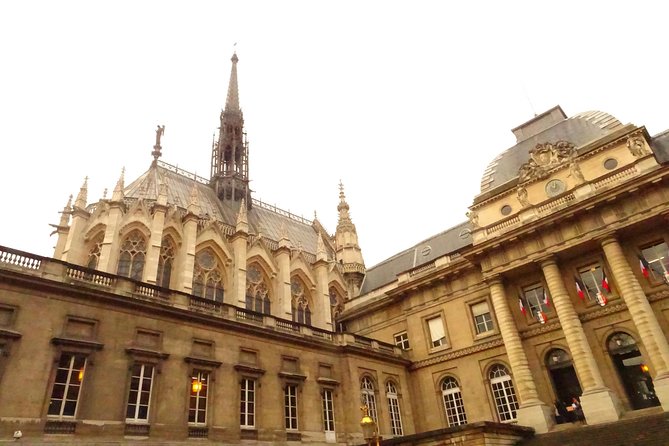
Palais de Justice: courts, revolutionary justice, and the cost of political certainty

The tour ends at Palais de Justice de Paris, with a guided stop that keeps the tension high. This isn’t just a pretty building. It’s tied to the theme of revolutionary legality and revolutionary violence—how a movement justifies punishment when the old rules have fallen apart.
You’ll also connect this space to the idea of revolutionary tyranny. That might sound heavy (it is), but the tour’s tone helps you track the shift: early-stage demands for change can turn into systems that claim they’re protecting the revolution while erasing due process.
If you’re the kind of person who likes to understand history’s moral logic—how people rationalize what they do—this ending lands well. It leaves you with more questions than answers, but better questions. The tour makes you think about how quickly a cause can become a system, and how easily a system can become coercion.
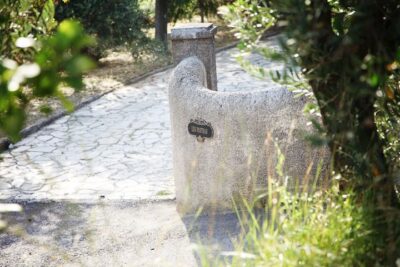
The secret Enlightenment stop: why ideas mattered before barricades
One highlight is a visit to a secret location: the headquarters of Enlightenment. Even without getting location details upfront, the tour clearly uses this as an interpretive bridge.
Here’s the practical value: it helps you stop thinking of the Enlightenment as just a list of famous philosophers. You start seeing it as a toolbox of arguments that people carried into political conflict. When the guide links the revolutionaries’ ideas to what they demanded in the streets, it makes the revolutions feel less random.
This stop is also a nice palate cleanser. After the tour builds momentum through Paris’s civic and judicial spaces, you get a moment that explains the intellectual fuel behind the upheavals.
The full revolution storyline: what you’ll learn from 1789 to 1871

The tour covers revolutions in France and Paris over time, including 1789, 1792, 1830, 1848, and 1871. It also brings in major revolutions connected to the city’s influence: the American Revolution, Russian Revolution, Haitian Revolution, and Latin American Revolutions, plus the Spring of Nations of 1848.
The value isn’t only that the tour “covers lots of history.” It’s how it builds a coherent narrative: events happen in sequence, and the guide repeatedly shows how each moment shapes the next argument, the next policy push, and the next backlash.
You’ll also hear about specific revolutionary sites tied to the Paris story, such as Place de la Révolution, Convention Nationale, Palais Égalité, and Tribunal Révolutionnaire. Even when you’re not spending long hours in one place, the guide connects the dots so the names don’t feel like trivia.
And the song component helps. Revolutionary songs during the walk might sound like a gimmick, but in this context they work like emotional punctuation. They keep your brain from treating the period as only political mechanics.
How the tour handles big concepts without losing you

The tour’s core themes—liberalism, socialism, collapse, tyranny—could go wrong on a typical tour. Too much jargon, too little clarity. Here, the guide keeps them tied to what you’re seeing, and to what’s happening in the story.
That matters because those words are still with us today. The tour’s pitch is about what the past informs about the present and possible future. I like that it stays grounded. It doesn’t just ask you to admire revolution. It asks you to notice patterns: how people build coalitions, how institutions resist, and how language about freedom can lead to violence when stakes spike.
This is also why the chronology booklet and the later cheat sheet are such a smart part of the experience. Your brain can only process so much in four hours. The written timeline helps you clean up and connect the ideas after the walk.
Timing and logistics: comfortable shoes are non-negotiable
You’re looking at about 150 minutes to 4 hours total, depending on timing and pacing. The experience involves a lot of walking, plus one short metro segment. If you’re used to museum days with lots of sitting, this will feel more active.
The tour also needs a metro ticket. That part is easy to overlook if you planned to stay strictly on foot. You don’t need a car, but you do need transit readiness.
My practical tip: wear shoes you trust for uneven sidewalks and longer stretches. Also, if you’re planning other museum stops the same day, choose wisely. The tour recommendation is to do this before visiting the Conciergerie and the Carnavalet museum. Doing it first gives those later stops a clearer political context.
What you get after the walk: the booklet and cheat sheet payoff
Included with the tour is a booklet with a complete overview of the locations covered and a full chronology of the revolutions included. After the tour, you also receive a cheat sheet that ties the places and events together in the order you visited them.
I love this part for one simple reason: it turns your walk into a learning tool you can actually use. You can review the timeline later, re-map the story when you see new references in books or documentaries, and connect the names of sites to what happened there.
You’ll also get reading and media recommendations—plus YouTube and podcast suggestions. That’s helpful if you want to keep the momentum without building a research rabbit hole from scratch.
Price and value: is $47 worth it for a 4-hour history session?
At $47 per person for about 150 minutes to 4 hours, this is one of those prices that feels fair once you think about what’s included. You’re getting guided coverage of major revolutionary sites in Paris, a secret Enlightenment stop, and written materials that extend the value after your tour time is over.
It’s not just a walk with facts. It’s a structured explanation with concepts and a timeline you can take home. For people who like history but get impatient when tours ramble, that structure is exactly what you’re paying for.
If you’re on a tight budget, the key question is whether you’ll use the cheat sheet and booklet. If you’re the type who likes to revisit notes later, this has good value. If you prefer quick photo stops with minimal theory, you might find it heavier than you want.
Private tour note: more time, more flexibility
A private group option is available, and for private tours it can last up to 4 hours. There may also be an option to include a pause for a pastry or macaron shop, though any purchase cost on-site is not included.
This makes sense if you want a slower pace, more time for questions, or a version tuned to what you care about most.
Who should book this tour, and who might want to skip it
You should book if:
- You like chronological storytelling and want events to connect rather than float separately.
- You want political concepts explained in a way that connects to places on the ground.
- You enjoy guided walks more than seated museum time.
You might skip if:
- You want mostly scenic views and light commentary.
- You’re not comfortable walking for hours or handling transit steps.
- You prefer history without politics-language themes like liberalism and socialism.
Should you book the Révolution(s) walking tour?
Yes, if you want Paris to feel like more than postcards. This tour is a strong choice for anyone who’s curious about how revolutions form, how they justify themselves, and how they reshape institutions. The combination of major sites, a secret Enlightenment stop, and the timeline tools you take home makes it more than a one-time story.
If you can handle walking and you like your history with real-world consequences, this is one of those Paris experiences that changes how you see the center of the city afterward.
FAQ
How long is the Révolution(s) Walking Tour?
The tour runs about 150 minutes to 4 hours, depending on the start time and pacing.
Where does the tour meet?
You meet next to the obelisk at Place de la Concorde. The guide will be bearded and wearing the French flag on their shoulders.
Is the tour private?
A private group option is available.
What languages are offered?
The live tour guide is available in English and French.
Do I need a metro ticket?
Yes. The tour requires a metro ticket because there is a short metro segment during the walk.
What’s included in the tour price?
Included are the guided walking tour (about 4 hours), lessons from history, guided visits to major revolutionary sites, a secret location visit, photo opportunities, and a booklet with a complete overview and chronology. You also receive reading and media recommendations and a cheat sheet after the tour.
What places in Paris will we visit?
You’ll visit major revolutionary sites and civic landmarks tied to the revolutionary story, including Place de la Révolution, Convention Nationale, Palais Égalité, City Hall, Tribunal Révolutionnaire, and key court and justice-related areas around Palais de Justice. You also include the secret Enlightenment headquarters location.
Is there free cancellation?
Yes. You can cancel up to 24 hours in advance for a full refund.
Is there a recommended time to do this tour compared with other museums?
It’s recommended to do this tour before visiting the Conciergerie and the Carnavalet museum.