REVIEW · PARIS
Paris: Revolution, Blood & the Birth of Freedom Walking Tour
Book on GetYourGuide →Operated by HandMedinaCo Tours · Bookable on GetYourGuide
Paris changes fast when the rules break. This 90-minute walk pulls you into the chaos of the French Revolution with guided stops at major Revolutionary landmarks. I like that it keeps things human—people, panic, and power—so the story feels like it’s happening on your side of the street.
I also like the format: a live English guide shepherds you from place to place, with enough structure to keep the big events from turning into random dates. One possible drawback: a few people have said the flow can feel jumpy if the timing between stops doesn’t feel tight, so you’ll want to go with a flexible mindset.
Key points I’d bank on before you go
- 90 minutes makes this a good “first-pass” Revolution experience without eating your whole day
- A live English guide keeps the story understandable, not lecture-y
- You’ll hit several recognizable sites tied to the Revolution, including Palais de Justice and the Conciergerie
- The route includes cobblestones and uneven ground, so shoes matter more than you think
- The ending at the Statue of Danton helps you leave with a clearer sense of how the story lands
- At about $41, you’re paying mainly for guided storytelling at multiple historic stops, not for extra add-ons
In This Review
- Revolution, Blood & the Birth of Freedom: what you’re really buying
- Meeting at 1 Bd Beaumarchais: quick logistics that save you stress
- Place de l’Odéon: starting where ideas had a soundtrack
- Cour du Commerce Saint-André to Pont Neuf: from chatter to consequences
- Palais de Justice: where the “power” word becomes real
- Conciergerie and the shift from argument to fate
- Caveau de la Huchette and Notre-Dame: seeing Paris after the shouting
- Hôtel de Ville and the walk toward Danton
- Guides matter: James, Sylvie, and Pierre-style experiences
- Price and value: is $41 for 90 minutes fair
- Who should book, and who might not love it
- Should you book Revolution, Blood & the Birth of Freedom?
- FAQ
- How long is the walking tour?
- Is the tour in English?
- Where do I meet the guide?
- What are the main stops on the route?
- Are food and drinks included?
- Do I need hotel pickup?
- What should I wear?
- Is cancellation free?
Revolution, Blood & the Birth of Freedom: what you’re really buying

This tour is built for one thing: the moment Paris stops being polite. You’re not just walking past impressive buildings—you’re getting the human drama behind the walls, plazas, and justice-related spots that shaped the Revolution’s mood.
The best part is that the Revolution is presented as people in motion. That means hope and fear, crowds and arguments, and the brutal speed at which power changed hands. It’s exactly the kind of history that feels more real when it’s on the same streets where the decisions and consequences played out.
And yes, it’s only 90 minutes. That’s a feature. You’ll get a concentrated version of the Revolution’s turning points without needing to plan a full day of museum time.
Meeting at 1 Bd Beaumarchais: quick logistics that save you stress

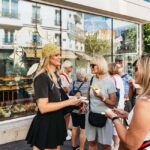
You meet at 1 Bd Beaumarchais, and your guide holds an EXPLORE PARIS TOURS sign in front of the building. That’s an easy one if you show up a few minutes early, because Paris crowds can make “front of the building” a little more complicated than it sounds.
Wear comfortable walking shoes. This route includes cobblestone streets and uneven surfaces, so even if you’re fast on flat ground, expect your feet to slow down here. If you tend to rush, you’ll walk slower today. Your legs will thank you.
Also check the weather. The tour is outside most of the time, and the uneven ground plus slick pavement is not a combo you want to test.
You can also read our reviews of more walking tours in Paris



Place de l’Odéon: starting where ideas had a soundtrack

You begin with a guided stop at Place de l’Odéon. I like this kind of first stop because it sets the emotional tone fast—Paris under pressure, people talking louder, and the sense that the city is about to flip.
An opening square works well for a walking tour because you can orient yourself. Once you understand what the Revolution period is trying to explain—power shifting, institutions under stress, the public arguing with authority—the rest of the landmarks land better.
If you’re coming in with a vague sense of the Revolution, this is where the guide should help you get bearings fast. If you’re already well read, you’ll still benefit from a clear storyline that ties the stops together.
Cour du Commerce Saint-André to Pont Neuf: from chatter to consequences

Next comes Cour du Commerce Saint-André, also guided. Courtyards and side spaces like this tend to feel more intimate than big monuments, and that matters for Revolution-era stories. The Revolution wasn’t only about grand speeches. It was also about daily pressure building until it snapped.
Then you move to Pont Neuf. Bridges are great tour anchors because they force you to think about connection—who can move, who can gather, and how the city’s geography shapes events. This stop is guided, so your guide should connect the setting to the political tension of the era.
One practical note: bridges can be windy. If you’re sensitive to cold, bring a layer you can manage quickly while walking.
Palais de Justice: where the “power” word becomes real

At Palais de Justice, Paris, you get another guided component. This is the kind of stop where the Revolution story naturally turns toward institutions, judgment, and the terrifying part of change: the machinery of law and punishment.
What I like here is that it anchors the Revolution beyond slogans. Even if you only know the big headlines—liberty, violence, overturning authority—this helps you connect how systems respond when the public and the state clash.
If your guide is strong at storytelling, this is often a standout moment. People have praised guides who bring the period to life with visuals, and this is the kind of place where pictures really help you picture what’s being explained.
Conciergerie and the shift from argument to fate
You then visit the Conciergerie. This is another landmark tied to the Revolution, and it’s a big reason the tour isn’t just about political ideas. It’s also about consequences.
A building like this works differently than a square. In an open space, you can imagine crowds. In a historic facility like this, you imagine rooms, waiting, and the weight of decisions. That emotional change is the point.
One more reason I like this stop: it slows you down. The tour is only 90 minutes, but the Conciergerie adds a pause that makes the rest of the story feel less like trivia and more like a timeline with stakes.





Caveau de la Huchette and Notre-Dame: seeing Paris after the shouting

Then you head to Caveau de la Huchette, with a guided tour. After heavier justice-related stops, this feels like a palate cleanser in the middle of the storyline.
The key here is not to expect a total reset. Instead, think of it as how Paris carries its past forward. Even when a space is known for something else today, a good guide can help you connect the Revolution era to what’s around you now.
You also visit Notre-Dame Cathedral. This part is listed as a visit, not guided, so you’ll likely have time to take in the surroundings at your own pace. That’s helpful. Big landmarks can get better when you’re allowed to look without being rushed into the next sentence.
Hôtel de Ville and the walk toward Danton
Next is Hôtel de Ville, guided. This is another political anchor. I like it because it brings the Revolution story back to civic power—who leads, who claims legitimacy, and how public authority forms when old systems are collapsing.
Finally, the tour finishes at the Statue of Danton. Ending here is smart. It gives you a named figure to hold onto, so the story doesn’t evaporate after your last stop. You can look at the statue, take a breath, and match what you heard to what you just saw.
Guides matter: James, Sylvie, and Pierre-style experiences
This tour depends on your guide in a way that’s worth knowing. Different guides can change the experience from smooth and clear to a bit scattered.
Some guides—like James—have been praised for making it enjoyable and keeping things engaging. Others, like Pierre, are noted for being very detailed and using pictures to show what things looked like when the Revolution was in full swing. That visual support is especially useful because it helps you move from names and dates into scenes and mood.
There’s also a contrast to be aware of. With Sylvie, one account described the tour as kind but with weaker cohesion—stops felt like they were hopping along a timeline without enough connection. If you’re the type who needs a tightly threaded story, aim for a guide who explains the links between each location.
Price and value: is $41 for 90 minutes fair

At $41 per person for a 90-minute guided walk, you’re paying for a few concrete things: the guide, walking structure, and access to multiple historic sites connected to the Revolution narrative. Since food and drinks aren’t included, you’re not paying for extras—you’re paying for storytelling and site visits.
Value-wise, this price can make sense if you want a guided storyline rather than trying to piece together the Revolution from your own reading while walking. It’s also a good deal if you like compact tours. Ninety minutes is short enough to fit into a busy day, but long enough for the guide to build momentum.
Who should book, and who might not love it
I’d say this tour fits best if you:
- Want English narration and a clear storyline in a short time
- Like walking between big places and smaller spaces tied to the Revolution
- Enjoy guides who use visual aids and detailed explanations
- Prefer street-level history over sitting in one museum room
You might hesitate if you:
- Need a flawlessly timed, perfectly connected narrative from stop to stop
- Hate cobblestones or uneven pavement and would rather avoid any extra foot strain
Should you book Revolution, Blood & the Birth of Freedom?
If you want a focused Revolution primer that uses real locations and a live guide, I think this is worth considering. The route touches multiple major sites linked to the era, and the 90-minute length makes it an easy add-on when you’re already seeing central Paris.
My main “yes, but” is pace and cohesion. With any walking tour, the quality of the thread matters. If you care deeply about that, look for signs of a guide who keeps the story connected—especially through visuals and clear explanations.
If your schedule is tight and you want liberty-and-terror Paris in a single outing, book it with confidence. If you’re hoping for a perfectly choreographed timeline at every step, go in with some flexibility and good shoes—and let the streets do what they do best: make the past feel close.
FAQ
How long is the walking tour?
It lasts 90 minutes.
Is the tour in English?
Yes, it’s a live tour guide in English.
Where do I meet the guide?
The meeting point is 1 Bd Beaumarchais, and the guide will be holding an EXPLORE PARIS TOURS sign in front of the building.
What are the main stops on the route?
The tour includes stops such as Place de l’Odéon, Cour du Commerce Saint-André, Pont Neuf, Palais de Justice, Conciergerie, Caveau de la Huchette, Notre-Dame Cathedral, Hôtel de Ville, and it finishes at the Statue de Danton.
Are food and drinks included?
No. Food and drinks are not included.
Do I need hotel pickup?
No. Hotel pickup and drop-off are not included.
What should I wear?
Wear comfortable walking shoes, since you’ll be on cobblestones and uneven surfaces.
Is cancellation free?
Yes, you can cancel up to 24 hours in advance for a full refund.