REVIEW · PARIS
Paris Montmartre Walking Tour: Art & Rebel Legacy – Small Group
Book on Viator →Operated by Dayin · Bookable on Viator
Montmartre is best understood on foot, one sloping street and odd little corner at a time. This two-hour walk links the Moulin Rouge with Sacré-Cœur while explaining how cabaret, artists, rebels, and ordinary neighborhood life shaped the hill. Guides such as Clara, Lou, Benoit, and Reuben have led past guests through quieter routes and shared plenty of local detail.
I like the eight-person maximum, which gives you room to ask questions and request help with photos or food ideas. I also like the way the route can avoid the worst stair climb. Several guides have taken the group uphill by level back streets instead of sending everyone straight up the steps or into the funicular queue.
The trade-off is simple: this is still a hill walk. You cover several stops in about two hours, and one participant counted roughly 14,000 steps. Wear good shoes, allow extra time for the climb, and remember that entry inside the Moulin Rouge is not included.
In This Review
- Key points at a glance
- Why this small Montmartre walk works
- Starting beneath the Moulin Rouge
- Rue Lepic and the everyday side of Montmartre
- Place des Abbesses and the Wall of I Love You
- Bateau-Lavoir and the birth of modern art
- La Maison Rose and the postcard version of Montmartre
- Choosing the quieter way to Sacré-Cœur
- Ending beneath Sacré-Cœur
- What the guide adds to famous sights
- Group size, pace, and the real cost
- Who should book this walk
- Should you book the Paris Montmartre Walking Tour?
- FAQ
- How long is the Montmartre walking tour?
- Where does the tour begin?
- Where does the tour end?
- How large is the group?
- Is admission to the Moulin Rouge included?
- Can I cancel for a full refund?
Key points at a glance
- Small group of eight: You get a better chance to hear the guide and ask questions than on a large city walk.
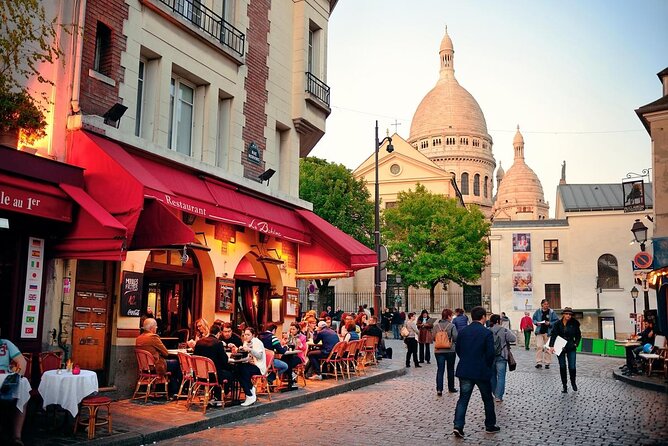
- A useful route uphill: Guides may use quieter, lower-stair streets toward Sacré-Cœur rather than the most tiring direct climb.
- Art at the center: Bateau-Lavoir connects the neighborhood with Picasso, Braque, and Apollinaire.
- A strong finish: The tour ends in front of Sacré-Cœur, with time for photos and the Paris view.
- More than postcard stops: Rue Lepic, Place des Abbesses, and La Maison Rose help you see Montmartre as a neighborhood, not just a monument.
- Good for first-time Montmartre visits: The guide helps connect famous film and art references with the actual streets around you.
Why this small Montmartre walk works
This experience has a clear shape. You begin in the cabaret district near the Moulin Rouge and finish high on Montmartre Hill at Sacré-Cœur. In between, the route moves through streets tied to artists, writers, romance, cinema, and the everyday life of one of Paris’s most recognizable neighborhoods.
That structure matters. Montmartre can feel scattered when you explore it alone. The Moulin Rouge is down on Boulevard de Clichy, while Sacré-Cœur sits above the city. Without a plan, you can spend time circling the same streets or miss places such as Bateau-Lavoir and the Wall of I Love You.
A guide adds the links between those places. Clara has been praised for making the area lively and easy to understand, while Lou has led groups through less obvious local streets. Benoit has adjusted the route to reduce stairs, and Reuben has brought in details connected with Saint Denis, Amélie, and Emily in Paris. Guide assignments can change, but the comments point to a useful feature of a small operator: the walk can feel personal rather than scripted.
At $66.09 per person, this is not the cheapest way to walk around Montmartre. You are paying for a local guide, a maximum group of eight, and a planned route rather than admission to a monument. I think the price makes the most sense if this is your first time in the neighborhood, you want context for the sights, or you prefer not to work out the uphill route yourself.
You can also read our reviews of more walking tours in Paris



Starting beneath the Moulin Rouge
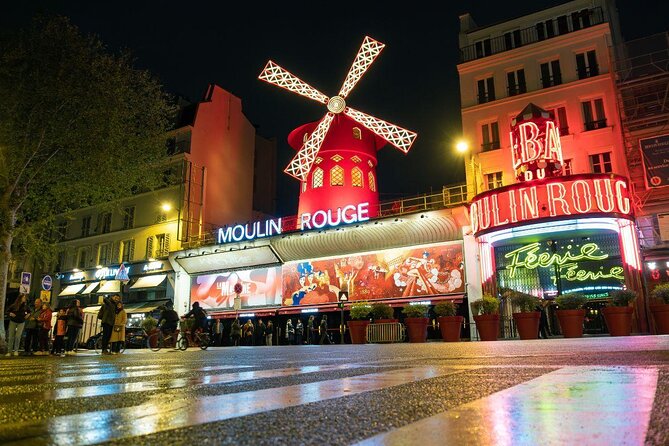
The meeting point is outside the Moulin Rouge at 82 Boulevard de Clichy. This is a busy and easy-to-recognize starting place, but give yourself enough time to locate the group. One useful tip is to arrive early, since a Starbucks is directly across the street, although coffee is not part of the tour.
The opening stop lasts about 20 minutes. You learn about the cabaret’s place in Paris nightlife and its connection with the can-can. The Moulin Rouge is mainly an exterior starting point here, since admission is not included. If you want a show, that requires a separate plan and ticket.
This beginning gives the walk a bit of theatrical energy, but it also makes clear that the tour is not a cabaret performance. You are here to hear stories and get oriented before heading into Montmartre’s streets.
Rue Lepic and the everyday side of Montmartre

From the Moulin Rouge, the route reaches Rue Lepic, a charming street known for its art connections and bohemian feel. The stop is scheduled for around 20 minutes, enough time for the guide to point out the character of the street without turning the walk into a long pause.
Rue Lepic helps balance the famous landmarks. You are not only moving from one major sight to the next. You are also seeing the type of street where shops, homes, cafés, and old artistic associations sit close together.
This is a good place to ask questions. A small group makes it easier to ask about food, neighborhood customs, or places to return to later. One guide, Clara, has offered restaurant suggestions based on personal preferences, and those recommendations became especially useful for one solo visitor. That kind of exchange is a real benefit over a recorded audio guide.
Place des Abbesses and the Wall of I Love You
Place des Abbesses is a brief ten-minute stop. The square gives you a look at the neighborhood’s architecture and its social life, with the guide adding background about the area. It is a short visit, so do not expect a long architectural lecture or free time for a full meal.
The nearby Wall of I Love You is another ten-minute pause. The artwork presents the words I love you in 250 languages. It is a simple, photogenic stop, and it brings a lighter mood after the cabaret and artistic history earlier in the walk.
These two stops are valuable because they break up the climb. You get places to pause, take photos, and notice details while the guide keeps the story moving. If you are looking for a long museum-style discussion, this is not that. The route favors short stops and a steady walk.
Bateau-Lavoir and the birth of modern art
The 20-minute visit to Le Bateau-Lavoir is one of the strongest parts of the route for art lovers. The building is linked with Picasso, Braque, and Apollinaire, and it is presented as a birthplace of modern art.
The important point is not just the names. Bateau-Lavoir shows why Montmartre mattered to artists. The neighborhood was more than a pretty hill with views. It was a place where artists worked, argued, lived close together, and helped push painting and writing in new directions.
You should keep your expectations practical. This stop does not include a museum admission or a gallery visit. The value comes from the guide’s explanation of the site and its place in Montmartre’s story. If you have only seen the neighborhood through its famous white basilica and painted squares, this stop gives the area more substance.






La Maison Rose and the postcard version of Montmartre
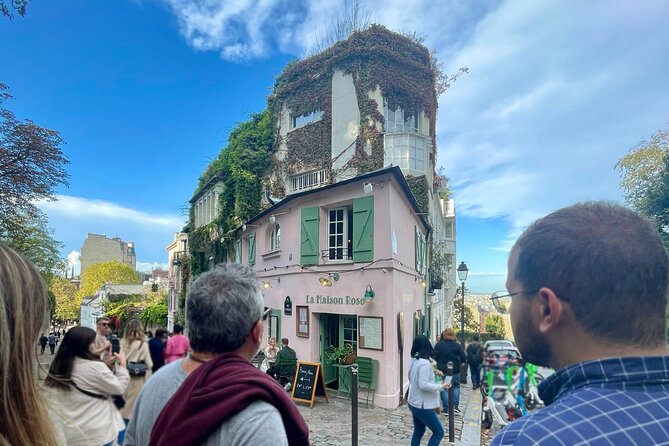
La Petite Maison Rose, open since 1920, is one of Montmartre’s best-known restaurant facades. The scheduled stop lasts about 20 minutes, giving you time to see the building and hear about its place in the neighborhood.
This is one of the more camera-friendly stops, but the guide helps keep it from being only a photo opportunity. You learn why the restaurant became associated with Montmartre and how it fits the area’s artistic image.
The practical point is that the stop does not include a meal. If you want to eat there, you will need a separate reservation or visit. The walk is better for orientation than for dining. Listen to the guide’s recommendations, then choose a restaurant later if you want a proper meal.
Montmartre can sometimes feel like a set built for photographs. La Maison Rose is part of that postcard appeal, but the route works best when you treat it as one piece of a larger neighborhood story, not as the main event.
Choosing the quieter way to Sacré-Cœur
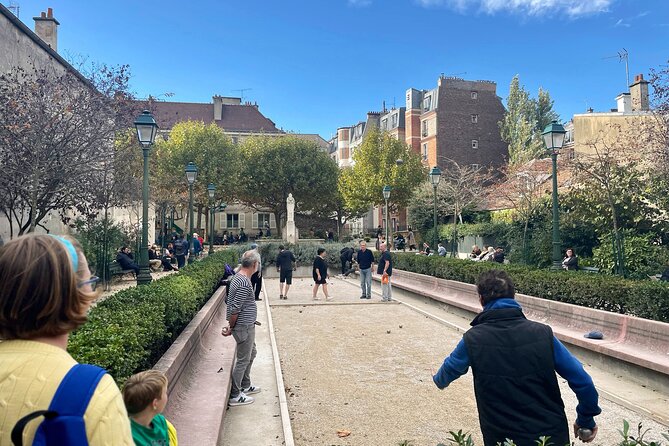
The last climb is the part to think about before booking. Montmartre is hilly, and the direct route to Sacré-Cœur can involve many steps. Yet the guides have shown that the climb does not have to be a single hard staircase.
Benoit used a level-by-level back-road route, and Clara found a path with the least possible number of stairs. Another guide took the group on a local route that avoided both stairs and the funicular. The precise path may depend on the guide and the needs of the group, so do not assume a completely flat walk. You are still gaining height.
This flexibility is a major reason to choose a small group. If you need a slower pace or want to limit stairs, tell the guide at the start. The supplied information says most people can take part, but it does not promise a step-free route or a specific accessibility arrangement.
The tour runs in rain or shine. Bring clothing suited to the forecast and shoes with a firm sole. The walk is only about two hours, but the combination of standing, uneven streets, and uphill movement can make it feel more demanding than the time suggests.
Ending beneath Sacré-Cœur
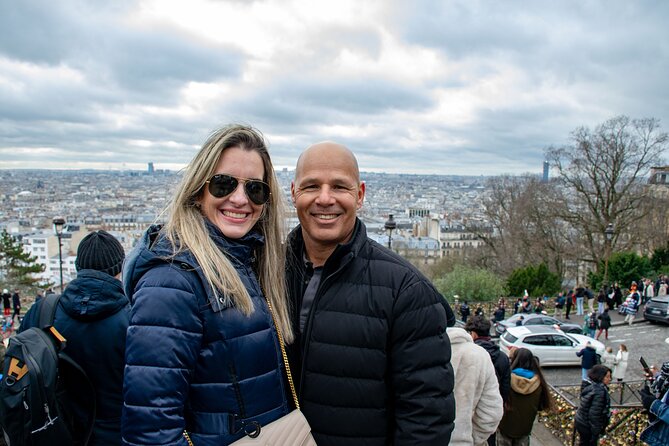
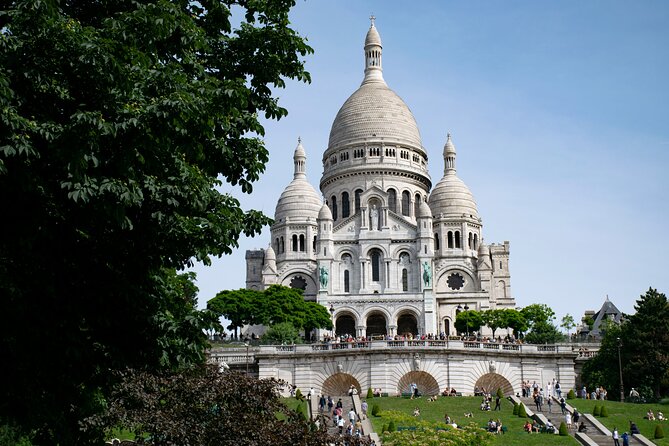
The tour ends in front of the Basilique du Sacré-Cœur at 35 Rue du Chevalier de la Barre. This is a smart finish. You arrive at one of Paris’s major landmarks with the city spread below, and the guide leaves you in a good place for photographs.
The final stop is planned for around 20 minutes. You hear about the basilica and its importance, then have the chance to enjoy the view. The tour does not list a separate guided interior visit, so think of this as an exterior arrival and orientation rather than a full church tour.
The end point also gives you freedom. You can take photos, continue inside on your own, explore more of Montmartre, or make your way elsewhere in Paris. Since there is no hotel pickup or drop-off, you are responsible for getting to the Moulin Rouge and moving on from Sacré-Cœur afterward.
What the guide adds to famous sights
The best part of this walk is not any single building. It is the way a guide changes how you read the streets.
At the Moulin Rouge, you get cabaret context. At Bateau-Lavoir, you connect a plain-looking building with major artists. At the Wall of I Love You, you see a modern artwork that is easy to pass without understanding. At Sacré-Cœur, you finish with the physical reward of the view.
The guides also add stories that may not appear in a standard route. One path followed the footsteps associated with Saint Denis after he lost his head. Another included the artwork of a man appearing to move through a wall. Film fans can ask about Amélie and Emily in Paris locations.
Those details make a first visit easier. You can return later with your own priorities, perhaps for cafés, photographs, or a slower look at the streets. The walk gives you a framework without requiring you to spend a full day in Montmartre.
Group size, pace, and the real cost
The maximum group size is eight, or you can arrange a private experience. That is small enough for direct conversation and personal attention. It also means the guide can respond to the group instead of speaking to a crowd at a fixed distance.
The route lasts about two hours and is offered in English. A mobile ticket is accepted, and confirmation arrives at booking. The tour operates near public transportation, but the supplied details do not identify a specific metro station or return route.
At $66.09, the value depends on how you use it. If you are comfortable navigating Montmartre, reading background material, and handling the climb alone, you can see the public places without paying a guide. If you want local stories, a sensible uphill route, and advice for the rest of your Paris stay, the smaller group helps justify the cost.
There are no listed admission tickets included, which keeps the comparison clear. You are paying for guiding rather than bundled entry. That can be good value if you want a focused introduction and do not need a show or museum visit added to the price.
Free cancellation is available if you cancel at least 24 hours before the start time. Changes or cancellations made later are not refunded, so keep the cut-off in mind when arranging your Paris days.
Who should book this walk
I would choose this tour for a first visit to Montmartre, especially if you want to understand why the area matters beyond Sacré-Cœur. It is also a good match for solo visitors who appreciate help with photos and restaurant suggestions, couples who want the Wall of I Love You and La Maison Rose, and art fans interested in Bateau-Lavoir.
It suits people who prefer stories to a checklist of monuments. The guide’s local route can also help if you are concerned about the steepest stairs.
I would think twice if you dislike walking uphill, need a guaranteed step-free route, or want a long interior visit at Sacré-Cœur. The tour is also less useful for someone who has already spent serious time in Montmartre and prefers to explore independently.
Should you book the Paris Montmartre Walking Tour?
Book it if you want a compact, guided introduction with a small group and a thoughtful route up the hill. The strongest reasons are the eight-person limit, the guides’ ability to reduce the worst stair sections, and the mix of art, cabaret, neighborhood streets, and views.
Skip it if your priority is a Moulin Rouge performance, a meal at La Maison Rose, or extensive time inside Sacré-Cœur, since those are not included. For everyone else, arrive ready to walk, wear sensible shoes, and treat the tour as your Montmartre orientation. You will finish with the city below you and a much better idea of where to return.
FAQ
How long is the Montmartre walking tour?
The tour lasts approximately two hours.
Where does the tour begin?
It begins at the Moulin Rouge, 82 Boulevard de Clichy, 75018 Paris, France.
Where does the tour end?
It ends in front of the Basilique du Sacré-Cœur at 35 Rue du Chevalier de la Barre, 75018 Paris, France.
How large is the group?
The group is limited to a maximum of eight people. A private option is also available.
Is admission to the Moulin Rouge included?
No. The Moulin Rouge stop is included in the walking route, but admission is not included.
Can I cancel for a full refund?
Yes, if you cancel at least 24 hours before the experience start time. Cancellations or changes made less than 24 hours before the start time are not refunded.