REVIEW · PARIS
Paris Montmartre Highlights Walking Tour – Small Group
Book on GetYourGuide →Operated by Dayin · Bookable on GetYourGuide
Montmartre is Paris at its most theatrical: cabarets below, artists’ studios above, and a white basilica watching over the whole city. This two-hour walking tour links the neighborhood’s best-known sights with stories of Picasso, Van Gogh, Matisse, revolution, and bohemian life.
I like the small maximum of eight people, which gives you a better chance to hear the guide on narrow streets and ask questions. I also like the route itself: it moves from the Moulin Rouge through quieter corners before ending at Sacré-Coeur, where the city opens below you. The main consideration is the brisk pace. You cover many stops in two hours, and the route includes Montmartre’s hills and steps.
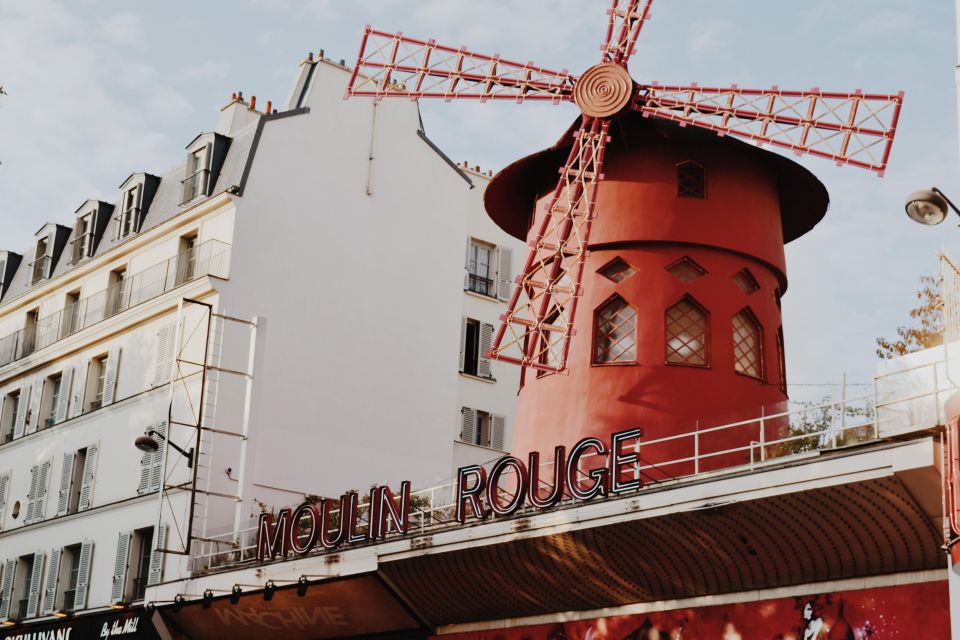
- Moulin Rouge beginning: Start beneath the famous red windmill in the Pigalle district.
- Artists and daily life: Walk along Rue Lepic and past places linked with Picasso, Van Gogh, and Matisse.
- Romance and cabaret: See the Wall of Love and learn about Montmartre’s playful, rebellious side.
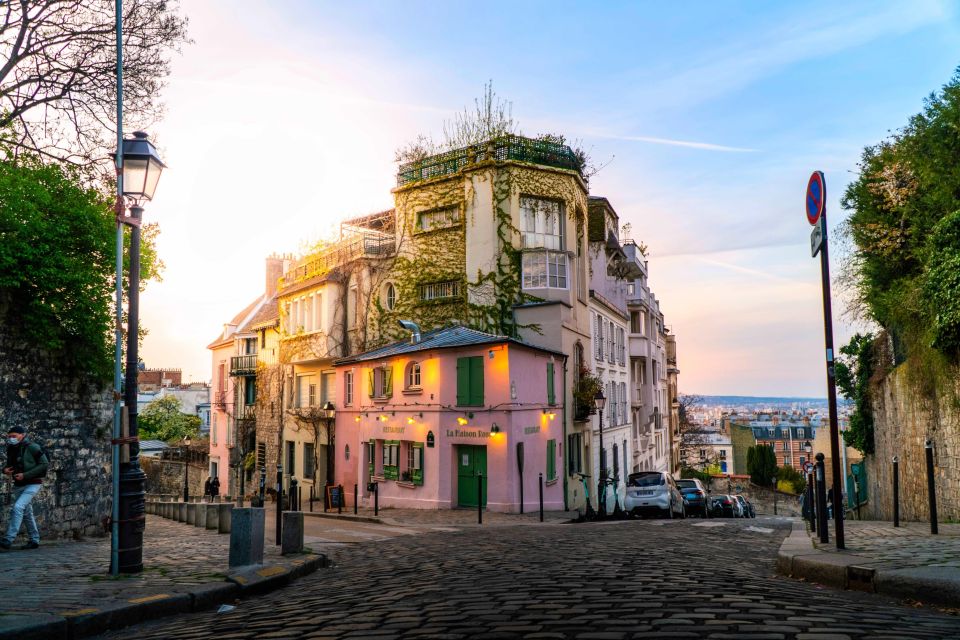
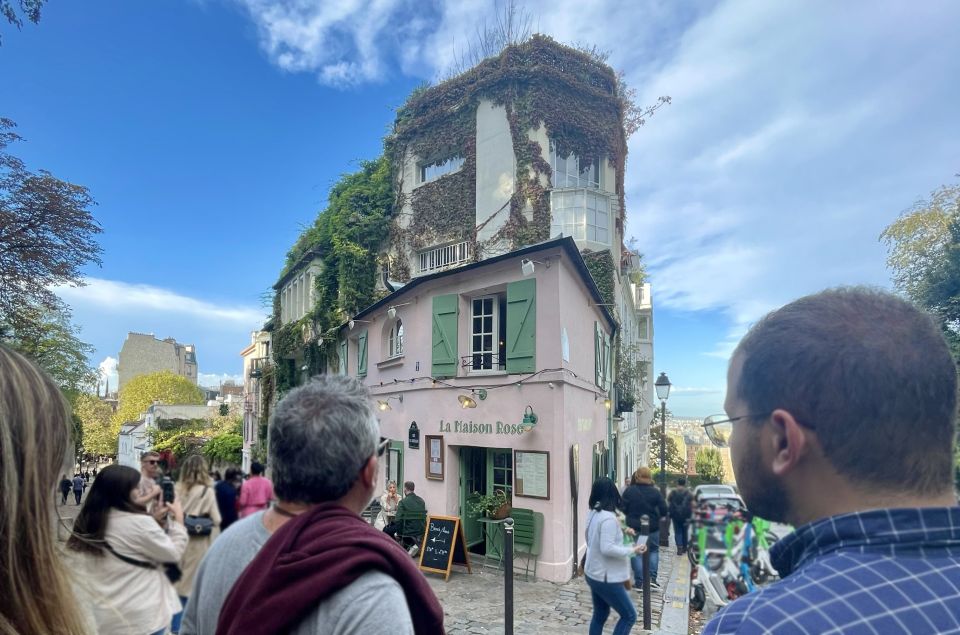
- Classic Montmartre scenes: Stop at Moulin de la Galette and the pink La Maison Rose.
- Sacré-Coeur finale: Finish outside the basilica with wide views across Paris.
- Small-group format: Share the walk with no more than eight people, with English, French, or Spanish available.
In This Review
- Why This Two-Hour Montmartre Walk Works
- Meeting Beneath the Moulin Rouge
- Rue Lepic and the Artists of Montmartre
- The Wall of Love on Place des Abbesses
- Moulin de la Galette and the Neighborhood’s Bohemian Past
- La Maison Rose, One of Montmartre’s Familiar Faces
- Sacré-Coeur From the Outside
- Place du Tertre and the Final Montmartre Scene
- The Guide and Small-Group Difference
- What the $64 Price Delivers
- Pace, Hills, and Practical Planning
- Who Will Enjoy This Montmartre Experience Most
- My Verdict on the Montmartre Route
- FAQ
- Where does the Montmartre walking tour start?
- Where does the tour finish?
- How long does the tour last?
- How many people can join the small group?
- Which languages are available?
- Does the tour enter Sacré-Coeur Basilica?
- Is hotel pickup included?
- Is the tour wheelchair accessible?
- Can I cancel for a full refund?
Why This Two-Hour Montmartre Walk Works
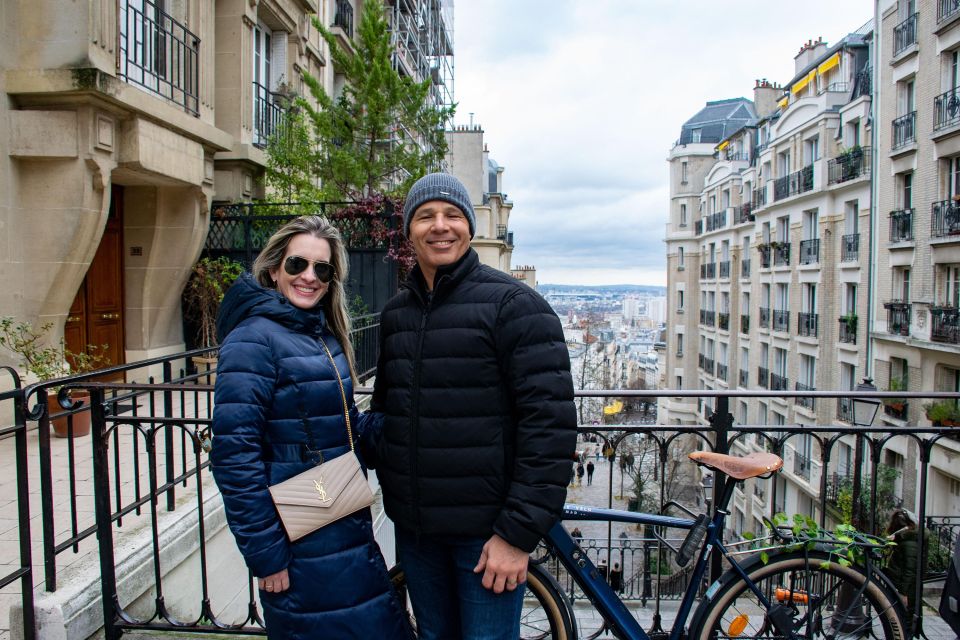
This experience is less about entering major sights and more about learning how Montmartre fits together. The Moulin Rouge, artists’ cafés, village-like streets, cabaret culture, revolutionary politics, and Sacré-Coeur all belong to different chapters of the neighborhood’s story.
That makes a guide useful here. Montmartre can feel like a string of attractive streets if you walk it without context. A local guide can show you why one corner matters, connect an artist’s name to a particular building, and explain how this hill became linked with both art and rebellion.
The group size matters, too. With no more than eight people, you are not trying to keep up with a large flag-waving crowd. You can hear the commentary more easily and ask about a detail that catches your eye. The available languages are English, French, and Spanish.
The walk lasts two hours, so expect an overview rather than a long study of Montmartre. You get the essentials and several strong photo stops, but the tour does not include an interior visit to Sacré-Coeur. The basilica is viewed from outside, with time on its steps for the Paris panorama.
Meeting Beneath the Moulin Rouge

The tour begins in front of the Moulin Rouge, where you look for a blue Dayin sign. Arrive with enough time to locate the meeting point, since the Pigalle area can be busy and the tour moves on foot from the start.
The Moulin Rouge is a fitting opening stop. Its red windmill and famous cabaret name introduce Montmartre’s stage-set quality, but the guide also places it in the wider story of entertainment and nightlife. You have about 15 minutes for a visit, guided explanation, and photographs.
This is a photo stop rather than a cabaret performance. Do not book this walk expecting admission to the Moulin Rouge or a show. Its value is in seeing the building from outside and hearing how it connects with the neighborhood around it.
You can also read our reviews of more walking tours in Paris



Rue Lepic and the Artists of Montmartre

From the Moulin Rouge, the route heads toward Rue Lepic for another 15-minute stop. This is where the walk begins to feel more like a neighborhood tour than a list of famous monuments.
Montmartre became closely tied to artists, and the route points out homes and places associated with Picasso, Van Gogh, and Matisse. Those names alone can make the area seem like an open-air art museum, but the better question is how artists lived and worked here. Your guide helps connect the streets to the bohemian culture that made Montmartre so important to Parisian art.
Rue Lepic also gives you a sense of the hill’s everyday character. It is not all grand monuments and postcard views. You move through streets where ordinary homes, cafés, and local corners share space with major cultural landmarks.
The short stop means you will hear selected stories rather than every detail. If a particular artist is central to your interest, ask your guide about that person while the group is small.
The Wall of Love on Place des Abbesses
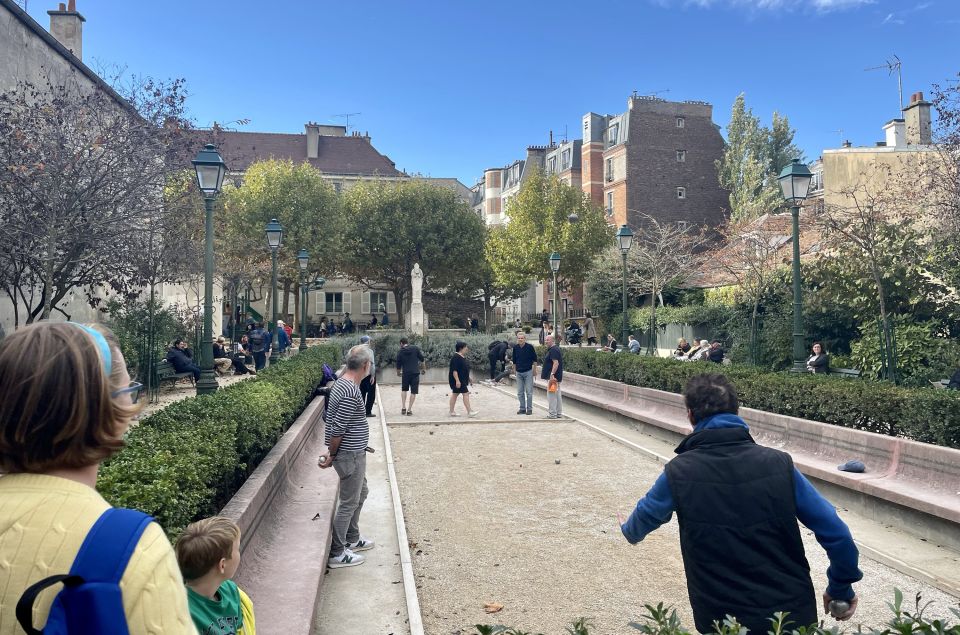
The Wall of Love, or Mur des Je t’aime, brings a softer mood to the route. The 15-minute stop focuses on a tiled wall covered with expressions of love in many languages.
It is an easy place to pause, take a photograph, and enjoy Montmartre’s romantic side. The stop also breaks up the more serious material about artists and political movements. I like this change of tone because it keeps the walk from becoming a lecture.
Do not expect a large monument or a long visit. The wall is compact, and the main appeal is its idea and setting. Your guide can point out the phrase you want to find and give the stop some context before the group continues uphill.
Moulin de la Galette and the Neighborhood’s Bohemian Past
The next 15-minute stop is Moulin de la Galette, one of Montmartre’s best-known names from its old dance-hall and windmill era. It helps explain why this hill attracted artists, entertainers, and people looking for a less formal side of Paris.
Here, the guide discusses the late 19th-century bohemian spirit and the social life that shaped Montmartre’s reputation. You learn that the neighborhood’s appeal was not only its art studios. Music, dancing, cafés, and cabarets all played a part.
The stop is also a reminder that Montmartre has been polished by fame. The area you see today is a popular part of Paris, but the stories reach back to a period when it had a more unruly, independent character.
You will have time for photographs and a guided explanation, but not an extended visit inside a venue. The attraction is the connection between the place, the artists, and the culture that grew around it.
La Maison Rose, One of Montmartre’s Familiar Faces
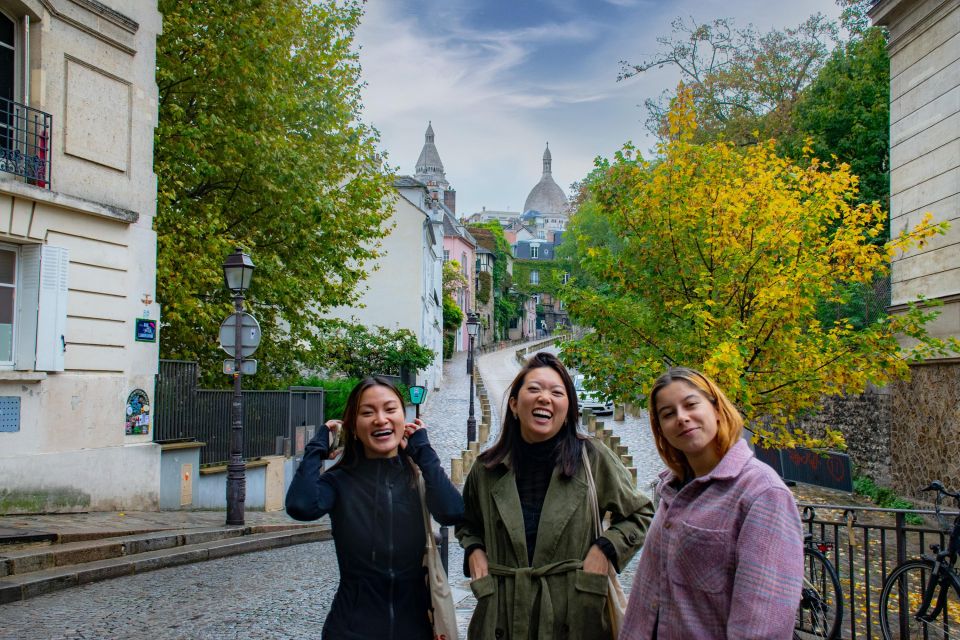
La Maison Rose is the next 15-minute stop. Its pink exterior makes it one of the neighborhood’s most recognizable photo subjects, especially when viewed with the surrounding streets.
This stop works well because it shows how Montmartre’s appeal often comes from small, highly visual places. You are not only looking for grand architecture. A brightly painted house, a sloping lane, or a café corner can carry as much atmosphere as a major monument.
Your guide gives the building a place within the neighborhood’s artistic story. Since the stop is short, you can take photographs without losing the thread of the walk. Keep in mind that seeing La Maison Rose from outside does not mean the tour includes a meal or interior access.






Sacré-Coeur From the Outside
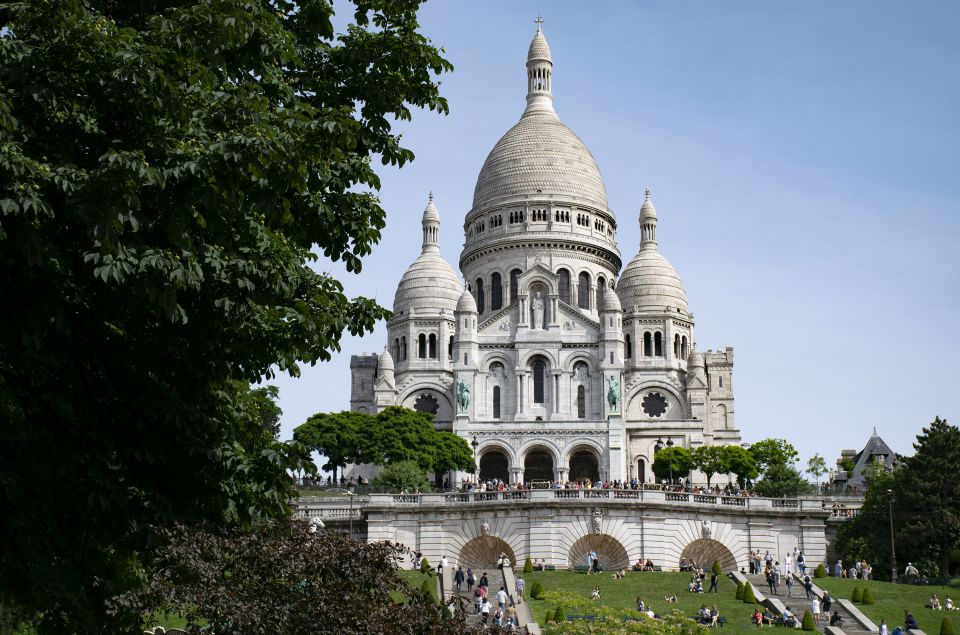
The route then reaches the Sacré-Coeur Basilica, with around 25 minutes for a guided visit and photographs. This is the longest stop, and it deserves the extra time.
The basilica is viewed from outside. You can admire its white domes and ornate exterior, then take in the broad view over Paris from the steps. This is the point where the route’s uphill work pays off.
The view is one of the strongest reasons to choose this tour. You have a clear sense of Montmartre’s position above the city, and the guide can help you identify what you are seeing. It is also a natural place to pause after moving through crowded streets and narrow lanes.
The steps can be busy, so your experience will depend partly on the conditions that day. Still, ending here gives the walk a satisfying shape. You begin with the Moulin Rouge’s bright nightlife and finish with Paris spread below a major religious landmark.
If entering Sacré-Coeur is important to you, plan a separate visit. This tour covers the exterior only, and it finishes at the Basilica of the Sacred Heart of Paris.
Place du Tertre and the Final Montmartre Scene
Place du Tertre follows Sacré-Coeur, with about 20 minutes for a guided stop. The square is closely linked with painters, portrait artists, and the image of Montmartre as an artists’ village.
This is a good place to understand the difference between Montmartre’s past and its present. The artistic identity remains visible, but the square is also one of the area’s most popular places. You may find it lively and crowded, especially at busy times.
The guide helps you look beyond the obvious picture. Instead of treating the square as a quick photograph, you learn how it fits into the area’s long connection with painting and street art. You can also use this final stop to ask for ideas about where to walk next.
The tour ends at the Basilica of the Sacred Heart, not back at the Moulin Rouge. That matters when planning your day. From the hilltop, you can continue exploring Montmartre on your own, but hotel pickup and drop-off are not included.
The Guide and Small-Group Difference

The tour includes a local guide who speaks English, French, or Spanish. No individual guide names are provided, so you should choose your preferred language when booking rather than expect a particular person.
The small-group limit of eight is one of the clearest benefits. Montmartre’s streets can be tight, and explanations are easier to follow when the guide is not addressing a large crowd. I also find that a small group makes it less awkward to ask practical questions about the area.
The guide’s role is especially important because the route contains many short stops. You are given roughly 15 minutes at several locations, 25 minutes at Sacré-Coeur, and 20 minutes at Place du Tertre. A strong guide needs to keep the timing under control while still allowing room for questions.
The experience is available as a private option as well as a small group. The private version is the only wheelchair-accessible choice according to the activity information. The standard small-group route is not wheelchair accessible, so check this carefully before booking.
What the $64 Price Delivers
At $64 per person, this is not the cheapest way to walk through Montmartre. You can see many of these streets without paying for a tour. The question is what you want from the outing.
The price includes a local guide, an intimate group, city-navigation tips, and two hours of organized walking. You are paying for the route and the explanation, not entry tickets. Since the main sights are viewed from outside, there are no included admissions to weigh into the value.
I think the price makes the most sense if this is your first substantial visit to Montmartre or if you want the neighborhood’s major sights placed in context. It also suits you if you prefer a compact tour that leaves the rest of the day open.
The value is weaker if you already know Montmartre well, want to explore at your own pace, or mainly want to enter Sacré-Coeur. In those cases, a self-guided walk may be enough, followed by a separate visit inside the basilica.
The small maximum helps justify the cost. You are not simply being led from one photo stop to another in a large crowd. You get a planned route with local commentary and a better chance for direct questions.
Pace, Hills, and Practical Planning
Wear comfortable shoes. The activity lasts two hours and covers Montmartre on foot, including its uphill streets and the steps around Sacré-Coeur. Even if the distance is manageable, the slope and stopping pattern can make the walk feel more active than a flat city stroll.
The tour runs rain or shine, so check the forecast and dress for the day. A wet walk around Montmartre can be less pleasant, particularly on the hill and steps, but the tour does not automatically stop because of light rain.
The experience can be canceled if the minimum of two people is not met. Keep that possibility in mind if you are building a tightly timed Paris schedule.
You can cancel up to 24 hours in advance for a full refund, and the reserve-now, pay-later option lets you hold a place without paying immediately. These terms are useful if your Paris plans are still shifting.
The route is offered at different starting times, depending on availability. Choose a time that leaves room for the walk to run at its full pace, especially if you have a timed reservation immediately afterward.
Who Will Enjoy This Montmartre Experience Most
I would choose this tour if you want a clear introduction to Montmartre without spending half a day on a large group excursion. The route gives you the main sights, several artistic stories, a romantic stop, and the city view from Sacré-Coeur.
It is a good fit for:
- First-time visitors who want help finding the key landmarks.
- Art lovers interested in Picasso, Van Gogh, and Matisse.
- Couples who like the Wall of Love and Montmartre’s romantic mood.
- Solo visitors who prefer the ease of a planned route and a small group.
- Anyone who wants a short tour before exploring the hill independently.
You might choose something else if you need a fully step-free route, want to visit interiors, or prefer a slow photography walk. Families and older visitors should consider the hills, weather, and time on foot before booking.
The available private option may suit you better if you need wheelchair access or want the guide’s full attention. The standard group is limited to eight, but it is still a shared walking experience with a set route and pace.
My Verdict on the Montmartre Route
Book this tour if you want Montmartre explained rather than simply photographed. The route gives you a useful first look at the Moulin Rouge, Rue Lepic, the Wall of Love, Moulin de la Galette, La Maison Rose, Place du Tertre, and Sacré-Coeur in a compact two-hour outing.
I especially like the way it ends at the basilica steps. You move from cabaret and artists to one of Paris’s best city views, and the sequence makes the neighborhood easier to remember.
Skip it if you want interior access, a slow private walk, or a flat route. For most first visits, though, the combination of a maximum eight-person group, local commentary, and a strong hilltop finish gives the $64 price a fair case.
FAQ
Where does the Montmartre walking tour start?
The tour starts in front of the Moulin Rouge. Look for the blue Dayin sign.
Where does the tour finish?
The tour finishes at the Basilica of the Sacred Heart of Paris, also known as Sacré-Coeur.
How long does the tour last?
The walking tour lasts two hours.
How many people can join the small group?
The small group has a maximum of eight people.
Which languages are available?
The live guide is available in English, French, and Spanish.
Does the tour enter Sacré-Coeur Basilica?
No. The tour views Sacré-Coeur from outside and includes time for photographs and the view over Paris.
Is hotel pickup included?
No. Hotel pickup and drop-off are not included.
Is the tour wheelchair accessible?
The tour is wheelchair accessible only with the private option.
Can I cancel for a full refund?
Yes. You can cancel up to 24 hours in advance for a full refund.