REVIEW · PARIS
Paris: Marais District & Jewish Quarter Guided Tour 12 guest
Book on GetYourGuide →Operated by Babylon Tours Paris · Bookable on GetYourGuide
Marais history is easier to read on foot. This guided walk makes the Marais feel legible, and the Jewish Quarter route gives you social context you won’t get from wandering alone. I love that you move through big visual anchors like Place des Vosges, then shift into smaller, story-heavy streets around the Pletzl. I also like that the guide is an art historian, so you’re not just hearing dates—you’re learning how buildings, symbols, and street layout point to real lives. One thing to consider: the tour does not include entry into synagogues.
With a maximum group size of 12, you get a calmer pace than the typical Paris herd. Guides I’ve seen highlighted include Eden and Francois, both praised for clear English and for bringing emotion and personality to the stories. The trade-off is you’ll do a moderate amount of walking, and you can’t bring luggage or large bags.
In This Review
- Key Highlights You’ll Feel Right Away
- The Marais and Jewish Quarter, Connected by Real Streets
- Why the Small Group Size Matters (A Lot)
- Price and Value: $61 for 150 Minutes of Guide Power
- Where You Meet and What to Bring
- Stop-by-Stop: What Each Part of the Walk Teaches You
- Paroisse Saint-Paul Saint-Louis: Getting Oriented in the Marais
- Hôtel de Sully Courtyard: Royal-Style Grandeur, Without the Museum Lines
- Place des Vosges: The Square That Teaches You How Paris Plans Prestige
- Rue des Francs Bourgeois and Hôtel Carnavalet: Mansions, Now With Public Purpose
- Rue des Rosiers and the Pletzl: Daily Life and Community Context
- Artistic Tomb Stones and Graves: The Part You Should Let Land
- Pompidou and Hôtel de Ville: Two Icons From Different Periods, Still Connected
- Churches at the Finish: Saint Gervais and the Walk’s Closing Note
- Synagogues and Access Rules: What You Can Expect to See
- Languages and Guide Style: Easy Communication, Better Stories
- A Few Logistics Details That Save You Headaches
- Who Should Book This Tour
- Should You Book: My Quick Decision Guide
- FAQ
- How long is the tour?
- How many people are in the group?
- Does the tour include entry into synagogues?
- Are food and drinks included?
- What language is the guide available in?
- Do I need to bring ID?
- Is luggage allowed?
Key Highlights You’ll Feel Right Away

- Max 12 people keeps questions easy and the pace human
- Art historian guide turns landmarks into stories you can remember
- Place des Vosges is treated like a living “royal” public square, not a photo stop
- Pletzl and Rue des Rosiers area gives meaning to shops, streets, and everyday scenes
- Pass-by tombstone-style artistic memorials adds a moving, respectful layer to the Jewish Quarter walk
- A route that links eras by including Pompidou and Hôtel de Ville along the way
The Marais and Jewish Quarter, Connected by Real Streets

Paris can be pretty good at throwing monuments at you. This tour does something smarter: it teaches you how one neighborhood shaped another over time, by walking the actual streets people used.
The Marais used to sit beyond the city’s center. Today it’s right in the middle of everything, and that shift matters. When you walk the streets in the order the guide suggests, you can feel how power and culture got built into the district—first through grand residences and courtyards, later through commerce and community around the Jewish neighborhood.
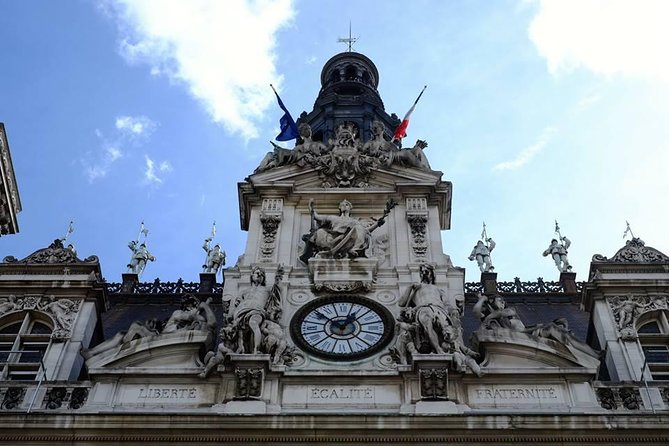
You also get the best kind of Paris contrast. You’ll see royal-style space at Place des Vosges, then switch gears to the texture of the Pletzl area: bakeries, boutiques, and shopfront streets like rue des Francs Bourgeois. Then, later in the walk, modern architecture enters the picture with Centre Pompidou, and civic Paris shows up with Hôtel de Ville. It’s not random. It’s a time-lapse you walk through.
You can also read our reviews of more guided tours in Paris



Why the Small Group Size Matters (A Lot)

This tour caps at 12 guests per guide. That might sound like a detail, but it affects your experience in practical ways.
With fewer people, the guide can slow down when a story needs room—like when you’re shown the artistic tombstones and graves-style memorials. You’re not trying to hear over everyone else’s audio. And if you have questions, you’re more likely to get direct answers.
It also helps the route feel flexible. The tour notes that occasional closures can happen, and when that occurs you’ll get an alternative. A larger bus-style group makes those swaps harder. A small group makes them more manageable.
Price and Value: $61 for 150 Minutes of Guide Power

At $61 per person for about 150 minutes, this lands in the reasonable range for a guided walking tour in central Paris—especially because you’re not just getting a generic guide. You’re getting a professional art historian.
Here’s the value logic I’d use if you’re deciding last minute:
- You’re paying for interpretation. The money goes to helping you notice things you’d otherwise miss on your own—like why certain courtyards, mansion exteriors, and public squares matter.
- You’re paying for structure. The walk connects the Marais’s historic spine to the Jewish neighborhood’s 18th- and 19th-century impact, then keeps moving into other architectural and civic landmarks.
- You’re paying for time. 150 minutes is long enough to absorb stories, but not so long you feel trapped.
What you’re not paying for: food and drinks. You’ll likely want to plan a light snack before you go, or budget for a stop after.
Where You Meet and What to Bring
The meeting point can vary depending on the option booked, but it’s based around 133 Rue Saint-Antoine. If you’re the kind of traveler who likes to arrive early, do it. Rue Saint-Antoine is busy, and you’ll avoid last-minute stress.
Bring your passport or ID card, since the tour asks for valid photo ID. Also, follow the bag rules. No luggage or large bags. Museums on the route may require you to keep things minimal—generally only handbags or small thin backpacks.
Good tip: wear shoes you trust. This is a walking tour with a moderate amount of walking, so don’t assume you can do it in stiff dress shoes.
Stop-by-Stop: What Each Part of the Walk Teaches You






Paroisse Saint-Paul Saint-Louis: Getting Oriented in the Marais
The tour begins by bringing you into the Marais through the Paroisse Saint-Paul Saint-Louis area. Even if you only pass by churches on many trips, this one works as an orientation tool.
Why? Because it sets a tone. The Marais isn’t just charming streets. It’s a district with a religious and civic footprint that shows up repeatedly as you move forward. When the guide explains what you’re seeing here, it helps you later notice how different institutions coexisted in the same neighborhood.
Hôtel de Sully Courtyard: Royal-Style Grandeur, Without the Museum Lines
Next comes Hôtel de Sully. You walk and pass by, including the courtyard of the property.
This is the kind of stop that can make you slow down even if you think you’re just passing. Courtyards show scale. They show how private space was designed to support public power and daily life. In a district like the Marais, those details matter because they explain why certain streets feel “built for status.”
Place des Vosges: The Square That Teaches You How Paris Plans Prestige
Place des Vosges is one of the highlights for a reason. It’s described as pristine and beautiful, and the guide treats it like a key part of the Marais’s royal history.
What you’ll get from a guided stop here is the ability to read the square beyond the postcard view. A public square isn’t just pretty. It’s a design choice that shapes how people gather, how buildings face each other, and how a neighborhood shows off its identity.
If you’re prone to treating squares as quick photos only, this stop helps you slow down in a smart way.
Rue des Francs Bourgeois and Hôtel Carnavalet: Mansions, Now With Public Purpose
Then you move into the mansion-lined feeling of the Marais through rue des Francs Bourgeois and the area around Hôtel Carnavalet.
The walk emphasizes mansion after mansion—former homes of nobility now repurposed into spaces that may include museums, including Musée Carnavalet. This is one of the places where an art historian guide really pays off. You’re not just seeing “old buildings.” You’re learning how private wealth turned into public heritage.
A practical note: museums on the route can have occasional closures without warning from management. When that happens, the guide provides an appropriate alternative. That reduces the risk of you losing the story.
Rue des Rosiers and the Pletzl: Daily Life and Community Context
The route shifts into the Jewish neighborhood through Rue des Rosiers, the Pletzl, and onward toward places like Rosiers – Joseph Migneret Garden.
The tour highlights that you’ll stroll past bakeries and boutiques in the Pletzl. That matters because it helps you picture history as something lived, not just archived. And the walking approach makes it easier to understand why certain streets became known for commerce and community during the 18th and 19th centuries.
Artistic Tomb Stones and Graves: The Part You Should Let Land
One of the most praised elements is the stroll that includes artistic tombstones and graves-style memorials.
This isn’t the kind of stop where you want to rush. It’s more respectful to give it a few minutes of quiet attention. If you like history that carries emotion, this is where you’ll feel it most. Guides like Eden and Francois are specifically praised for bringing personality and even emotion to the stories, which helps a memorial walk feel grounded rather than cold.
Pompidou and Hôtel de Ville: Two Icons From Different Periods, Still Connected
At some point, the tour may introduce Centre Pompidou and Hôtel de Ville as architectural masterpieces from very different periods.
This is a clever planning choice. It keeps your brain from getting stuck in one era. After walking the Marais and Jewish Quarter, it’s refreshing to see how Paris stacks styles and institutions side by side. You’ll likely find that you appreciate Pompidou and City Hall more when you understand what came before it in the same broader district.
Also, if you’re doing other museums later, this gives you a strong visual framework. You’ve already learned how the neighborhood “reads,” so later you’ll notice patterns faster.
Churches at the Finish: Saint Gervais and the Walk’s Closing Note
The route can end with Saint Gervais Church (walk, pass by). For me, that kind of final church stop works like a full-stop to the sentence.
It helps anchor what you just learned about the Marais as a working neighborhood with layered religious and civic presence. You’re not walking through history as a theme park. You’re walking through it as something still in motion.
Synagogues and Access Rules: What You Can Expect to See
Here’s the key constraint you should plan around: the tour does not include entry into any synagogues. Access is restricted to worshippers for security reasons.
That means you’ll focus on the neighborhood context and respectful exterior experiences, plus memorials in the streetside area. If synagogue interior access is a must for you, you’ll need a different kind of visit or plan that matches those security requirements.
Languages and Guide Style: Easy Communication, Better Stories
The tour lists multiple guide languages: Russian, German, French, Italian, English, and Spanish. That’s a real plus if you’re picky about understanding every nuance.
And from what I’ve seen praised, the guides put energy into the storytelling. Eden is highlighted for friendliness and engaging delivery, with excellent English. Francois is praised for humor and personality, and for a deep love of what he teaches. That style tends to make the route feel smoother, even when you’re covering a lot.
A Few Logistics Details That Save You Headaches
- No hotel pick-up or drop-off, so plan to meet the guide at the stated location.
- No food and drinks included, so don’t rely on the tour to fix hunger.
- Luggage and large bags aren’t allowed, and museums may restrict what you carry inside.
- Occasional closures can happen; the guide handles it with an alternative.
- Quiet-room rules may apply in parts of museums; your guide will explain what to expect before you enter.
Who Should Book This Tour
This is a great fit if you:
- Want a guided way to connect the Marais to the Jewish neighborhood’s street-level history
- Prefer a small group (12 max) over crowd-style sightseeing
- Like walking tours with interpretation, not just point-and-shoot landmark stops
- Are interested in respectful memorial context, not just architecture
It may be less ideal if you:
- Can’t handle moderate walking
- Need synagogue interior access
- Travel with large bags or luggage you planned to bring along
Should You Book: My Quick Decision Guide
Book it if you want to understand the Marais and the Jewish Quarter as connected neighborhoods, not separate “attractions.” The structure is strong, the group size is small, and the art historian angle helps you notice details that self-guided wandering often misses.
Skip or reconsider if you’re hoping for synagogue interior entry or if your schedule and mobility can’t handle a moderate walking pace. In that case, you might choose a different format that matches your needs more closely.
If your goal is a smart, story-driven walk through Paris layers of power and community, this one is an easy yes.
FAQ
How long is the tour?
The tour duration is 150 minutes.
How many people are in the group?
The tour has a maximum of 12 guests per guide.
Does the tour include entry into synagogues?
No. The tour does not include entry into synagogues due to security restrictions; access is reserved for worshippers.
Are food and drinks included?
No. Food and drinks are not included.
What language is the guide available in?
Live tour guides are available in Russian, German, French, Italian, English, and Spanish.
Do I need to bring ID?
Yes. You should bring a passport or ID card, and valid photo ID is required.
Is luggage allowed?
No luggage or large bags are allowed. Inside museum areas, only handbags or small thin backpacks are allowed.