REVIEW · PARIS
Paris Louvre Museum: Small Group Guided Highlights Tour
Book on Viator →Operated by Memories France · Bookable on Viator
The Louvre can swallow your day. This 2-hour guided highlights tour keeps you focused on the classics and the backstory, from the palace roots under your feet to the art that put Paris on the map. I love that the group is capped at six people, so you’re not just shuffling through rooms like a human traffic jam.
I also love the way the tour funnels you to the Louvre’s most famous stops—especially the Mona Lisa—without making you wander 10 miles of galleries on your own. One possible drawback: you still have to go through the museum’s security and ticket checks, and in busy periods the “skip-the-line” part may not feel like skipping everything.
In This Review
- Key points worth clocking before you go
- Why the Louvre feels different with only six people
- Arc de Triomphe du Carrousel: your meetup and how to not get stuck
- Getting inside: what “skip the line” really means
- Headsets vs. intimacy: the trade-off you should consider
- The Louvre highlights route: what you’ll see in 2 hours
- The palace foundations and the museum’s origin story
- The art “catwalk”: major works first, with context
- Finding the masterpieces without the map fatigue
- Mona Lisa time: how your guide makes the moment work
- What the tour gets right (and why it’s worth paying for)
- Small-group comfort: the hidden benefits you’ll feel
- Where this tour fits best (and where it might not)
- Practical tips for your Louvre day
- Should you book this Louvre highlights tour?
- FAQ
- What’s the duration of the Paris Louvre Museum small group highlights tour?
- Is the tour conducted in English?
- Does the price include Louvre admission?
- How big is the group?
- Where does the tour start and end?
- Can you skip security lines at the Louvre?
- What’s the cancellation window?
Key points worth clocking before you go
- Max 6 people, no crowd herding: closer, more personal conversation with your guide.
- Must-see route in about 2 hours: you’ll hit the Louvre’s headline works like the Mona Lisa, plus key sculptures and galleries.
- Guide-led context: you get the why behind what you’re looking at, not just where to stand.
- Ends inside the museum: after the tour, you can keep exploring on your own immediately.
- Orange-badge meetup help: meeting in a busy area can be tricky, but guides use visible identification.
- Headsets are not part of this small-group format: great for intimacy, but you’ll want to stay close if audio carries poorly.
Why the Louvre feels different with only six people
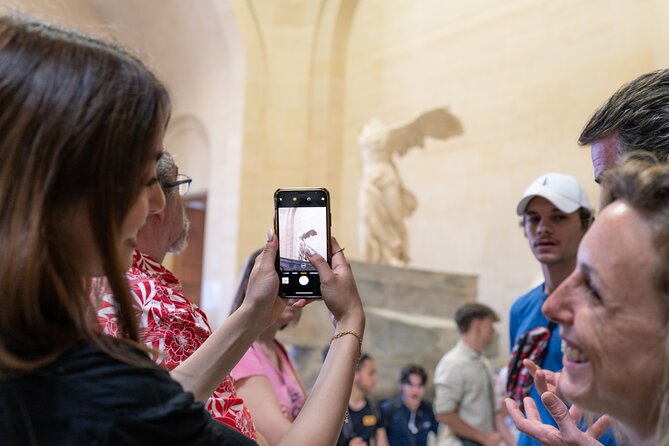
The Louvre is one of those places where the size is the real enemy. You can walk for an hour and still feel like you’ve barely scratched the surface—especially the first time. This tour solves that problem with a tight, guided route and a group that’s small enough to actually follow what’s being explained.
With a max of six, the experience tends to feel more like a focused lesson than a mass event. In the past, guides like Stephanie, Julien, Carolina, Celia, Cristina, Hugo, Arianna, and John Edward have been called out for being engaging and well-paced. The common theme is simple: you spend less time figuring out what to do next.
You can also read our reviews of more guided tours in Paris



Arc de Triomphe du Carrousel: your meetup and how to not get stuck
This tour starts at the Arc de Triomphe du Carrousel area (Pl. du Carrousel, 75001 Paris). It’s near public transportation, which helps because Paris taxis can be a scavenger hunt.
If you’re arriving by taxi, give yourself extra time. One practical heads-up: the arch area can be under renovation, and signs can be small. Your best strategy is to scan for your guide’s orange badge and orange lanyard—that’s the fastest visual confirmation.
Getting inside: what “skip the line” really means
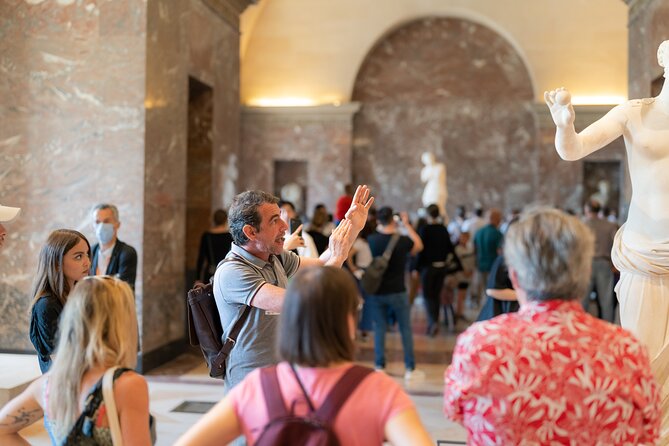
The tour includes the Louvre admission ticket for adults (not just a guiding service). Your guide’s job is to get you through entry checks efficiently and to lead you straight toward the masterpieces.
But the museum’s security and ticket checks cannot be avoided. The tour notes that security measures may affect lines and visitors cannot skip the security line. Translation: you may still wait, but you’ll usually wait smarter, with guidance on where to stand and how to move.
Also note: the Louvre can be loud. Since this is a small-group setup (max six), you may not use headsets—more on that next.
Headsets vs. intimacy: the trade-off you should consider
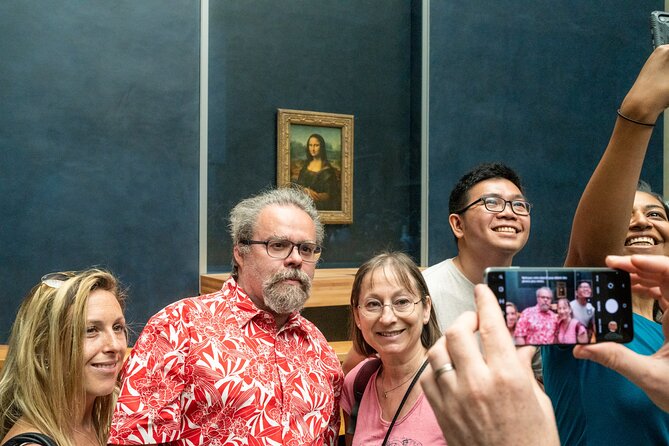
This format is designed to feel close and interactive. That’s why headsets aren’t used for groups of six. In a quiet moment, you’ll probably hear everything fine. In a noisy moment, you may have trouble, especially if you’re not near the front.
A good move: position yourself so you’re close enough to catch the guide’s voice. If anything feels hard to hear, speak up right away rather than waiting. In this group size, your guide can adjust the delivery and the stopping points.
The Louvre highlights route: what you’ll see in 2 hours
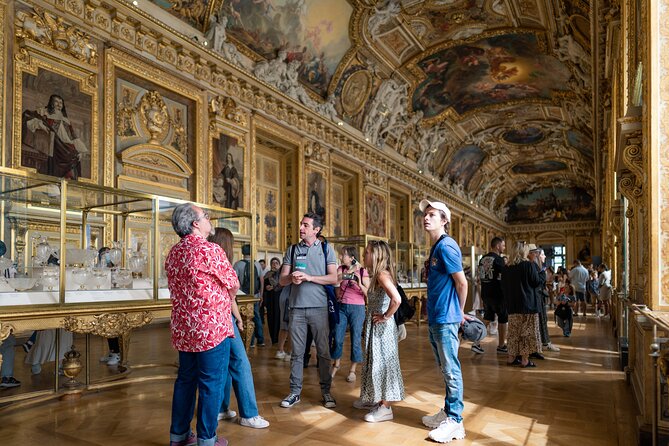
The tour is single-stop: it stays at the Louvre for about 2 hours. The point is not to cover everything. The point is to see the most important works and understand why they matter, without getting lost in a maze of galleries.
Here’s the kind of flow you should expect.
You can also read our reviews of more museum experiences in Paris






The palace foundations and the museum’s origin story
You’ll get history at the human scale: the Louvre started as a royal palace, with medieval fortress foundations beneath it. That matters because it changes how you read the building. Instead of treating the Louvre like a neutral box for art, you start seeing it as architecture with a past.
Some guided routes also connect the palace story to older defensive features, including the idea of a moat. Even if you’ve seen photos of the Louvre before, you’ll often come away with a better sense of how it was meant to protect power.
The art “catwalk”: major works first, with context
Your guide leads you to famous highlights so you don’t waste time hunting. Based on the emphasis from past guests, you can expect stops tied to headline sculpture and painting.
In particular, the tour commonly pairs the big names with explanations that make them easier to understand at a glance, including:
- Venus de Milo (the iconic marble figure people expect to recognize)
- Liberty Leading the People (the painting that hits with story as much as style)
- The Apollo Gallery of Louis XIV, which helps you read the Louvre as a power showcase, not just an art warehouse
And yes, you’ll hear why those works became cultural touchstones. A good guide doesn’t just point; they give you a short framework so the art doesn’t feel like random museum assignments.
Finding the masterpieces without the map fatigue
One of the most practical values is navigation. The Louvre is famously confusing. With a guide, you spend less time doing guesswork and more time actually looking.
In the small-group format, the movement can feel smoother through crowded pockets. Past guests have described getting to the main sights quickly and with less stress, even when it’s busy. The guide’s pacing also tends to keep the tour from feeling rushed, since there are fewer bodies to manage.
Mona Lisa time: how your guide makes the moment work
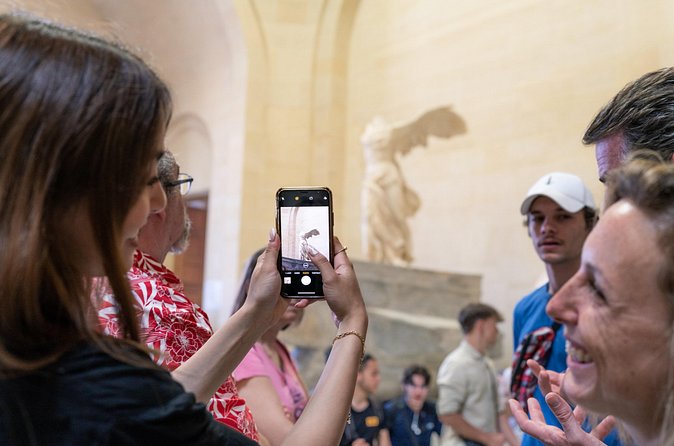
The Louvre’s most famous painting is also the most likely to become a frustrating experience on a self-guided visit: crowds, noise, and tiny viewing windows.
This tour tackles that by building your visit around the story. You’ll get the background behind the Mona Lisa’s famous reputation and the fascination around her expression. The goal isn’t to turn you into an art historian. It’s to help you see her as a real, specific work with a real story—so the encounter feels satisfying instead of chaotic.
If you’ve only ever seen the Mona Lisa as a postcard image, this is where the guide can change the trip. You’re not just staring at a face; you’re watching a cultural magnet do what it does.
What the tour gets right (and why it’s worth paying for)
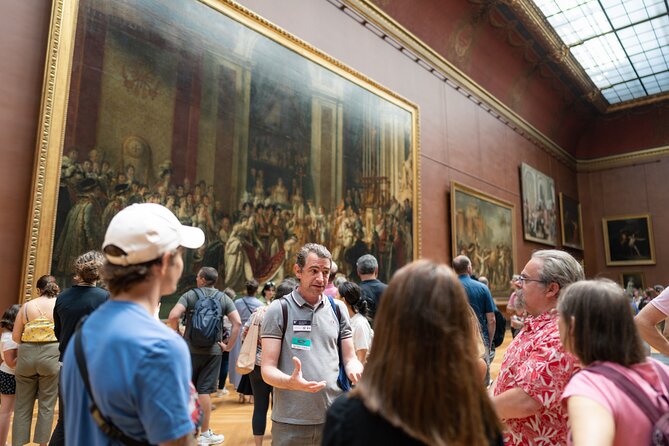
This tour costs $132.63 per person and includes the €22 adult museum ticket. That means you’re not paying twice for entry. You’re mostly paying for the guide’s time and the streamlined route that helps you actually see the highlights during a short visit.
For first-timers, that’s a smart trade. You’re essentially buying a plan. Instead of spending your limited Paris time wandering and getting overwhelmed, you get an organized path to the works that define the Louvre.
The small group is a big part of the value. Many people leave the Louvre feeling either overwhelmed or disappointed because they saw almost nothing of the “important stuff.” This format is built to prevent that.
Small-group comfort: the hidden benefits you’ll feel
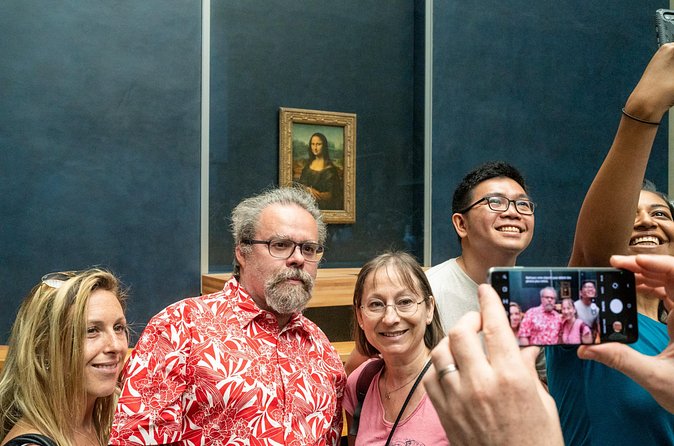
Beyond the obvious advantage of fewer people, the six-person cap changes how you experience stops. You can ask questions. You can adjust your pace. And you’re more likely to get close enough to actually register details rather than just watching other heads move.
Past guests also noted that guides sometimes help with personal viewing needs, including finding a good spot if you’re shorter. That’s not something you should count on every time—but it’s a sign that the guides are attentive to what their group can physically manage.
Where this tour fits best (and where it might not)
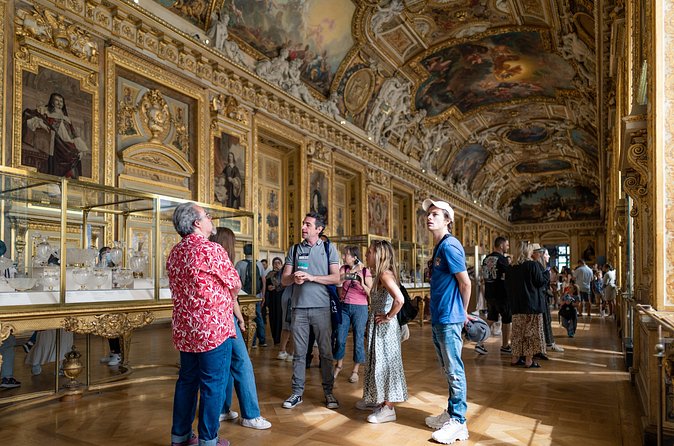
This is ideal if you:
- are visiting the Louvre for the first time and want a guided highlights track
- want less stress and better direction than a free-for-all visit
- only have a couple hours and want the big works plus context
It may not be the best fit if you:
- want a full museum marathon (the Louvre will still feel huge)
- struggle with noisy environments and want headsets by default
- prefer to wander at your own pace without stopping
Practical tips for your Louvre day
Bring the mindset that this is a curated highlight sprint. If you treat it like a complete Louvre education, you’ll feel shorted. If you treat it like a fast, meaningful sampler, you’ll feel you used your time well.
A couple more practical moves:
- Wear comfortable shoes. Even a highlights route still means lots of walking.
- Stay near your guide. With this small-group format, that’s your best bet for clear audio and good sightlines.
- Plan to keep exploring afterward. The tour ends inside the museum, so you can continue on your own while the highlights are fresh in your mind.
Should you book this Louvre highlights tour?
Book it if you want the Louvre to feel manageable, guided, and worth your time—especially as a first visit. The small group size, the focused route to major works like the Apollo Gallery and the Mona Lisa, and the end-inside access after the tour add up to strong value.
Skip it (or consider a different format) if you know you need headsets to hear in a loud crowd, or if your plan is to spend the day deep in everything rather than prioritizing the highlights.
If your main goal is to see the essential Louvre in about two hours without getting swallowed by the building, this is a very solid way to do it.
FAQ
What’s the duration of the Paris Louvre Museum small group highlights tour?
The tour runs for about 2 hours.
Is the tour conducted in English?
Yes, the tour is offered in English.
Does the price include Louvre admission?
Yes. The tour includes a €22 entrance ticket for adults.
How big is the group?
This tour has a maximum of 6 travelers.
Where does the tour start and end?
It starts at Arc de Triomphe du Carrousel (Pl. du Carrousel, 75001 Paris). It ends inside the Louvre Museum.
Can you skip security lines at the Louvre?
No. The tour notes that security measures may affect lines and visitors cannot skip the security lines.
What’s the cancellation window?
You can cancel up to 24 hours prior to departure for a full refund.