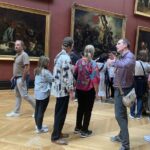
REVIEW · PARIS
Paris: Louvre Museum Skip-The-Line Tour
Book on GetYourGuide →Operated by Paris in person private tours · Bookable on GetYourGuide
Two hours, and the Louvre finally makes sense. This private, skip-the-line tour hits the Louvre’s big artistic turning points without wandering for hours, moving from Ancient Greece all the way to the early 19th century. I love the Renaissance-to-Romanticism storyline that helps you read the artworks like they’re connected, not random wall decorations.
The main catch: 2 hours is still a highlight sprint. You’ll see major works and understand the themes, but you won’t leave with full coverage of every wing and masterpiece.
In This Review
- Key Takeaways Before You Go
- Entering the Louvre Fast from Arc de Triomphe du Carrousel
- What “Skip-the-Line” Really Means (and What It Doesn’t)
- The 2-Hour Structure: How You Get Value without Coverage
- Renaissance in Motion: Medieval Thinking to Humanism
- The Louvre’s Big Anchor: Nike of Samothrace and Neoclassical Logic
- Leonardo and Venetian Painting: How the Louvre Teaches Technique
- Romanticism with Teeth: Raft of Medusa and Liberty Leading the People
- Ingres and the Academic Gaze: Une Odalisque
- A Pacing That Works: Private Group Energy and Real Q&A Time
- Price and Value: Is $294 per Person Worth It?
- Who This Tour Suits Best (and Who Might Prefer Another Plan)
- Should You Book This Louvre Skip-The-Line Tour?
- FAQ
- What’s the duration of the Louvre skip-the-line tour?
- Where do we meet for this tour?
- What’s included in the price?
- Are food and drinks included?
- Is the tour private?
- What languages are offered?
- Is the museum visit wheelchair accessible?
- What items aren’t allowed in the museum?
- Does the tour run in bad weather?
- Can I cancel for a refund?
Key Takeaways Before You Go

- Skip-the-line entry means you start seeing art fast instead of queuing.
- A guided storyline across eras turns the Louvre from a list into a timeline.
- Signature masterworks in tight time: Nike of Samothrace, Botticelli, Mantegna, Leonardo, Veronese, and more.
- Romantic and political art included, like Delacroix’s July Revolution painting and Gericault’s Raft of Medusa.
- Multilingual live guides (English, French, Serbo-Croatian) keep the experience smooth.
- Private group pacing helps when you’re bringing teens or you want to ask questions.
Entering the Louvre Fast from Arc de Triomphe du Carrousel

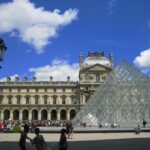
The meeting point is at the Arc de Triomphe du Carrousel, and your guide will be carrying a red tote canvas bag. That little detail matters. In Paris, it’s easy to lose time. Show up a bit early, spot the red bag, and you’ll stay on schedule.
This tour is built for people who want to arrive, get in, and start absorbing art without spending half their visit stuck in entry lines. You’ll get a skip-the-line entrance ticket plus a live guide. That combo is the whole point here. The Louvre can swallow a day. This experience tries to help you eat it in two controlled bites.
Another practical thing: the tour runs rain or shine. So plan for weather. If you’re traveling with a day bag, keep it museum-friendly—oversize luggage isn’t allowed, and anything exceeding 55x35x20 cm won’t get into the museum.
You can also read our reviews of more museum experiences in Paris


What “Skip-the-Line” Really Means (and What It Doesn’t)

Skip-the-line helps you bypass the ticket queue, but you’re still entering a busy museum. So think of it as time saved, not total silence. The payoff is that you start the art conversation sooner.
Inside, the guide’s job is to keep you moving efficiently and help you look with purpose. The tour focuses on major works across three periods: Renaissance, Neoclassicism, and Romanticism, with stops that also connect back to older forms of art (like Ancient Greek sculpture).
You’ll also benefit from having a single narrative thread. When a guide points out what changes between periods—subject matter, style, symbolism—you stop seeing the Louvre as random rooms and start seeing it as a chain of ideas.
The 2-Hour Structure: How You Get Value without Coverage

This is not a “see everything” tour. It’s a curated highlight route designed to fit into 2 hours. That means you should come with a mindset of focus:
- You’ll see key masterpieces.
- You’ll hear context that makes those masterpieces make more sense.
- You’ll leave with a clearer mental map of what you’re looking at next time you return.
If you’re the type who wants to stand in front of one painting for 45 minutes, this route might feel brisk. But if you want the best chance of understanding the Louvre in a short visit, it’s a smart format.
One strong sign of quality is that guides aren’t just listing names. In the experiences shared by recent guests, guides such as Boris were praised for framing the works with a historical perspective—for example, explaining how the depiction of the sun and light changed in art. That’s exactly what you want in two hours.
Renaissance in Motion: Medieval Thinking to Humanism
Renaissance art is not only about nicer faces and more realism. It’s also about how people started thinking. The tour explicitly focuses on early Renaissance ideas—especially the shift from Medieval approaches toward humanism.
You’ll see works that make that transition feel concrete. Botticelli is included via fresco work tied to Venus and the Three Graces Presenting Gifts to a Young Woman. Even if you’ve seen Botticelli’s name on museum labels, the fresco format and the subject matter help you understand why Renaissance artists were so invested in classical themes and human emotions.
You’ll also get an early Florentine flavor through Mantegna’s Saint Sebastian. This is useful because it shows you that Renaissance change wasn’t one smooth road. Artists were experimenting with form, narrative, and symbolism at different speeds in different places.
What I like about this Renaissance section is that it doesn’t float in vague art-history air. It gives you a reason to look: pay attention to how artists represent the human body, how they arrange figures, and how stories are staged visually.
The Louvre’s Big Anchor: Nike of Samothrace and Neoclassical Logic
One of the standout stops is the Nike of Samothrace—a 2nd-century BC marble sculpture of the Greek goddess Nike (Victory). This isn’t Renaissance or Romantic, but it’s crucial. It gives you a foundation for later Neoclassical tastes: drama, motion, and the pull of ancient ideals.
Neoclassicism often borrows from antiquity, then turns it into a new language for its own time. Seeing the original source of inspiration helps you read later works with more clarity. When you walk from ancient sculpture into the 18th–early 19th-century paintings and statues, you start noticing how artists treat ideals like citizenship, heroism, and power.
That context sets you up for Jacques-Louis David, whose works included on this tour connect Neoclassical style with political and historical storytelling. You’ll see The Oath of The Horatii and Crowning of Napoleon. The point isn’t just that David is famous. It’s that he used clarity of form and dramatic staging to make ideology look like art you could live inside.
A few more Paris tours and experiences worth a look



Leonardo and Venetian Painting: How the Louvre Teaches Technique
If your Louvre bucket list includes Leonardo da Vinci, this tour gives you the essential moment: Leonardo’s Mona Lisa is represented among the stops. Even if you’ve seen it on screens, being guided matters. A good guide helps you notice what you’d otherwise skip because you’re too busy staring at your phone.
Right next to Leonardo’s gravity, you’ll also encounter Venetian painting through highlights such as Bellini’s Venetian works. You’ll likely notice a shift in emphasis—how color and light carry meaning in a different way than in other schools.
Veronese is represented by Marriage at Cana, described here as the largest painting in the Louvre. That scale changes your experience. You can’t take it in like a small portrait. A guide helps you scan it with strategy: where the narrative starts, how the crowd is composed, and how the scene’s visual hierarchy guides your eyes.
This section is great value because it teaches you to compare techniques quickly. You don’t just see names. You learn how artists used paint, composition, and atmosphere to tell stories.
Romanticism with Teeth: Raft of Medusa and Liberty Leading the People
Romanticism shows up when art stops pretending it’s only about calm perfection. It becomes emotional, intense, and often political.
You’ll see Gericault’s Raft of Medusa, which is famous for its dramatic subject and sense of crisis. This kind of work trains your eye to look for movement and tension, not just faces. The Louvre can sometimes feel like a parade of perfect images. Romanticism is the moment the parade starts arguing with you.
Then Delacroix enters with Liberty Leading the People, commemorating the July Revolution of 1830. This is a powerful pairing with the Neoclassical stops, because you can feel the shift: from art designed to project ideals through structure, to art designed to project upheaval through emotion and immediacy.
This is also where the guide’s storytelling really pays off. The tour isn’t only about what’s painted. It’s about why people wanted painting to do the job of history, propaganda, and personal belief.
Ingres and the Academic Gaze: Une Odalisque
Another included work is Ingres’ Une Odalisque. This stop helps balance the political drama and mythic subjects around it. Ingres is known for a controlled, academic approach, and seeing this work inside the Louvre’s broader timeline helps you understand how different artists aimed for different kinds of impact.
You’ll likely find it useful to look beyond the obvious subject and focus on line, posture, and how the figure is presented. A good guide can help you connect the artistic choices to the broader aesthetic tastes of the period.
This kind of stop is also handy if you’re traveling with mixed interests—someone who loves famous names, someone who cares about artistic technique, and someone who just wants the wow moments. It’s one of those stops that can satisfy everyone.
A Pacing That Works: Private Group Energy and Real Q&A Time
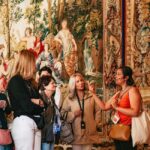
This tour is a private group, with a live guide (English, French, Serbo-Croatian). That matters because it changes how the visit feels. Instead of being rushed by a crowd, your guide can pace the route for your group.
There’s also evidence that guides respond to the people in front of them. One guest specifically praised customization toward their interests, and another highlighted that the guide handled a group with two teenage boys while still keeping the content engaging. That’s the real test: can the guide teach without putting everyone to sleep?
If you like asking questions, this format is your friend. Use it. Ask what you should look for in the brushwork, or why a certain period changed how artists showed bodies, light, or emotion. In a museum as big as the Louvre, those questions are how you turn sightseeing into learning.
Price and Value: Is $294 per Person Worth It?
At $294 per person for a 2-hour private, skip-the-line Louvre tour, you’re paying for two things: time saved and guided interpretation.
Here’s how to think about the value:
- Skip-the-line entrance ticket reduces one of the biggest time drains at the Louvre. If you’ve ever spent your energy standing in line, you know time is a budget item.
- A live guide turns famous works into meaningful experience. Without context, you can walk past masterpieces and still feel like you saw a “thing” rather than an idea.
- Thematic focus across Renaissance, Neoclassicism, and Romanticism makes the Louvre feel smaller and more connected. In two hours, that focus is the difference between a hit list and a story you can remember.
Could you do the Louvre on your own for less money? Sure. But if you only have a short window, paying for structure is often cheaper than paying for confusion and wasted time.
If you’re an art-history fan who wants the big names plus the reasons behind them, this price is easier to justify. If you’re casual and prefer wandering at your own speed, you might want to compare against other self-paced options.
Who This Tour Suits Best (and Who Might Prefer Another Plan)
This tour is a great fit if you:
- Have limited time in Paris and want the Louvre’s most famous works.
- Like your art with context—Renaissance transitions, Neoclassical style logic, and Romantic emotional/political stakes.
- Want help handling logistics like finding the meeting point and entering efficiently.
- Appreciate multilingual guidance (English, French, Serbo-Croatian).
It may be less ideal if you:
- Want to spend long minutes in front of just one or two artworks.
- Expect a full museum walk-through instead of a curated highlights route.
- Plan to bring large luggage (oversize items aren’t permitted).
Should You Book This Louvre Skip-The-Line Tour?
I’d book it if your goal is to leave with understanding, not just photos. The strongest reason is the combination of skip-the-line entry plus a guide-led storyline through major Renaissance, Neoclassical, and Romantic works. In two hours, you get a workable framework for the Louvre—enough to enjoy it now and navigate it better later.
If your visit is tight on time and you’re willing to trade some freedom for focus, this tour is a smart use of money. Show up on time, wear museum-comfy shoes, and treat it like a crash course you can build on.
FAQ
What’s the duration of the Louvre skip-the-line tour?
The tour lasts 2 hours.
Where do we meet for this tour?
Meet at the Arc de Triomphe du Carrousel, and your guide will be carrying a red tote canvas bag.
What’s included in the price?
The price includes skip-the-line entrance ticket to the Louvre and a live guide.
Are food and drinks included?
No. Food and beverages aren’t included.
Is the tour private?
Yes. It’s a private group.
What languages are offered?
The live guide is available in English, French, and Serbo-Croatian.
Is the museum visit wheelchair accessible?
Yes, the tour is wheelchair accessible.
What items aren’t allowed in the museum?
Oversize luggage isn’t allowed. Items exceeding 55x35x20 cm are not permitted in the museum.
Does the tour run in bad weather?
Yes, it operates rain or shine.
Can I cancel for a refund?
You can cancel up to 24 hours in advance for a full refund.