REVIEW · PARIS
Paris Le Marais Walking Tour: Small Group Experience
Book on GetYourGuide →Operated by Dayin · Bookable on GetYourGuide
Le Marais gives you one of Paris’s best walks in a compact package. In two hours, you move from Templar tales and grand 1600s town houses to Jewish bakeries, art galleries, fashionable shops, and the handsome Place des Vosges. The route shows how several versions of Paris can share the same few streets.
I like the small group of eight or fewer, which leaves room for questions and a more personal pace. I also like the practical finish: your guide offers tips for finding your way around Paris after the walk, rather than leaving you with a few disconnected facts. The main consideration is time. Two hours covers many stops, but mostly from the outside, with short visits rather than full museum tours.
In This Review
- Key points at a glance
- Why Le Marais rewards a walking tour
- From Temple to Hôtel de Sens
- Marché des Enfants Rouges and the food side of Le Marais
- Picasso Museum and the changing cultural district
- Rue des Rosiers and Jewish Le Marais
- Place des Vosges, the elegant centerpiece
- Hôtel de Sully and private mansion architecture
- Village Saint-Paul and Hôtel de Ville
- What $64 means for the value
- Pace, languages, weather, and access
- Who will get the most from this walk
- Should you book the Le Marais walk?
- FAQ
- How long does the Le Marais walking tour last?
- How large is the small group?
- What languages are offered?
- Which major places are included?
- Does the tour include hotel pickup and drop-off?
- Is the tour wheelchair accessible?
- Can I cancel for a full refund?
Key points at a glance
- Eight people maximum: You get a better chance to speak with your guide and ask about places that catch your eye.
- A useful mix of sights: The walk includes Place des Vosges, Rue des Rosiers, the Marché des Enfants Rouges, Hôtel de Sens, and Hôtel de Sully.
- Several guide languages: Tours are offered in English, French, and Spanish.
- Stories from medieval to modern Paris: Expect the Templar Order, aristocratic mansions, Jewish Le Marais, Picasso, galleries, and boutiques.
- A route that works as an orientation walk: The final stops near Hôtel de Ville and Saint-Paul make it easy to continue exploring on your own.
- Private access for wheelchair users: The regular small-group option is not fully wheelchair accessible, but the private option is.
Why Le Marais rewards a walking tour
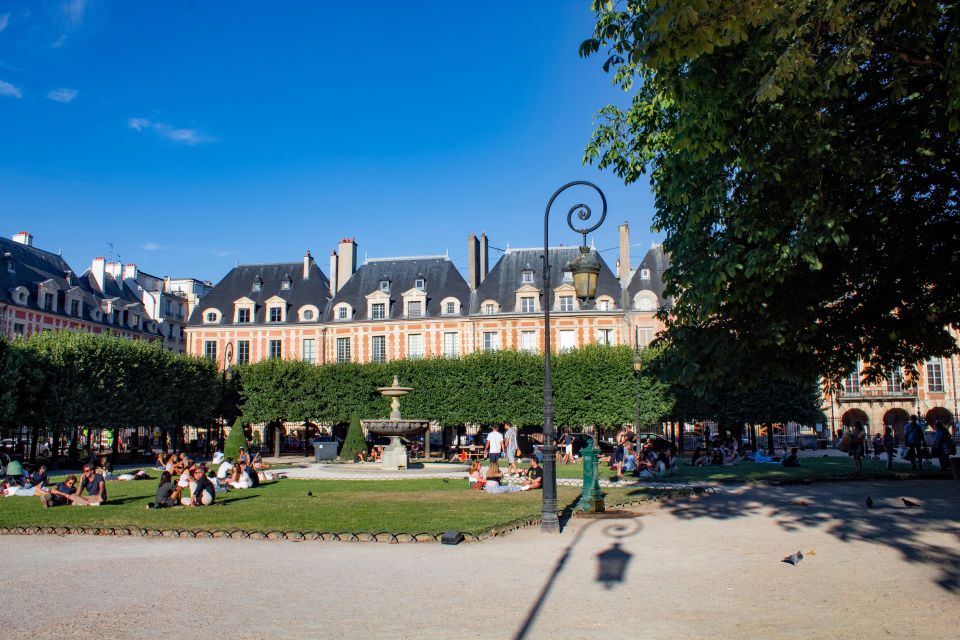
Le Marais is not a single postcard view. It is a district of changing identities, and that is exactly why a guide helps.
You may begin near Temple, at 89 Rue de Turbigo, where the surroundings connect to the old Templar story. From there, the walk moves through streets shaped by medieval development, noble families, religious institutions, Parisian food culture, and present-day design. A guide can tie those pieces together while you are standing in front of the actual buildings.
I like this kind of tour because Le Marais often looks casual at street level. A plain doorway may lead to a former aristocratic residence. A narrow street may mark the center of a community that has shaped Parisian life for generations. Without context, you can easily walk past the best details.
The small format matters here. With eight people or fewer, you can usually hear the guide without the raised voice and stop-start rhythm that comes with a large group. You can also ask about a shop, street, restaurant area, or building while the subject is still in front of you.
The tour runs in rain or shine, so wear shoes that can handle two hours on city pavement and bring weather protection. This is a walking experience, not a seated lecture.
You can also read our reviews of more walking tours in Paris



From Temple to Hôtel de Sens
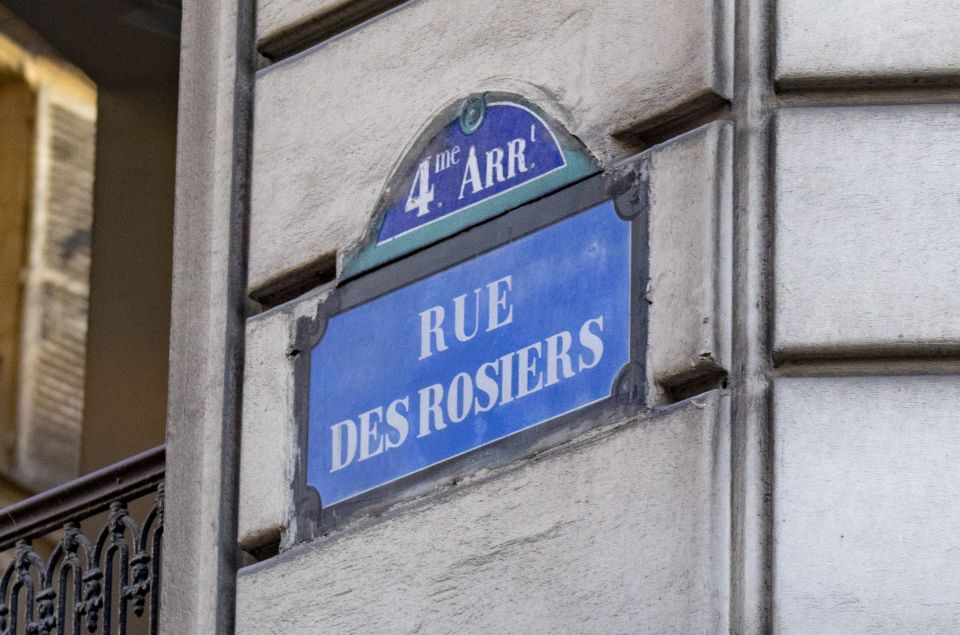
The starting point may be at Temple, 89 Rue de Turbigo, though the exact meeting point depends on the option you book. Check that detail before setting out, since the tour has two possible starting arrangements.
The opening section sets up Le Marais as a place of layers. The Templar Order is part of the district’s older story, and the guide uses that past to explain how this part of Paris changed over time. Do not expect a complete medieval history course. The value is in getting a clear frame for the streets ahead.
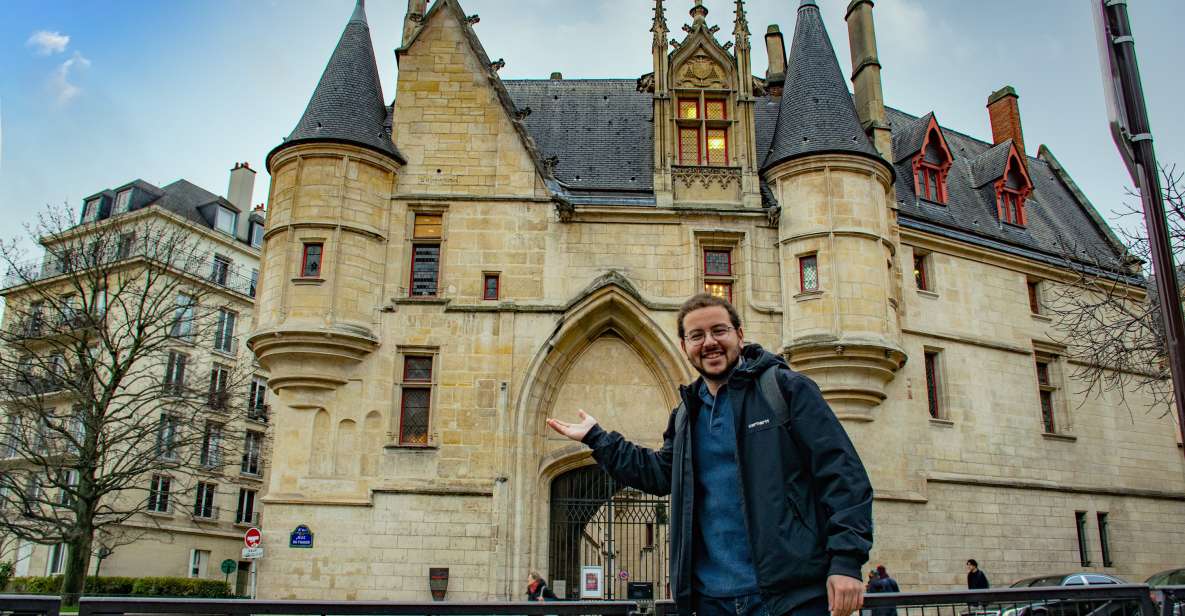
Hôtel de Sens is one of the early visual highlights. You stop here for about 10 minutes, with time for photographs and a guided explanation. Its historic architecture helps you see the difference between an ordinary Paris street and the grand residences built for powerful families and institutions.
The stop is fairly short, which is useful if you want a broad introduction, but limiting if you hope to go inside or study every architectural detail. Treat it as a strong outside visit and a prompt to return later if the building catches your interest.
Marché des Enfants Rouges and the food side of Le Marais
The Marché des Enfants Rouges receives about 15 minutes. This is one of the tour’s more grounded stops, since it connects the district’s past with everyday Parisian food culture.
A market adds a welcome change of pace after looking at historic façades. You can see how Le Marais remains a lived-in neighborhood, not just an open-air museum. The guide can explain the market’s place in the area while pointing out what makes it worth revisiting.
The time is enough for an introduction and photographs, but not necessarily for a relaxed meal. If you want to eat there, plan to return after the tour rather than counting on a full market visit during the two-hour route.
That is a useful pattern for this experience. You see many places, but the tour is designed to help you understand and prioritize them. It gives you a map in your head, then leaves you free to come back for lunch, shopping, or a museum visit.
Picasso Museum and the changing cultural district
The Picasso Museum is a brief photo stop of about 10 minutes. The information provided does not include museum admission, so you should view this part as an exterior introduction rather than a museum visit.
That may sound like a missed opportunity, but it suits the purpose of the walk. Le Marais is not only about old stone and royal squares. Its present-day identity includes museums, galleries, boutiques, and contemporary art. A stop connected to Picasso helps make that point.
If the museum is high on your Paris list, set aside separate time to visit it. The walking tour will not replace an indoor museum visit, but it can help you place the museum within the neighborhood and decide how to shape the rest of your day.
Rue des Rosiers and Jewish Le Marais
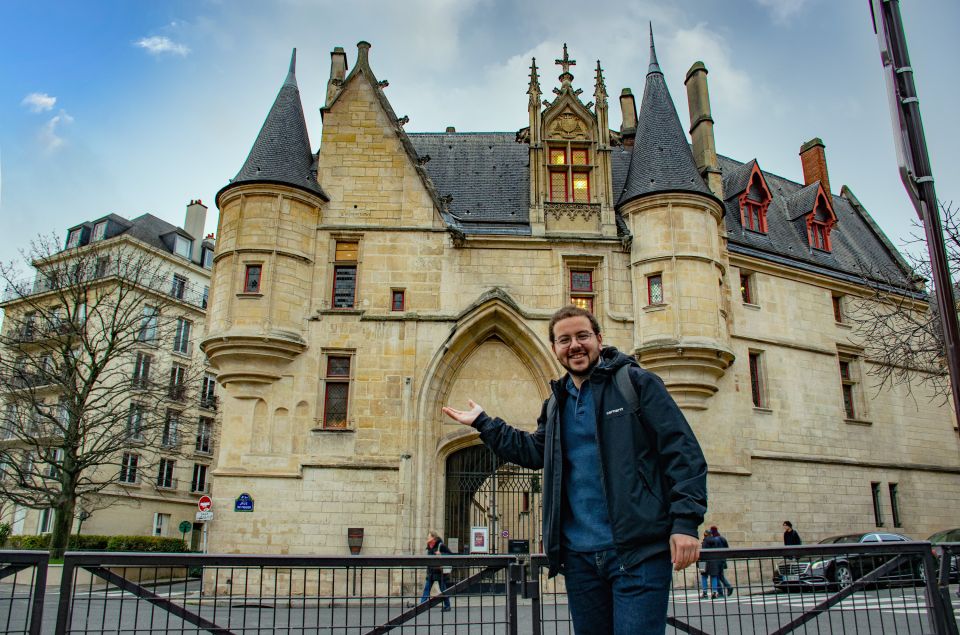
Rue des Rosiers receives around 20 minutes, making it one of the longer stops. This is an important part of the route because it focuses on the Jewish Quarter and gives the tour a social and cultural dimension beyond architecture.
Your guide explains how this part of Le Marais developed and points out details you might otherwise miss. The street is also useful for understanding the district’s modern food and shopping character. It is not presented as a sealed historic zone. It remains part of the neighborhood’s current life.
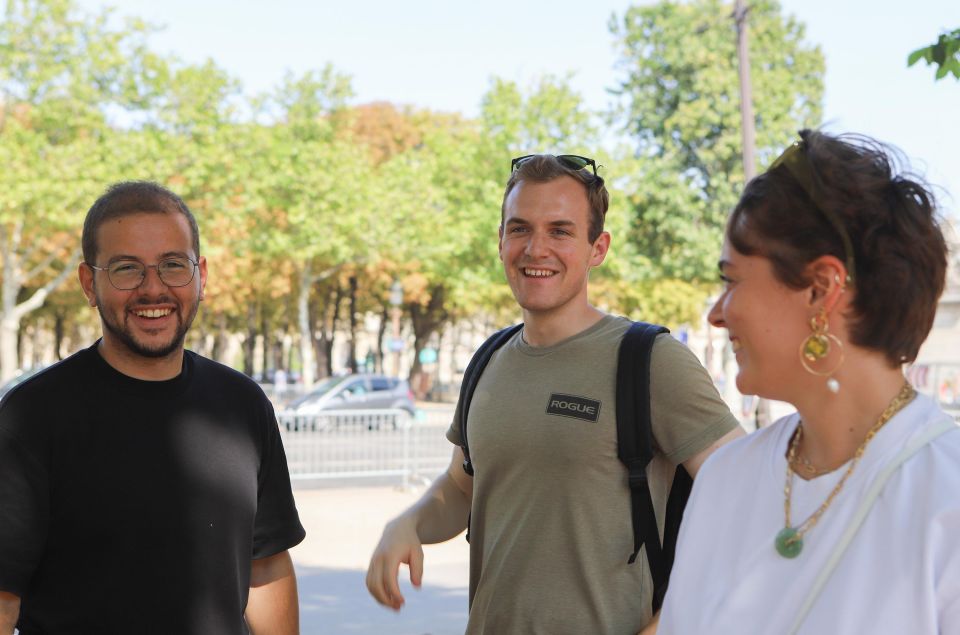
I would pay close attention here, especially if you prefer tours that explain communities and daily life rather than simply naming buildings. The guide team has included Hugo, Clara, and Walid. Their approaches may differ, but the available feedback points to strong explanations, good pacing, and an ability to adjust the conversation to your interests.
One guest specifically described Hugo’s walk through both quarters as full of surprising places and interesting conversation. Another found Clara’s pace especially comfortable. Walid was praised for tailoring the walk to personal interests, with contact a few days before the visit to confirm details and shape the experience. Those details suggest that the human side of the tour is a major part of its value.






Place des Vosges, the elegant centerpiece
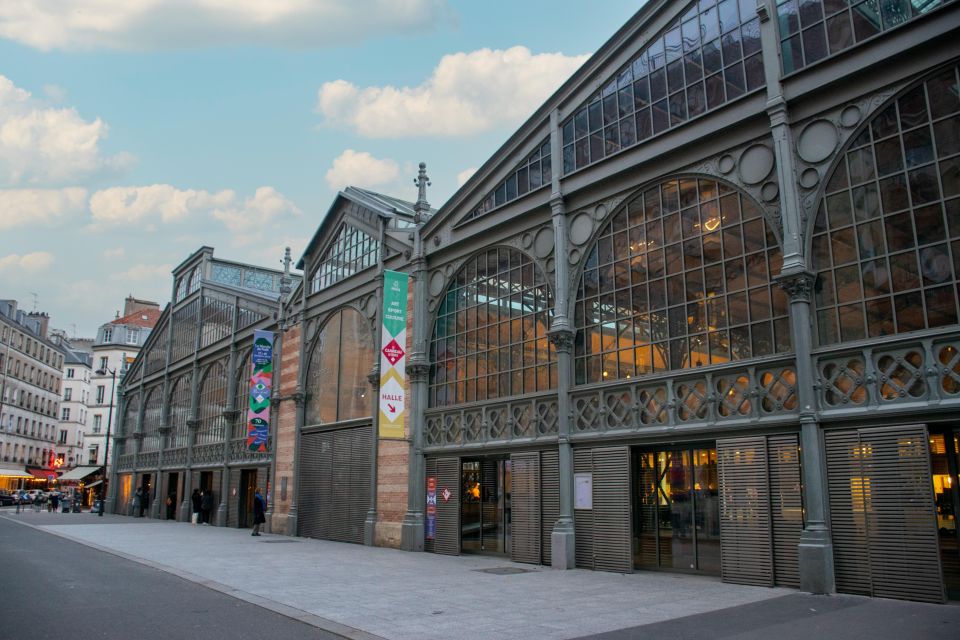
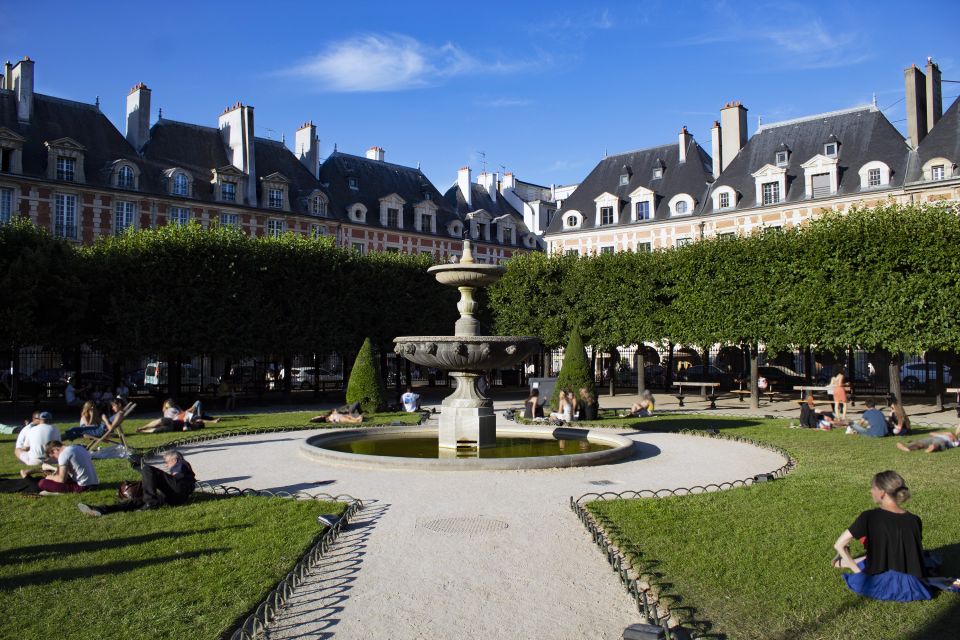
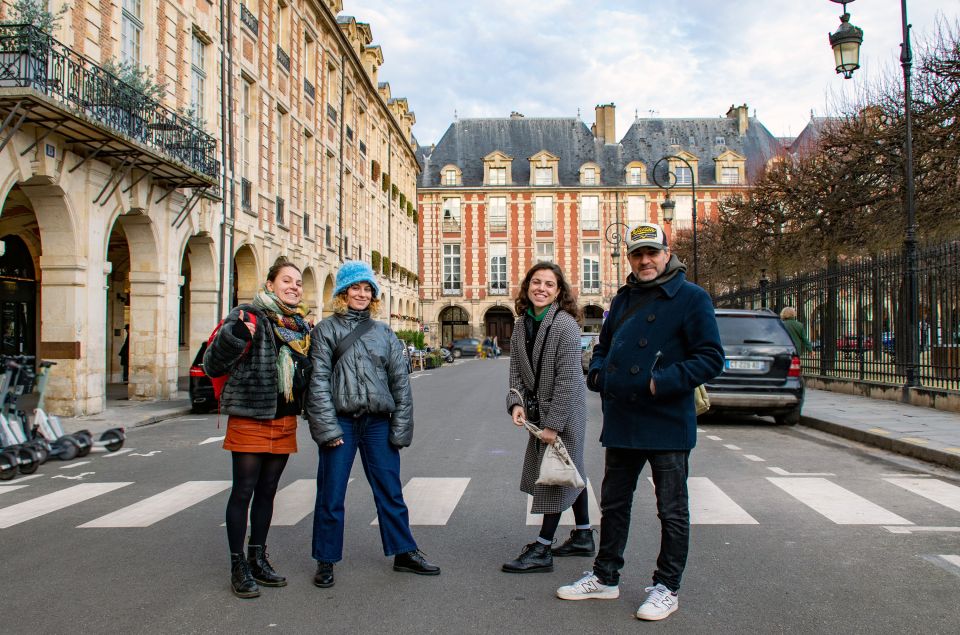
Place des Vosges gets about 20 minutes, tied with Rue des Rosiers for the longest stop. This square is one of Le Marais’s essential sights and a natural centerpiece for the walk.
Its orderly architecture gives you a clear look at the planned elegance of 1600s Paris. The surrounding buildings create a strong sense of unity, a sharp contrast to the narrower and more irregular streets elsewhere in the district. Your guide can explain how the square fits into the story of aristocratic Le Marais and why it remains such a popular place to pause.
You will have time for photographs and a guided visit, but not an extended architectural study. That is fine for a first look. The square is easy to appreciate quickly, and the guide’s context helps you see more than a pleasant open space.
If you want a quiet break, this is one of the places where you might linger after the tour. The official walk keeps moving, so use the end of the experience to decide which sights deserve a second visit.
Hôtel de Sully and private mansion architecture
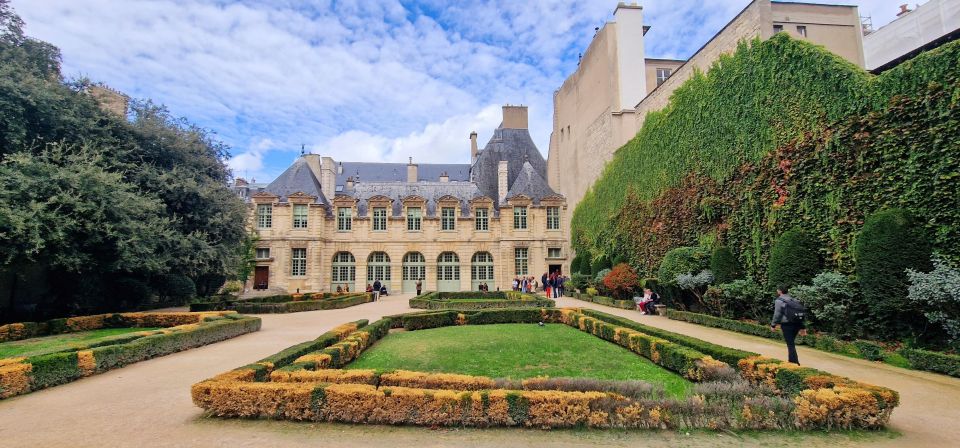
The stop at Hôtel de Sully lasts about 15 minutes. This is another chance to see the grand town houses, known in French as hôtels particuliers, that give Le Marais much of its character.
The important point is not just that the building is old. These residences show how status once shaped the district. Large homes, courtyards, gardens, and carefully designed façades reveal a Paris built for powerful residents, not only for the working population in the surrounding streets.
A guide’s explanation is particularly useful here because exterior architecture can be easy to overlook. You learn what to look for in the proportions, entrances, and relationship between the building and the street. The stop also reinforces the tour’s main theme: Le Marais keeps its past visible while serving modern Paris.
As with the other mansion stops, do not book this expecting an elaborate interior visit. The schedule calls for a guided stop of about 15 minutes, so the emphasis is on seeing, interpreting, and moving on.
Village Saint-Paul and Hôtel de Ville
Le Village Saint-Paul is a shorter stop of about 10 minutes. It adds another angle on the district, with smaller streets and a more tucked-away feel than the grand Place des Vosges.
The word village does not mean you leave Paris. You are still in the center of the city, but the setting can feel more intimate and less formal. This is the sort of place where a local guide is useful, since the appeal comes from the arrangement of lanes, courtyards, and small-scale spaces rather than one famous monument.
The walk then reaches Hôtel de Ville for another 10-minute guided stop. This gives the tour a strong citywide finish. You move from local streets and neighborhood stories to one of Paris’s major civic landmarks.
The tour has two possible drop-off points: Hôtel de Ville or Paroisse Saint-Paul Saint-Louis. That gives you a practical choice about what to do next. You can continue near the river and central Paris from Hôtel de Ville, or remain closer to the Saint-Paul side of Le Marais.
What $64 means for the value
At $64 per person, this is not the cheapest way to stroll through Le Marais. You can walk the streets for free, and many of the sights are viewed from outside.
The value comes from the guide, the small group, and the route’s structure. You are paying to connect places that can otherwise feel scattered: Hôtel de Sens, the market, the Picasso Museum area, Rue des Rosiers, Place des Vosges, Hôtel de Sully, Village Saint-Paul, and Hôtel de Ville.
I think the price is reasonable if you are visiting Paris for the first time, want a strong neighborhood orientation, or enjoy asking questions as you walk. It is also a fairer comparison with private touring than with a large group excursion. A private option is available, but the price may differ, so check the choice before booking.
The value is weaker if you already know Le Marais well or mainly want long stops inside museums and historic buildings. This is an overview walk with short visits. Its strength is connection and interpretation, not extensive admission-based sightseeing.
Pace, languages, weather, and access
The experience lasts two hours, with several stops ranging from 10 to 20 minutes. That creates a steady pace. You cover a lot, but you should expect regular walking and limited time at each place.
Guides lead the experience in English, French, or Spanish. Confirm your preferred language when choosing the tour, especially if it matters for your group.
The walk operates rain or shine. Paris weather can change quickly, so bring a coat or umbrella when needed. Comfortable shoes matter more than dressing for a formal sightseeing event.
The regular small-group experience is wheelchair accessible only with the private option. If access needs are important for you, select the private format rather than assuming the standard group route will work.
Hotel pickup and drop-off are not included. You need to reach the meeting point yourself, and the starting place may vary according to the option booked. The two possible ending points make it easy to continue exploring, but they do not replace transport back to your hotel.
Who will get the most from this walk
I would choose this tour if you want a clear first look at Le Marais without giving up the chance to ask questions. It suits couples, friends, solo visitors, and families who prefer a small group to a crowd.
It is especially useful early in a Paris stay. The guide’s tips for navigating the city afterward can help you decide where to return, how to connect the district with nearby sights, and which areas fit your interests.
Art-minded visitors will appreciate the Picasso Museum stop and the references to galleries and boutiques. Food-focused visitors get the Marché des Enfants Rouges and Rue des Rosiers. Architecture fans get Place des Vosges, Hôtel de Sens, and Hôtel de Sully.
You should choose something else if you need a slow, highly detailed architectural tour or full interior access. You should also allow extra time if you want to eat at the market, visit the Picasso Museum, shop along Rue des Rosiers, or explore the churches and civic buildings near the final stops.
Should you book the Le Marais walk?
Book it if you want a compact, personal introduction to one of Paris’s most varied districts. The strongest reasons are the eight-person limit, the mix of major sights and less obvious corners, and the guides’ reported ability to keep the pace comfortable and adapt the conversation.
The $64 price makes the most sense when you value interpretation and orientation, not admission tickets. Think of the walk as a well-organized first chapter. It shows you where Le Marais’s stories meet, then gives you enough direction to build your own second visit.
Skip it if you have only two hours and want to go inside museums, or if you already know the area street by street. For most first-time visitors who want history, food, architecture, and modern Paris in one manageable walk, this is a sensible choice.
FAQ
How long does the Le Marais walking tour last?
The tour lasts two hours.
How large is the small group?
The intimate group has a maximum of eight people. A private option is also available.
What languages are offered?
The tour is offered in English, French, and Spanish.
Which major places are included?
The route includes Hôtel de Sens, Marché des Enfants Rouges, the Picasso Museum area, Rue des Rosiers, Place des Vosges, Hôtel de Sully, Le Village Saint-Paul, and Hôtel de Ville.
Does the tour include hotel pickup and drop-off?
No. Hotel pickup and drop-off are not included.
Is the tour wheelchair accessible?
It is wheelchair accessible only with the private option.
Can I cancel for a full refund?
Yes. You can cancel up to 24 hours in advance for a full refund. You can also reserve now and pay later.