REVIEW · PARIS
Paris: La Défense Modern District Walking Tour
Book on GetYourGuide →Operated by Cognosimo Tours · Bookable on GetYourGuide
La Défense is Paris with the old rules set aside. Instead of limestone façades and Haussmann balconies, you get towering office buildings, broad plazas, outdoor sculpture, and the huge open frame of the Grande Arche, built on the same ceremonial line as the Arc de Triomphe, the Obelisk, and Place de la Concorde. I like this tour for its clear look at the city’s modern side and for the way it connects architecture with postwar urban planning.
I also like that the walk lasts only 75 minutes, making it easy to fit into a busy Paris day, and that it is a private tour in French or English. The main caution is the meeting point: one verified booking had trouble finding the guide at the start, so arrive early and agree on exactly where you will meet near the Grande Arche.
In This Review
- Key points to know
- Why La Défense deserves a place in your Paris plans
- Starting at the Grande Arche
- Reading the urban plan of La Défense
- Squares, sculptures, and open public space
- The contrast between La Défense and historic Paris
- What the 75-minute timing means for you
- The $100 price and private-tour value
- Who will enjoy this modern Paris walk
- Practical advice for a smoother visit
- Should you book the La Défense tour?
- FAQ
- Where does the La Défense walking tour begin?
- Where does the tour finish?
- How long does the tour last?
- What languages are available?
- Is this a private tour?
- What will I see during the walk?
- Does the tour explain the history of La Défense’s development?
- Is the tour suitable for wheelchair users?
- Can I cancel for a full refund?
Key points to know
- The Grande Arche anchors the tour: See Paris’s modern gateway and understand its alignment with several major historic monuments.
- The 1960s project gets context: Learn how La Défense developed under Georges Pompidou, with contributions from Jean Prouvé and Oscar Niemeyer.
- Outdoor art is part of the route: Sculptures and public squares give the office district a visual life beyond its towers.
- The contrast with old Paris is the point: This is a useful counterpoint to the Louvre, Notre-Dame, and the Marais.
- Private guiding keeps the walk focused: You can ask questions about buildings, planning, and the city’s changing identity.
- Check the physical demands: The activity is not suitable for wheelchair users or people with mobility impairments.
Why La Défense deserves a place in your Paris plans
Most first-time visits to Paris focus on the historic center. That makes sense, but it can also leave you with a one-sided picture of the city. La Défense shows the capital as a business center and a place that has repeatedly tried to reinvent itself.
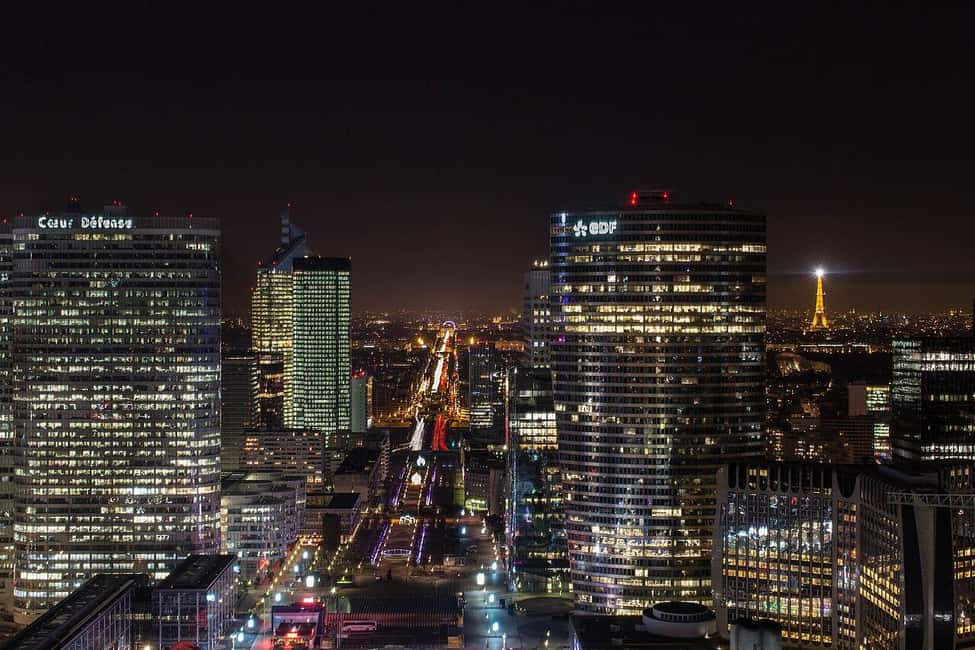
You will not find the intimate streets or centuries-old façades that make central Paris so appealing. Instead, the district gives you scale. Open spaces separate the buildings. Strong geometric lines replace winding lanes. Glass, steel, concrete, and stone create a setting that feels more like a planned urban experiment than an old neighborhood.
I find that contrast useful. After several days of monuments and traditional architecture, La Défense can reset your eyes. It asks you to consider what Paris wanted to become in the second half of the 20th century, not only what it had been before.
The 75-minute format works well for this purpose. You get a guided introduction without giving up half a day. The walk is especially suitable if you enjoy modern architecture, public art, city planning, or the visual clash between historic and contemporary Paris.
You can also read our reviews of more walking tours in Paris



Starting at the Grande Arche
The tour begins at the Grande Arche de la Défense, the district’s most recognizable landmark. Its enormous square opening gives it a simple but powerful form. Rather than copying the Arc de Triomphe, it offers a modern interpretation of the triumphal arch.
The building is also important for its position. It aligns with the Arc de Triomphe, the Obelisk, and Place de la Concorde, creating a long visual and ceremonial axis through Paris. On this walk, that alignment helps connect the modern district to the historic center. You are not looking at an isolated office complex. You are looking at a newer chapter placed on a very old line through the city.
The meeting point is easy to identify in principle because the Grande Arche is such a large landmark. In practice, the surrounding public spaces can make a first meeting less obvious than expected. One useful detail from the available feedback is that a guest had difficulty locating the guide at the beginning. I would arrive with extra time, keep your phone available, and confirm the precise meeting spot before the tour date.
The supplied details do not name the individual guides, so you should not expect to meet a particular person. The tour is offered in English or French, and the private format means the guide’s attention is reserved for your group.
Reading the urban plan of La Défense
The guide introduces the urbanization project that began in the 1960s under Georges Pompidou. This is one of the most valuable parts of the experience because the district makes more sense once you understand that it was planned as a major modern business center rather than allowed to grow street by street.
You will learn about the work of architects connected with the project, including Jean Prouvé and Oscar Niemeyer. Their names place La Défense within the wider story of modern architecture. The district is not simply a collection of tall buildings. It reflects ideas about traffic, work, open space, monumental scale, and the role of architecture in a growing city.
A guide can point out how the district separates broad pedestrian areas from the surrounding roads and buildings. The exact emphasis may depend on your guide, but the central theme is clear: La Défense was designed to present a new image of Paris.
That planning story gives the walk more substance than a quick photo stop. Without it, you might simply see a group of office towers. With it, you can look at the spaces between them and ask why the district feels so different from central Paris.
Squares, sculptures, and open public space
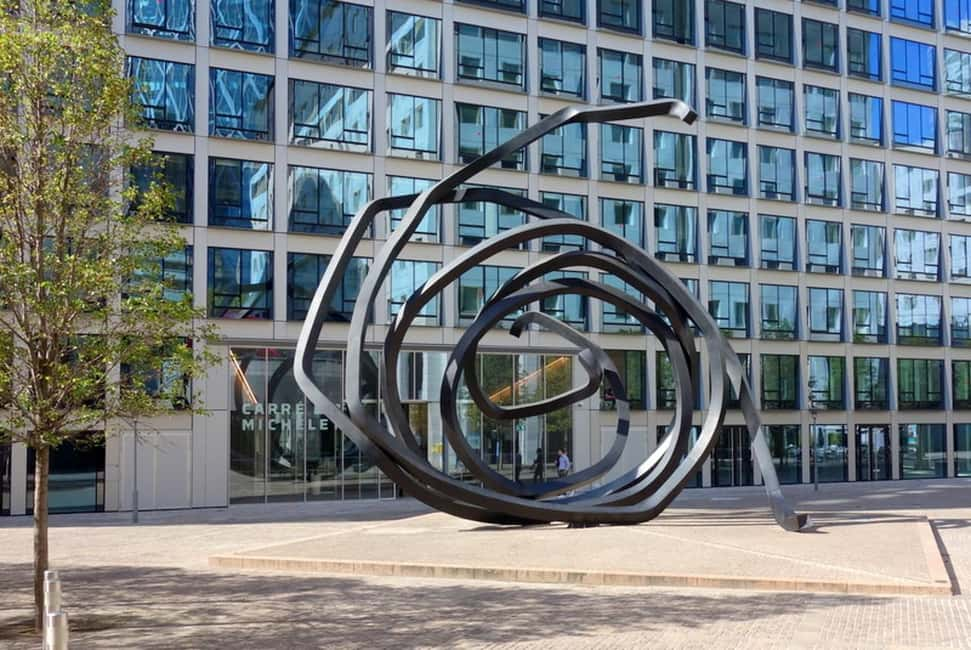
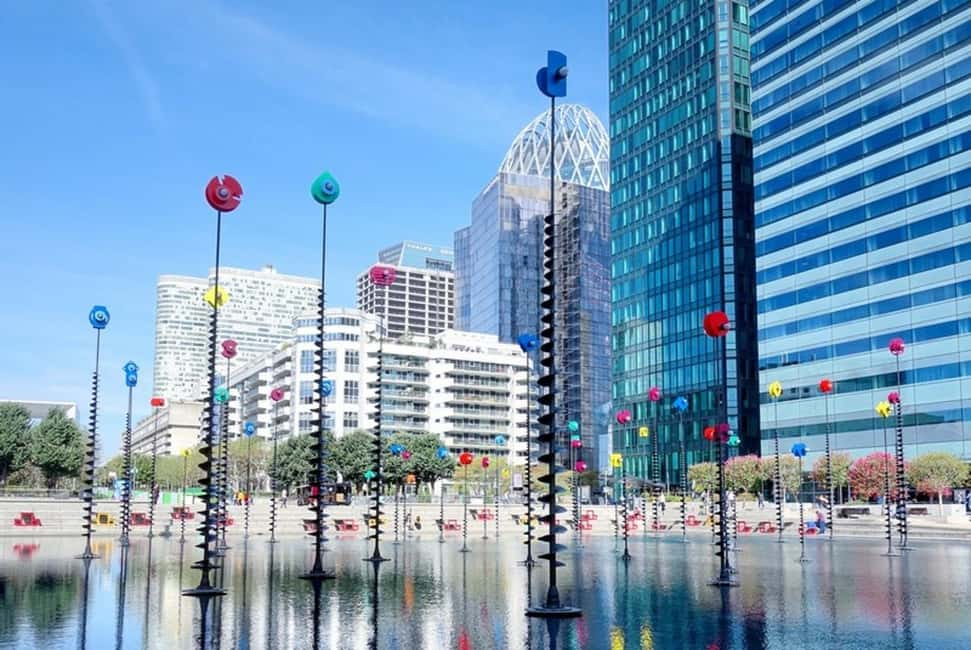
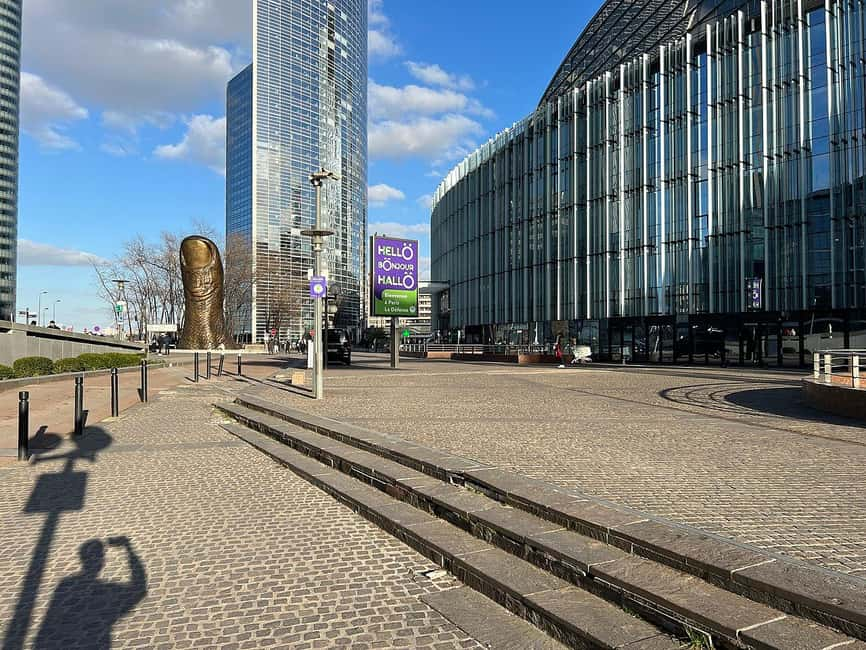
The route includes the squares and sculptures spread through La Défense. These works matter because they keep the district from being only a place to work. Public art gives the large open spaces points of interest and breaks up the hard surfaces of the modern setting.
You can expect the guide to draw attention to the relationship between the sculptures, the surrounding buildings, and the plazas. A work of art that might seem abstract on its own can look different when framed by high-rise façades or placed along a major pedestrian axis.
This is also where the tour can feel most rewarding for people who enjoy design. La Défense does not present architecture in the small, intimate way you find in older Paris neighborhoods. It presents it at the level of blocks, towers, plazas, and long sightlines.
The district’s outdoor art is one of its strongest features. The available feedback specifically praised the collection of modern skyscrapers and outdoor sculpture, describing the visit as worthwhile. That is a fair reading of the experience: the art and buildings give you something to examine even if contemporary architecture is not your usual reason for touring Paris.
The contrast between La Défense and historic Paris
The tour’s central comparison is between old Paris and its contemporary development. You will not physically walk through the historic center during this 75-minute activity, but the guide uses familiar landmarks to explain what makes La Défense different.
Historic Paris often feels enclosed and human-scaled. Streets, façades, churches, bridges, and monuments create a sequence of close views. La Défense opens out. Its spaces are larger, its buildings are taller, and its architecture often depends on distance to make sense.
That contrast can be exciting, but it is not for everyone. If you want a tour filled with ornate interiors, old streets, and famous paintings, this is the wrong choice. If you want to understand how Paris accommodates modern commerce and large-scale development, it offers a useful change of pace.
I would pair this walk with a classic central Paris tour rather than treat it as a substitute. The two experiences explain different sides of the same city. One shows the inherited capital, and the other shows the capital that tried to move forward.






What the 75-minute timing means for you
Seventy-five minutes is enough time for a clear introduction, but not enough for a complete architectural study of every tower and artwork. That limit is worth keeping in mind when you decide how much to expect.
The short duration is a benefit if your schedule is tight. You can add La Défense before another activity, use it as a morning outing, or visit when you want a change from museums. The private format also gives the guide a chance to adjust the discussion to your interests within the available time.
You may prefer a longer experience if you want detailed coverage of individual architects or extended time for photography. The supplied information does not promise entry into multiple buildings, a museum visit, or a full tour of the district. The emphasis is on walking, seeing the Grande Arche, viewing sculptures and squares, and learning about the urban project.
This is best understood as an orientation walk. It gives you the ideas and visual framework to appreciate La Défense, then leaves you free to continue exploring on your own if you wish.
The $100 price and private-tour value
At $100 per person, this is not a casual budget walk. The value depends heavily on your group size and your interest in the subject. Since the experience is private, you are paying for a guide dedicated to your party rather than joining a large shared group.
For a couple or a small group that cares about modern architecture and urban planning, that format can make the price reasonable. You can ask direct questions, keep the pace suited to your group, and focus on the features you care about most. The 75-minute length also prevents the cost from stretching into a much larger half-day commitment.
For a solo visitor, the price feels harder to justify unless La Défense is a major priority. The district is also available to explore independently, and many people can appreciate its broad plazas and skyscrapers without a guide. The paid value comes from interpretation: learning why the district was created, how its design relates to Paris, and what role its architects and public art play.
The tour includes the guided walk, the Grande Arche visit, the sculptures and squares, and the discussion of La Défense’s urbanization project. It does not list meals, transportation, or additional attraction tickets, so plan your budget around the tour itself.
You can reserve now and pay later, which helps if your schedule is still moving. Free cancellation is available up to 24 hours before the activity for a full refund. Those terms reduce the risk, but they do not change the need to check the final meeting details carefully.
Who will enjoy this modern Paris walk
I would recommend this experience to you if you fit one or more of these descriptions:
- You enjoy modern architecture, skyscrapers, and large public spaces.
- You want to understand how Paris developed after the 1960s.
- You have already seen the main historic sights and want a different side of the city.
- You prefer a private guide who can speak English or French.
- You want a short activity that fits around other plans.
- You like photography based on strong lines, scale, and unusual buildings.
Families with older children may also find the dramatic architecture easier to appreciate than a long museum visit, but the physical limitations matter. The activity is specifically not suitable for people with mobility impairments or wheelchair users. Smoking is not allowed.
You should also choose this tour with realistic expectations. The district is a business center, not a traditional Paris neighborhood. Its appeal comes from planning, architecture, scale, and public art, not from cafés, old shops, or medieval atmosphere.
Practical advice for a smoother visit
Wear comfortable shoes. The activity is a walking tour through a large modern district, and the details provided do not promise a seated format or a route designed for limited mobility.
Get to the Grande Arche early. Because the starting point is broad and public, identifying the correct guide may take a little effort. Confirm the exact meeting instructions and look for a clear way to contact the guide if you cannot spot the group.
Keep the weather in mind. Much of the interest lies in open squares and outdoor sculptures, so the experience is likely to feel different in poor weather than it would on a clear day. The available details do not specify indoor alternatives.
If modern architecture is your main interest, prepare a few questions before you arrive. You might ask about the project’s 1960s goals, the influence of Georges Pompidou, Jean Prouvé, and Oscar Niemeyer, or the reason the Grande Arche was placed on the historic axis.
The tour is available in French and English. Select the language that lets you follow architectural terms and planning ideas without effort. A private group is useful here because even a short explanation can become more rewarding when you can ask for clarification.
Should you book the La Défense tour?
Book it if you want a focused look at Paris’s modern identity, especially if skyscrapers, public sculpture, and urban planning interest you. The Grande Arche, the historic axis, and the 1960s development story give the 75-minute walk a clear purpose.
Skip it if your Paris time is very short and you have not yet seen the major historic sights, or if ornate architecture and old neighborhoods are your priority. At $100 per person, the tour makes the most sense for a private group that values explanation and conversation.
My practical verdict: this is a specialized but worthwhile addition to Paris, not a universal first-day tour. Confirm the meeting point, allow for walking, and choose it because you want to understand the modern district, not because you expect another version of old Paris.
FAQ
Where does the La Défense walking tour begin?
The tour begins at the Grande Arche de la Défense.
Where does the tour finish?
It finishes at Place de la Défense in Puteaux, France.
How long does the tour last?
The guided walking tour lasts 75 minutes.
What languages are available?
The live guide can conduct the tour in French or English.
Is this a private tour?
Yes. The activity is offered for a private group.
What will I see during the walk?
You will see the Grande Arche, modern sculptures, public squares, and the contemporary architecture of La Défense.
Does the tour explain the history of La Défense’s development?
Yes. The guide discusses the urbanization project that began in the 1960s under Georges Pompidou, including the work of architects such as Jean Prouvé and Oscar Niemeyer.
Is the tour suitable for wheelchair users?
No. The activity is listed as unsuitable for wheelchair users and people with mobility impairments.
Can I cancel for a full refund?
Yes. You can cancel up to 24 hours before the activity for a full refund.