REVIEW · PARIS
Paris Historic Private 3-hour Walking Tour with WWII Landmarks
Book on Viator →Bookable on Viator
Paris reveals a different face when you follow the marks left by World War II. This private three-hour walk moves from the Jewish Quarter to the grand hotels of Place Vendôme, showing how occupation, resistance, deportation, and liberation touched both ordinary streets and famous landmarks.
I like the way the route mixes major Paris sights with quieter wartime stories, especially the Holocaust Memorial, Rue des Rosiers, and the account of bookshop owner Silvia Beech refusing to sell to the Gestapo. I also like the private format, which lets you ask questions and adjust the pace. The main drawback is the price: at $220 per person, it makes the most sense for a small group that values a focused guide rather than a low-cost general walk.
- Begin in the Marais: Connect daily Jewish life, persecution, round-ups, and deportation to streets you can still walk today.
- Hear a civilian resistance story: Shakespeare and Company adds a personal account of courage under occupation.
- Use the Metro once: One Paris Metro ticket is included for the move to the Tuileries.
- See wartime Paris through famous addresses: The Ritz and Le Meurice reveal how occupation reached the city’s grandest hotels.
- Finish with a sweeping view: End near General de Gaulle’s statue, the Grand Palais, the Petit Palais, and the Champs-Élysées.
In This Review
- A WWII Walk That Puts Ordinary Paris First
- Starting at Saint-Paul and Entering the Jewish Quarter
- Shakespeare and Company and the Courage of a Bookseller
- Taking the Metro to the Tuileries
- Place Vendôme, the Ritz, and Le Meurice
- Place de la Concorde and the Road to Liberation
- What the Private Format Adds
- Is $220 Per Person Good Value?
- Pace, Walking, and Practical Preparation
- Who Will Get the Most From This Walk?
- Should You Book the Paris WWII Walking Tour?
- FAQ
- How long is the Paris WWII walking tour?
- How much does the tour cost?
- Is this a private tour?
- Where does the tour begin?
- What transportation is included?
- Where does the tour finish?
A WWII Walk That Puts Ordinary Paris First
This is not a general sightseeing walk with a few wartime facts added at the end. The route is built around Paris during occupation, with the city itself serving as the classroom.
You begin near Saint-Paul in the Marais, then move through the Jewish Quarter, across the Seine, into the Tuileries, and onward to Place Vendôme and Place de la Concorde. The final stretch follows part of the Champs-Élysées. That progression matters because it shifts your view between private lives, public power, cultural resistance, military occupation, and liberation.
I especially like the balance between recognizable Paris and less obvious places. You will see well-known squares, gardens, hotels, and monuments, but the guide’s focus stays on what happened there during the war. That gives familiar sights a new purpose without turning the walk into a dry classroom lecture.
The private setup should help if you have a long list of questions or want the guide to linger over one subject. Jo, one of the guides associated with this experience, is described as adaptable and able to connect French history with current life in Paris. Christopher is also described as personable, accommodating, and happy to take questions. Guide assignment is not guaranteed, but the format gives your guide room to respond to your interests.
Starting at Saint-Paul and Entering the Jewish Quarter
The tour begins at Paroisse Saint-Paul Saint-Louis, at 99 Rue Saint-Antoine, close to Metro Saint Paul. From there, you enter the Marais and the Jewish Quarter for about an hour.
This is the emotional center of the walk. You learn about daily life under Nazi Occupation, then follow the story of persecution, the round-up of Jewish residents, and deportation to Auschwitz. The route includes the Holocaust Memorial, the Museum of Jewish Art and History, and Rue des Rosiers.
Rue des Rosiers is one of the most useful stops because it is a living street, not a detached monument. You can look at the shops and pavement while the guide explains how Jewish life was disrupted and threatened. That contrast can be difficult, but it makes the subject more immediate than a quick stop outside a museum.
The Holocaust Memorial adds a quiet place for reflection. Admission is listed as free, as are the other stops, but the tour does not appear to include a full visit inside the Museum of Jewish Art and History. Think of this section as an outdoor introduction and guided context, not a substitute for spending several hours in a museum.
You should come ready to listen. The material includes persecution and deportation, so this is not a light sightseeing stroll. Families with older children, students, and anyone trying to understand France beyond its postcard image may find this part especially worthwhile.
You can also read our reviews of more walking tours in Paris



Shakespeare and Company and the Courage of a Bookseller
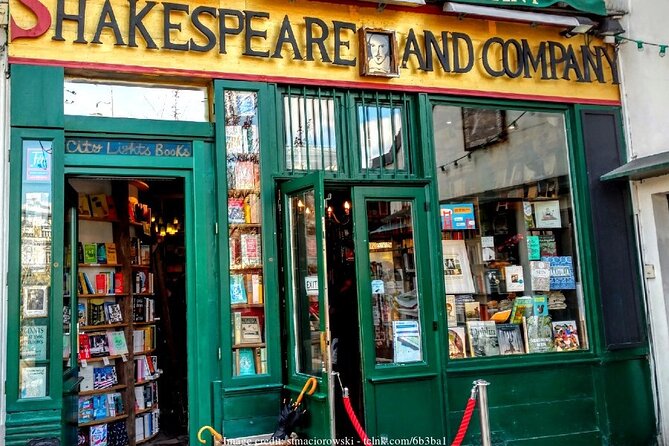
The next stop is Shakespeare and Company, the famous bookshop near the Seine. You spend about 30 minutes here, hearing how its founder, Silvia Beech, refused to sell her books to the Gestapo.
This story gives the tour a human scale. The Marais section deals with a whole community facing state persecution. At Shakespeare and Company, the focus narrows to one civilian making a clear choice under pressure.
I like the change of mood. You move from memorials and deportation to a bookstore, a place linked with ideas, readers, and independent judgment. The stop shows that resistance was not limited to armed groups or military figures. Some people resisted through refusal, principle, or small acts that carried real risk.
The tour does not list admission to the shop as part of the experience, and the stop is described as a visit rather than a private indoor program. You should expect time near this landmark and a guided account connected to it, with the exact chance to browse depending on the day and the guide.
Taking the Metro to the Tuileries
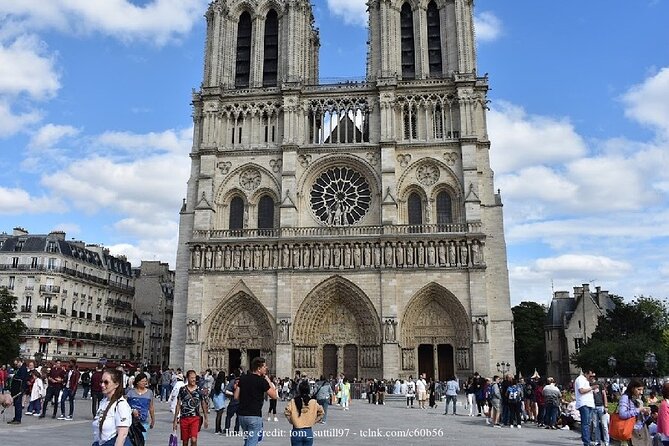
The route then uses the Paris Metro to reach the Tuileries Gardens. One Metro ticket is included, which is helpful because the walk covers several parts of central Paris rather than staying in one neighborhood.
The Metro ride also breaks up the walking. That matters on a three-hour tour, especially if you want time for photos and questions without rushing from one stop to the next. Additional transportation costs on the day are not included, so you should allow for that if the guide recommends more Metro travel.
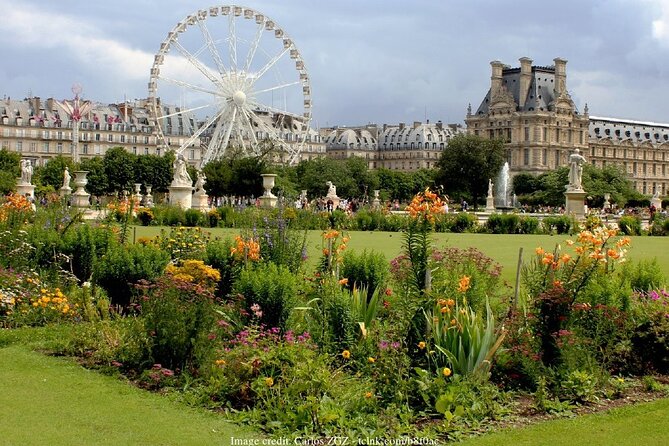
At the Tuileries, the subject changes to the Monuments Men. You spend about 30 minutes learning about their wartime work. The garden gives you a broad, open setting after the tighter streets of the Marais and the busy area around Shakespeare and Company.
This stop also reminds you that war threatened art and buildings as well as people. The Tuileries is one of Paris’s classic public spaces, but the guide uses it to explain how cultural treasures became part of the wartime story.
The itinerary does not promise a long garden walk or a formal garden tour. You should see this as a focused historical stop, with enough time to understand the topic and take a few photographs.
Place Vendôme, the Ritz, and Le Meurice
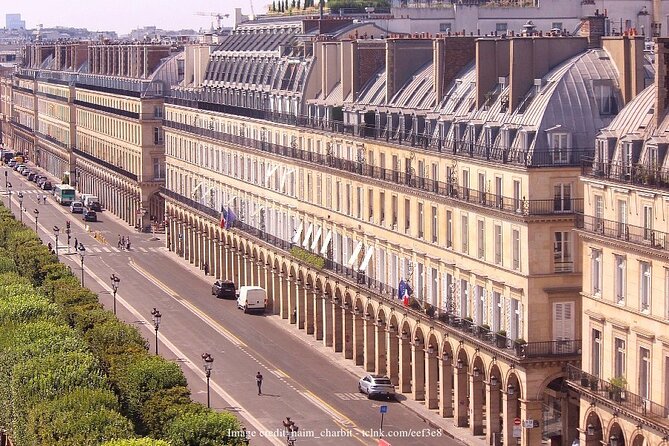
From the Tuileries, the tour continues to Place Vendôme and nearby Rue de Rivoli, where you see the Ritz and Le Meurice. This section lasts about 30 minutes.
These hotels offer a sharp contrast with the Jewish Quarter. Here, the story turns toward power, privilege, occupation, and the people who moved through Paris’s most prestigious addresses. The guide connects these famous hotels with the war years, allowing you to look beyond their polished façades.
I like this part because it keeps the tour from becoming a single-note memorial walk. Paris during the war was not one experience. The city held frightened families, people in hiding, collaborators, resisters, foreign officers, artists, officials, and wealthy hotel patrons. The Ritz and Le Meurice help show how the occupation reached the highest levels of Parisian society.
The stop is outdoors and free of an admission charge. Do not expect a hotel interior tour or access to private rooms. The value is in the explanation of what these addresses represented and how the guide links them to the wider history of occupied Paris.
Place de la Concorde and the Road to Liberation
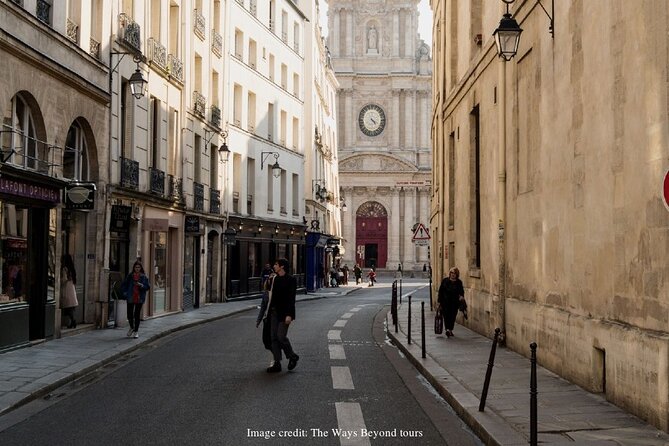
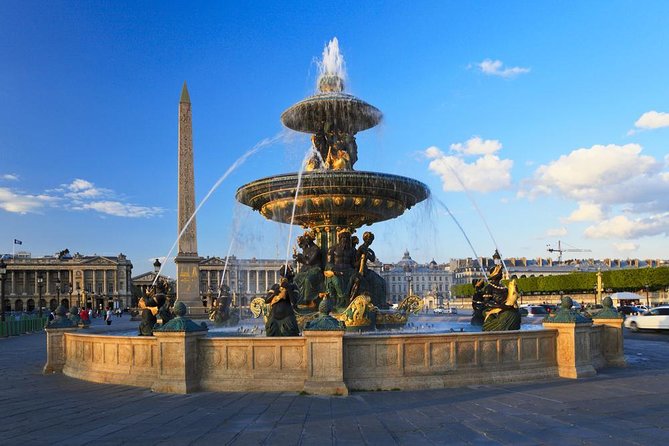
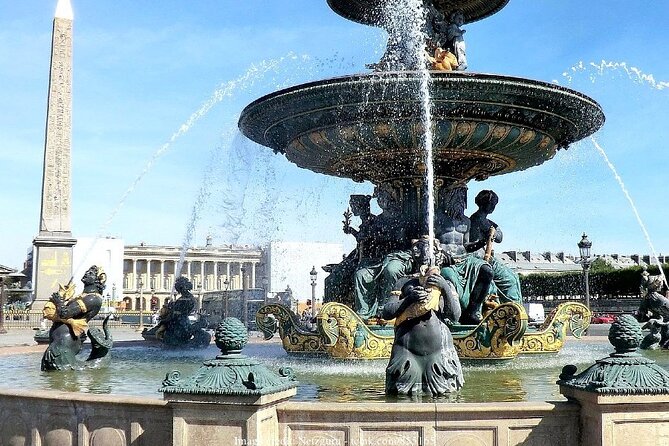
The final 30 minutes begin at Place de la Concorde, described as the place where peace was declared. From there, you walk partway up the Champs-Élysées, the grand avenue used by both Nazi and Allied forces during their marches through Paris.
This is a strong closing section because the scale grows again. You have started with individual streets and community memory. You now reach a ceremonial axis tied to military power, public celebration, and the return of French authority.
The walk ends at the statue of General Charles de Gaulle, identified here as a hero of France. Nearby, the Grand Palais and Petit Palais were used as hospitals during the war. From this point, you get a broad view toward the Arc de Triomphe.
That final view gives you a chance to take photographs, but it also ties the pieces together. Parisian history is often presented through grand architecture. This tour asks you to consider the people and events behind those façades, then finishes in a place built for national ceremony.
The endpoint is close to public transportation and taxi links. Your guide can advise you on continuing your day, which is useful if you are heading to another sight, returning to your hotel, or looking for food nearby.
You can also read our reviews of more private tours in Paris





What the Private Format Adds
The tour is for your group only. That is the biggest reason to consider it at this price.
A private walk can move at a more comfortable pace than a large group tour. You can stop for photographs, ask about a family connection, or request more explanation about the Jewish Quarter, the Resistance, the Monuments Men, or the liberation of Paris. The supplied feedback gives particular emphasis to guides who answer questions and adapt to what the group wants to see.
That flexibility is also useful if your group has mixed interests. One person may want more military history, another may care more about civilian life, and another may want to connect the past with present-day Paris. A guide such as Jo may be able to bring those threads together, while Christopher is described as welcoming questions throughout the walk.
Still, private does not mean fully custom from the first minute. The route has a clear structure and fixed major stops. You can influence the pace and discussion, but you should not assume you can replace every listed location with a completely different itinerary.
Is $220 Per Person Good Value?
The price is $220 per person, with group discounts available. That is a serious cost for three hours, especially when the stops themselves do not require admission fees.
You are paying mainly for the private guide, the specialist subject, the route design, and the ability to shape the conversation. If you are traveling with several people, the group discount may improve the value. For a couple or a solo visitor, the price will feel easier to justify if World War II history is a central reason for visiting Paris.
I would not choose this tour simply to see the Marais, the Tuileries, or Place de la Concorde. You can visit those places on your own. I would choose it because you want help connecting them to occupation, persecution, resistance, and liberation in one well-paced morning or afternoon.
One Metro ticket is included, but food, drinks, hotel pickup, hotel drop-off, extra transportation, and gratuities are not. You will need to reach the starting point yourself and plan your onward journey from the Charles de Gaulle statue area.
Pace, Walking, and Practical Preparation
You need a moderate level of physical fitness. The experience lasts about three hours and includes walking through several central areas, standing at outdoor landmarks, and using the Metro.
Wear comfortable shoes. The route is not presented as a strenuous hike, but a thoughtful walking tour can feel longer than a sightseeing bus ride, especially if you are already tired from a full day in Paris.
Give yourself enough time to reach Saint-Paul. The starting point is at Paroisse Saint-Paul Saint-Louis, and arriving early will help you begin calmly. Since the tour begins near a Metro station, public transportation is a practical way to get there.
Bring water and plan food separately. The guide can recommend local favorites along the way, but meals and drinks are not included. You should also leave some room for photographs, since the route passes several places you may want to frame properly.
The tour has mobile ticketing and confirmation is received at booking. Free cancellation is available if you cancel at least 24 hours before the local start time. Changes or cancellations inside that window are not accepted for a refund.
Who Will Get the Most From This Walk?
This is best for you if you want history tied to real streets rather than a general overview from a bus or a museum label. It suits couples, families, and small private groups who are willing to pay more for direct conversation with a guide.
It is also a good choice if you have already seen the major monuments and want a new way to read the city. You still get familiar Paris, including the Champs-Élysées, the Tuileries, Place Vendôme, and the grand hotels, but the focus is on what those places meant during the war.
You may want a different experience if you prefer a fast tour with many attractions, dislike serious historical subjects, or want extended interior access to museums and hotels. This route is about guided interpretation outdoors, not museum admission or luxury-hotel sightseeing.
The strongest feature is the human focus. The tour covers the Jewish population of Paris, civilian heroes, a bookseller’s refusal, cultural protection, and the people connected with occupation and liberation. The guides are also described as warm, adaptable, and open to questions, which matters more on a private tour than a long list of stops.
Should You Book the Paris WWII Walking Tour?
Book it if you want a specialized, private history walk and are comfortable with the $220 per-person price. The route is well suited to anyone who wants to understand Paris during World War II while still seeing major central sights.
I would especially recommend it for a small group that can use the private format fully. Ask questions, request context about the subjects that matter to you, and leave time for the guide to connect the wartime story with present-day Paris.
Skip it if your main goal is inexpensive sightseeing or long visits inside museums. But if you want the Marais, Shakespeare and Company, the Tuileries, Place Vendôme, and the Champs-Élysées to speak about occupation and liberation, this walk gives those places a clear and personal thread.
FAQ
How long is the Paris WWII walking tour?
The tour lasts approximately three hours.
How much does the tour cost?
The listed price is $220 per person. Group discounts are available.
Is this a private tour?
Yes. Only your group participates in the activity.
Where does the tour begin?
It begins at Paroisse Saint-Paul Saint-Louis, 99 Rue Saint-Antoine, 75004 Paris, near Metro Saint Paul.
What transportation is included?
One Paris Metro ticket is included. Additional transportation used during the day is not included.
Where does the tour finish?
The tour finishes near the statue of General Charles de Gaulle, close to public transportation and taxi links. Your guide can advise you on your onward journey.