REVIEW · PARIS
Paris: Guided tour in PORTUGUESE at the Louvre-semi-private
Book on GetYourGuide →Operated by ERLON EXPERIENCES & TOURS · Bookable on GetYourGuide
The Louvre feels smaller after this. I loved having a Portuguese licensed guide connect the dots, and I really liked the skip-the-line express security setup. The only catch is it’s a tight 2 hours, so you’ll leave with momentum to explore on your own.
Meeting is easy once you know the landmark: stand at the Louvre Pyramid at the equestrian statue of King Louis XIV in Place du Carrousel. The group stays small (up to 6), and the guides get high marks for being fun and attentive, including Alexandra and Meire in recent tours.
You also get a full-day Louvre ticket included, plus a map, so the tour becomes your fast orientation—then you can keep going after. Just be ready to travel light since large bags aren’t allowed.
In This Review
- Key highlights at a glance
- Finding the meeting point: Louvre Pyramid and King Louis XIV
- What a Portuguese-only, small-group format changes
- Skipping express security: why you’ll feel the time savings
- Stop-by-stop: how the Louvre classics are handled in just 2 hours
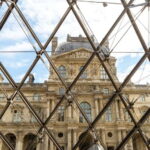
- The Louvre Pyramid and the first orientation moment
- Mona Lisa: more than a photo pose
- Nike of Samothrace: seeing why it’s famous
- Venus de Milo: the legend and the object
- Royal jewelry and Versailles-style atmosphere
- French and Italian paintings: how the guide helps you follow the thread
- Photo stops inside: getting shots without breaking the rules
- Included extras that make the ticket feel smarter
- Price and logistics: is $143 a good value for this format?
- Who this tour fits best (and who should skip it)
- Should you book the Portuguese Louvre semi-private tour?
- FAQ
- FAQ
- How long is the Portuguese Louvre guided tour?
- Where do I meet the guide?
- What language is the tour in?
- What’s the group size?
- Is a Louvre ticket included?
- Does the tour help with skipping lines?
- Is an audio guide included?
- What items are not allowed?
- Is the tour wheelchair accessible?
- Is free cancellation available?
Key highlights at a glance

- Portuguese-speaking, live licensed guide who tells the stories in real time
- Express security shortcut that helps you start seeing art sooner
- A planned route that lands on signature works like Mona Lisa, Nike of Samothrace, and Venus de Milo
- Photo time built in, with guidance on where to aim for great shots
- Full-day entry included so you can continue at your own pace afterward
Finding the meeting point: Louvre Pyramid and King Louis XIV

Your tour starts at 8 Pl. du Carrousel, but the practical meeting point is the Louvre’s main Pyramid. Look for the equestrian statue of King Louis XIV by Place du Carrousel, and you’ll find your guide there.
This matters more than it sounds. The Louvre is huge, and wandering around trying to match a group can eat into your first minutes. Once you’re standing at the Pyramid, you can also orient yourself fast for the photo opportunities that happen during the tour.
If you can, keep your phone handy. The provider notes they may need to contact you, so having your number ready saves stress.
You can also read our reviews of more guided tours in Paris



What a Portuguese-only, small-group format changes

This is a live Portuguese tour with a small group capped at 6 participants. That small size is a big deal in a museum like the Louvre because you’re not just listening—you can ask questions and react to the guide’s pacing.
In the recent experience feedback, guides like Alexandra (nicknamed Alexsia) and Meire are praised for being patient, didactic, and genuinely friendly. In plain terms: they’re not just reciting labels. They’re giving you context you can use while you’re walking.
You’ll get a certified guide, and the tour is designed to keep the flow moving through key rooms rather than getting stuck in one bottleneck. That’s ideal when you want an efficient start without turning into a sprint.
Skipping express security: why you’ll feel the time savings

The tour includes a shortcut through express security via a dedicated entrance setup. You’re still entering a major museum, so you can’t treat it like a private backdoor all day—but you should notice a real difference in how quickly you begin seeing artworks.
For you, the payoff is simple: you don’t lose your most focused time standing in line. Since this tour is only 2 hours, every minute spent watching the gate area is time you can’t get back.
Also, plan around the museum’s photo and bag rules. Flash photography isn’t allowed, and luggage or large bags are not allowed. If you show up with a big backpack or suitcase, you may have to deal with storage logistics before you even start. That’s the part that can disrupt the “easy start” feeling.
Stop-by-stop: how the Louvre classics are handled in just 2 hours

You’ll see several signature works that most first-timers aim for. The advantage of a guided format is that the highlights are not just locations—they’re placed into a story so you actually understand what you’re looking at.
Here’s how the big moments fit together.
The Louvre Pyramid and the first orientation moment
Right after meeting, you’ll spend time at the Louvre Pyramid area as part of the guided flow. This is your “reset” point: you get oriented before the museum swallows you.
Think of it as setting your bearings fast. Once you enter, the museum’s scale can confuse even well-prepared visitors. A quick start here helps you track where you are and why you’re going where you’re going.
You can also read our reviews of more private tours in Paris
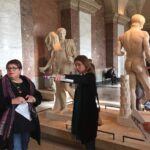





Mona Lisa: more than a photo pose
One of the iconic “ladies” you’ll encounter is the Mona Lisa. You don’t just stand near her and hope for a good moment. The guide’s job is to give you the story and the why behind the fame—so your attention isn’t glued only to the crowd or the crowd-control ropes.
In a short tour, the best guides use famous works as teaching tools: they explain what makes the artwork important, what to notice, and how to look without needing 45 minutes of staring.
Photo-wise, you’ll have time for pictures during the tour, which helps you capture the moment without feeling rushed or stuck.
Nike of Samothrace: seeing why it’s famous
Another major stop is the Nike of Samothrace. Even if you’ve never studied art history, the guide can point you toward what matters visually—how the sculpture’s motion and presence create impact.
In practice, this is the kind of artwork where a guide helps you shift from seeing it as “a famous statue” to seeing it as an experience. You’ll get a clearer sense of why people stop, stare, and then look again from a different angle.
Venus de Milo: the legend and the object
You’ll also see the Venus de Milo. Guides usually do well here because the famous backstory and the visual cues make it easy to focus. Instead of treating it like a random statue among thousands, you’ll understand why it became a cultural touchstone.
And since the Louvre can overwhelm, having a named destination like Venus de Milo helps you keep your mental map clean.
Royal jewelry and Versailles-style atmosphere

The tour also targets displays inspired by the opulence of the Palace of Versailles, plus French royalty jewelry.
This part is valuable if you like your art with context. The Louvre isn’t only paintings and marble faces; it’s also objects that show power, taste, and status. When your guide ties those items to the Versailles world, you start seeing “decorative” things as evidence of how people wanted to be seen.
It’s a nice change of pace, too. After you’ve focused on big classical hits, stepping into galleries with palace-style grandeur helps you keep interest high instead of feeling like you’re only checking boxes.
French and Italian paintings: how the guide helps you follow the thread

You’ll spend time in areas focused on French and Italian paintings. The big win here isn’t just learning names of artists. It’s understanding how centuries of painting developed into different styles and ideas—and learning how to look for those differences quickly.
Because the guide is speaking Portuguese, you’ll probably notice a difference immediately. You don’t have to translate in your head while you’re also trying to read museum text. That’s why Portuguese-language tours tend to feel more personal: the museum’s stories land with less friction.
Recent guide feedback highlights that the guides explain artworks in detail and with patience. In a 2-hour format, that’s exactly what you want: high signal, not scattered facts.
Photo stops inside: getting shots without breaking the rules

The tour is designed to include photo stops, with time set aside for pictures inside the museum. That’s helpful because the Louvre often means standing near masterpieces while other visitors wait for their moment.
A good guide helps you find angles and moments so you’re not just photographing a crowd. And since the tour includes time specifically for photos, you should feel less awkward about taking a couple extra seconds to get it right.
One important restriction: no flash photography. If you normally rely on flash for low-light interiors, skip the habit. Also, bring a charged phone/camera because you’ll want photos of the galleries as much as the artworks.
Included extras that make the ticket feel smarter

You’re getting more than just a guide.
Included in your cost:
- Full-day access ticket to the Louvre Museum
- Certified tour guide
- Map of the Louvre Museum
That full-day access changes how you should think about the experience. Even if the tour itself is only 2 hours, you can treat it like a high-impact first chapter, then spend the rest of your day roaming with a map and a mental checklist of what you already understand.
The map matters. The Louvre is not a “follow the signs and you’ll be fine” kind of place. Any extra help that helps you plan where to go next is worth something, even if you end up changing your route later.
Not included:
- Audio guide (available for rental at the museum)
If you like having extra narration while you walk independently, you can rent that later. But for a Portuguese speaker, the live guide coverage is likely what you’ll rely on most during the 2 hours.
Price and logistics: is $143 a good value for this format?

At $143 per person for a 2-hour, small-group tour (up to 6), you’re paying for three things at once: a Portuguese licensed guide, a skip through express security, and a full-day Louvre ticket.
Whether it’s a good deal depends on your travel style.
You’ll likely feel it’s good value if:
- You want your first Louvre visit to be organized and not purely trial-and-error.
- Portuguese language support matters to you so you can understand the stories without mental translation.
- You’d rather spend money on guide time than waste it standing in the wrong lines and wandering with no plan.
You might think twice if:
- You prefer long, unscheduled museum wandering without structure. Two hours can feel short, even though the full-day ticket lets you continue.
- You want a purely self-guided experience with your own pace from the start.
Overall, I see the value as practical: you’re paying to get oriented, hit major works, and get photo time quickly—then using the included full-day ticket to decide what you want to linger on.
Who this tour fits best (and who should skip it)
This is a strong match if you:
- Speak Portuguese and want a live Portuguese guide rather than reading translations.
- Enjoy a small-group setting where the guide can keep momentum without losing people.
- Want a smart first pass at the Louvre’s most famous masterpieces and major painting areas.
It also works well if you’re on a time crunch but still want depth. You’ll leave with names and context you can carry into your self-guided hours.
If you’re the type who loves spending an entire morning with just one artwork, you may find the route moves quickly. Since the tour is only 2 hours, it can’t replace a slow, self-directed day. But the included full-day entry helps soften that limitation.
Should you book the Portuguese Louvre semi-private tour?
I’d book it if you want a fast, friendly start: Portuguese-speaking guidance, express security, and a route that reaches the Louvre’s main icons without wasting your best energy. The small group size is also a comfort factor, especially in a museum where crowds can turn your patience into confetti.
Skip it only if you already know the Louvre well and you’re planning to do everything on your own, or if you’re bringing lots of gear and you don’t want to deal with the museum’s restrictions on large bags.
FAQ
FAQ
How long is the Portuguese Louvre guided tour?
The tour lasts 2 hours.
Where do I meet the guide?
Meet in front of the Louvre’s main Pyramid at the equestrian statue of King Louis XIV, at Place du Carrousel.
What language is the tour in?
The tour is in Portuguese.
What’s the group size?
The group is limited to 6 participants.
Is a Louvre ticket included?
Yes. You receive a full-day access ticket to the Louvre Museum.
Does the tour help with skipping lines?
Yes. It includes skipping the line through an express security check.
Is an audio guide included?
No. An audio guide is not included, but it’s available for rental at the museum.
What items are not allowed?
Pets, drones, and luggage or large bags are not allowed. Flash photography is also not allowed inside.
Is the tour wheelchair accessible?
Yes, the tour is wheelchair accessible, and wheelchairs and certain equipment are lent free of charge by the museum in exchange for ID.
Is free cancellation available?
Yes. You can cancel up to 24 hours in advance for a full refund.