REVIEW · PARIS
Paris Guided Bike Tour
Book on GetYourGuide →Operated by ParisCityVision · Bookable on GetYourGuide
Paris on a bike turns monuments into close-ups. This guided ride mixes the big Paris postcard sights with confidential streets so you get history plus a more lived-in feel. I really like how the guide stays tuned to the group, keeping small-group pacing smooth, with time for photos and real questions.
The main thing to weigh is that this isn’t a stroll: you’ll need a basic cycling comfort level, and the minimum age is 13. If you’re not confident on a bike for busy areas and turns, you may find the route a bit demanding.
In This Review
- Key highlights you’ll actually feel on the ride
- A 3-hour loop that hits Paris icons and quieter streets
- Starting at Paris City Vision near the Louvre: where you get oriented fast
- Palais-Royal and the Louvre: gliding into the center without losing the plot
- Pont Neuf and Place Dauphine: a classic crossing with quick viewpoint payoff
- Notre-Dame and Île de la Cité: history in your line of sight
- The Latin Quarter, Sorbonne, and Fontaine Saint-Michel: where the tour gets fun
- Les Invalides and the Seine quays: Paris looks different when you’re moving
- Eiffel Tower area and Pont d’Alma: big views with guided context
- Arc de Triomphe and Champs-Élysées: the icon belt, managed by a pro
- Place de la Concorde and Saint-Germain-des-Prés: shifting mood on purpose
- La Comédie-Française and finishing at the Louvre: a smart ending loop
- What the guiding style looks like in the real world (Andrea and Hugo)
- Price and value: what $43 buys you in 3 hours
- Who should book, and who should skip
- Practical tips so your ride feels easy, not stressful
- Should you book this Paris guided bike tour?
- FAQ
- How long is the Paris Guided Bike Tour?
- Where is the meeting point, and where does the tour end?
- What’s included in the price?
- Are monument entrances included?
- Is any food tasting included?
- What cycling ability do I need?
- What are the age requirements?
- Is the tour wheelchair accessible?
- What languages are available, and what are the cancellation options?
Key highlights you’ll actually feel on the ride

- Monuments plus side streets: you see major landmarks and also quieter lanes that don’t feel like a conveyor belt
- Guide-led timing: stop frequency can flex to match the group, not the other way around
- Photo-friendly stops at viewpoints like the Pont Neuf, Notre-Dame area, and the Seine quays
- Food tips built in: the guide shares good addresses for croissants and ice cream (tasting is not included)
- Very small groups (max 12), so you’re not just another body in the pack
- Strong narration in multiple languages: English, Spanish, and French are available
A 3-hour loop that hits Paris icons and quieter streets

This is the kind of bike tour that makes sense if you want Paris in one practical block: you cover a lot of ground in 3 hours, but you’re not stuck staring at a single monument. The route is built around emblematic highlights, then it threads in smaller streets so you see a version of Paris that feels more day-to-day than staged.
I like that the tour feels like an adventure rather than a checklist. You ride past the famous spots you already recognize, but you’re also given reasons to look closely—what you’re seeing, why it matters, and what to notice next. The guide also keeps things moving at an “optimal pedaling” rhythm, so you’re not constantly stopping and starting.
And yes, you’ll hear culinary tips. The guide may point you toward the best croissant hunt or an artisanal ice cream stop, which is perfect if your Paris plan includes at least one serious sweet mission. One note: those tastings aren’t included, so treat the advice as local direction for later.
You can also read our reviews of more cycling tours in Paris
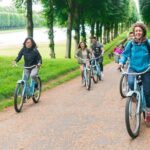
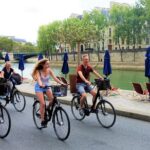
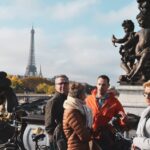
Starting at Paris City Vision near the Louvre: where you get oriented fast

You meet at ParisCityVision at 3 Place des Pyramides (75001). This is a great area to start because you’re already in the heart of the action, close to the Louvre and the core river routes.
Plan to arrive 15 minutes early. That’s not just for formality. You’ll want a little buffer to get comfortable with the bike, grab a helmet if needed, and get your bearings before the group rolls out. The tour also runs in English, Spanish, and French, so if you want the explanation in your strongest language, you’re in good shape.
Palais-Royal and the Louvre: gliding into the center without losing the plot

The first stretch is all about momentum. You move into the Palais-Royal area, then head to the Louvre area, where the guide sets context for what you’ll see later.
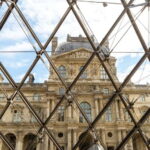
Even if you don’t go inside, these are the zones where Paris feels dense and historic. On a bike, you can actually take in the scale—façades, courtyards, and the way streets funnel into major intersections. The guide’s job here is to help you look at the right things first, so when you arrive near a landmark later (Pont Neuf, the Seine quays, and beyond), you already understand what you’re looking at.
In the best versions of this kind of tour, the guide talks like they’re narrating your walk through the city. That’s what you’re aiming for here—clear facts, plus anecdotes that don’t wander off topic.
Pont Neuf and Place Dauphine: a classic crossing with quick viewpoint payoff
Once you hit the Pont Neuf, you’re in one of Paris’s signature “pause and look” moments. This bridge is a major visual anchor for the river scene, and it’s the kind of place where a guide can point out details you’d miss at bike speed.
Then you roll toward Place Dauphine, which adds a different texture—slightly more intimate and square-focused compared with the sweep of bigger monuments. This is also a good section for photos because the guide can help you choose an angle before the group keeps going.
Notre-Dame and Île de la Cité: history in your line of sight
The tour’s core centerpiece is the Notre-Dame de Paris area and Île de la Cité. You’ll ride through this part of Paris with the guide explaining what you’re seeing and why it’s such a pivotal historical zone.
What makes this portion work on a bike is pacing. You don’t need to stop for long to absorb the setting, because the route gives you a rolling sense of arrival: river views, architecture cues, and the feeling of being surrounded by layers of time.
You’ll also want to keep your eyes open for the guide’s “Parisian habits” comments—small cultural observations that make the monuments feel less like museum pieces and more like part of daily life.
You can also read our reviews of more guided tours in Paris
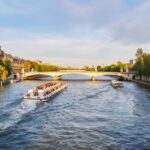


The Latin Quarter, Sorbonne, and Fontaine Saint-Michel: where the tour gets fun

After Île de la Cité, you move into the Latin Quarter, including the Sorbonne area and the Fontaine Saint-Michel area. This is where the tour starts to feel more like wandering with someone who cares about the city—not just checking off sights.
The Latin Quarter has that “students and bookstores and side streets” energy, and on a bike you can cover it quickly while still catching the vibe. The guide is usually most helpful here because they can explain the neighborhood’s character and point out details that don’t show up in a typical big-sight stop.
There’s also a stop area near Restaurant La Fontaine Saint-Michel, which gives you a breather without killing the flow. Even if you don’t eat there, it helps break the ride into sensible segments.
Les Invalides and the Seine quays: Paris looks different when you’re moving
Next up is Les Invalides, then the ride continues along the Quai de la Seine. This is a key transition section. You’re leaving the denser, older-street feel and stepping into one of Paris’s most iconic “move alongside the water” experiences.
You’ll get viewpoint time that feels more fluid than standing still. The river gives you depth; the quays make it easier to see where you’re going next. This is the kind of stretch that makes the bike format click—you get a city-wide overview without spending the entire time stuck at traffic lights.
Eiffel Tower area and Pont d’Alma: big views with guided context
The route then swings toward the Eiffel Tower area, with Pont d’Alma included in the path. This is where the tour earns its reputation for “big sights, sensible pacing.”
If you’ve only ever seen the Eiffel Tower from one famous viewpoint, this portion can broaden your perspective. The guide’s narration helps you understand the relationship between what you see from the street and what the tower symbolizes in Paris. Even without entering anything, you’ll likely come away with a clearer sense of why this location is photographed so often.
Arc de Triomphe and Champs-Élysées: the icon belt, managed by a pro

From the Eiffel area, you ride toward the Arc de Triomphe (the Etoile area), then continue along Champs-Élysées. This is the Paris “wow” stretch—wide boulevards, powerful skyline landmarks, and a sense of scale that you can’t really replicate on foot in the same time.
Champs-Élysées can also feel a little overwhelming if you’re alone. With a guide, it becomes more readable: you get context and you’re not just walking through a shopping corridor. You’ll also pass Grand Palais and Petit Palais, which are perfect for the “look up” moment—ornate façades and architectural details you’ll miss if you’re focused only on the road ahead.
The group’s pacing matters here. The tour includes flexibility in stop frequency, so if your legs need a breath or your group wants a photo moment, the guide can handle it without derailing the whole schedule.
Place de la Concorde and Saint-Germain-des-Prés: shifting mood on purpose
Next you reach Place de la Concorde, another major visual pivot point. Places like this can feel like crossroads between eras—big civic space, lots of lines and angles, and plenty to observe even when you’re just riding past.
Then the route heads toward Saint-Germain-des-Prés. This is where the vibe changes again: more classic café-area energy, more “Paris after dark” personality, and generally a calmer feel than the widest boulevard moments.
La Comédie-Française and finishing at the Louvre: a smart ending loop
You’ll pass La Comédie-Française and then finish back near the Louvre Museum. Ending near the Louvre is convenient because you’re already back where many first-time visitors want to be at the end of the day—ready to wander, grab a drink, or keep exploring without needing extra transit planning.
This closing loop also matters because it helps you digest what you’ve seen. After three hours of motion and stories, you’ll likely feel like Paris has connections—river routes tie together monuments, neighborhoods link by vibe, and the city starts to make more sense as a whole.
What the guiding style looks like in the real world (Andrea and Hugo)
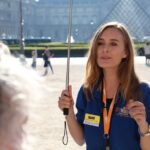
The guide is the difference between a decent ride and a great one, and this tour seems to nail that. From recent feedback, Andrea is praised for being friendly, keeping the oral content focused on what matters, and mixing anecdotes with essential facts. People also highlighted how the tour can feel almost village-like while still touching the famous sights, thanks to those quieter street segments.
Another guide, Hugo, is described as both fun and fact-heavy in the best way—sharing stories plus historical context, with a genuine love for Paris past and present. There’s also a consistent theme in the feedback: the pace is calm, the bikes are good, and the guide manages the group well.
Price and value: what $43 buys you in 3 hours
At $43 per person, you’re paying for two things: a guided bike route and an experienced local guide. You’re not paying for museum tickets here—entrances to monuments are not included—and you’re also not getting guided tastings.
So how is it still good value? Because you’re paying to move efficiently between major landmarks while getting context along the way. In practice, that can save time and effort versus trying to self-route through busy areas and missing the explanations that make the sights feel meaningful.
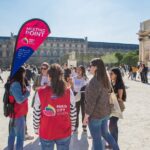
Also, the group size cap at 12 people is a real cost-to-serve factor. You’ll feel the difference: tighter attention, easier question time, and fewer awkward pauses while the whole group reunites.
Who should book, and who should skip
This tour is for you if:
- You’re a confident cyclist or at least comfortable riding in city conditions
- You want a guided, story-led view of Paris rather than only photos
- You like mixing iconic monuments with neighborhoods and side streets
- You want practical food inspiration for later (croissant and ice cream addresses)
It’s not for you if:
- You rely on a wheelchair (this tour isn’t suitable for wheelchair users)
- You have limited interest in cycling and would prefer a walking tour instead
- You need guaranteed long stops—this route is paced for pedaling time, with flexible stop frequency rather than extended sightseeing
Age-wise, the minimum is 13, and children’s bikes are suitable for kids around 130 cm / 4’2″ and up, depending on height and cycling ability.
Practical tips so your ride feels easy, not stressful
Paris by bike is fantastic when you set yourself up for success. Here are the practical moves that matter most on this specific kind of route:
- Dress for the weather and bring a layer. Bike tours can feel cooler or windier than you expect.
- Don’t wait until the last second to check the forecast. If conditions are rough, the ride can feel harder than the time on paper suggests.
- Show up early enough to get settled before you start rolling.
- Bring a phone for photos, but keep it secure. You’re moving through busy areas and bridges.
- Ask questions. The guide is set up to answer things on filming locations, Parisian habits, and anything else you want to understand while you ride.
Should you book this Paris guided bike tour?
If you want a fast, guided Paris hit that balances monuments with quieter street moments, I think it’s a strong yes. The combination of small-group attention, expert pacing, and story-focused commentary (plus sweet-tooth tips) makes it a smart way to build your Paris “mental map” in just 3 hours.
I’d only hesitate if you’re not comfortable cycling in a city or you strongly prefer sitting still for long monument visits. In that case, you’ll likely prefer a walking-based option with slower stops and more time for entrances.
FAQ
How long is the Paris Guided Bike Tour?
It lasts 3 hours.
Where is the meeting point, and where does the tour end?
You depart from ParisCityVision, 3 Place des Pyramides 75001 Paris, and the tour finishes at the Musée du Louvre.
What’s included in the price?
You get a guided visit of Paris on a bike and the services of an experienced guide.
Are monument entrances included?
No. Entrance fees to monuments are not included.
Is any food tasting included?
No. Tasting is not included, but the guide can share addresses for sweets like croissants and ice cream.
What cycling ability do I need?
You need a certain level of cycling ability. The tour is for everyone, but it does require you to be able to ride comfortably.
What are the age requirements?
The minimum age is 13. Children’s bikes are suitable for ages 13 to 17 or about 130 cm / 4’2″, depending on height and cycling ability.
Is the tour wheelchair accessible?
No. It’s not suitable for wheelchair users.
What languages are available, and what are the cancellation options?
The live guide operates in English, Spanish, and French. You can cancel up to 24 hours in advance for a full refund, and you may be able to reserve now & pay later.