REVIEW · PARIS
Paris: Gourmet Food Tour with Over 10 Tastings and Wine
Book on GetYourGuide →Operated by City Wonders Ltd. · Bookable on GetYourGuide
Paris: Gourmet Food Tour With Over 10 Tastings and Wine
Paris rewards hungry walkers, and this tour turns the streets around the Louvre into a moving lunch table. In 2.5 hours, you visit bakeries, pastry shops, a fromagerie, a wine bar, and a family-run brioche shop while tasting more than 10 French specialties.
I like the broad mix of stops, from a simple jambon beurre to polished macarons and regional cheese. I also like the food stories: guides such as Becky, Carole, Sophia, and Ananya have made the tour as much about French customs, shops, and architecture as about eating.
The main drawback is dietary. This is not suitable for vegans, people with gluten or nut allergies, or anyone with gluten intolerance. It can accommodate vegetarians and pescetarians, but you should expect a lot of bread, pastry, cheese, and meat. Also note the timing: the activity is advertised as 2.5 hours, while the itinerary says three hours, so allow a little extra space.
In This Review
- Key points at a glance
- Starting at Place Colette near the Louvre
- The bakery stop: croissants and jambon beurre
- Macarons and the Meilleur Ouvrier de France
- Cheese at La Fromagerie du Louvre
- Wine, charcuterie, and a proper seated pause
- Historic shops and the market streets
- Ending with brioche on Rue des Petits Carreaux
- Is $111 a fair price?
- Timing, pace, and group comfort
- Who should book this Paris food walk?
- Should you book it?
- FAQ
- Where does the Paris gourmet food tour start?
- How do I find the guide?
- Where does the tour finish?
- How long does the tour last?
- How many tastings are included?
- Is wine included?
- What foods might I taste?
- Can vegetarians join the tour?
- Is the tour suitable for vegans or people avoiding gluten?
- What should I bring?
- Are hotel pickup and drop-off included?
- Can I cancel the booking?
Key points at a glance
- Start beside the Louvre: Meet at Place Colette, by metro exit 5 of Palais Royal Musée du Louvre, outside La Comédie Française.
- More than 10 tastings: Expect croissants or pain au chocolat, jambon beurre, macarons, cheese, charcuterie, wine, and brioche.
- A real sit-down pause: The wine-bar stop includes two glasses of French wine with cheese and charcuterie.
- Food and city stories together: The guide explains French culinary customs, historic shops, architecture, and the Meilleur Ouvrier de France award.
- Generous portions: This is closer to a light meal than a nibble-only tasting, so skip breakfast if you have a morning start.
- Finish near a famous market: The tour ends at 9 Rue des Petits Carreaux in the 2nd arrondissement.
Starting at Place Colette near the Louvre
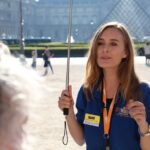
Your meeting point is easy to place on a Paris map but can be busy in person. Go to the middle of Place Colette, next to metro exit number 5 at Palais Royal Musée du Louvre, in front of La Comédie Française. The guide carries a City Wonders sign.
This is a useful starting area because you begin in central Paris without spending time on a hotel pickup. You need to make your own way there, then walk to the final stop at 9 Rue des Petits Carreaux. The route links the 1st arrondissement with the market streets of the 2nd, so the tour doubles as a gentle orientation walk.
Wear comfortable shoes. You will not be covering huge distances, but the experience is built around walking between several food businesses. Baby strollers, baby carriages, and electric wheelchairs are not allowed, and the tour is not suitable for people with mobility impairments.
An English-speaking guide leads the group. The guide names vary, but the strongest personal praise has gone to Becky, Carole, Sophia, John, Ananya, Vic, and others. Their role matters here. A food tour can be a string of samples, but a good guide explains what you are tasting, why it matters, and how the shop fits into Parisian life.
You can also read our reviews of more food & drink experiences in Paris

The bakery stop: croissants and jambon beurre
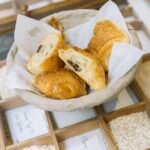
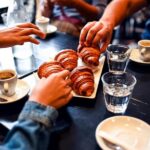
The first food stop sets the tone. At a popular bakery, you taste a buttery French viennoiserie, usually a croissant or pain au chocolat. These pastries are familiar around the world, but eating them in the context of a French bakery gives the experience a little more meaning.
Your guide may explain the place of viennoiseries in everyday French routines and the difference between a pastry eaten at leisure and one grabbed on the way to work. The tour is not only about luxury food. The point is to see how ordinary French favorites sit alongside high-end confectionery and carefully selected cheese.
You also try jambon beurre, a ham and butter baguette sandwich. It is one of France’s classic on-the-go meals, and it provides a useful contrast to the sweet pastry. The sandwich is simple by design: bread, ham, and butter, with the quality of those basics doing the work.
This is one reason you should not eat a full breakfast first. Several portions are described as generous, and the later cheese, charcuterie, and wine stop is substantial. A coffee or small snack beforehand may be sensible if you need something early, but arrive ready to eat.
Macarons and the Meilleur Ouvrier de France
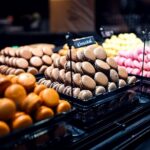
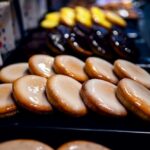
Next comes a stop at one of France’s acclaimed pastry shops for macarons. These small meringue-based sweets are colorful, delicate, and easy to recognize, but the tour gives you a chance to place them within French pastry culture.
The guide also introduces the Meilleur Ouvrier de France title. This is a prestigious award given every four years to outstanding French craftspeople. In practical terms, it helps you understand why some Paris pastry shops put such care into technique, presentation, and consistency.
This stop will appeal most to anyone who enjoys the finer side of French baking. It is also a good break in the sequence because the macarons feel different from the rustic bakery items. You move from a common breakfast pastry to a carefully made confection, then back toward more traditional savory foods.
If you have a nut allergy, this is not the right tour for you. The activity specifically excludes people with nut allergies, along with those with other listed food allergies. You should not count on being able to avoid an ingredient simply by skipping one sample.
Cheese at La Fromagerie du Louvre
The cheese stop is likely to be the most educational part of the walk. At a top cheese shop, you taste several French cheeses and learn where they come from and how they are made.
One especially praised stop is La Fromagerie du Louvre. The cheese expert Thibault has explained the selections in detail, including their regions and production methods. That kind of guidance changes the experience from eating cheese to understanding why one cheese is soft, another firm, and another perhaps stronger or more aged.
I like this section because French cheese can be confusing when you meet it without context. A shop visit gives you a practical introduction to regional variety, and you may leave with a better idea of what to order later in your trip. The tour does not simply place a plate in front of you and move on.
The quantity also matters. The cheese is part of a larger meal, not a single token taste. If you are not used to several rich foods in succession, pace yourself. You can enjoy the explanations without trying to finish every item quickly.
Wine, charcuterie, and a proper seated pause
The tour then moves to a wine bar for a sit-down tasting of French wine with cheese and charcuterie. Two glasses of wine are included.
This is the point where the experience feels most like lunch. Earlier stops are eaten while moving through shops and streets, but here you can sit, slow down, and compare the flavors. Charcuterie adds a salty, savory counterpoint to the cheese, while the wine gives the guide a chance to discuss basic French food and wine pairings.
The setting is described as a grand wine cellar, which adds atmosphere without turning the stop into a formal wine class. You are not signing up for technical instruction from a sommelier. You are getting a relaxed introduction to French wine with food on the table.
The two-glass limit is worth noting. Wine is included, but this is not an unlimited tasting or a dedicated wine workshop. If wine is your main interest, a specialist cheese and wine experience may suit you better. If you want wine as part of a wider Paris food walk, this stop is well judged.
You should also plan responsibly. The tour includes alcohol, and the food arrives throughout the morning or afternoon. The leisurely pace helps, but you still need to keep the group schedule in mind.
A few more Paris tours and experiences worth a look
Historic shops and the market streets
Between tastings, the guide takes you through historic stores and Paris streets near the Louvre. The walking is important because it connects the food to the city rather than placing you in a sealed tasting room.
You hear about French culinary traditions, local businesses, and the history of the places you pass. Several guides have also added stories about architecture and the surrounding area. This gives the experience more value for a first visit, especially if you want an early sense of how central Paris fits together.
The route later reaches one of the city’s most famous street markets. The market area is home to the pastry shop associated with King Louis XV, adding another layer of royal and culinary history to the walk.
The information provided does not promise time for independent shopping at every stop, so do not treat the tour as a full market-shopping excursion. The focus is tasting and explanation. Still, keep a mental note of the businesses that appeal to you, since the final destination puts you near more food shops in the 2nd arrondissement.
Ending with brioche on Rue des Petits Carreaux
The final tasting is brioche from a multigenerational family-run shop. It is a fitting finish: sweet, soft, and different enough from the croissant and macarons to give the tour a clear last course.
Ending at 9 Rue des Petits Carreaux is useful. You finish in a lively central neighborhood rather than returning to the Louvre, so you can continue exploring or find your own lunch nearby. The exact food at each stop can vary, and the first pastry may be a croissant or pain au chocolat, but the overall structure remains a progression through bakery goods, sweets, cheese, wine, charcuterie, and brioche.
By this point, you may be very full. The tour has been described as offering more food than expected, not as a few decorative bites. That is good value for someone who wants a food-centered morning, but less appealing if you prefer to eat lightly and save room for a later restaurant reservation.
Is $111 a fair price?
At $111 per person, this is not a cheap walk. It becomes easier to justify when you count what is included: a guide, the walking route, more than 10 food tastings, and two glasses of wine.
You are also paying for access to a planned sequence of specialty shops. Without a guide, you could buy a croissant, sandwich, macarons, cheese, wine, charcuterie, and brioche on your own. But you would need to choose the businesses, manage the route, understand the products, and find a way to sample them without ordering too much at any one place.
I see the value in the tour if you are visiting Paris for a short stay or want a useful food introduction early in your trip. One particularly practical tip is to book it near the start of your visit. You can return to the shops you like, use the food vocabulary you pick up, and make better choices at restaurants afterward.
The price is less attractive if you already know Paris well, speak French comfortably, and plan to explore food markets independently. It is also poor value for anyone who cannot eat most of the menu. Vegetarians and pescetarians can be accommodated, but vegans and people with gluten intolerance cannot take part safely according to the stated restrictions.
Timing, pace, and group comfort
The listed duration is 2.5 hours, with the itinerary also describing a three-hour food and wine experience. I would reserve at least three hours in your day, plus time to reach the start and continue from the finish.
The pace is generally leisurely. That matters because this is not a race between bakeries. You have time to listen, taste, and look around, although the number of stops means the schedule still needs to keep moving.
Group size can vary. One past booking had only two participants, allowing the guide to give constant attention, while another account praised the comfortable group size. You should not assume a private tour, but the experience appears designed for conversation rather than a large coach group.
Solo visitors can fit in well. The food creates an easy subject for conversation, and the tour has a social structure without requiring you to arrange your own table or tastings.
Who should book this Paris food walk?
I would choose this tour for:
- First-time Paris visitors who want food and city orientation together
- Couples and small groups looking for a generous morning or afternoon tasting
- People who enjoy pastries, cheese, cured meats, and French wine
- Solo visitors who want a guided activity with built-in conversation
- Anyone who likes learning the story behind a shop or dish
- Pescatarians and vegetarians who confirm the available adaptations before booking
I would skip it if you want a dedicated wine course, a vegan food tour, a gluten-free route, or a sit-down restaurant meal lasting several hours. I would also avoid booking it immediately before a major lunch or dinner reservation.
The experience is most useful when you treat it as both a tasting and a neighborhood walk. You get food, but you also gain a list of places worth revisiting and a clearer sense of French eating habits.
Should you book it?
Book this tour if you want a full food introduction to central Paris and value a guide who can connect each taste to French culture, craft, and place. The strongest parts are the cheese explanation, the wine-bar stop, and the generous range of samples.
Skip it if your diet rules out bread, pastry, cheese, meat, nuts, or wine. For everyone else, $111 is a fair price for a guided route with substantial food, especially near the beginning of a Paris stay. Just wear good shoes, arrive hungry, and leave room for the brioche.
FAQ
Where does the Paris gourmet food tour start?
It starts in the middle of Place Colette, beside metro exit number 5 of Palais Royal Musée du Louvre, in front of La Comédie Française theatre.
How do I find the guide?
Look for a guide holding a City Wonders sign at the meeting point.
Where does the tour finish?
The tour finishes at 9 Rue des Petits Carreaux, 75002 Paris, France.
How long does the tour last?
The activity is listed as 2.5 hours. The itinerary also describes a three-hour food and wine tour, so allow extra time in your schedule.
How many tastings are included?
More than 10 food tastings are included.
Is wine included?
Yes. Two glasses of French wine are included during the wine-bar stop.
What foods might I taste?
The tour includes items such as croissants or pain au chocolat, jambon beurre, macarons, French cheese, charcuterie, and brioche. The exact pastry selection may vary.
Can vegetarians join the tour?
Yes. The tour can be adapted for vegetarians and pescetarians.
Is the tour suitable for vegans or people avoiding gluten?
No. The tour is not suitable for vegans, people with gluten intolerance, or those following a gluten-free diet.
What should I bring?
Bring comfortable shoes for the walking route.
Are hotel pickup and drop-off included?
No. You must make your own way to the meeting point and continue from the final stop independently.
Can I cancel the booking?
You can cancel up to 24 hours in advance for a full refund. A reserve-now, pay-later option is also available.