REVIEW · PARIS
Paris: French Revolution Walking Tour
Book on GetYourGuide →Operated by Mon Petit Paris · Bookable on GetYourGuide
Paris’s Revolution lives street by street. On this French Revolution walking tour from Place du Châtelet, you trace conspiracy, intrigue, and political terror across real blocks of central Paris. It’s history with foot traffic, not paragraphs.
I like two things most. I love the treasure hunt style approach—your guide turns the Revolution into a chain of street-level clues, not a list of dates. And I like that the guides (I kept hearing names like Louis and François, plus Fran, Guillaume, Sam, and Ilan) keep the story moving in clear English, with good pacing for a compact 2-hour outing.
One possible drawback: the route isn’t strictly chronological, so if you want a perfectly ordered timeline or you’re hunting specific big monuments like Champs de Mars, you might feel a bit shorted. Still, the trade-off is that the walk feels like a living narrative of how Paris changed.
In This Review
- Key things to know before you go
- Starting at Place du Châtelet: Fontaine au Sphinx Sets the Tone
- The 2-Hour Format: Fast, Focused, and Actually Doable
- A Treasure Hunt in Revolutionary Shoes: How the Story Sticks
- Following the Road to the Bastille Through Paris Streets
- Louis XVI, Marie Antoinette, and the Guillotine: History With a Pulse
- Paris, Then and Now: What You Learn About the City Itself
- Pacing, Stops, and Q&A: Getting the Most From Your 2 Hours
- Logistics That Matter: Where to Meet and How to Prepare
- Is This Tour Worth $46? Value for a Fast-Story Experience
- Who Should Book This French Revolution Walking Tour
- Should You Book It?
- FAQ
- How long is the Paris French Revolution Walking Tour?
- How much does it cost?
- Where do I meet my guide?
- Is the tour guided in English?
- Is the tour wheelchair accessible?
- What’s included in the price?
- Is hotel pickup included?
- Can I cancel and get a refund?
- Is there an option to reserve without paying right away?
- What’s the best way to plan my start time?
Key things to know before you go
- Meet at Fontaine au Sphinx on Place du Châtelet for an easy start in the thick of central Paris
- Treasure-hunt format helps you remember key moments because you’re actively looking for details
- The road to the Bastille is a major thread, with a day-by-day build-up at walking speed
- Guillotine-era stories connect the Revolution to the very idea of public justice and political spectacle
- A mid-tour comfort break keeps the experience realistic in the middle of busy streets
- Nuanced storytelling shows the Revolution as complex, not just villains vs. heroes
Starting at Place du Châtelet: Fontaine au Sphinx Sets the Tone
Place du Châtelet isn’t a museum entrance. It’s a crossroads. That matters, because the French Revolution wasn’t polite or tidy, and Paris wasn’t either. Starting in front of the Fontaine au Sphinx gives you a quick sense that you’re in the working heart of the city—where crowds, rumors, and movement shape events.
You’ll find your guide in front of the fountain, and from there you’re pulled into a very “street-first” way of seeing Paris. This is one of the best ways to understand the Revolution: not from behind glass, but by treating city streets as the original stage.
If you’re the kind of traveler who likes to connect modern Paris to its past, this is a smart match. You’ll be walking through areas that still feel central and busy, and that contrast helps the story land.
You can also read our reviews of more walking tours in Paris



The 2-Hour Format: Fast, Focused, and Actually Doable
At $46 per person for a 2-hour walking tour, you’re paying for story clarity and local context. That’s the real value. Self-guided history can be good, but it often turns into you squinting at plaques and hoping the pieces connect.
Here, the guide does the connecting for you. The duration is tight enough that you won’t wander for half a day, but long enough to build momentum. Reviews repeatedly highlight that the pace feels comfortable and the stops stay varied, which is exactly what you want when the subject is heavy.
There’s also a mid-tour comfort break. It may sound basic, but it’s a big deal in Paris walking tours where you can lose people if you push too hard. The break helps you keep your energy for the final stretch, when the story ramps up toward the Bastille.
A Treasure Hunt in Revolutionary Shoes: How the Story Sticks
The tour doesn’t just tell you what happened. It makes you pay attention. That treasure hunt framing is more than marketing—it changes your brain’s job while you walk.
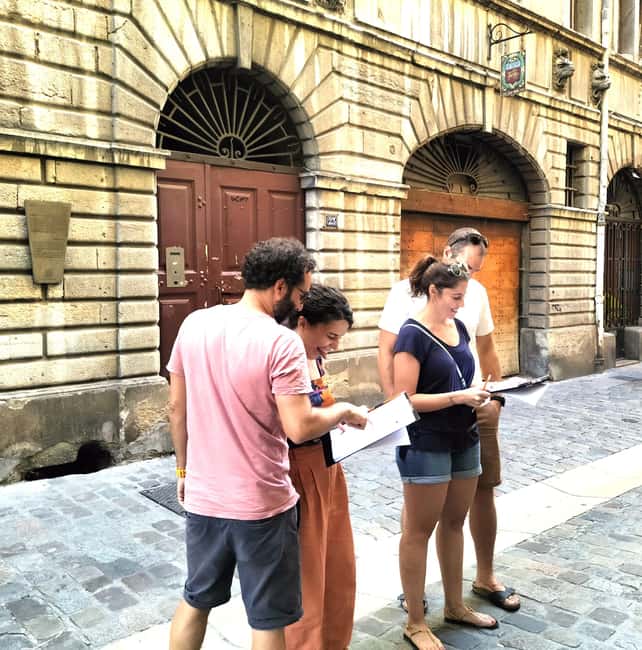
Instead of waiting for the next big name, you’re looking for smaller details and “hidden objects” that act like anchors. Think of it like this: the Revolution has tons of moving parts (pamphlets, alliances, betrayals, public fear). When someone helps you spot the right thread at the right stop, the whole thing becomes easier to remember.
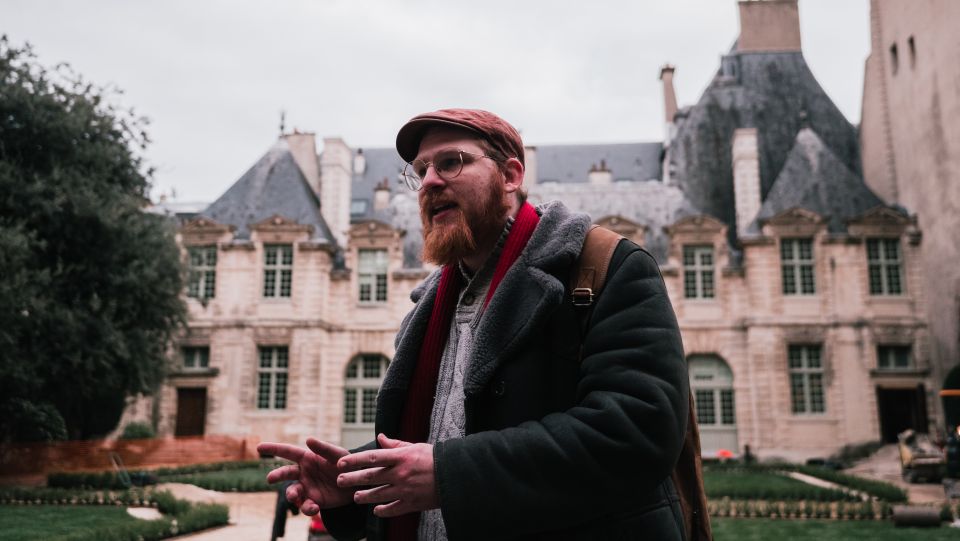
And the guide’s style matters. Multiple guides are mentioned by name—Louis and François pop up often, along with Fran, Sam, Amber, Guillaume, and Ilan. The common theme is engaging storytelling and strong communication, so you’re not stuck translating the guide’s enthusiasm into your own understanding.
One useful note: because the tour is thematic and not strictly chronological, you may notice the path jumps around a bit. That’s not a flaw—it’s often a better way to learn. You start seeing how different pressures fed into each other until the system cracked.
Following the Road to the Bastille Through Paris Streets
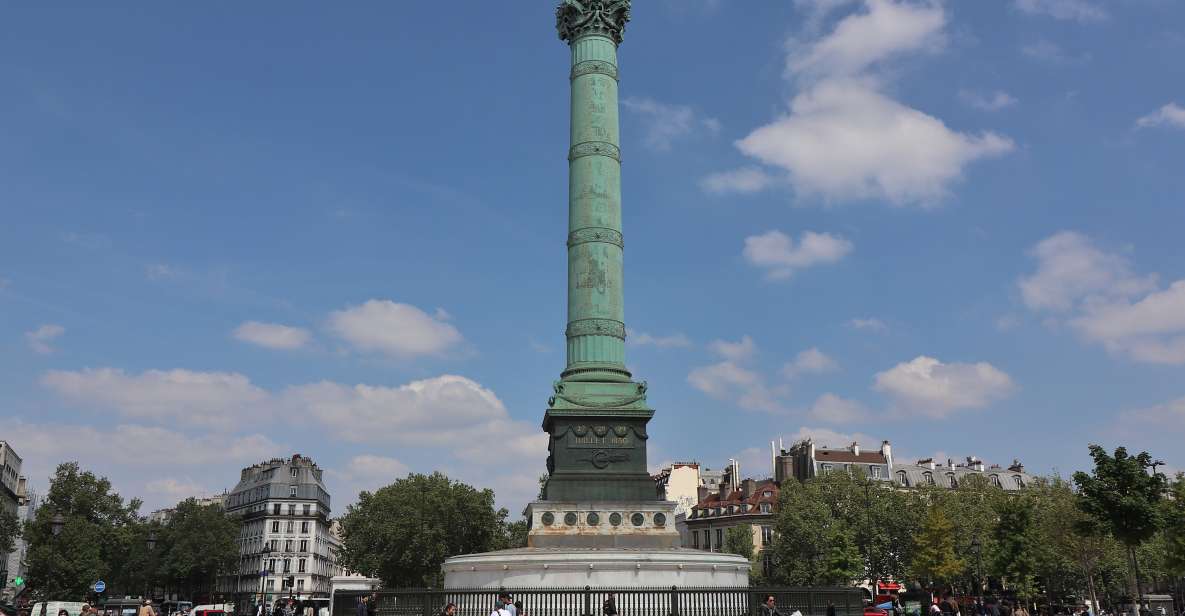
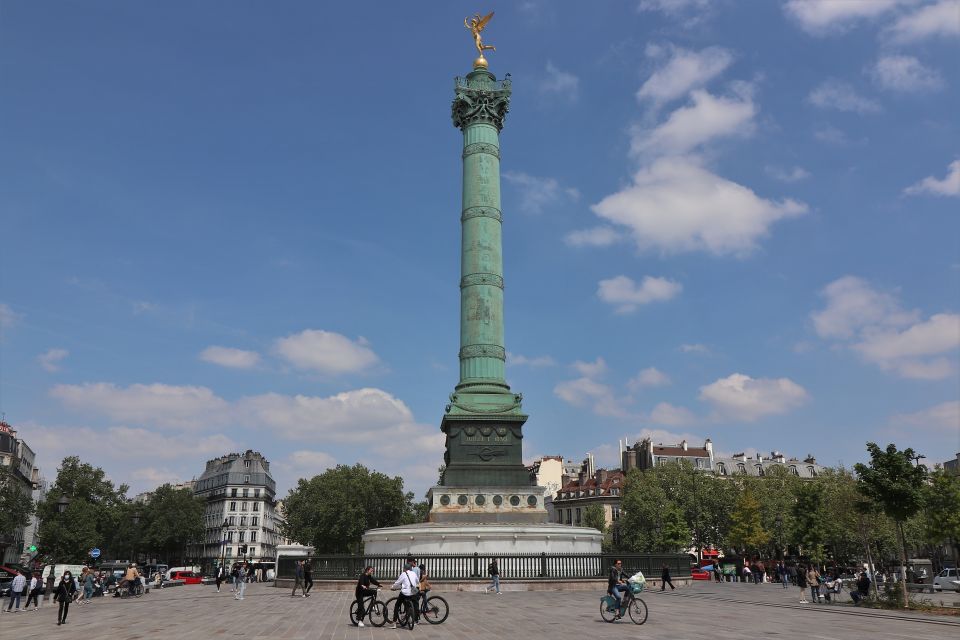
The Bastille is the gravity center of this tour. The route is designed so the walk builds toward that moment, with a day-by-day lead-up that helps you feel the escalation instead of just memorizing the date.
Walking the story matters here. When you read about the Revolution, it’s easy to treat it like one sudden event. On foot, it feels more like a slow tightening of the screws. People gather, information spreads, tension grows—and then everything snaps.
You’ll also pick up the idea that the Revolution reshaped Paris in real ways. Not just politically, but socially and emotionally. Paris becomes a place where public action and public fear coexist. That’s the kind of lesson you can’t get from a dry timeline.
Louis XVI, Marie Antoinette, and the Guillotine: History With a Pulse
The tour includes grim, specific stories about the guillotine era—especially the fates of Louis XVI and Marie Antoinette. This is where the tour is at its most intense, because you’re connecting political decisions to the physical reality of public spectacle.
Guides also cover the idea of prophecy or foretelling that leads to a key revolutionary’s downfall. Even when you don’t catch every detail perfectly, the takeaway is clear: during the Revolution, rumor and interpretation mattered. People read signs into events, and those readings could help speed someone toward the blade.
Now, a gentle caution. This tour is about street-level storytelling of revolutionary events, not a full-scale reenactment. If you want every dramatic moment expanded with maximum gore and spectacle, you might find the experience a bit compressed. That’s not a reason to skip it—just know what you’re buying: a balanced narrative that fits 2 hours.






Paris, Then and Now: What You Learn About the City Itself
One of the quiet benefits of this kind of walk is learning how the Revolution changed the way Paris functioned. You’re not just learning that the Revolution happened. You’re learning how it altered public life—who held power, how crowds acted, and why streets mattered.
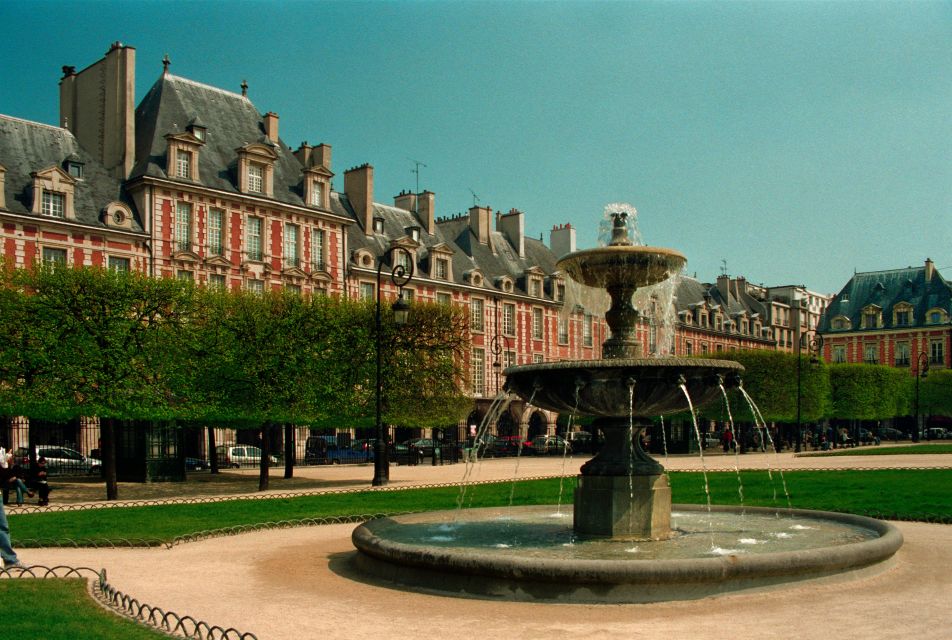
You’ll likely spend time in or around areas that connect strongly to the Revolution’s energy, including the Marais area (it comes up in feedback). And your guide may point out churches and other landmarks to explain how revolutionary thinking interacted with everyday life.
That part is especially useful if you’re visiting Paris for the first time. You’ll start to see the city as layered. Today’s façade sits on top of older tensions. The Revolution becomes the lens through which those layers make sense.
Pacing, Stops, and Q&A: Getting the Most From Your 2 Hours
The biggest pattern in the feedback is how well the guides manage time. People repeatedly note that stops are varied, the tour feels nicely paced, and the guide stays easy to hear—even when the streets get noisy.
Expect the guide to tell the story with clear structure, then adapt to questions. Some guides are even described as using first-person storytelling, which can make the city feel like it’s back in 1789 for a few minutes.
There are also small practical touches. You’re walking, you’re outdoors, and you’ll likely have to weave through busy areas. The mid-tour comfort break helps you reset. And because it’s a live guide (English), you can ask follow-ups when something clicks or sparks a curiosity detour.
If you tend to ask a lot of questions, this is a good tour for that. The time is short, so the guide will usually keep your answers sharp and connected to the story rather than fading into a long lecture.
Logistics That Matter: Where to Meet and How to Prepare
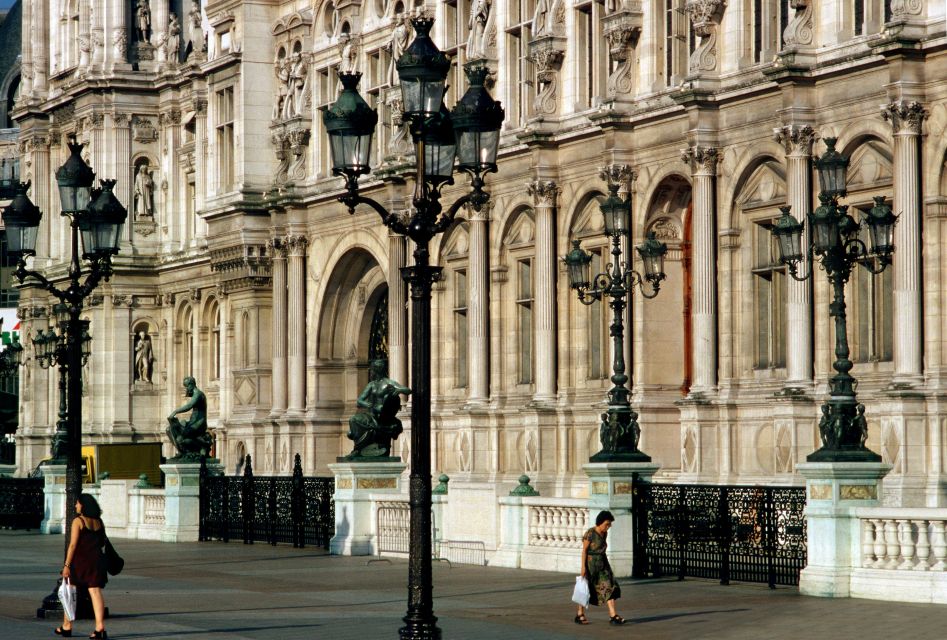
Meeting point is specific: stand in front of the Fontaine au Sphinx on Place du Châtelet.
Hotel pickup and drop-off are not included, so plan your own way to the start. The good news is the location is central, and you should be able to reach it with normal Paris transit plans.
Since the tour is wheelchair accessible, it’s designed with mobility needs in mind. That doesn’t automatically mean every single stretch will feel easy, but it’s a sign the operator thinks about access rather than treating walking tours as “only for fit people.”
What to bring is the usual street-walking kit: comfortable shoes, water, and an extra layer if the weather is moody. Nothing fancy, just enough to stay focused while the guide does the heavy lifting.
Is This Tour Worth $46? Value for a Fast-Story Experience
Let’s be honest: $46 is not the price of a quick audio app. You’re paying for a guide, a guided route, and a story that has been condensed to fit 2 hours.
For that price, you’re getting:
- A focused route through central Paris tied to major revolutionary moments
- Live English interpretation, so you’re not stuck decoding history on your own
- Active attention tools (the treasure hunt style) that make details stick
- A format that’s short enough to do even on a packed Paris schedule
If you’re the type who enjoys museums but wants a more human, street-level version of history, this is strong value. You’ll likely leave feeling like you can “see” the Revolution in the city rather than only remembering dates.
Who Should Book This French Revolution Walking Tour
This tour fits best if you want history with momentum.
You’ll probably enjoy it if:
- You like walking tours that actually teach, not just point at buildings
- You’re curious about why the Revolution escalated (and how quickly it snowballed)
- You want the road to the Bastille framed as a build-up, not a single event
- You want a guide to connect heavy events like the guillotine to the politics and atmosphere of the time
It may be less ideal if you want:
- A strictly chronological, monument-by-monument march through every major site
- An ultra-detailed deep study that runs longer than 2 hours
- A route built around a list of specific landmarks you already have in mind
Should You Book It?
If you want a smart, engaging way to understand the French Revolution through Paris streets, I’d book it. The combination of a tight 2-hour length, a treasure-hunt style that keeps you alert, and guides who clearly know how to tell the story in English makes this one of those tours that feels worth its time even if your history background is basic.
If you’re picky about chronology or you’re chasing specific landmarks you’ve pre-planned, consider pairing this with another activity so you can fill any gaps. But for most visitors, this is a high-hit, story-driven way to see Paris with a new set of eyes.
FAQ
How long is the Paris French Revolution Walking Tour?
The tour lasts 2 hours.
How much does it cost?
It costs $46 per person.
Where do I meet my guide?
Meet your guide in front of the Fontaine au Sphinx on Place du Châtelet.
Is the tour guided in English?
Yes. The live tour guide speaks English.
Is the tour wheelchair accessible?
Yes, it’s listed as wheelchair accessible.
What’s included in the price?
The price includes the walking tour and the guide.
Is hotel pickup included?
No. Hotel pickup and drop-off are not included.
Can I cancel and get a refund?
Yes. Free cancellation is available up to 24 hours in advance for a full refund.
Is there an option to reserve without paying right away?
Yes. You can reserve and pay later.
What’s the best way to plan my start time?
Check availability to see starting times, then plan to arrive at the meeting point before the start.