REVIEW · PARIS
Paris: French Monarchy Intrigues Walking Tour
Book on GetYourGuide →Operated by Ode to Paris · Bookable on GetYourGuide
Paris turns conspiratorial fast. This walk is built like an episodic show, and I love how it connects medieval power struggles to today’s myths while still feeling like a real stroll through the city. Two things I especially like are the guide’s story energy (Daniel Mille-Levy is a standout) and the way the tour ends near the Louvre with context for what you’ll see next. One drawback: this is not a quiet, art-history-style tour—if you want pure monuments and dates, you may find the political plotting a lot.
You’ll start on the river at Pont des Arts and move through Île de la Cité and off-the-beaten-path corners, with a few spots the guide keeps for the best moments of the story. Expect rain or shine, and plan for comfortable shoes, because the tour is designed to keep you moving.
And here’s the practical upside: if you do this before your Louvre visit, you’ll walk into the museum with a mental timeline already in place—plus a few spine-tingling explanations for superstitions you’ve heard your whole life.
In This Review
- Key things that make this tour worth your time
- French monarchy intrigue from 843 to 1616: why it feels personal
- Meeting Daniel at Pont des Arts: the story starts with the guide
- Episode-style storytelling: how the tour links chaos to consequences
- Vikings, Wars of Religion, and court power games in one line
- Friday the 13th and the psychology of superstition
- Templars, Catherine de Medici, and pop-culture fingerprints
- Ile de la Cité and secret stops: where the story feels anchored
- A bakery pause for real Paris breaks
- Louvre finish: why doing it before your museum visit changes everything
- What the $33 price gets you (and why it’s not just the duration)
- Who should book this, and who might skip it
- Quick tips to make the most of it
- Should you book this French monarchy intrigue walk?
- FAQ
- How long is the Paris: French Monarchy Intrigues Walking Tour?
- Where does the tour start?
- What is the price per person?
- Is Louvre Museum entry included?
- What languages are offered?
- Do I need to bring anything specific?
- Is a private group option available?
Key things that make this tour worth your time

- Four episodes of French monarchy intrigue from 843 to 1616, a stretch most Paris walks skip
- Off-the-beaten-path stops and secret viewpoints that make the story feel local, not textbook
- Pop-culture connections that help you recognize why certain plots show up again and again
- A spooky superstition story that links medieval thinking to modern fears
- A guide-built cheat sheet (and source links) for follow-up reading and watching
French monarchy intrigue from 843 to 1616: why it feels personal

Most Paris walking tours race through the “big” centuries: the Revolution, Napoleon, maybe a quick Medieval highlight. This one slows down and pulls you into a long stretch—843 all the way to 1616—where clans, dynasties, and political families collide, plot, and reshuffle the rules. The result is that the past doesn’t sit behind glass. It behaves like something you can recognize.
What I like best is the tour’s clear point: the modern world didn’t just happen. It was built through small decisions, propaganda, family rivalries, and the constant effort to justify power. The tour frames history as cause-and-effect. When you hear about a political maneuver that turned into a myth people still repeat, you’ll understand why stories in books, series, and games often lean on the same human patterns: fear, ambition, betrayal, and luck.
You’ll also get a few specific themes that make the tour more than a parade of names. The highlights include Viking raids, political plots during the Wars of Religion, and the origin of the English language. You also hear why Friday the 13th became a superstition people still respect—and fear. Those aren’t trivia for trivia’s sake. They’re used as hooks to show how rumors spread, how legitimacy is manufactured, and how ideas cross borders.
You can also read our reviews of more walking tours in Paris



Meeting Daniel at Pont des Arts: the story starts with the guide

Your meeting point is easy to spot: the guide is bearded, wears glasses, and has a French flag on his shoulders at Pont des Arts. That matters more than you might think. When you’re moving through city streets and river-side paths, finding the guide quickly keeps the tour feeling smooth instead of chaotic.
The tour runs about 2 to 3 hours, and the pacing is built around short guided segments and walking stretches. You’re never left standing around for too long. The format feels like chapters: the guide delivers an episode, then you relocate to a new spot and the next episode starts to make sense.
If you choose English or French, you’ll still get the same core experience: a local historian-style storyteller with the ability to connect events across time. In reviews, people repeatedly mention Daniel Mille-Levy’s energy in cold weather (even below 0°C on one January day) and his knack for keeping both adults and teens engaged. That’s a strong sign you’re not buying a dry lecture—you’re buying momentum.
Episode-style storytelling: how the tour links chaos to consequences

This walking tour is designed as four episodes. Each one is meant to show what’s behind the event, why it mattered, and what it helped set in motion later. The tour also leans into something important: history doesn’t repeat exactly, but it rhymes.
Here’s how that shows up in the experience:
- You get the origin story, not just the outcome. You learn how events start and why people at the time thought they were making rational moves.
- You see the consequences down the line. A family conflict or a court intrigue isn’t treated like a one-time drama; it’s treated like an engine.
- You get the pop-culture echo. The tour highlights that French history influenced series, movies, and games—so when you spot a familiar pattern, you’ll understand where the pattern comes from.
One of the most memorable motifs tied to the storytelling (and repeated in reviews) is a pig crossing a street. That’s not a joke tacked on for fun. It’s used as a starting point for a chain of events—proof that small incidents can get pulled into bigger power struggles. If you like history that surprises you, this is the kind of structure that works.
Vikings, Wars of Religion, and court power games in one line

The tour doesn’t treat “French monarchy” as a tidy progression of kings. It frames the earlier centuries as messy: raids, clan conflicts, and the slow consolidation of authority. The highlight list specifically mentions Viking raids and political plots during the Wars of Religion, and those themes fit perfectly with the tour’s overall tone.
In practice, that means you’ll hear stories where:
- Families and factions clash like competitors in a long-running game.
- Religion becomes a battlefield for power, not just belief.
- Political plotting happens in spaces you can still picture on a walk—streets, river approaches, and central island landmarks.
This is also where the tour’s “forgotten leaders and political plots” angle pays off. You don’t just hear the usual household names. You hear about less-highlighted figures and the behind-the-scenes mechanics that let certain people win influence. Even if you’ve read some French history before, the tour’s promise is that you’ll come away with names you didn’t have in your mental catalog.
Friday the 13th and the psychology of superstition

Yes, this tour includes a spooky explanation for the superstition around Friday the 13th. It’s the kind of topic that can turn into a gimmick on lesser tours. Here, it’s used as a window into how fear works—how people build explanations for misfortune, how those explanations spread, and how they can be shaped by politics and social pressure.
You’ll likely find yourself thinking about modern life differently. Not because you suddenly become superstitious, but because you start seeing how narratives can control behavior. It’s the same human engine that powers rumors online, political misinformation, and viral stories that refuse to die.
The tour’s overall approach makes this feel grounded. Instead of treating superstition as isolated folklore, it places it in a broader history of authority and belief.




Templars, Catherine de Medici, and pop-culture fingerprints

The tour’s pop-culture angle isn’t random. Reviews specifically call out stories involving the Templars and Catherine de Medici, and people mention that the tour includes recommendations for series, books, and games inspired by (or connected to) the events you’ll hear. Even if you don’t care about where Game of Thrones fits, you’ll still enjoy the framework.
That’s because the tour uses pop-culture as an interpretation tool. When you already know the “vibes” from fiction, real history becomes easier to follow. When you don’t, the tour still gives you enough context to understand why fiction writers reach for the same kinds of plots.
It also helps that the guide provides follow-up material. You’ll get a booklet with the complete chronology of the events covered, plus reading and movie or series recommendations. You can even expect YouTube and podcast suggestions. Reviews mention a cheat sheet in PDF form and linked sources for deeper checking. That’s valuable because it lets you extend the story after the walk ends, without hunting through ten different histories.
Ile de la Cité and secret stops: where the story feels anchored

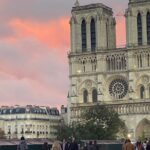
The route includes Île de la Cité, with a guided segment there. This is a fitting place for monarchy intrigue. The island’s historical weight is obvious, but the tour’s best trick is that it doesn’t leave you with only “this is old.” It ties the island into the logic of the story—how leaders, courts, and factions operated in a world where power was personal.
You’ll also hit “secret stops,” plus a few shorter guided moments in between walking stretches. Those off-the-beaten-path stops are where the tour tends to feel most memorable. The guide can point at a small corner and turn it into a scene from an episode, and it’s a lot more satisfying than hearing every story from the same main street.
You can also expect photo opportunities along the way. The stops aren’t just for storytelling—they’re for seeing Paris with a purpose. If you like photography, you’ll likely get more than a few shots that feel tied to something you understand, not random angles.
A bakery pause for real Paris breaks

The tour includes a stop for local snacks. The intent is simple: keep energy up, give you a human pause mid-walk, and let the story sink in. It’s the kind of break that helps the tour feel less like sprinting through landmarks and more like sharing time with someone who knows the city.
On the private version, the guide can also arrange a bakery stop for a pause, but the cost on location isn’t covered. If you like food breaks during sightseeing, the private option might match your travel style.
Louvre finish: why doing it before your museum visit changes everything

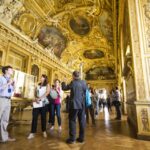
The tour ends at the Louvre Museum area, with a guided segment right there. The highlight promise is that you’ll learn about events that happened in the Louvre right before your visit. The practical payoff is huge: you’ll step inside (or come back later) with context already in your head.
If you plan to visit the Louvre anyway, doing this walk first is a smart move. Museums can be overwhelming. You see rooms and masterpieces, but you sometimes lose the story thread. A tour like this gives you a narrative handle—what kind of world you’re walking into, what power looked like, and why certain myths and political ideas traveled through time.
The Louvre segment is only part of the total experience, but it’s designed as a finish line: you end in the place that later feels like the final chapter of the walk.
What the $33 price gets you (and why it’s not just the duration)
At about $33 per person for roughly 2.5 hours, this tour is priced for the kind of return you want from a walking experience: a guide-led story, multiple stops, and real take-home material.
Here’s how the value stacks up:
- You’re paying for a guide who builds connections across centuries, not just a list of dates.
- You get a booklet chronology, plus recommendations for deeper reading and viewing.
- You also get the hidden-location benefit—off-the-beaten-path stops tend to be where you feel you learned something you couldn’t easily “find yourself” on a map.
- The guide includes a cheat-sheet style tool (and source links per reviews), which makes the tour useful after you get home.
If you’ve ever spent money on a tour that gave you facts but not follow-through, this is the opposite. The structure pushes you to remember, then invites you to study more.
The private tour is longer—up to 2h30 to 3h—and includes extra depth, including an exclusive story tied to the Mad King. If your group prefers a slower pace or you want more direct Q&A, the private option is likely the better match.
Who should book this, and who might skip it
This tour is best for you if:
- You like political intrigue and family drama in history form.
- You enjoy seeing why myths and stories persist.
- You already know some pop-culture references and want the real-world roots.
- You’re planning to visit the Louvre and want context first.
- You prefer active walking tours where the guide tells a continuous storyline.
You might want to consider another option if:
- You only want art and architecture facts, not court politics.
- You get tired fast from story-heavy tours.
- You’re looking for a very relaxed pace with minimal standing and moving.
Either way, bring comfortable shoes and come ready for rain or shine. The tour is built to keep going.
Quick tips to make the most of it
- Do it before the Louvre. You’ll notice connections faster once you see the museum setting.
- Listen for the cause-and-effect threads. The tour is designed around consequences, not just events.
- Ask questions if something sparks curiosity. The guide’s value is that he can connect episodes.
Should you book this French monarchy intrigue walk?
I think you should book it if you want Paris history that feels like a series: episodes, clues, power grabs, and outcomes that echo beyond their original century. The best reason to choose it is the way it uses a long time span—843 to 1616—to show how modern thinking and modern fears have older roots than you’d expect.
Book it especially if the Louvre is on your list. Ending there isn’t just a location choice—it’s part of the storytelling design. And with Daniel Mille-Levy’s approach and the added cheat-sheet style material, you’re not leaving empty-handed.
If you’re unsure, use this rule of thumb: if you like history that explains how people manipulate narratives and why superstition sticks, this tour will feel like your kind of Paris.
FAQ
How long is the Paris: French Monarchy Intrigues Walking Tour?
The tour runs about 2 to 3 hours. The private version can run up to 2h30 to 3h.
Where does the tour start?
The meeting point is Pont des Arts. The guide is bearded, wears glasses, and has a French flag on his shoulders.
What is the price per person?
It costs $33 per person.
Is Louvre Museum entry included?
No. Louvre Museum admission tickets are not included.
What languages are offered?
The live guide is available in English and French.
Do I need to bring anything specific?
Wear comfortable shoes. The tour happens rain or shine.
Is a private group option available?
Yes. Private group tours are available, and the private experience can be longer with added exclusive material.