REVIEW · PARIS
Paris by Night: Exclusive Segway night tour with a Local Guide
Book on Viator →Operated by Go Go Tours - Privat Segway Tours In Paris · Bookable on Viator
Segways turn Paris into motion. This Paris by Night tour hits major landmarks in the glow of evening, with short training and photo stops timed for the light. I love how the guide coaching feels calm and practical, so you’re not just fumbling around for 90 minutes. I also love the hit-list route, because you get the big Paris icons lined up without spending your whole trip stuck in transit.
The loop starts at 101 Av. de la Bourdonnais (7th arrondissement) and runs about 1 hour 30 minutes, capped at 15 people. Along the way, you’ll glide past Les Invalides, the Pont Alexandre III area, Petit Palais and Grand Palais, then roll on to Place de la Concorde, the Louvre area, Musée d’Orsay, and finish by the Eiffel Tower. Guides like Alex, Santiago, Kenza, and Violet show up in recent groups, and the common thread is patient instruction plus stops built around what you want to photograph.
One heads-up: the route takes you through bike lanes and across intersections near traffic, so you need to stay focused. And since most stops are brief, think walk-by views and pictures, not long museum time—especially since monument admission tickets aren’t included.
In This Review
- Key points to know before you ride
- Entering Paris at dusk: what a Segway tour really delivers
- Timing, meeting point, and how the 90 minutes flows
- Learning the Segway: training, helmets, and traffic reality
- Stop-by-stop route: what you’ll see and why it works at night
- Stop 1: Les Invalides (Musée de l’Armee / Napoleon’s Tomb area)
- Stop 2: Pont Alexandre III
- Stop 3: Petit Palais
- Stop 4: Grand Palais
- Stop 5: Place de la Concorde
- Stop 6: Louvre Museum area
- Stop 7: Musée d’Orsay
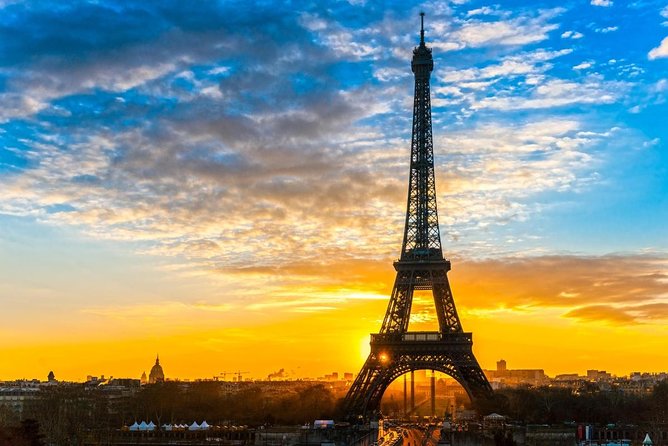
- Stop 8: Eiffel Tower finish
- The best part at night: timing, lighting, and photo strategy
- Price and value: is $85.68 worth it?
- Who should book this Segway tour (and who should consider alternatives)
- Smart-casual packing: what matters for a cold, damp, or windy ride
- Should you book this Paris by Night Segway tour?
- FAQ
- How long is the Paris by Night Segway night tour?
- What time does the tour start?
- Where is the meeting point?
- Is the tour offered in English?
- What’s the group size limit?
- Do I get safety equipment?
- Are raincoats or cold-weather items provided?
- Are admission tickets included for the sights?
- Is it suitable for children?
- What is the cancellation policy?
Key points to know before you ride
- Small-group feel (max 15): you move as a group, but it doesn’t feel like a huge parade.
- Helmet + cold-weather gear: you get helmet use, plus raincoats and hats if it’s chilly.
- Guides slow down for comfort: if you’re newer on a Segway, you’ll get extra coaching and pacing.
- Major sights in one loop: Invalides to Eiffel Tower, with classic bridge-and-boulevard views.
- Quick photo stops: expect short time at each highlight, designed for pictures rather than museum entry.
Entering Paris at dusk: what a Segway tour really delivers
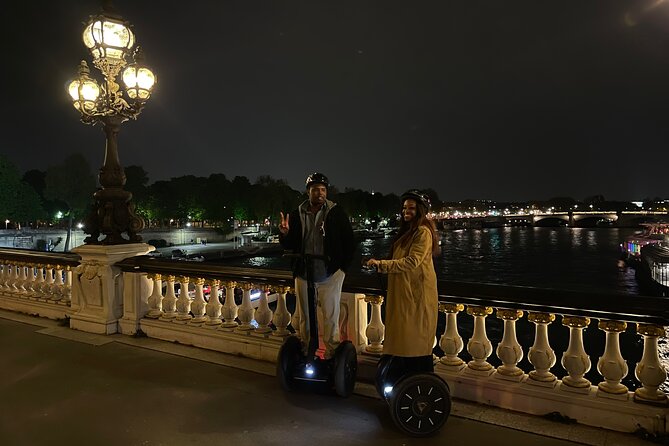
Paris at night can feel magical, but it can also feel like a maze. This tour solves the maze part by putting you on a Segway with a local guide and a set route that strings together the city’s most famous sights. You’ll be riding at a time when buildings look softer and bridges look extra elegant—when street lighting does the heavy lifting.
What makes this experience worth your time is the format. In about 90 minutes, you’re not just seeing monuments from far away—you’re moving through the corridors between them. That movement matters: you get “arrival” views from different angles, and you can actually line up photos without sprinting between sites.
And because you’re on a Segway, the pace stays steady. Even if you’re in your 50s, bringing teens, or you’re riding for the first time, you still get that feeling of covering ground while the guide keeps the group together and the route logical. Guides in this program—people like Jack, Kenza, Victor, and Norris—are repeatedly described as careful with safety and patient during the learning phase.
You can also read our reviews of more guided tours in Paris



Timing, meeting point, and how the 90 minutes flows
The tour starts at 6:30 pm and runs about 1 hour 30 minutes. You meet at 101 Av. de la Bourdonnais, 75007 Paris, and the tour ends back at the same meeting point. That “come back to where you started” detail is helpful if you’re planning dinner nearby or just want a clean end to your night.
You’ll also want to build in some buffer time. While the schedule is tight, the early part of the experience depends on how quickly everyone settles into the Segway basics. In real groups, guides often start with a short instruction and then adjust the pace once riders feel comfortable—especially for complete beginners.
It’s smart-casual dress code. That’s not a “uniform,” but it does mean you should show up ready to move. If you’re coming directly from another activity, plan for comfortable clothing that won’t snag and footwear that works well on pavement and paths.
Learning the Segway: training, helmets, and traffic reality
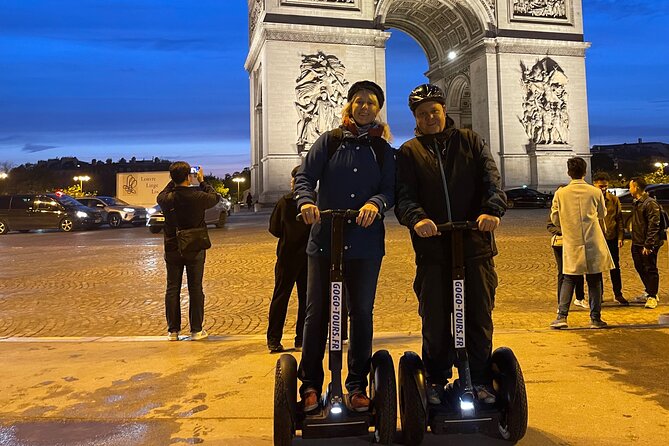
If you’ve never ridden a Segway, you’ll likely feel a little wobbly at first. That’s normal. What I like about this kind of tour format is that the guide doesn’t treat your group like a fast-moving crowd—they teach the ride basics before the route really starts.
Safety is part of the process, not an afterthought. You get helmet use, and the guide actively manages speed and spacing. Several recent guides are praised for coaching riders through turns and stopping points without rushing anyone. Some groups even include first-timers who take a bit longer to feel confident, and the guide adapts.
Now for the practical part: you are riding near streets. One of the most repeated pieces of advice from riders is to be ready for stretches that feel like bike-lane riding and for crossing intersections. That doesn’t mean it’s chaotic, but it does mean you should stay alert, follow the guide’s instructions, and avoid any urge to freestyle your own speed. Think of it as guided “Paris cruising,” not a leisurely stroll.
Stop-by-stop route: what you’ll see and why it works at night
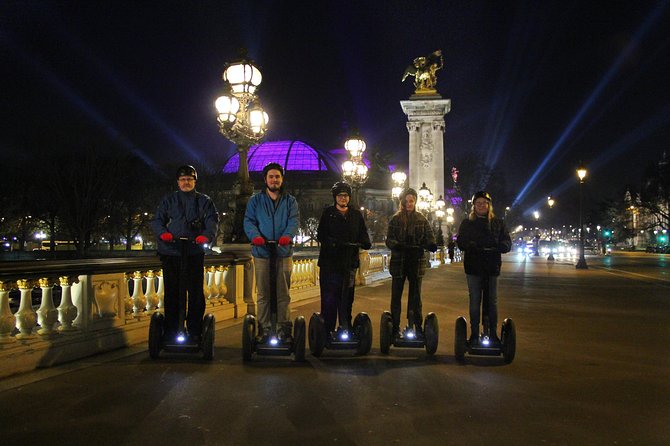
This tour is built like a highlight reel, but each stop has a reason. The timing is designed for views and photos, with brief on-foot moments—often around five minutes per stop—so you can capture the landmark without turning the tour into a museum day.
Stop 1: Les Invalides (Musée de l’Armee / Napoleon’s Tomb area)
You start at Les Invalides, tied to France’s military story. The site includes the Hôtel des Invalides, commissioned in 1670 by Louis XIV to house and care for wounded soldiers. Even if you don’t go inside, the exterior setting gives you a grounded Paris-history opening before the route turns to the Seine-side and grand boulevards.
Practical tip: take a few photos early, when your camera (and your body) are still fresh. This is the easiest moment to get wide shots before you’ve had to coordinate rides, stops, and helmet hair.
You can also read our reviews of more evening experiences in Paris






Stop 2: Pont Alexandre III
Next up is the Pont Alexandre III, one of the Seine bridges you’ll want to see at night. It was built for the World Fair in Paris and is often described as one of the city’s most beautiful bridges. At dusk, the bridge lighting and the water angles make for great photos, especially if you can catch the reflection.
This is also a nice “breather” stop. You’re still moving through the route, but the bridge setting keeps the visuals interesting even in a short window.
Stop 3: Petit Palais
Then you glide past the Petit Palais, built for the 1900 Universal Exhibition. It later became a museum in 1902, so the building already has that formal, grand-exhibition feel. The area works well at night because the façades read clearly under street lighting.
Photo note: aim for architectural details rather than only the full building. Night lighting tends to flatten distance, so smaller features can come out sharper.
Stop 4: Grand Palais
Your route continues to the Grand Palais, another 1900 exhibition icon. It’s dedicated by the French Republic to the glory of French art, and that purpose shows in the scale of the structure. Even in a brief stop, you can get the “wow” factor: this is one of those Paris buildings that looks even more impressive when you approach it from the street.
If you’re someone who likes symmetry and big façades, this stop is a good one to slow down and frame carefully.
Stop 5: Place de la Concorde
From grand halls and exhibition-era architecture, you shift to one of Paris’s most evocative civic spaces: Place de la Concorde. It sits between the Champs-Élysées and the Tuileries Gardens, and it’s described as Paris’s largest square. One neat fact: it’s also noted as France’s second largest after Place de Quinconces in Bordeaux.
At night, this square feels open and dramatic—like a stage—so your photos can look more “cinematic” than you’d expect from a quick stop.
Stop 6: Louvre Museum area
You roll toward the Louvre, which began as a fortress in 1190 and was reconstructed as a royal palace in the 16th century. The tour highlight here is not museum time. It’s the exterior presence and the way the area looks at night.
The tour also emphasizes a seasonal visual: in summer months, you can admire the sun setting behind the Louvre Pyramid. If you’re traveling in the warm season, this is the stop that can turn your ride into something you’ll remember even after jet lag fades.
Stop 7: Musée d’Orsay
Then you head to Musée d’Orsay. The building is famous because it started life as the Gare d’Orsay, built for the 1900 World’s Fair, with modern features credited to architect Victor Laloux. At night, this “old train station turned museum” angle comes across as a blend of industrial and elegant.
This is another stop where you’ll get the sense of the building without needing an admission ticket. Plan on photos and quick orientation views.
Stop 8: Eiffel Tower finish
Finally, you end with the Eiffel Tower. The tour frames it as part of national heritage, and it also notes a key story point: when Gustave Eiffel achieved the construction in 1889, it was meant to be temporary and was not an instant favorite among Parisians. That contrast helps the landmark feel less like a static postcard.
If you time it right, this is the payoff moment: lit ironwork, wide-city views, and that unmistakable feeling that you really are in Paris.
The best part at night: timing, lighting, and photo strategy
Night Segway tours work because Paris lights up differently than it does in daylight. The route is planned so you ride during the “in-between” period—when you can still see details clearly but you also get warm street and monument lighting.
If you’re traveling outside peak summer, the tour can still be a twilight-to-evening experience. That can be a plus. The sky often looks dramatic, and landmarks like the Louvre and Eiffel Tower can feel less harsh than they do under full nighttime darkness.
For photos, I’d use a simple strategy:
- Start with wide shots at the big squares and bridges.
- Switch to details at buildings like Petit Palais and Grand Palais.
- Save the most careful framing for Eiffel Tower and the Louvre-area moment.
Guides often help with stop positioning so you’re not just standing randomly in the street. Several guides are also praised for stopping when riders want more time for photos, especially if the group is small.
Price and value: is $85.68 worth it?
At $85.68 per person, this isn’t the cheapest way to see famous Paris. But it is a focused way to do it, which is where the value comes from.
You’re paying for four things at once:
1) a local guide explaining what you’re seeing,
2) private tour format,
3) Segway training and helmet use,
4) a route that strings together major landmarks without you managing navigation, cross-town routing, or transit connections.
The tour is capped at 15 travelers, so it’s designed to stay manageable. And the reviews you’ll see for this type of tour tend to emphasize how much fun and how much learning you get in the time—especially for first-timers.
Where it may not feel worth it is if you’re already planning lots of museum tickets and long indoor stays. This experience is about movement and views. Admission tickets for the monuments on the route aren’t included, so you should not count on going inside Louvre or Musée d’Orsay during this 90-minute window.
Who should book this Segway tour (and who should consider alternatives)
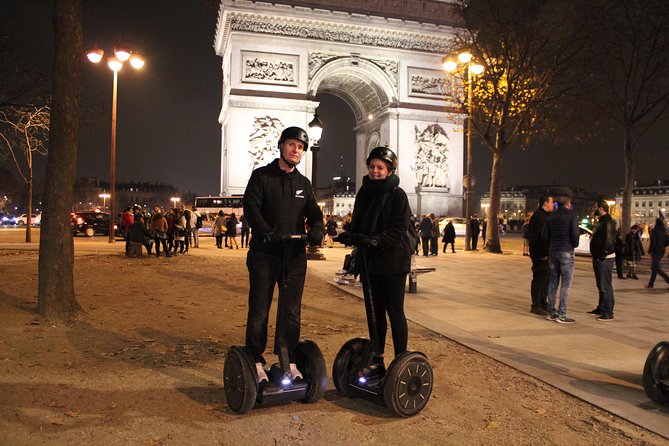
This tour is a strong fit if you want an efficient overview of central Paris and you like the idea of riding to cover distance. It also suits families with older kids, since the tour isn’t allowed for children 11 and under. Many riders mention teens enjoying the ride, and first-timers finding it easier than expected once the guide trains them.
It’s also a good choice for people who want a guided route without a bus schedule. You’ll still spend time listening and learning, but you won’t be trapped in a single viewpoint for the whole evening.
Consider another option if you:
- feel very uncomfortable riding anywhere near traffic or crossing intersections,
- hate the idea of short stops where you can’t linger,
- want deep museum time inside the Louvre or Musée d’Orsay during the tour.
Smart-casual packing: what matters for a cold, damp, or windy ride
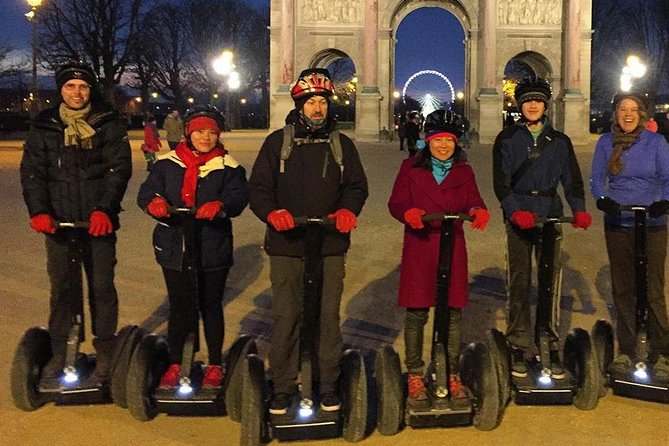
You don’t need a fancy outfit. The tour’s dress code is smart casual, and it includes raincoats and hats if it is cold. Still, you’ll enjoy the ride more if you show up prepared for Paris weather.
Bring:
- layers you can adjust easily,
- gloves if you run cold (even with cold-weather gear provided),
- a bag you can keep close while riding.
Also, charge your phone before you go. The best shots on a night ride often come at stops you can’t fully predict, like that Louvre Pyramid sunset moment in summer months.
Should you book this Paris by Night Segway tour?
If you want a fast, fun way to see Paris’s biggest sights in one evening—without getting buried in planning—then yes, it’s a solid booking. The small-group size, helmet use, and guide support during the learning phase make it a surprisingly practical way to enjoy the City of Light.
I’d book it especially if it’s your first time in Paris and you want your bearings fast. You’ll finish with a clear mental map of where things are—and likely a list of what you want to return to on your own.
If you’re picky about quiet, long museum time, or you strongly prefer to avoid any riding near streets, you might be happier with a walking tour that keeps you fully off the road.
FAQ
How long is the Paris by Night Segway night tour?
It runs about 1 hour 30 minutes.
What time does the tour start?
Start time is 6:30 pm.
Where is the meeting point?
You’ll meet at 101 Av. de la Bourdonnais, 75007 Paris, France.
Is the tour offered in English?
Yes, it’s offered in English.
What’s the group size limit?
The tour has a maximum of 15 travelers.
Do I get safety equipment?
Yes. Helmet use is included.
Are raincoats or cold-weather items provided?
Yes. The tour includes raincoats, and hats if it is cold.
Are admission tickets included for the sights?
No. Admission tickets are not included for the stops on the route.
Is it suitable for children?
Children aged 11 and under are not allowed.
What is the cancellation policy?
You can cancel for a full refund up to 24 hours before the experience’s start time. If you cancel less than 24 hours before, the amount paid is not refunded.